

U0100 on 2008-2016 Audi A4: Lost Communication with ECM Causes and Fixes
On a 2008-2016 Audi A4, code U0100 is most often caused by water damage to the ECM due to clogged plenum drains under the windshield. Cleaning the drains and inspecting the ECM and its wiring for corrosion is the first step. A failing ECM power relay (J271, often marked '645') is another common culprit, frequently setting a P068A code alongside U0100.
- For a 2008-2016 Audi A4, U0100 almost always points to an issue in the plenum area.
- Your first and most important diagnostic step is to check for water under the windshield cowl.
- Prevent this issue by regularly cleaning leaves and debris from the plenum drains, especially in the fall.
- If you also have code P068A, the ECM power relay is the most likely part to replace.
- Replacing the ECM is expensive and requires professional programming; it should be the last resort after confirming the root cause (like a water leak) has been fixed.
What's Unique About the 2008-2016 Audi A4
The Audi A4 of the B8 generation (2008-2016) has a well-documented vulnerability that directly leads to the U0100 code: clogged plenum drains. The drains for the plenum chamber (the area under the windshield wipers) are prone to getting blocked by leaves and debris. When this happens, rainwater overflows and floods the electronics box that houses the ECM, its power relay, and connectors, causing corrosion and catastrophic electrical failures. This single design issue is the most probable cause of a U0100 code on this specific vehicle, a problem discussed frequently in owner forums.
Generation note: This guide covers the Audi A4 B8 generation (2008-2012) and the facelifted B8.5 generation (2013-2016). The causes, particularly the plenum drain issue, are common to both.
Symptoms You May Notice
- Check Engine Light and/or EPC (Electronic Power Control) light on
- Engine will not crank or start (no-start condition)
- Engine cranks but does not fire
- Intermittent stalling while driving
- Rough or erratic idle
- Transmission may enter 'limp mode' or exhibit harsh shifting
- Multiple other warning lights on the dashboard (ABS, Traction Control, etc.)
- Cooling fans running at full speed with the engine off
- Replacing the ECM without fixing the water leak. If the plenum drains are not cleared, the new ECM will be damaged by water again.
- Replacing other modules. The U0100 code indicates a problem with the ECM or its communication lines, not necessarily the modules that are reporting the code.
- Replacing coil packs or injectors. While symptoms may include misfires, if U0100 is present, the root cause is the loss of communication with the ECM that controls those components.
Most Likely Causes
- Water Intrusion from Clogged Plenum Drains 🔴 High Probability The plenum drains under the windshield, particularly the one under the battery tray, are susceptible 🎬 Watch: How to find and clean these hidden plenum drains. to clogging with leaves and debris, causing water to overflow directly into the sealed electronics box containing the ECM and its relays. This is a widely reported design flaw in B8 platform cars.
How to confirm: Remove the plastic cowl cover. Inspect for standing water, leaves, and mud, especially under the battery. Open the electronics box (if safe and dry) and check the ECM, relays, and connectors for any signs of moisture, white/green corrosion, or a waterline. The presence of water is definitive proof.
Typical fix: Thoroughly clean the plenum drains. Some owners remove the rubber grommets entirely to prevent future clogs. Dry out the electronics box. Clean any corrosion from connectors with an electronics cleaner. If the ECM or its connectors are heavily corroded, they will need to be replaced.
Est. part cost: $0-$20 for cleaning supplies. $800-$1500 if the ECM is damaged. - Faulty ECM Power Relay (J271) 🟡 Medium Probability This specific relay, often labeled '645', is a known failure point that can cause intermittent power loss to the ECM, triggering a U0100 code, often alongside a P068A code ('ECM Power Relay Load Circuit - Opens Too Early'). It is located in the same electronics box that is vulnerable to water damage.
How to confirm: Locate the relay in the electronics box in the plenum. Swap the relay with a known good one of the same part number. If the car starts and runs, the relay is bad. A VCDS scan showing P068A is a strong indicator. The relay can be tested with a multimeter.
Typical fix: Replace the ECM power relay. This is a simple plug-and-play part.
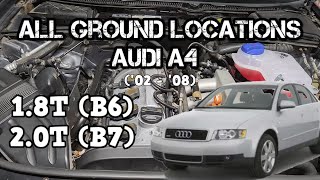
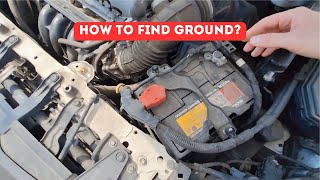
Est. part cost: $20-$50 - Corroded Main Ground Straps 🟡 Medium Probability → Shop Engine Ground Strap Ground points in the engine bay are exposed to the elements and can corrode over time, leading to unstable voltage and communication issues for the ECM. Key ground points are on the firewall and from the engine block to the chassis.
How to confirm: Locate the primary ground points: one is typically on the firewall near the plenum, and another from the engine block to the chassis. Inspect for corrosion, looseness, or fraying. Perform a voltage drop test from the engine block to the negative battery terminal (should be <0.2V with the engine running).
Typical fix: Remove, clean, and secure the ground connections. Sand the contact points to bare metal and apply dielectric grease before re-tightening. 🎬 Watch: A guide to properly cleaning and fixing ground connections. Replace the ground strap if it is badly corroded.
Est. part cost: $15-$40 for a new ground strap. - Weak or Failing Battery ⚪ Low Probability → Shop Vehicle Battery
How to confirm: Test the battery voltage with a multimeter. A healthy, resting battery should be at 12.6V. Anything below 12.2V indicates a weak battery that may cause communication faults during startup, as modern control modules are very sensitive to low voltage.
Typical fix: Recharge or replace the battery. Note that on many Audis, a new battery must be 'coded' to the vehicle's battery management system.
Est. part cost: $150-$300
Rare But Worth Checking
- Coolant Wicking Through Wiring Harness: A bizarre but documented issue where a leaking transmission coolant valve (N488) or other sensor allows coolant to enter the wiring harness. Capillary action, sometimes called 'coolant migration', draws the fluid all the way to the ECM connector, causing shorts and corrosion. Inspect the ECM connector for green, crusty residue that is not typical of water corrosion. Pin 35 on the 60-pin ECM connector has been identified as a potential entry point from the N488 valve.
- Internal ECM Failure: While possible, the ECM itself is rarely the initial point of failure. It's usually damaged by an external cause like water or voltage spikes. This should only be considered after all other possibilities (power, ground, wiring, water ingress) have been exhaustively ruled out.
Diagnosis Steps
- Check for Water First: Immediately inspect the plenum chamber under the windshield wipers for standing water and debris. This is the most common cause on this car. Pay special attention to the drain located under the battery tray.
- Inspect ECM and Relay Box: Open the electronics box in the plenum. Look for any signs of moisture or corrosion on the ECM, connectors, and relays.
- Check Battery and Basic Electrics: Ensure the battery is fully charged (12.6V+) and terminals are clean. Check all fuses related to the ECM in the main fuse panels.
- Scan for All Codes: Use a quality OBD-II scanner (VCDS is highly recommended for Audi) to read codes from all vehicle modules, not just the engine. Note which modules are not communicating.
- Inspect ECM Power Relay (J271): If you also have a P068A code, the ECM power relay (often marked '645') is highly suspect. Try swapping it with a known-good relay or replacing it.
- Verify ECM Power and Ground: Using a multimeter and wiring diagram, confirm the ECM is receiving proper battery voltage and has a solid ground connection at its connector pins. Check for voltage drop on the ground side.
- Inspect CAN Bus Wiring: Visually inspect the wiring harness going to the ECM for any signs of chafing, rodent damage, or corrosion, especially around the plenum area and at the ECM connectors.
- Check for Coolant Wicking: Disconnect the ECM connectors and inspect for any green, crusty residue indicative of coolant migration. If found, trace the harness to find the leaking sensor or valve.
- Isolate the ECM: If all power, grounds, and wiring appear good, the ECM itself is the likely point of failure, usually due to undiscovered internal water damage.
Parts You'll Likely Need
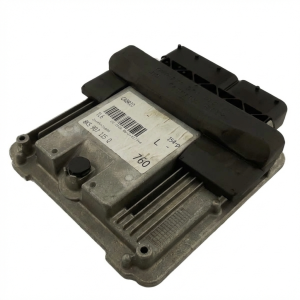
- Engine Control Module (ECM)
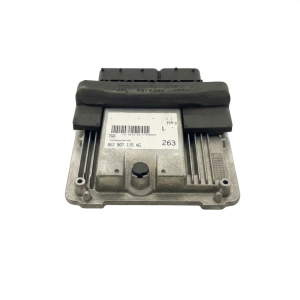
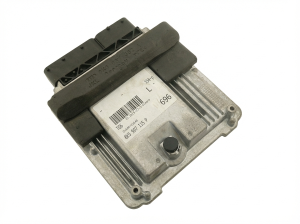
(OEM #Varies by year/engine/trans (e.g., 8K2907115 series))— Often damaged beyond repair by water ingress from clogged plenum drains. This is the most common reason for needing replacement.
Trusted brands: Bosch (OEM)
OEM price range: $1200-$1800
Aftermarket price range: $600-$1000 (Remanufactured) - ECM Power Relay
(OEM #8K0951253 (often stamped with '645'))— A known failure point that causes intermittent power loss to the ECM, triggering U0100 and P068A codes.
Trusted brands: Genuine Audi/VW, Bosch, Wehrle
OEM price range: $40-$60
Aftermarket price range: $15-$35
Related Codes That Often Appear With This One
- P068A — This code ('ECM Power Relay De-Energized Too Early') often appears with U0100 and points directly to a failing ECM power relay (J271) or its circuit.
- U01xx (various) — Multiple other 'U' codes (e.g., U0121 - Lost Communication with ABS, U0146 - Lost Communication with Gateway) will be stored in various modules, all pointing back to the fact that they cannot hear from the ECM.
Technical Service Bulletins (TSBs) & Recalls
- TSB 2024745/4 (or similar for P068A): While not directly for U0100, bulletins related to DTC P068A00 instruct technicians to check and replace the J271 ECM power relay, which is a primary cause of U0100.
Platform-Specific Known Issues
- Clogged Plenum Drains: The primary vehicle-specific issue. Debris blocks
Mechanic-Grade Diagnostic Values
- CAN Bus Network Resistance — expected: Approximately 60 Ω. Failure: A reading of 120 Ω indicates a break in the wiring or a missing terminating resistor. A reading near 0 Ω indicates a short between CAN-High and CAN-Low wires.
- CAN Bus Voltage (Key On, Engine Off) — expected: CAN-High (Pin 6): ~2.5V to 3.5V. CAN-Low (Pin 14): ~1.5V to 2.5V. Both lines should show approximately 2.5V when idle (recessive state).. Failure: Voltages that are stuck high, stuck low, or not showing the expected differential indicate a wiring short, open, or a faulty module pulling the bus down.
- Engine-to-Chassis Ground Voltage Drop — expected: Less than 0.15V. Failure: Readings higher than 0.15V indicate a degraded or corroded ground strap, which can cause unstable module operation.
Scan Tool Commands That Help
- VCDS (VAG-COM): Optical Bus Diagnostics — If the vehicle is equipped with a MOST (Media Oriented Systems Transport) bus for infotainment, this function can be used to test the integrity of the fiber optic loop. A break in this loop can sometimes cause issues on the CAN bus. This is accessible via the CAN Gateway module.
- VCDS (VAG-COM): Installation List (in CAN Gateway) — After replacing a module, you must access the CAN Gateway's Installation List to tell the system which modules are installed on the vehicle. If a module is replaced and not correctly registered here, it may not communicate, leading to U-codes.
- ODIS (Official Dealer Software): Component Protection Removal — This is a mandatory online function required after installing a new or used ECM, CAN Gateway, or Comfort Control Module. Without this, the module will have limited functionality and may continue to cause communication errors.
Wiring & Ground Locations
- J533 (CAN Gateway) — Located behind the glove box, between the glove box and the center console stack.. The CAN Gateway is the central router for all data buses. If it fails (due to internal fault, power/ground loss, or water damage if applicable), it can cause a total communication breakdown between all modules, leading to a flood of U-codes, including U0100.
- J393 (Comfort Control Module) — Located in the right rear of the trunk area, often near the fuse panel, inside a plastic bracket.. While not a primary cause, this module is highly susceptible to water damage from clogged sunroof drains. A shorted J393 can disrupt the Convenience CAN bus, which can sometimes cause cascading failures that affect the Powertrain CAN bus where the ECM communicates.
- Primary Chassis Grounds — Key ground points include the transmission-to-chassis (G104), engine block-to-firewall (G105), and points in the left (G106) and right (G107) engine bays.. The ECM and other modules rely on clean ground connections for stable operation. Corrosion at these points creates voltage drops and electrical noise that can interrupt CAN bus signals and trigger a U0100 code.
- ECM Connector — Inside the electronics box in the plenum chamber at the base of the windshield.. This is the direct physical connection to the ECM. It is the primary victim of water intrusion from clogged plenum drains. All power, ground, and CAN bus wires for the engine computer terminate here.
Real Owner Repair Stories
- AudiWorld Forums user (2017 Audi A5 (B9 platform, but relevant principle)) — Car would not do anything when trying to start. No power even when pressing the start button. Could not connect with VCDS or OBD11.
❌ Tried (didn't work) Attempting to scan the vehicle.
✅ What actually fixed it The issue was a failed CAN Gateway (J533). The user was informed that the car cannot function without the gateway, as it bridges all the CAN buses. The fix required replacing the J533 module and having it programmed online to remove Component Protection. - NHTSA ODI #11218134 — An owner reported a safety concern where the vehicle would sometimes require multiple cranks to start, regardless of whether the engine was warm or cold. A scan revealed code U0100, indicating a loss of communication to the ECM.
OEM Part Supersession History
Varies, e.g., 8D0951253A→4H0951253A (Relay marked '645')— Part consolidation and design updates by VW/Audi over many years.
Heads up: The relay marked '645' is a common multi-function relay. While it is the correct replacement for the ECM Power Relay in many B8 models, it's crucial to verify the part number. Some older or different relays like '643' may look similar but have different internal configurations or current ratings. Always replace with the exact specified part number or a confirmed supersession.
Model Year Variations Within This Range
- 2013-2016 (B8.5 Facelift): The B8.5 facelift introduced electromagnetic steering, replacing the hydraulic steering of the B8. This changes the steering system's integration with the vehicle's electronics but does not fundamentally alter the common causes for U0100. The MMI system was also updated to 3G+, and there were cosmetic changes to headlights, taillights, and bumpers. The core electrical architecture regarding the ECM and CAN Gateway remains largely the same.
- Late 2012+: Audi reportedly introduced a revised DSG (S-Tronic) mechatronics unit starting in late 2012, making B8.5 models generally less prone to certain gearbox failures than early B8 models. While not directly related to U0100, a failing mechatronics unit can sometimes cause communication faults on the CAN bus.
Diagnostic Flowchart
Other Known Issues on This Vehicle
Issues unrelated to this code that are worth knowing about as an owner of this generation:
- Excessive Oil Consumption (2.0T TFSI) 🔴 High — Very common on early 2009-2011 models with the CAEB engine code. Can start as early as 60,000 miles. A class-action lawsuit was filed over this issue. (Ref: Multiple TSBs exist, such as 101103, which involves a multi-stage fix starting with a new PCV valve and software update, and potentially progressing to piston/ring replacement.)
- Timing Chain Tensioner Failure (2.0T TFSI) 🔴 High — Common on pre-facelift (approx. 2008-2013) EA888 engines. Failure can be catastrophic, leading to bent valves and engine destruction. Symptoms include a startup rattle. (Ref: Audi released an updated tensioner design. TSBs like 2039995/1 address startup rattling by replacing tensioners.)
- Water Pump Failure 🟠 Medium — The plastic water pump housing is prone to cracking or leaking, often between 60,000-80,000 miles. Can cause overheating if not addressed. (Ref: TSB 2061604 provides guidance on diagnosing leaks and replacing the pump or thermostat housing.)
- Front Control Arm Bushing Wear 🟠 Medium — The multi-link front suspension has numerous rubber bushings that wear out, typically after 70,000-100,000 miles, causing clunking noises, poor handling, and uneven tire wear.
- Carbon Buildup on Intake Valves 🟠 Medium — A common issue for all direct-injection (FSI/TFSI) engines. Buildup can cause misfires, rough idle, and loss of performance, typically needing a cleaning service every 50,000-80,000 miles.
Used vs. New Parts: Buying Guide for This Vehicle
When a used part is the smart pick: Used parts are a viable option for expensive modules like the CAN Gateway (J533) or Comfort Control Module (J393), provided you can verify they are from a non-water-damaged vehicle. Relays and wiring connectors are also excellent candidates for used parts.
Donor-vehicle mileage cap: roughly under 120000 miles for the part to have meaningful remaining life.
What to inspect on the donor part:
- For any electronic module, physically inspect the connectors for white or green crust (corrosion) and the case for any signs of a waterline. Do not buy parts from a flood car.
- Ask the seller for the VIN of the donor car to verify compatibility and check its history if possible.
- For an ECM, ensure the part number matches yours exactly, including all letters.
- When buying a used relay, look for clean, straight pins and no signs of melting or heat damage on the plastic casing.
OEM-only on this vehicle (don't cheap out):
- Engine Control Module (ECM): While a used OEM module can be used, it is a high-risk purchase. It absolutely requires professional programming (Component Protection removal) to work. A remanufactured unit from a reputable supplier with a warranty is a safer bet than a junkyard part.
Aftermarket brands forum-validated for this vehicle:
- Bosch (OEM for many electronics, including ECM and relays)
- Wehrle (For relays)
Brands owners have reported issues with on this vehicle:
- Unbranded, no-name electronic modules or relays from online marketplaces. The quality control is often poor, and they can fail quickly or cause more complex electrical issues.
Real Owner Stories
Aggregated from forums and TSBs cited above. Mileages and costs reflect what owners reported in those sources.
2009-2016 Audi A4 (B8 Platform)
Symptoms: Intermittent U0100 code appearing specifically after rainfall.
What fixed it: Cleaning out the scuttle/plenum drains and removing the rubber grommets to prevent future water buildup near the ECM box.
Source hint: AudiWorld thread 'No Signal/Communication with ECM - Intermittent'
2009-2016 Audi A4 (B8 Platform)
Symptoms: Water leaking into the cabin and dashboard warning lights related to ECM communication.
What fixed it: Clearing blocked drains near the ECM box that were causing water to overflow.
Source hint: Reddit thread 'I have water leaking down this part in my a4 help'
2009-2016 Audi A4 (B8 Platform)
Symptoms: Coolant leaked through the wiring harness and 'cooked' the ECM.
What fixed it: Replacing the leaking N488 valve and the damaged ECM.
Source hint: AudiWorld thread 'Coolant leak through wiring harness cooked ecm'
2009-2016 Audi A4 (B8 Platform)
Symptoms: Blocked scuttle/plenum drainage causing water to pool near electronics.
What fixed it: Preventative removal of the drain grommets to ensure water can exit the plenum chamber freely.
Source hint: Audi-Sport.net thread 'Scuttle / Plenum drainage issues'
2009-2016 Audi A4 (B8 Platform)
Symptoms: Intermittent starting issues where the engine requires several cranks to fire, regardless of temperature.
What fixed it: Diagnosis of the ECM communication loss (U0100) as reported in NHTSA ODI #11218134.
Source hint: NHTSA ODI #11218134
Related OBD-II Codes
Frequently Asked Questions
Is there a TSB for the U0100 code on my Audi A4 related to the power relay?
Why are my cooling fans running at full speed even though the engine is off?
I found water under my battery tray; could this cause the U0100 code?
What is the '645' relay and why does it matter for this code?
Can a leaking coolant valve cause a U0100 communication error?
Do I need to do anything special if I replace the battery to fix communication issues?
Helpful Videos



We Have This Part in Stock

The information in this article is provided for general reference and educational purposes only. Vehicle specifications, procedures, and part compatibility can vary by production date, trim level, and region. Always consult your vehicle's factory service manual and verify part numbers before purchasing or performing repairs. Safety-critical components such as airbags, seat belts, and braking systems should be installed by a qualified professional.
- Audi A4:
- 🧭 Diagnostic Flowchart
- 🎬 Helpful Videos
- 🛍️ Shop This Part
- What's Unique About the 2008-2016 Audi A4
- Symptoms You May Notice
- Most Likely Causes
- Rare But Worth Checking
- Diagnosis Steps
- Parts You'll Likely Need
- Related Codes That Often Appear With This One
- Technical Service Bulletins (TSBs) & Recalls
- Platform-Specific Known Issues
- Mechanic-Grade Diagnostic Values
- Scan Tool Commands That Help
- Wiring & Ground Locations
- Real Owner Repair Stories
- OEM Part Supersession History
- Model Year Variations Within This Range
- Other Known Issues on This Vehicle
- Used vs. New Parts: Buying Guide for This Vehicle
- Real Owner Stories
- 2009-2016 Audi A4 (B8 Platform)
- 2009-2016 Audi A4 (B8 Platform)
- 2009-2016 Audi A4 (B8 Platform)
- 2009-2016 Audi A4 (B8 Platform)
- 2009-2016 Audi A4 (B8 Platform)
- Related OBD-II Codes
- Frequently Asked Questions
- 🎟️ Get 5% Off