

U0100 on 2007-2014 Cadillac Escalade ESV: Lost Communication with ECM Causes and Fixes
U0100 on a 2007-2014 Escalade ESV indicates a loss of communication with the Engine Control Module (ECM). This is a critical fault, often caused by wiring issues like a loose gray connector under the main fuse box, broken ground wires at the engine block, or chafed harnesses, rather than a failed ECM. Expect diagnostic costs to range from $100 to $300, with repairs potentially costing more if a module needs replacement.
- U0100 is a critical code on your Escalade that makes the vehicle unsafe to drive.
- Do NOT immediately assume the ECM has failed. The problem is most likely a wiring or connection issue.
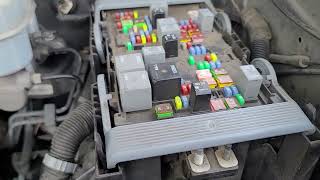
- The first and most important place to check is the large electrical connectors under the main fuse box in the engine bay.
- Thoroughly inspect the wiring harness for any signs of rubbing or damage, especially near the engine and transmission.
- Due to the complexity of network diagnostics, professional service is highly recommended to avoid costly misdiagnosis.
What's Unique About the 2007-2014 Cadillac ESCALADE ESV
The GMT900 platform, which underpins the 2007-2014 Escalade, is known for its complex electrical systems and susceptibility to network communication problems. GM has issued multiple Technical Service Bulletins (TSBs), including the critical #08-07-30-021H, which addresses widespread GMLAN communication failures across the entire platform, including the Escalade. These bulletins highlight that issues like loose connectors under the fuse block, backed-out terminals in the transmission harness, and chafed wiring are more common culprits for a U0100 code than an actual failed ECM, making a 🎬 Watch: Diagnosing a U0100 no-communication and no-crank condition. thorough wiring inspection essential on these trucks.
Diagnostic Flowchart
Tap your situation to follow the diagnostic path that matches what you're seeing on this vehicle.
Symptoms You May Notice
- Vehicle may not crank or start.
- Engine may stall while driving.
- Transmission may not shift correctly or may be stuck in 'limp mode' (often 2nd gear).
- Multiple warning lights on the instrument panel, such as Check Engine, ABS, Traction Control, and 'Service Stabilitrak'.
- Instrument panel gauges may fluctuate or stop working.
- Intermittent door lock cycling or chime operation.
- Scan tool cannot communicate with the ECM.
- Replacing the Engine Control Module (ECM) without first exhaustively checking all wiring, grounds, and especially the connectors under the fuse box.
- Replacing the Transmission Control Module (TCM) because a U0101 (Lost Communication with TCM) code is also present. The root cause is often a shared network fault, not two failed modules.
Most Likely Causes
- Poor Connection at Under-hood Fuse Block (UBEC) 🔴 High Probability A widely known issue on the GMT900 platform. The main connectors underneath the fuse block can become loose, interrupting power or communication to the ECM. The gray connector is frequently cited.
How to confirm: Lift the under-hood fuse block and physically check the large connectors (especially the gray one) for a secure, clicked-in fit. Wiggle the connectors while monitoring for restored communication (e.g., dash lights returning to normal).
Typical fix: Reseat the connector until it clicks and is fully secure. In a documented YouTube repair, the owner wedged a piece of paper between the connector and its housing to create a tight fit, which immediately resolved the no-start condition. If the connector or terminals are damaged, they will need repair or replacement.
Est. part cost: $0 - $50 - Chafed or Damaged Wiring Harness 🔴 High Probability TSB #08-07-30-021H and numerous owner forums call out wiring harnesses chafing against vehicle components. Common chafe points on the GMT900 platform include where the harness passes over the driver's side valve cover, rubs against the ECM/TCM bracket, the upper control arm, or a shock tower bolt.
How to confirm: Visually inspect wiring harnesses, particularly where they run near the transmission, behind the engine, and around the left side junction block. Look for areas where the loom is rubbed through, exposing the wires.
Typical fix: Repair the damaged wires by soldering and heat-shrinking. The repaired section should be protected with high-quality loom and re-routed or secured to prevent future chafing.
Est. part cost: $10 - $100 - Broken or Corroded Ground Wires 🔴 High Probability Modules require a stable ground to communicate. A common failure point on these trucks is a ground wire breaking *inside* the crimped ring terminal that attaches to the engine block. The connection appears visually intact but is electrically open. Another known issue is corrosion at the frame ground located under the driver's side door. Grounds G102 and G104 on the engine are critical.
How to confirm: Inspect the main engine ground points for corrosion and tightness. Critically, perform a 'pull test' by physically tugging on the wires at the ring terminal. A broken wire will pull out of the crimped lug. A voltage drop test on the ground circuit can also identify high resistance.
Typical fix: If a wire is broken at the lug, cut off the old terminal, strip the wire, and crimp on a new ring terminal. Clean the mounting surface on the engine block or frame to bare metal before reattaching.
Est. part cost: $5 - $25 - Low Battery Voltage or Bad Grounds 🟡 Medium Probability → Shop Vehicle Battery Control modules require a stable voltage (above 12.4V) to operate. A weak battery, failing alternator, or corroded main battery ground can cause modules to drop off the network, triggering communication codes.
How to confirm: Test the battery with a multimeter; it should read ~12.6V engine off and 13.7-14.7V engine running. Inspect the main battery terminals and chassis ground points for corrosion and tightness.
Typical fix: Recharge or replace the battery, clean or repair ground connections, or replace the alternator if it's failing.
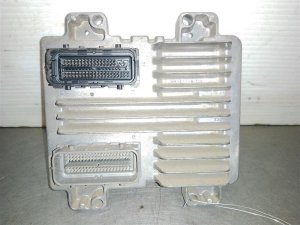
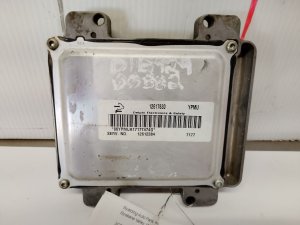
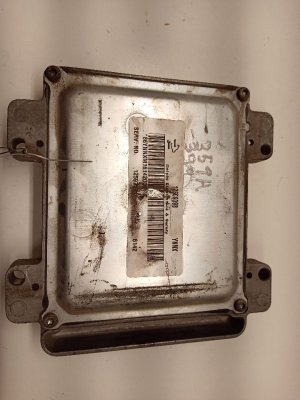
Est. part cost: $20 - $500 - Faulty Engine Control Module (ECM) ⚪ Low Probability → Shop Engine Control Module (ECM) While possible, outright failure of the ACDelco E38 ECM is less common than the wiring and connection issues listed above. Misdiagnosis is frequent.
How to confirm: This should be the last resort after all wiring, power, and ground checks have been completed. A professional would use a scope to verify the ECM is not sending signals on the CAN bus and confirm it has proper power and ground inputs before condemning the module.
Typical fix: Replace the ECM. The new module will require programming to the vehicle's VIN and specific configuration.
Est. part cost: $300 - $750
Rare But Worth Checking
- Water Intrusion in Connectors: A 2009 Escalade ESV owner on Reddit reported that driving through deep water during a storm led to a dashboard full of warnings and multiple communication codes (U0100, U0101, U0121, U0140), strongly suggesting water had compromised a critical harness connector on the underbody.
- Corroded Transmission Connector Terminals: → Shop HVAC Wiring Harness Connector Terminal TSB #08-07-30-021H notes that terminals for the high-speed GMLAN can back out of the 16-way electrical connector at the transmission (X214), causing intermittent communication loss.
- Faulty Third-Party Module: A malfunctioning module, such as an aftermarket remote starter, alarm, or even a factory module like the electronic suspension control module, can flood the CAN bus with bad data, preventing other modules from communicating. One owner found a water-damaged electronic suspension module was the cause.
Diagnosis Steps
- Check Battery Health: Ensure the battery is fully charged (12.6V+ engine off) and that the alternator is charging correctly (13.7-14.7V engine on). Clean any corrosion from terminals.
- Scan All Modules: Use a professional-grade scan tool to check for codes in ALL vehicle modules (ECM, TCM, BCM, ABS, etc.). This will show which modules are offline and which are reporting the communication loss.
- Inspect Under-hood Fuse Block: Disconnect the battery. Lift the fuse block and inspect the large connectors underneath, paying close attention to the gray connector. Ensure they are fully seated and free of corrosion.
- Check Fuses: Inspect all fuses related to the ECM, TCM, and BCM in both under-hood and interior fuse panels.
- Inspect Grounds: Carefully inspect the main engine ground connections on the engine block (G102, G104) and the frame ground under the driver's door. Physically pull on the wires at the ring terminals to ensure they are not broken inside the crimp.
- Inspect Wiring Harnesses: Following the guidance in TSB #08-07-30-021H, carefully inspect the main wiring harnesses for chafing, especially near the transmission bell housing, over the driver's side valve cover, and near the shock tower.
- Check CAN Bus Resistance: Disconnect the battery. Use a multimeter to measure the resistance between Pin 6 (CAN High) and Pin 14 (CAN Low) at the Data Link Connector (DLC). A healthy network should read approximately 60 ohms. A reading of 120 ohms indicates an open circuit or a missing termination resistor, while a reading near 0 ohms indicates a short between the two wires.
- Isolate Modules: If the resistance is incorrect or the problem is intermittent, a technician may begin disconnecting modules one by one from the CAN bus to see if communication is restored, which would isolate a faulty module that is bringing down the network.
- Verify ECM Power and Ground: If all wiring and other modules check out, use a wiring diagram to confirm the ECM itself is receiving proper power and has a solid ground before condemning the unit.
Parts You'll Likely Need
- Engine Control Module (ECM)
- Ring Terminal / Wiring Repair Supplies
Related Codes That Often Appear With This One
- U0073 — Control Module Communication Bus 'A' Off. This is a general network failure code often seen with specific module communication losses.
- U0101 — Lost Communication with TCM. The TCM and ECM are on the same high-speed network; a fault affecting one often affects the other.
- U0121 — Lost Communication with Anti-Lock Brake System (ABS) Control Module. Also on the high-speed network.
- U0140 — Lost Communication With Body Control Module (BCM). The BCM is a central hub for many vehicle functions and communicates on the same network.
Technical Service Bulletins (TSBs) & Recalls
- The primary GM bulletin for diagnosing GMLAN communication issues on GMT900 trucks. It covers symptoms like no-crank, stalling, erratic gauges, and multiple 'U' codes. It directs technicians to inspect for backed-out terminals in the transmission connector, chafed harnesses, and other wiring faults before replacing any modules.
Platform-Specific Known Issues
- A loose connector under the under-hood fuse block is a very common cause for U0100 and other communication codes on this platform.
- The wiring harness is known to chafe against the transmission bell housing, leading to shorts in the GMLAN communication wires.
Mechanic-Grade Diagnostic Values
- GMLAN Bus Resistance at DLC — expected: 60 ohms (+/- 5 ohms). Failure: A reading of ~120 ohms indicates an open circuit or a faulty termination resistor. A reading near 0 ohms indicates the CAN High and Low wires are shorted together.
- GMLAN Bus Voltage (Key On, Engine Off) — expected: CAN High (Pin 6 at DLC) should be ~2.6V. CAN Low (Pin 14 at DLC) should be ~2.4V.. Failure: Voltages that are stuck high, low, or match each other indicate a short or open on the bus.
- GMLAN Termination Resistor Resistance — expected: 110-130 ohms. Failure: A reading outside this range indicates the individual resistor has failed. The network has two of these resistors.
Scan Tool Commands That Help
- Tech2 / GDS2: Network Isolation by Disconnection — If the CAN bus resistance is incorrect or communication is intermittent, a technician can use a scan tool to monitor network status while physically disconnecting components. A key strategy is to remove the C3 (X3) connector from the under-hood fuse block, which splits the high-speed LAN into two halves, helping to isolate the source of the fault.
Wiring & Ground Locations
- G102 — Lower left front of the engine block.. This is a primary ground for multiple engine components. High resistance here can cause various unpredictable issues, including module communication loss.
- G104 — Front of the left (driver's side) cylinder head.. This is a primary engine ground point. The ECM and other modules rely on clean grounds to communicate properly.
- G103 — Front of the right (passenger's side) cylinder head.. Another critical engine ground. All major grounds on the engine block should be inspected for tightness and corrosion.
- G300 — On a body mount on the frame, located under the vehicle near the driver's door.. A corroded frame ground in this location has been documented by owners to cause widespread, intermittent electrical issues and communication codes.
- JX200 / JX201 — Splice packs located in the passenger compartment, typically behind the instrument panel near the glove box area.. These are junction points where multiple GMLAN wires are joined together. Corrosion or a poor connection inside one of these splice packs can take down the entire network or large segments of it.
Real Owner Repair Stories
- YouTube user @CHAUSTERBUFFET (2009 Cadillac Escalade) — No crank, no start, code U0100.
❌ Tried (didn't work) Not specified, diagnosis went straight to the known fuse box issue.
✅ What actually fixed it The gray wire connector under the main under-hood fuse box was loose and not clicking into place. The owner wedged a piece of paper between the connector and its housing to create a tight, secure fit, which immediately resolved the problem. - Tahoe Yukon Forum User (GMT900 Platform Vehicle (Tahoe/Yukon/Escalade family)) — Weird dash lights, erratic rear wiper, poor fuel mileage, multiple communication codes.
❌ Tried (didn't work) Not specified, diagnosis focused on grounds.
✅ What actually fixed it A main ground wire connection on the frame, located under the driver's side door, was severely corroded and had possibly fallen off. The user cleaned the contact point on the frame to bare metal and reattached the ground with a new bolt, fixing the electrical issues.
"I Checked Everything" — The Actual Cause
- A common scenario for U0100 is that all wiring harnesses pass a visual inspection for chafing, but the fault persists. The hidden cause is often a ground wire that has broken *inside* the crimped ring terminal. It looks perfectly fine and is bolted securely to the engine or frame, but has no electrical continuity. This type of failure can only be found by physically tugging on the wire (a 'pull test') or by performing a voltage drop test across the connection, which would show high resistance.
OEM Part Supersession History
Varies by year, but a common service number is 12633238→May be superseded by numbers like 12639900 for certain applications.— Internal hardware or software updates.
Heads up: Crucially, any replacement E38 ECM must be programmed with the vehicle's VIN and specific configuration using a tool like GDS2. After installation, a security key relearn procedure is required for the engine to start, and a crankshaft position variation relearn (CASE relearn) may also be necessary to prevent a P0315 code. This is not a plug-and-play part.
Model Year Variations Within This Range
- 2008-2014: On 2008 and newer models, the GMLAN high-speed network uses two 120-ohm terminating resistors. One is internal to the ECM, but the second is an external component typically mounted on the rear chassis frame. On earlier 2007 models, the second resistor may be located within a different module. This is a key difference when diagnosing a 120-ohm reading on the bus.
Helpful Videos

Used OEM Parts in Stock

New Aftermarket Parts Available

The information in this article is provided for general reference and educational purposes only. Vehicle specifications, procedures, and part compatibility can vary by production date, trim level, and region. Always consult your vehicle's factory service manual and verify part numbers before purchasing or performing repairs. Safety-critical components such as airbags, seat belts, and braking systems should be installed by a qualified professional.
- Cadillac ESCALADE ESV:
- 🧭 Diagnostic Flowchart
- 🎬 Helpful Videos
- 🛍️ Shop This Part
- What's Unique About the 2007-2014 Cadillac ESCALADE ESV
- Symptoms You May Notice
- Most Likely Causes
- Rare But Worth Checking
- Diagnosis Steps
- Parts You'll Likely Need
- Related Codes That Often Appear With This One
- Technical Service Bulletins (TSBs) & Recalls
- Platform-Specific Known Issues
- Mechanic-Grade Diagnostic Values
- Scan Tool Commands That Help
- Wiring & Ground Locations
- Real Owner Repair Stories
- "I Checked Everything" — The Actual Cause
- OEM Part Supersession History
- Model Year Variations Within This Range
- 🎟️ Get 5% Off