

U0100 on 2007-2011 Gmc YUKON DENALI XL: Lost ECM Communication Causes & Fixes
On 2007-2011 GMC Yukon Denali XLs, code U0100 usually points to a wiring problem, not a bad computer. The most common culprits are issues at the 16-pin transmission harness connector (X214), a bad engine ground (G110), or a chafed wiring harness, as cited in GM's own service bulletins. A repair can be as simple as cleaning a ground or as complex as tracing a wire.
- U0100 on this Yukon is a network communication code, not a sensor failure.
- Do not immediately assume the ECM is bad. The problem is far more likely to be in the wiring, a specific connector, or a ground.
- Start your diagnosis with the most common, well-documented failures: the transmission harness connector and the G110 engine ground.
- This code indicates a serious fault that can cause stalling or a no-start condition. The vehicle should not be driven until it is repaired.
- Due to the diagnostic complexity, professional help is recommended if the issue isn't an obvious loose/corroded connection.
What's Unique About the 2007-2011 Gmc YUKON DENALI XL
For this specific generation of GMC trucks and SUVs (the GMT900 platform), the U0100 code is very frequently linked to specific, well-documented issues. A prominent GM Technical Service Bulletin (TSB #08-07-30-021H) points directly to problems in the 16-way transmission wiring harness connector as a primary cause for this network failure. Additionally, owner forums and technicians consistently identify a specific engine ground point, G110 on the driver's side of the engine block, as a common failure point that leads to intermittent communication loss. In some cases, the wires on the G110 ground lug can break internally while appearing visually intact. These known issues provide a clear diagnostic starting point that may not exist on other vehicles.
🎬 Watch: A master tech diagnoses a Denali no-start communication fault.Diagnostic Flowchart
Tap your situation to follow the diagnostic path that matches what you're seeing on this vehicle.
Symptoms You May Notice
- Check Engine Light is on
- Transmission may not shift or gets stuck in one gear (limp mode) [TSB #08-07-30-021H, 19]
- Engine may not start or cranks but won't fire
- Engine may stall unexpectedly
- Various warning lamps on the instrument panel, such as 'Service Stabilitrak' or 'Reduced Engine Power'
- Gauges on the instrument cluster may fluctuate or stop working
- Intermittent door lock cycling or chime operation [TSB #08-07-30-021H]
- Loss of power steering assist
- PRNDL gear indicator display is blank or incorrect
- Replacing the Engine Control Module (ECM) without first ruling out all wiring and ground faults.
- Replacing the battery without testing the alternator and checking for parasitic draws.
- Replacing the throttle body or accelerator pedal for 'Reduced Engine Power' messages without addressing the U0100 communication fault first.
Most Likely Causes
- Wiring/Terminal Issues at Transmission Connector (X214) 🔴 High Probability → Shop Transmission Assembly This is a well-documented issue covered by GM TSB #08-07-30-021H. The 16-pin connector (X214) for the 6L80/6L90 transmission is exposed to the elements, and its terminals can corrode or back out, disrupting the high-speed GMLAN communication that runs through it.
How to confirm: Inspect the large electrical connector at the transmission. Disconnect it and check for any green or white corrosion, bent pins, or pins that have pushed back into the connector housing. The TSB provides a detailed inspection procedure.
Typical fix: Clean the connector terminals with a specialized contact cleaner. If terminals are damaged or backed out, the connector may need to be repinned or replaced. Applying dielectric grease to the seal can prevent future moisture intrusion.
Est. part cost: $5-$90 - Poor or Broken Engine Ground (G110) 🔴 High Probability The G110 ground, located on the driver's side rear of the engine block, is a critical grounding point for the ECM and TCM. It is prone to corrosion or becoming loose. A widely reported failure is the wire breaking inside the crimped ring terminal, appearing intact but creating an open circuit, especially when the engine torques. GM issued a bulletin (#PIE0548) to gather information on failures at this specific ground on later models.
How to confirm: Locate the G110 ground on the driver's side of the engine block, often near the back of the cylinder head. Check if the connection is clean, tight, and free of corrosion. Wiggle the wires at the terminal; if the engine stalls or symptoms change, the wire is likely broken internally. A voltage drop test from the ECM ground wire to the battery negative post will confirm a bad ground.
Typical fix: Remove the ground bolt, clean the stud, the terminal, and the engine block surface to bare metal. If the wire is broken, crimp on a new ring terminal. Reassemble securely and apply dielectric grease to prevent future corrosion. 🎬 See how to find and repair the G110 engine ground.
Est. part cost: $1-$15 - Chafed Engine Wiring Harness 🟡 Medium Probability → Shop Engine Wiring Harness The main engine harness can rub against various components. TSB #08-07-30-021H and owner forums identify common chafe points: where the harness passes over the driver's side valve cover, rubs against the ECM/TCM bracket, the shock tower bolt, or the power steering pump. This can wear through the insulation and cause the CAN bus wires (twisted pair, often Tan and Tan/Black) to short to each other or to ground.
How to confirm: Visually inspect the entire engine wiring harness, paying close attention to areas where it contacts metal parts or is tightly bent. Look for worn-through plastic loom and damaged wires inside.
Typical fix: Repair the damaged wires by soldering and heat-shrinking. Protect the repaired area with high-quality automotive tape (e.g., Tesa tape) and re-route or secure the harness to prevent future rubbing.
Est. part cost: $10-$30 - Low Battery Voltage or Failing Alternator ⚪ Low Probability → Shop Alternator
How to confirm: Test the battery with a multimeter or load tester. A healthy battery should show ~12.6V with the engine off. With the engine running, voltage should be 13.7-14.7V. A voltage drop below 9V during cranking can cause modules to drop offline.
Typical fix: Recharge or replace the battery. If charging voltage is low, the alternator may need to be replaced.
Est. part cost: $150-$400
Rare But Worth Checking
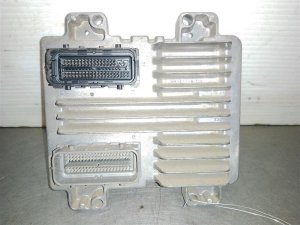
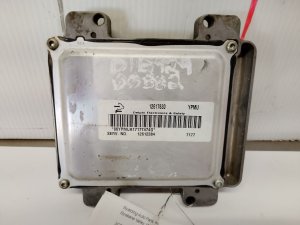
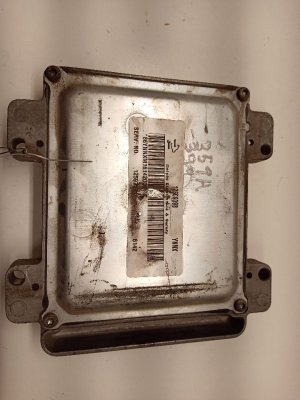
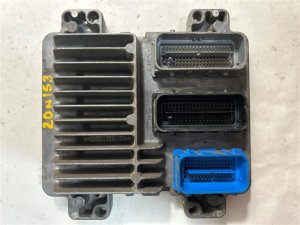
- Faulty Engine Control Module (ECM): → Shop Engine Control Module (ECM) While this is what the code seems to imply, it's rarely the actual cause. The ECM (an ACDelco E38 on these trucks) is generally reliable. All wiring and ground issues must be exhaustively ruled out before condemning the ECM. A key symptom of a truly failed ECM can be the check engine light not illuminating at all when the key is first turned to 'ON'.
- Faulty Transmission Control Module (TCM): → Shop Transmission Assembly The TCM is located inside the transmission on 6-speed models. A shorted TCM can disrupt the entire CAN bus, causing a U0100. This is a difficult and expensive repair and will usually be accompanied by a U0101 code. Often, the problem is still the wiring leading to the TCM, not the module itself.
- Loose Underhood Fuse Block Connector: → Shop Fuse Box On some GMT900 vehicles, the large multi-pin connectors on the underside of the main fuse block can become loose. This can cause a loss of power or communication to multiple modules, including the ECM. A user on a forum fixed their 2009 Escalade with U0100 by wedging the loose connector for a tighter fit. 🎬 Watch: Troubleshooting lost communication codes on Chevy and GMC trucks.
Diagnosis Steps
- Check Battery: Ensure the battery is fully charged (12.6V+) and the terminals are clean and tight. Check alternator output (13.7-14.7V) when running. Low voltage is a common cause of communication codes.
- Scan All Modules: Use a professional scan tool to see which other modules are reporting a loss of communication with the ECM. This confirms the ECM is the source of the problem.
- Inspect Grounds: Locate, remove, and clean the G110 ground on the driver's side of the engine block. Crucially, pull on the wire at the ring terminal to check for internal breaks, which is a common failure mode. Also inspect other major engine and chassis grounds like G108.
- Inspect Transmission Connector: Disconnect the 16-pin transmission harness connector (X214). Check for corrosion, moisture, or backed-out pins as per TSB #08-07-30-021H. Clean with contact cleaner and ensure a secure connection.
- Inspect Underhood Fuse Block: Lift the underhood fuse block and check that the large connectors underneath are fully seated and locked.
- Inspect Wiring Harness: Carefully inspect the engine wiring harness for any signs of chafing, melting, or damage, especially over the driver's side valve cover, near the power steering pump, and near brackets.
- Check CAN Bus Resistance: With the battery disconnected, measure the resistance between Pin 6 (CAN High) and Pin 14 (CAN Low) of the OBD-II port. A healthy network should read approximately 60 ohms. A reading of 120 ohms indicates a missing terminating resistor or a break in the wiring. A reading near 0 ohms indicates a short circuit.
- Check Power/Ground at ECM: If all else fails, use a wiring diagram to probe the power and ground pins directly at the ECM connector to ensure it's receiving proper voltage.
Parts You'll Likely Need
- Engine Control Module (ECM)
(OEM #12633238, 12612384, 12625455 (Service numbers vary by year/engine, always verify with VIN))— This is the last resort after all wiring, connector, and ground issues have been ruled out. The ECM is the module that is offline. Requires programming to the vehicle's VIN.
Trusted brands: ACDelco
OEM price range: $400-$700
Aftermarket price range: $250-$500 - Electrical Contact Cleaner — Needed for cleaning corroded terminals at the transmission connector (X214) and ground points.
Trusted brands: CRC, DeoxIT
OEM price range: $10-$20
Aftermarket price range: $5-$15 - Transmission Connector Pigtail/Body
(OEM #88988938, 15131300 (Connector body/kit numbers))— Used to repair a physically damaged or severely corroded 16-pin connector at the transmission, a very common cause of this code per TSB 08-07-30-021H.
Trusted brands: ACDelco, Rostra
OEM price range: $40-$90
Aftermarket price range: $20-$50
Related Codes That Often Appear With This One
- U0101 — Lost Communication with TCM. This often appears with U0100 because the TCM and ECM are on the same high-speed network and share common wiring paths and grounds. A fault affecting one often affects the other.
- U0073 — Control Module Communication Bus 'A' Off. This is a more general code indicating the entire high-speed GMLAN bus is down, which happens when a critical module like the ECM is offline. [TSB #08-07-30-021H, 27]
- U0121 — Lost Communication with Anti-Lock Brake System (ABS) Control Module. This indicates the network fault is widespread and affecting other critical modules on the same bus. [TSB #08-07-30-021H]
- U0140 — Lost Communication With Body Control Module. Often set with U0100, indicating a widespread network failure. [TSB #08-07-30-021H]
Technical Service Bulletins (TSBs) & Recalls
- TSB #08-07-30-021H: 'Loss of High Speed GMLAN Communications...' - This is the primary document for this issue, listing U0100 and pointing to the transmission connector, chafed wiring, and poor connections as root causes across the GMT900 platform.
- PIE0548: An engineering information request from GM to gather data on failures related to the G110 and G114 ground connections on later model trucks, indicating it's a known area of concern for the manufacturer.
Platform-Specific Known Issues
- TSB #08-07-30-021H directly addresses the loss of high-speed GMLAN communications on these vehicles. It specifically calls out checking the transmission harness connector for backed-out terminals, inspecting for chafed wiring harnesses, and checking the terminating resistors.
Mechanic-Grade Diagnostic Values
- CAN Bus Resistance at OBD-II Port (DLC) — expected: ~60 Ohms (with battery disconnected). Failure: A reading of ~120 Ohms suggests one of the two terminating resistors (often in the ECM or ABS module) is offline or there's a break in the circuit. A reading near 0 Ohms indicates a short between the CAN High and CAN Low wires.
- CAN Bus Voltage at OBD-II Port (DLC) — expected: CAN High (Pin 6) should be ~2.5-3.5V and CAN Low (Pin 14) should be ~1.5-2.5V, with both totaling ~5V. (Key On, Engine Off). Failure: Voltages that are stuck high, low, or at 0V indicate a short to power or ground on that specific line.
- Voltage Drop at Ground G110 — expected: Less than 100mV (0.1V). Failure: A reading higher than 100mV when testing between the G110 terminal and the negative battery post (with engine running and electrical loads on) indicates high resistance in the ground connection, which is a common cause of this code.
Scan Tool Commands That Help
- Tech2 / GDS2: Module Status / Network Test — This function polls all modules on the network and displays which ones are communicating and which are not. For a U0100, this command will quickly confirm that the ECM is the module that is offline, while others like the BCM, TCM, and ABS are still reporting.
- Tech2 / GDS2: Crankshaft Position (CKP) Variation Learn — This procedure, also known as a CASE relearn, is required after replacing the ECM. Failure to perform this relearn will result in a persistent Check Engine Light and potential engine performance issues, even if the U0100 code is resolved.
Wiring & Ground Locations
- G110 — On the left (driver's) side rear of the engine block, near the cylinder head.. This is a primary ground for the Engine Control Module (ECM) and Transmission Control Module (TCM). A poor connection here is a top cause of U0100 and U0101.
- G103 — On the front of the right (passenger's) side cylinder head.. This is the main battery ground connection to the engine block. Corrosion or looseness here can cause widespread electrical issues, including module communication failures.
- G104 / G108 — G104 is on the left front corner of the engine, mounted to the left cylinder head. G108 is a ground strap located in a similar area.. These grounds serve various engine components and sensors. While less common culprits than G110 for this specific code, they should be inspected as part of a thorough ground check.
- X214 — The 16-pin main electrical connector on the side of the transmission.. The high-speed GMLAN communication lines run through this connector. As cited in TSB #08-07-30-021H, it is highly susceptible to moisture and terminal damage, which can take down the entire network.
- ECM Connector X1/J1 — The main connectors at the Engine Control Module (E38), typically mounted on the left side of the engine.. The GMLAN High Speed network wires are located at Pins 45 (TAN/BLK) and 46 (TAN) on the X1 connector. Technicians can test for continuity and voltage directly at these pins to isolate a fault to the ECM itself or the harness.
- Terminating Resistors — These vehicles have two 120-ohm terminating resistors. One is typically internal to the ECM (E38). The other is often located in the ABS module (EBCM) or, on some models, in a separate plug near the rear of the vehicle above the spare tire.. The CAN bus requires exactly two terminating resistors to function. If a module containing a resistor fails or a wire breaks leading to it, the bus resistance will change from 60 ohms to 120 ohms, causing communication to fail.
Real Owner Repair Stories
- Tahoe Yukon Forum (2007 Tahoe (GMT900 Platform)) — No crank, registers key turn but starter only engages via scan tool command. Multiple U-codes including U0100.
❌ Tried (didn't work) Checking grounds, checking wiring harnesses, inspecting connectors.
✅ What actually fixed it The ABS module had failed internally. Because the Fuel Pump Control Module (FPCM) communicates through the ABS module to the ECM on this platform, the bad ABS module was preventing the ECM from allowing the engine to crank. Replacing the ABS module resolved the no-crank and the U0100 code. - Tahoe Yukon Forum (GMT900 Platform Vehicle) — Intermittent no-start, gauges going crazy, multiple warning lights. Occurred after driving through a mud puddle.
❌ Tried (didn't work) Initial visual inspection of grounds looked fine.
✅ What actually fixed it The ground wires under the driver and rear seats were corroded internally. After cutting back the insulation, green corrosion was found inside the wire strands despite the terminal looking clean. Cleaning the wire, applying flux, and flowing solder into the strands to remake the connection fixed the problem. - Chevrolet Forum (2007 Tahoe (GMT900 Platform)) — Multiple communication codes including U0100, U0101, U0073. Transmission issues.
❌ Tried (didn't work) Initial diagnosis was inconclusive.
✅ What actually fixed it The issue was finally resolved by the dealer, though the specific repair was not detailed by the owner, it fixed a cluster of communication codes (P0700, P2544, U0073, U0100, U0101), pointing towards a single harness or module fault that affected both ECM and TCM communication.
OEM Part Supersession History
12597121, 12612384→12625455, 12633238— Internal hardware and software revisions by GM over the model years.
Heads up: While later part numbers may physically fit, they may not be compatible with earlier model years due to changes in operating systems and hardware (e.g., changes to throttle body control in 2009). It is critical to use an ECM with the correct service number and operating system for the vehicle's specific year and VIN. Flashing an incompatible OS can brick the module.
Model Year Variations Within This Range
- 2009: Many 2009 model year vehicles received a new throttle body design. This change required a different calibration within the E38 ECM. Using an ECM from a 2007-2008 model on a 2009 vehicle (or vice-versa) without correct programming can lead to throttle-related issues, even if the U0100 code is resolved.
Helpful Videos
Used OEM Parts in Stock

New Aftermarket Parts Available

The information in this article is provided for general reference and educational purposes only. Vehicle specifications, procedures, and part compatibility can vary by production date, trim level, and region. Always consult your vehicle's factory service manual and verify part numbers before purchasing or performing repairs. Safety-critical components such as airbags, seat belts, and braking systems should be installed by a qualified professional.
- Gmc YUKON DENALI XL:
- 🧭 Diagnostic Flowchart
- 🎬 Helpful Videos
- 🛍️ Shop This Part
- What's Unique About the 2007-2011 Gmc YUKON DENALI XL
- Symptoms You May Notice
- Most Likely Causes
- Rare But Worth Checking
- Diagnosis Steps
- Parts You'll Likely Need
- Related Codes That Often Appear With This One
- Technical Service Bulletins (TSBs) & Recalls
- Platform-Specific Known Issues
- Mechanic-Grade Diagnostic Values
- Scan Tool Commands That Help
- Wiring & Ground Locations
- Real Owner Repair Stories
- OEM Part Supersession History
- Model Year Variations Within This Range
- 🎟️ Get 5% Off