

U0100 on 2006-2010 Hyundai Sonata: Lost Communication With ECM Fixes
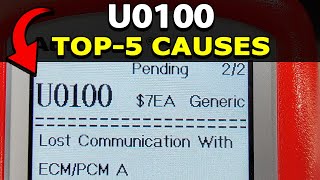
This code means the Engine Control Module (ECM) has lost communication. The most likely causes are a weak battery, poor ground connections, or damaged wiring. A faulty ECM is possible but less common. Start by testing the battery and checking all engine bay grounds before suspecting expensive components.
- U0100 is a critical code on a 2006-2010 Sonata, often causing a no-start or stalling condition. Do not drive the vehicle.
- Always start diagnosis with the simplest things: test the battery and clean all main power and ground connections, especially the one under the battery tray.
- A faulty ECM is a possible cause, but it's less likely than a problem with its power supply, ground, or the wiring harness connected to it.
- Due to the complexity of network diagnostics, this code is best handled by a professional with the right tools and experience.
What's Unique About the 2006-2010 Hyundai Sonata
The 2006-2010 Hyundai Sonata (generation 'NF') does not have a widely documented, unique design flaw that makes it exceptionally prone to the U0100 code. The causes are typical for CAN bus communication failures across many vehicles. However, owners should pay special attention to the main ground strap under the battery tray and the ECM connector itself, as these are common failure points mentioned in owner forums. Diagnosis should follow a standard, logical path starting with the simplest and most common electrical issues like battery power and ground connections before moving to more complex wiring or module diagnostics.
Symptoms You May Notice
- Engine will not start, or cranks but does not start
- Intermittent stalling while driving
- Check Engine Light is on (may be intermittent or fail to illuminate at all due to the communication error)
- Multiple other warning lights may illuminate (ABS, TCS, Airbag)
- Transmission may be stuck in one gear (limp mode)
- Reduced engine power or poor acceleration
- Erratic or non-functional gauges on the instrument cluster
- Replacing the ECM without first thoroughly checking all power, ground, and wiring connections. A simple bad ground can mimic a failed ECM.
Most Likely Causes
- Weak Battery or Poor Electrical Connection 🔴 High Probability → Shop Vehicle Battery Vehicle control modules are sensitive to voltage. A battery below 12.4V, corroded terminals, or a failing alternator can cause communication to drop out. This is the most common and easiest to fix cause.
How to confirm: Test the battery voltage at rest (should be >12.4V) and while cranking (should stay >10V). Inspect battery terminals and main chassis grounds for corrosion or looseness. Pay particular attention to the ground strap located under the battery tray.
Typical fix: Clean battery terminals and ground points with a wire brush. Charge or replace the battery if it fails a load test.
Est. part cost: $100-$250 - Damaged Wiring Harness or Connectors 🟡 Medium Probability Wiring can become damaged over time from vibration, heat, or rodent activity. The main ECM connector and the harness section near the exhaust are key areas to inspect.
How to confirm: Visually inspect the wiring harness going to the ECM for any signs of chafing, melting, or breaks. Unplug the ECM connector (with battery disconnected) and check for corroded, bent, or loose pins. Water intrusion into connectors is a known issue.
Typical fix: Repair the damaged section of wire. Clean or replace the affected connector pins. In severe cases, the entire engine harness may need replacement.
Est. part cost: $10-$800 - Faulty ECM Power or Ground Circuit 🟡 Medium Probability
How to confirm: Using a multimeter and a wiring diagram for the vehicle, verify that the ECM is receiving proper battery voltage and has a solid ground connection at its connector pins. Poor grounds are a common and often overlooked cause. A specific ground point to check on the NF Sonata is located on the driver's side inner fender, near the battery.
Typical fix: Repair the open or short in the power or ground wire. Clean and secure the ECM's main ground point on the chassis.
Est. part cost: $5-$100 - Failed Engine Control Module (ECM) ⚪ Low Probability → Shop Engine Control Module (ECM)
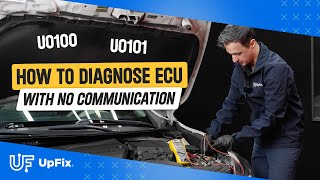
How to confirm: This is diagnosed by exclusion. If the battery, all power/ground circuits, and all CAN bus wiring have been tested and confirmed to be good, the ECM itself is the likely point of failure. A professional scan tool that cannot communicate with the ECM at all 🎬 See how to diagnose an ECM with no communication. points towards a failed module. Sometimes a failed ECM may have visible burn marks on the circuit board.
Typical fix: Replace the ECM. The new module will require programming to the vehicle's specific VIN and options.
Est. part cost: $800-$1200
Rare But Worth Checking
- CAN Bus Network Fault: The issue might not be the ECM itself, but a problem elsewhere on the network. Another module could be shorting the bus, or a terminating resistor could have failed. This requires advanced diagnostics to check network resistance (~60 Ohms) and signal waveforms.
- Aftermarket Device Interference: A poorly installed remote starter, alarm, or GPS tracker spliced into the CAN bus wiring can disrupt communication and trigger this code.
- Faulty Fuse Box / Junction Block: An internal short or corrosion within the under-hood fuse box can interrupt power to the ECM or corrupt the CAN bus signals that pass through it. This has been noted as a cause for shifting issues and can be related to communication codes.
Diagnosis Steps
- Check and record any other stored fault codes. Multiple 'U' codes suggest a network-wide problem.
- Perform a full battery and charging system test. Ensure battery voltage is above 12.4V and terminals are clean and tight.
- Inspect all relevant fuses in the engine bay and interior fuse panels, particularly any labeled 'ECM', 'PCM', or 'ECU'.
- Conduct a thorough visual inspection of the wiring harness to the ECM. Look for any signs of physical damage, melting near exhaust components, or rodent damage.
- Inspect the ECM connectors for corrosion, moisture, or backed-out pins. Ensure they are securely connected.
- Locate and inspect the main engine and ECM ground points on the chassis and engine block. On the NF Sonata, pay close attention to the ground strap under the battery and on the inner fender. Ensure they are clean, tight, and free of corrosion.
- If tools are available, disconnect the battery and measure the resistance between Pin 6 (CAN-H) and Pin 14 (CAN-L) on the OBD-II port. A healthy network should read approximately 60 ohms. A reading of 120 ohms suggests an open circuit or a failed terminating resistor, while 0 ohms indicates a short circuit.
- If all wiring, power, and grounds are confirmed good, the final step is to suspect a faulty ECM.
Parts You'll Likely Need
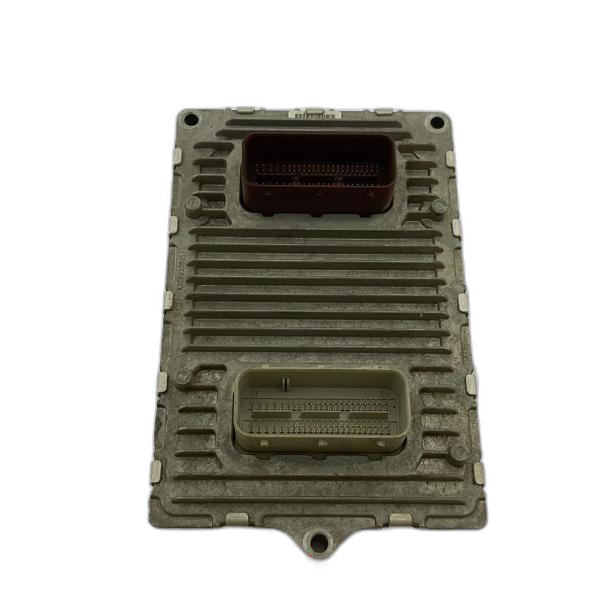
- Engine Control Module (ECM)
(OEM #Varies by year/engine. Ex: 39110-3C465 (for 3.8L V6). Always verify with VIN.)— This part is only needed if all wiring, power, and ground issues have been ruled out. It is the 'brain' of the system and can fail internally.
Trusted brands: Hyundai (OEM)
OEM price range: $800-$1200
Aftermarket price range: $400-$800 (Remanufactured)
Related Codes That Often Appear With This One
- U0101 — Lost Communication with TCM. The Transmission Control Module (TCM) is on the same high-speed CAN network, and a network-wide failure will often cause communication loss codes for multiple modules.
- U0121 — Lost Communication with ABS Control Module. Like the TCM, the ABS module is on the same network and will report a fault if the ECM goes offline.
- P0562 — System Voltage Low. This code often accompanies U0100 and strongly points to a failing battery or charging system as the root cause of the communication failure.
- P0630 — VIN Not Programmed or Mismatch in ECM/PCM. This code will appear if a replacement ECM has been installed but not correctly programmed with the vehicle's VIN.
Platform-Specific Known Issues
- Corroded Ground Strap Under Battery: → Shop Engine Ground Strap Several owners on forums like hyundai-forums.com have reported that the main ground strap located beneath the battery tray is a common point of corrosion, leading to intermittent electrical issues including U0100.
Mechanic-Grade Diagnostic Values
- CAN Bus Network Resistance — expected: ~60 Ohms. Failure: A reading of ~120 Ohms indicates an open circuit or missing terminating resistor. A reading near 0 Ohms indicates a short between CAN High and CAN Low.
- CAN High Voltage (Key On, Engine Off) — expected: ~2.5V to 3.0V (measured between CAN-H pin and chassis ground). Failure: Significant deviation from this range indicates a bus fault.
- CAN Low Voltage (Key On, Engine Off) — expected: ~2.0V to 2.5V (measured between CAN-L pin and chassis ground). Failure: Significant deviation from this range indicates a bus fault.
- ECM Power Ground Voltage Drop — expected: Max 50 mV. Failure: A higher voltage reading indicates excessive resistance in the ground circuit, which can cause module communication issues.
Scan Tool Commands That Help
- Hyundai GDS / GDS-Mobile: Write VIN — This function is mandatory after installing a new or used ECM/PCM. It programs the vehicle's VIN into the module. Failure to perform this step will result in a no-start condition and will set fault code P0630.
- Hyundai GDS / GDS-Mobile: ECU Upgrade — Used to flash the ECM with updated software from Hyundai. This may be required to fix software-related bugs or performance issues, and is sometimes specified in a Technical Service Bulletin (TSB).
- Hyundai GDS / GDS-Mobile: Resetting A/T Values — This function resets the transmission's adaptive learning values. It is often recommended after replacing or reprogramming the ECM to ensure proper communication and shift quality between the engine and transmission controllers.
Wiring & Ground Locations
- ECM Location — In the engine compartment, mounted to the firewall, typically behind the air filter housing assembly.. This is the primary module in question. Physical inspection of its connectors for corrosion, damage, or looseness is a key diagnostic step.
- Main Engine Ground Strap — Typically runs from the engine block or transmission housing to the chassis, often located under or near the battery tray.. This is a critical ground path for the entire powertrain. Corrosion or looseness here is a very common cause of intermittent electrical problems and communication codes like U0100.
- G09 (Example) — On the left front shock tower (for 2006 models).. This is an example of a chassis ground point. All ground points in the engine bay should be inspected for being clean, tight, and free of corrosion as they can affect module operation.
- Data Link Connector (OBD-II Port) — Under the driver's side dash, to the left of the steering column.. This is the primary access point for network diagnostics. CAN-H is Pin 6 and CAN-L is Pin 14. Resistance and voltage tests are performed here to assess the health of the entire network.
Real Owner Repair Stories
- 2CarPros Forum User (Hyundai Sonata (year not specified, but NF generation implied)) — No crank, no start, all dash lights go blank when trying to start, clicking from the fuse box, U0100 code present.
❌ Tried (didn't work) Replacing the engine wiring harness with a used one, programming a new key fob, testing the starter (it worked).
✅ What actually fixed it The user suspected a bad battery after the initial attempts failed. The final resolution was not posted, but the primary advice given by the mechanic was to meticulously check all ground wire connections, as they are easily overlooked after a harness swap and are a common cause for these exact symptoms. - Sonic Owners Forum User (Chevy, but analogous problem) (Chevrolet Sonic) — After major engine work, car started once then died. Subsequently had a no-crank, no-start with just a click. Battery was found to be dead (<5V). After replacing the battery, the car still would not crank and showed code U0100.
❌ Tried (didn't work) Swapping with a spare ECM.
✅ What actually fixed it The user noticed the anti-theft warning light was on. The root cause was the immobilizer being activated due to the complete power loss from the dead battery. The U0100 code was a symptom of the immobilizer cutting off communication with the ECM. The fix required performing a security relearn procedure.
Model Year Variations Within This Range
- 2009-2010: The Sonata received a significant facelift for the 2009 model year. The 2.4L and 3.3L engines were updated for more power, the interior and audio systems were completely redesigned, and the automatic transmission was refined. These changes mean that ECMs, wiring harnesses, and other electronic modules are likely not interchangeable between the 2006-2008 and 2009-2010 models. Part numbers must be matched with extra care for these later years.
- 2008-2010 (2.4L): Part numbers for the 2.4L engine ECM can vary based on production date and emissions standards (Federal vs. California). For example, part number 39100-2G330 is specified for 2.4L models with an automatic transmission built up to July 7, 2008, for federal emissions. Another part number, 39110-2G330, is listed for manual transmission models in the same period. This highlights the need to verify the exact part number on the original unit.
Diagnostic Flowchart
Other Known Issues on This Vehicle
Issues unrelated to this code that are worth knowing about as an owner of this generation:
- Rear Subframe Corrosion 🔴 High — Common in 'Salt Belt' states, leading to a recall (NHTSA Campaign ID: 13V113000). Can occur elsewhere over time. (Ref: Recall 110 / NHTSA 13V113000)
- Failing Sun Visors 🟡 Low — Extremely common. The visor's internal mechanism fails, causing it to droop and not stay in the stowed position. A service campaign was issued for some models. (Ref: TSB 09-BE-003-1 (for other models, but same issue))
- Theta II Engine Failure (2.4L) 🔴 High — While more prominent in later GDI engines, the early MPI Theta II engines in this generation can still suffer from issues like timing chain tensioner failure and oil consumption. (Ref: Related to later, larger recalls and lawsuits for Theta II engines.)
- Harsh Shifting / Output Speed Sensor Failure 🟠 Medium — A common issue causing erratic shifting, often accompanied by code P0722. The output speed sensor on the transmission fails.
- Failing Accelerator Pedal Position Sensor 🟠 Medium — Can cause the vehicle to enter 'limp mode' with reduced power. The sensor is integrated into the accelerator pedal assembly and requires replacement of the whole unit.
Used vs. New Parts: Buying Guide for This Vehicle
When a used part is the smart pick: A used OEM ECM from a junkyard or online retailer is a very common and cost-effective repair strategy. Since the part itself is often not the original point of failure (wiring/grounds are more common), a used module in good condition is a viable option, provided it is programmed correctly.
Donor-vehicle mileage cap: roughly under 150000 miles for the part to have meaningful remaining life.
What to inspect on the donor part:
- Part number MUST be an exact match to the original unit.
- Inspect the connector pins for any signs of corrosion (green or white powder), which indicates water damage.
- Check the casing for any cracks, pry marks, or broken mounting tabs.
- Source from a reputable seller that offers a warranty and guarantees the part is from a running vehicle if possible.
OEM-only on this vehicle (don't cheap out):
- Engine Control Module (ECM)
Aftermarket brands forum-validated for this vehicle:
- N/A - No new aftermarket (non-remanufactured) ECMs are commonly available. Focus on used OEM or professional remanufacturing/cloning services.
Brands owners have reported issues with on this vehicle:
- N/A
Real Owner Stories
Aggregated from forums and TSBs cited above. Mileages and costs reflect what owners reported in those sources.
2006-2010 Hyundai Sonata (NF)
Symptoms: Intermittent electrical issues and a no-start condition accompanied by the U0100 code.
What fixed it: Cleaning and replacing the main ground strap located beneath the battery tray, which was heavily corroded.
Source hint: hyundai-forums.com
2006-2010 Hyundai Sonata (NF)
Symptoms: The vehicle would not start and threw a U0100 code after a previous repair.
What fixed it: Verifying the correct wiring harness was used and checking all ground wire connections.
Source hint: 2CarPros.com
Related OBD-II Codes
Frequently Asked Questions
I'm seeing U0100 on my 2006-2010 Sonata; could this be related to the rear subframe corrosion recall?
My Sonata is stuck in one gear and won't shift. Is this a symptom of U0100?
Where is the most common ground point to check for U0100 on an NF Sonata?
Can a bad accelerator pedal cause a U0100 code on my 2008 Sonata?
Is there a TSB for the sun visor issue that might be related to my electrical codes?
My mechanic says I need a new ECM for my 2007 Sonata. Can I use a used one?
Helpful Videos
We Have This Part in Stock

The information in this article is provided for general reference and educational purposes only. Vehicle specifications, procedures, and part compatibility can vary by production date, trim level, and region. Always consult your vehicle's factory service manual and verify part numbers before purchasing or performing repairs. Safety-critical components such as airbags, seat belts, and braking systems should be installed by a qualified professional.
- Hyundai Sonata:
- 🧭 Diagnostic Flowchart
- 🎬 Helpful Videos
- 🛍️ Shop This Part
- What's Unique About the 2006-2010 Hyundai Sonata
- Symptoms You May Notice
- Most Likely Causes
- Rare But Worth Checking
- Diagnosis Steps
- Parts You'll Likely Need
- Related Codes That Often Appear With This One
- Platform-Specific Known Issues
- Mechanic-Grade Diagnostic Values
- Scan Tool Commands That Help
- Wiring & Ground Locations
- Real Owner Repair Stories
- Model Year Variations Within This Range
- Other Known Issues on This Vehicle
- Used vs. New Parts: Buying Guide for This Vehicle
- Real Owner Stories
- 2006-2010 Hyundai Sonata (NF)
- 2006-2010 Hyundai Sonata (NF)
- Related OBD-II Codes
- Frequently Asked Questions
- 🎟️ Get 5% Off