

U0100 on 2003-2009 Kia Sorento: Lost Communication with ECM/PCM Causes and Fixes
This code means the Engine Control Module (ECM) has stopped communicating with other modules. The most common causes are poor battery connections, bad grounds, or wiring issues. A failing ECM is also possible but less common. Expect to start with basic electrical checks, paying special attention to main engine bay ground points on the fender and intake manifold before suspecting expensive parts.
- U0100 on a 2003-2009 Sorento indicates a critical communication failure with the engine computer.
- Do not drive the vehicle. It is unsafe due to the high risk of the engine stalling without warning.
- Always start diagnostics by checking the simplest things first: the battery, its connections, and all related fuses.
- Thoroughly inspect power and ground wires to the ECM before considering replacing the expensive computer itself.
- This is a complex electrical fault; professional diagnosis is strongly recommended if you are not experienced with automotive electrical systems.
What's Unique About the 2003-2009 Kia Sorento
For the first-generation (2003-2009) Kia Sorento, which is a body-on-frame SUV, electrical issues like bad grounds and corroded wiring are common as the vehicles age. The U0100 code is frequently a symptom of these underlying electrical problems rather than an outright failure of the ECM itself. Owners often find that tracing and cleaning ground points (specifically on the intake manifold and driver's side fender) or repairing a section of the wiring harness resolves the communication loss without needing to replace the expensive engine computer. The ECM's location in the engine bay also makes its connectors susceptible to moisture and corrosion over time.
Symptoms You May Notice
- Engine will not start (no-start or crank-no-start)
- Engine stalls while driving
- Check Engine Light is on
- Multiple other warning lights may illuminate (ABS, TCS, etc.)
- Transmission may not shift correctly or may be stuck in one gear (limp mode)
- Scan tool cannot communicate with the ECM/PCM
- Instrument cluster gauges may drop to zero or go blank intermittently
- Replacing the ECM without first verifying its power and ground circuits are intact. A good ECM cannot function without proper power.
- Replacing other control modules (like the TCM or ABS module) that are reporting the U0100 code. These modules are correctly reporting that they cannot hear the ECM; they are not the source of the problem.
Most Likely Causes
- Weak Battery or Poor Battery Connections 🔴 High Probability → Shop Vehicle Battery All modern vehicles are sensitive to low voltage. As a vehicle ages, battery performance degrades and terminal corrosion becomes more likely. A voltage drop is a primary cause of communication codes.
How to confirm: Test the battery voltage with a multimeter. A healthy, fully charged battery should read about 12.6 volts with the engine off. Check that the battery terminals are clean and tight. A load test is the most definitive way to confirm battery health.
Typical fix: Clean the battery terminals and cable ends with a wire brush. If the battery is old or fails a load test, replace it.
Est. part cost: $100-$250 - Faulty ECM/PCM Power or Ground Connections 🟡 Medium Probability Ground straps and connections can corrode or break over time, especially on older body-on-frame vehicles exposed to moisture and road salt. This interrupts the power supply or ground path required for the ECM to function. Specific problem areas on the Sorento are the grounds on the intake manifold and the main chassis ground on the driver's side inner fender.
How to confirm: Visually inspect the main engine and chassis ground straps for corrosion or damage. Use a multimeter to perform a voltage drop test on the ECM's power and ground circuits to ensure it's receiving proper voltage. This requires a vehicle-specific wiring diagram.
Typical fix: Disassemble, clean, and tighten corroded ground connections. Replace corroded or broken ground straps and wiring connectors.
Est. part cost: $10-$50 - Damaged Wiring Harness (CAN Bus) 🟡 Medium Probability The wiring harness can be damaged by chafing against engine components, heat, or rodents. A short or open in the CAN bus wiring will sever communication. Owners have reported issues with the C125 connector, a major junction in the engine bay.
How to confirm: Visually inspect the wiring harness leading to the ECM for any signs of physical damage, melting, or corrosion. An advanced diagnostic step is to check for 60 ohms of resistance across the CAN-High and CAN-Low pins (usually pins 6 and 14) at the OBD-II port with the battery disconnected.
Typical fix: Repair the damaged section of the wiring harness. This may involve soldering in a new piece of wire and protecting it with heat shrink tubing.
Est. part cost: $5-$100 - Blown Fuse or Faulty ECM Main Relay ⚪ Low Probability
How to confirm: Check the vehicle's fuse boxes (both in the cabin and under the hood) for any fuses labeled 'ECM', 'PCM', 'ECU', or 'ENGINE'. In the under-hood fuse box, locate the ECM Main Relay and swap it with a known good relay of the same type (e.g., the horn relay) to see if the problem resolves.
Typical fix: Replace the blown fuse or faulty relay.
Est. part cost: $1-$25
Rare But Worth Checking
- Failed Engine Control Module (ECM/PCM): → Shop Engine Control Module (ECM) While this is the component that has lost communication, it's often not the root cause. All other possibilities (power, ground, wiring) must be ruled out before condemning the ECM. Internal hardware failure can occur due to age, heat, or voltage spikes, but it is much less common than a wiring or ground fault.
Diagnosis Steps
- Check the battery. Ensure it is fully charged (12.6V+) and the terminals are clean and tight.
- Scan for codes in all available modules. Note which modules are reporting U0100 and which modules are not communicating at all.
- Check all fuses related to the ECM/PCM and ignition system. Specifically check fuses labeled 'ECM', 'ECU', and 'ENGINE' in both the interior and under-hood fuse panels.
- Swap the ECM Main Relay in the under-hood fuse box with an identical relay from a non-critical system (like the horn) and see if communication is restored.
- Visually inspect the wiring harness to the ECM for any obvious damage, chafing, or corrosion. Pay close attention to where the harness may rub against the engine or chassis.
- Locate and inspect the main engine and chassis ground connections. On the Sorento, pay special attention to the ground point on the intake manifold and the main chassis ground on the driver's side inner fender near the battery. Disassemble, clean, and re-secure them even if they look okay.
- Using a wiring diagram, identify the power and ground pins at the ECM connector. With the key on, verify that the ECM is receiving battery voltage on the appropriate power pins and has a good ground.
- With the battery disconnected, measure the resistance between the CAN bus pins (Pin 6 and Pin 14) at the OBD-II port. A healthy network should read approximately 60 Ohms.
- If all power, ground, and network wiring checks out, the ECM itself is likely faulty.
Parts You'll Likely Need
- Engine Control Module (ECM/PCM)
(OEM #Varies by year and engine (e.g., 39110-39XXX series for 3.5L V6). Must be matched to VIN.)— This is the part that needs to be replaced if it has failed internally, after all other wiring and power issues have been ruled out. A replacement often requires programming by a dealer or specialized shop.
Trusted brands: Kia (OEM), Bosch
OEM price range: $800-$1200
Aftermarket price range: $300-$600 (Remanufactured) - Battery — A weak or failing battery is a very common cause of communication codes due to low system voltage.
Trusted brands: Interstate, DieHard, Duralast
OEM price range: $180-$300
Aftermarket price range: $100-$250 - ECM Main Relay
(OEM #e.g., 95224-2D000)— A faulty relay can cut power to the ECM, causing a total loss of communication. It's a cheap and easy part to replace as a diagnostic step.
Trusted brands: Kia (OEM), Standard Motor Products
OEM price range: $15-$30
Aftermarket price range: $10-$20
Related Codes That Often Appear With This One
- U0101 — This code means 'Lost Communication with TCM'. If the main CAN bus network is down or the ECM (which often acts as a gateway) is offline, communication with the Transmission Control Module will also be lost.
- U0001 — This code indicates a High-Speed CAN Communication Bus fault. It often appears with U0100 and points to a problem with the network wiring itself, rather than a single module.
Technical Service Bulletins (TSBs) & Recalls
- TSB KT2006071101 - This TSB provides diagnostic procedures for CAN system issues and U-code
Platform-Specific Known Issues
- On the 2003-2006 models, the ECM is located in the engine bay on the passenger side near the firewall, making it susceptible to heat and moisture over time.
- Corrosion at the main chassis ground points is a known issue on aging Sorentos and can cause a wide range of electrical problems, including U0100. The most cited locations are on the intake manifold and the driver-side inner fender.
- The main ECM power relay in the under-hood fuse box has been identified by owners as a point of failure, causing intermittent no-start and U0100 codes.
Mechanic-Grade Diagnostic Values
- CAN Bus Resistance — expected: Approximately 60 Ω (Ohms) between Pin 6 (CAN-H) and Pin 14 (CAN-L) at the OBD-II port with the battery disconnected.. Failure: A reading of 120 Ω indicates one of the two terminating resistors is offline. A reading near 0 Ω indicates a short between the CAN lines.
- CAN Bus Voltage (Key On, Engine Off) — expected: CAN-High (Pin 6) should be approx. 2.6V. CAN-Low (Pin 14) should be approx. 2.4V.. Failure: Voltages that are the same (e.g., both 2.5V) may indicate a short between the lines. Both at 0V could be a short to ground.
- ECM Power Supply (3.5L V6) — expected: Battery voltage (approx. 12.6V) at Pins 47, 68, and 99 of the ECM connector (Plug C-50 & C-5) with key on.. Failure: Voltage below 10V during cranking or no voltage indicates a power supply issue from the main relay or fuse.
- ECM Ground (3.5L V6) — expected: Continuity to chassis ground (less than 0.2 Ω) at Pin 46 of the ECM connector (Plug C-50).. Failure: High resistance indicates a corroded or broken ground connection, a common issue on these vehicles.
Scan Tool Commands That Help
- Kia GDS (Global Diagnostic System): ECU Initialization / VIN Programming — This function is required after replacing the ECM/PCM to program the vehicle's VIN and sync it with the immobilizer and other modules. A generic scanner cannot perform this function.
- Kia GDS (Global Diagnostic System): CAN Line Inspection / Network Topology — To view the status of all modules on the CAN bus network. This helps identify which modules are online and communicating, and which one (in this case, the ECM) is offline. It's a primary step in diagnosing any U-series code.
- Kia GDS (Global Diagnostic System): Flight Record / Trigger Module — For intermittent U0100 codes. This function allows the technician to record vehicle data during a drive cycle to capture the exact moment the communication loss occurs, which is invaluable for diagnosing faults that don't happen in the shop.
Wiring & Ground Locations
- ECM Main Relay — Located in the main engine compartment fuse/relay box, typically near the battery.. This relay supplies the primary power to the ECM. If it fails, the ECM has no power and cannot communicate, directly causing a U0100 code.
- ENGINE Fuse (10A) — In the instrument panel fuse box (driver's side dash) for 2003-2006 models.. This fuse protects circuits related to the PCM, speed sensor, and instrument cluster. A blown fuse here will cut power or critical signals to the ECM.
- P/TRN Fuse (10A) — In the engine compartment fuse box for 2003-2006 models.. This fuse specifically protects the PCM and the Main Relay coil circuit. Its failure is a direct cause of ECM power loss.
- ECM Ground (Intake Manifold) — A ground wire bolted directly to the upper intake manifold. This is a well-documented problem area.. This is a primary ground point for the ECM. Corrosion or a loose connection here creates high resistance, starving the ECM of a proper ground and causing communication failure.
- Chassis Ground (Driver's Fender) — A main ground strap from the battery negative terminal to the chassis on the driver's side inner fender, near the battery.. This is the main ground for the entire vehicle's electrical system. Corrosion here can cause widespread low voltage and communication issues across all modules.
Real Owner Repair Stories
- Kia-Forums.com user (2005 Kia Sorento EX 3.5L) — Crank no start, U0100 code, no communication with ECM, but could communicate with TCM.
❌ Tried (didn't work) Checking all fuses, Swapping relays
✅ What actually fixed it The user found a corroded ground wire on the upper intake manifold. After removing the bolt, cleaning the terminal and the manifold surface with a wire brush, and re-securing the connection, the vehicle started and the code was resolved.
Model Year Variations Within This Range
- 2003-2006: These models use the 3.5L Sigma V6 engine. The ECM (part numbers often in the 39110-39xxx series) and fuse box (part 91160-3E000) are specific to this generation. The most commonly cited issues with grounds on the intake manifold are prevalent on these years.
- 2007-2009: These facelift models introduced the 3.8L Lambda and 3.3L Lambda V6 engines. The ECM and wiring architecture were updated. While still susceptible to general electrical issues, the specific part numbers and some failure points differ from the earlier generation. A recall (NHTSA 20V088000) for some 2007-2009 models involved installing a relay in the main fuse box to prevent an ABS module short, indicating potential electrical vulnerabilities in this area.
Diagnostic Flowchart
Other Known Issues on This Vehicle
Issues unrelated to this code that are worth knowing about as an owner of this generation:
- Crankshaft Pulley Bolt Failure (3.5L V6) 🔴 High — Common on 2003-2006 models with the 3.5L V6. The bolt can back out or shear, causing a loss of all belt-driven accessories (power steering, alternator) and can lead to catastrophic engine damage. (Ref: A class action lawsuit was settled regarding this issue, but the claim period has passed.)
- Severe Frame Rust 🔴 High — Widespread on vehicles used in salt-belt states. The rear frame section, particularly around suspension mounting points, is prone to severe corrosion, potentially making the vehicle unsafe to drive. (Ref: Kia issued Voluntary Service Campaign SC264 for certain models to apply additional anti-corrosion materials, but severe cases may be beyond repair.)
- Oil Pump Bolt Loosening (3.5L V6) 🟠 Medium — Less common than the crank bolt issue, but documented by owners. Bolts securing the oil pump can back out, leading to a sudden loss of oil pressure and potential engine damage.
- Stop Lamp Switch Failure 🟡 Low — Common across many Kia/Hyundai models of this era. A faulty switch can prevent brake lights from working, cause the ESC light to illuminate, and prevent shifting out of Park. (Ref: Recall RC072 and RC084B were issued for this problem on 2006-2008 models.)
Used vs. New Parts: Buying Guide for This Vehicle
When a used part is the smart pick: A used Engine Compartment Fuse Box (Main Junction Block) is an excellent candidate for a used part, as it is a simple plug-and-play component without programming. Relays are also easily sourced from a donor vehicle for testing or replacement.
Donor-vehicle mileage cap: roughly under 150000 miles for the part to have meaningful remaining life.
What to inspect on the donor part:
- For a fuse box, inspect ALL terminals, top and bottom, for any signs of white or green corrosion.
- Check for any melted plastic around the high-amperage fuse slots, which indicates a past major short circuit.
- Ensure the donor vehicle is from a dry climate to minimize moisture-related issues.
- Verify the part number on the fuse box (e.g., 91160-3E000 for 03-06 models) matches exactly.
OEM-only on this vehicle (don't cheap out):
- Engine Control Module (ECM/PCM). While remanufactured units can work, they have a higher failure rate. A new OEM unit or a used OEM unit from a reputable source that offers programming services is the safest bet to avoid compatibility issues.
Aftermarket brands forum-validated for this vehicle:
- For relays, brands like Standard Motor Products (SMP) or Bosch are generally considered reliable replacements for OEM.
Brands owners have reported issues with on this vehicle:
- Avoid unbranded, no-name ECM/PCM repair services or remanufactured units from online marketplaces without a lifetime warranty and clear programming instructions.
Real Owner Stories
Aggregated from forums and TSBs cited above. Mileages and costs reflect what owners reported in those sources.
2003-2009 Kia Sorento
Symptoms: The vehicle would not start and the scan tool reported a U0100 No Communication with ECM code.
What fixed it: Cleaning the main ground point on the driver's side fender resolved the issue after replacing the battery and ECM relay failed to fix it.
Source hint: sorentonation.com thread titled 'U0100 No Communication with ECM'
2003-2009 Kia Sorento
Symptoms: The engine would not start and displayed code U0100.
What fixed it: Repairing a damaged engine wiring harness; the owner emphasized checking all ground wires following any harness work.
Source hint: 2carpros.com post titled 'Will Not Start and Code U0100'
Related OBD-II Codes
Frequently Asked Questions
Does TSB KT2006071101 apply to my Kia Sorento if I have a U0100 code?
Where are the most common ground points that fail on the Sorento causing this code?
Can a bad relay cause my Sorento to show U0100 and not start?
Is there a specific wiring connector I should check for communication issues?
My gauges are dropping to zero and the car stalls; could this be the battery?
Is the U0100 issue on my Sorento the same as on a Hyundai Santa Fe of the same era?
Helpful Videos


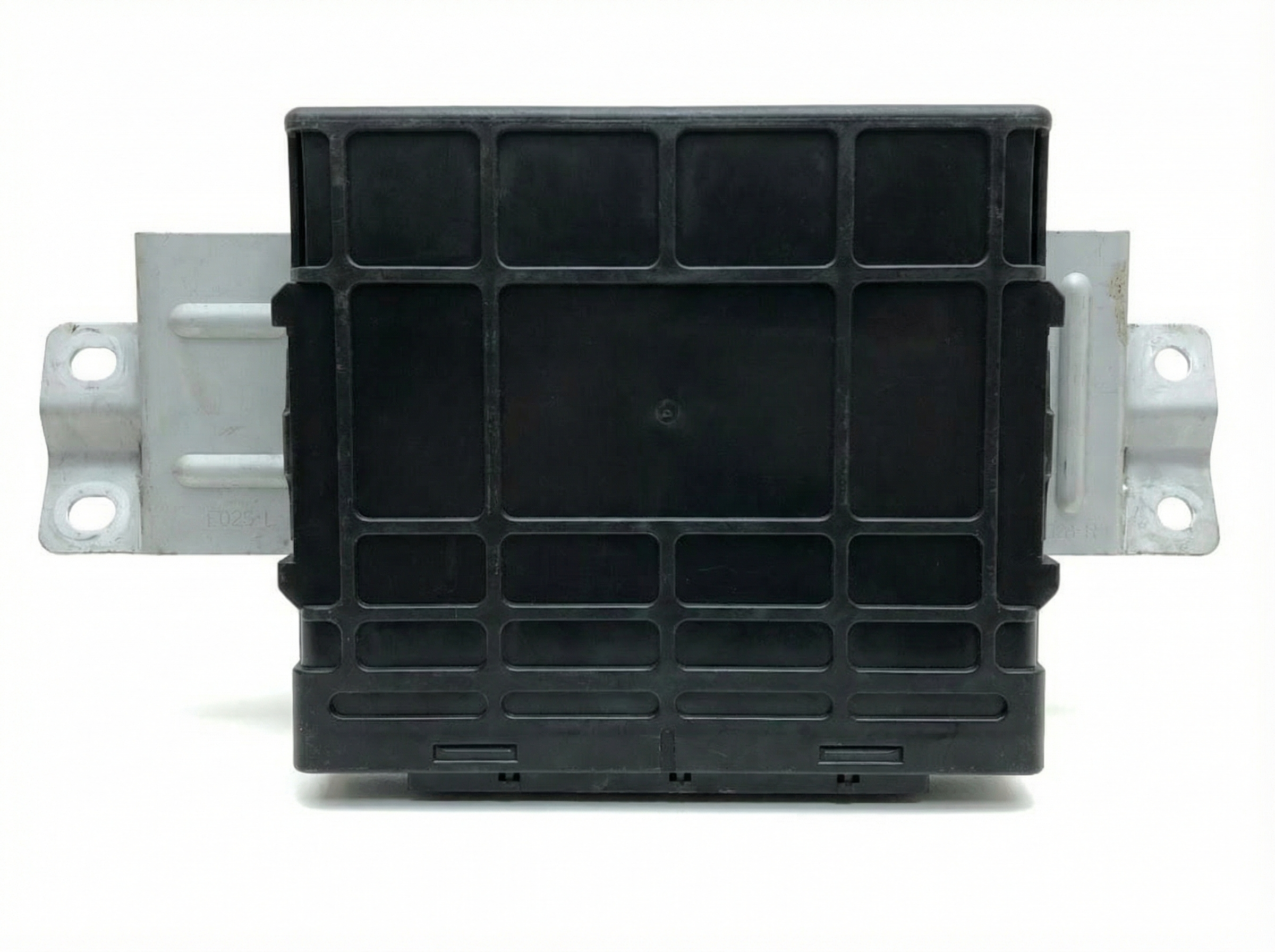
Used OEM Parts in Stock
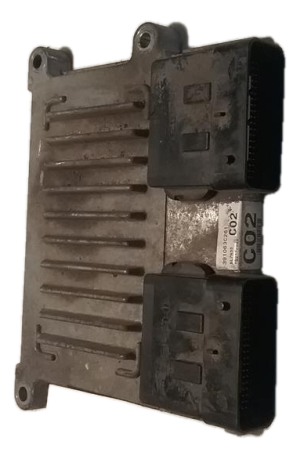
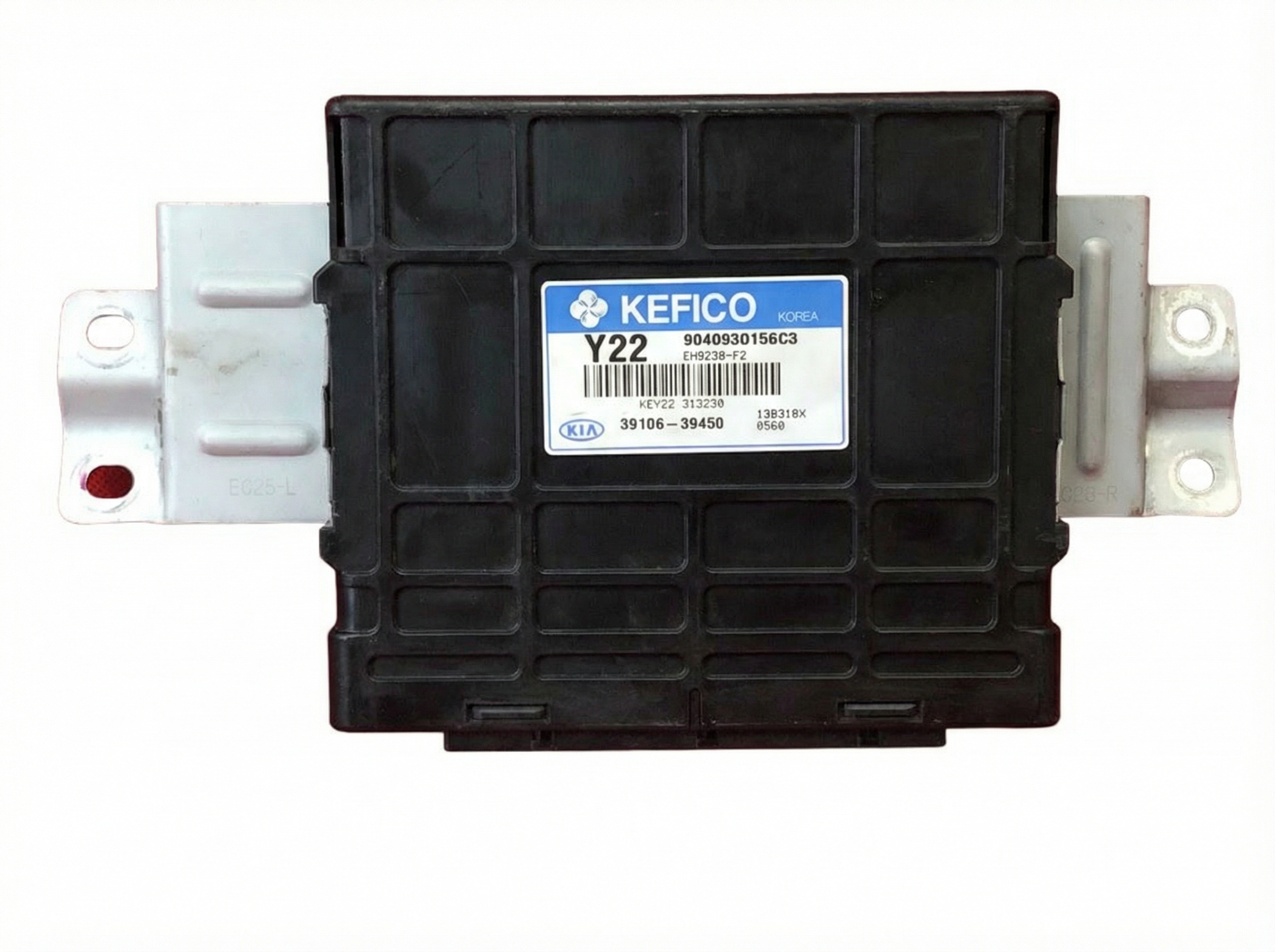
New Aftermarket Parts Available


The information in this article is provided for general reference and educational purposes only. Vehicle specifications, procedures, and part compatibility can vary by production date, trim level, and region. Always consult your vehicle's factory service manual and verify part numbers before purchasing or performing repairs. Safety-critical components such as airbags, seat belts, and braking systems should be installed by a qualified professional.
- Kia Sorento:
- 🧭 Diagnostic Flowchart
- 🎬 Helpful Videos
- 🛍️ Shop This Part
- What's Unique About the 2003-2009 Kia Sorento
- Symptoms You May Notice
- Most Likely Causes
- Rare But Worth Checking
- Diagnosis Steps
- Parts You'll Likely Need
- Related Codes That Often Appear With This One
- Technical Service Bulletins (TSBs) & Recalls
- Platform-Specific Known Issues
- Mechanic-Grade Diagnostic Values
- Scan Tool Commands That Help
- Wiring & Ground Locations
- Real Owner Repair Stories
- Model Year Variations Within This Range
- Other Known Issues on This Vehicle
- Used vs. New Parts: Buying Guide for This Vehicle
- Real Owner Stories
- 2003-2009 Kia Sorento
- 2003-2009 Kia Sorento
- Related OBD-II Codes
- Frequently Asked Questions
- 🎟️ Get 5% Off