

U0100 on 1999-2004 Oldsmobile Alero: Lost Communication with ECM/PCM Causes and Fixes
This code means the Engine Control Module (ECM/PCM) has stopped communicating with other modules. On the Alero, this is most often caused by a weak battery, corroded battery cables, or a bad ground connection, especially the ground splice on the transmission. Check these simple electrical issues before suspecting a bad computer.
- U0100 on an Alero is a serious code indicating a network failure; do not drive the vehicle.
- Before suspecting expensive computers, thoroughly check the battery, its connections, and all major engine/chassis ground points.
- A specific ground splice on the transmission is a known failure point and should be inspected carefully.
- If you have other strange electrical problems (lights, locks), the Body Control Module (BCM) could be the root cause.
- This is a difficult code for DIY diagnosis. Professional help is recommended to avoid replacing expensive parts by mistake.
What's Unique About the 1999-2004 Oldsmobile Alero
On the GM N-body platform, which the Alero is built on, electrical issues are a common source of communication codes like U0100. Specifically, these cars are known for having problems with main engine and module ground points. A ground splice pack located on the transmission housing is a known failure point that can cause intermittent no-start conditions and a loss of communication. Additionally, the Body Control Module (BCM), located behind the right side of the dash, is susceptible to failure from issues like water intrusion or internal faults, which can disrupt the entire Class 2 data bus and cause widespread electrical problems. The single-wire nature of the Class 2 network means that if this wire is shorted to ground or voltage anywhere in the vehicle, the entire network goes down.
Symptoms You May Notice
- Check Engine Light is on (may be intermittent)
- Engine will not start, or cranks but does not fire
- Engine stalls intermittently while driving
- Instrument cluster gauges stop working or behave erratically
- Multiple warning lights on the dash (ABS, Security, etc.)
- Transmission may not shift correctly or may enter 'limp mode'
- Scan tool cannot communicate with the PCM/ECM
- Security light may be flashing
- Replacing the PCM without first verifying its power, ground, and network connections. This is an expensive part that is often replaced unnecessarily.
Most Likely Causes
- Weak or Faulty Battery / Corroded Terminals 🔴 High Probability → Shop Vehicle Battery Low system voltage is a primary cause of network communication errors on modern vehicles. A voltage drop during cranking can cause modules to reset and lose communication. Aleros are also noted to have issues with corrosion on battery cable ends.
How to confirm: Test the battery voltage with a multimeter. A healthy, fully charged battery should read at least 12.6 volts with the engine off. Check for voltage drops below 10V during cranking. Visually inspect battery terminals and cables for white or green corrosion and ensure they are tight.
Typical fix: Clean the battery terminals and cable ends thoroughly with a wire brush. If the battery is weak or fails a load test, it must be replaced. Ensure new connections are tight.
Est. part cost: $100-$250 - Poor or Corroded Ground Connections 🔴 High Probability A specific ground splice pack (often labeled SP105 or similar) bolted to a transmission stud is a notorious failure point on the Alero and its platform mates. Corrosion gets into the splice and causes high resistance, leading to intermittent communication loss and no-start conditions.
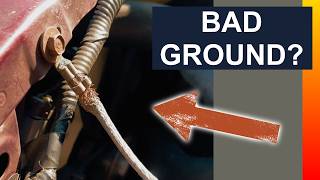
How to confirm: Locate the main engine and PCM grounds. The key ground point is on a transmission stud, near the dipstick tube. Other critical grounds are G101 (left front shock tower) and G102 (left side of engine). Inspect these points for looseness, rust, or corrosion. Perform a voltage drop test on the ground circuit from the PCM connector to the battery negative terminal.
Typical fix: Disassemble the ground connection, clean all contact surfaces (wire terminal, bolt, and chassis/engine block) down to bare metal, apply dielectric grease, and re-secure tightly. For the transmission ground splice, the best practice is to cut out the splice, strip the wires, crimp them all into a single high-quality ring terminal, and bolt it directly to the clean ground stud.
Est. part cost: $5-$15 - Damaged Class 2 Serial Data Wire 🟡 Medium Probability The single data wire (typically a dark green wire on this platform) runs throughout the car, connecting all major modules. It can become damaged from vibration, heat, or improper repairs, especially in areas where the harness passes through the firewall or near the steering column.
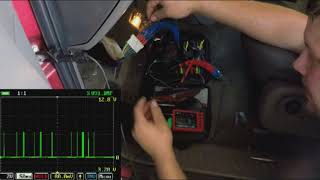
How to confirm: Visually inspect the wiring harnesses going to the PCM (under the left dash), BCM (behind the right dash), and EBCM (inside the left front fender) for any signs of chafing, pinching, or corrosion. A professional will use an oscilloscope to check the data signal on the wire (Pin 2 of the DLC). A short to ground or voltage on this wire will kill all communication. 🎬 Watch: Troubleshooting GM Class 2 no communication codes
Typical fix: Repair the damaged section of wire. If a connector is corroded, it may need to be cleaned or replaced.
Est. part cost: $10-$100 - Faulty Body Control Module (BCM) ⚪ Low Probability → Shop Body Control Module The Alero's BCM is known to fail, sometimes due to water intrusion or internal solder joint failure. A faulty BCM can broadcast corrupt data or short out the Class 2 network, causing other modules to report a loss of communication with the PCM.
How to confirm: This is difficult to confirm without a professional scan tool. If you have multiple seemingly unrelated electrical issues (erratic lights, locks, security system faults, radio problems) along with the U0100, the BCM is a strong suspect. A technician may unplug the BCM to see if communication with other modules is restored.
Typical fix: Replace the Body Control Module. The new module will require programming to the vehicle's VIN and options by a dealer or a specialized shop.
Est. part cost: $150-$400
Rare But Worth Checking
- Faulty Powertrain Control Module (PCM): → Shop Engine Control Module (ECM) While U0100 directly names the PCM, the module itself is rarely the cause. The problem is usually in the wiring or power/ground supply to the PCM. All other possibilities must be exhausted before condemning the PCM.
- Aftermarket Device Interference: Improperly installed aftermarket alarms, remote starters, or stereos can interfere with the vehicle's Class 2 data network and trigger U-codes. These devices are often spliced into critical wiring near the BCM or ignition switch.
Diagnosis Steps
- Check Battery Health: Start with the simplest cause. Test the battery voltage (should be >12.5V engine off) and ensure terminals are clean and tight. Perform a load test.
- Scan for All Codes: Use an advanced scan tool capable of reading codes from all modules (PCM, BCM, ABS, etc.). Note which modules are not communicating. A 'No Communication' message is a key clue.
- Inspect Fuses: Check all fuses related to the PCM, BCM, and Ignition in both the under-hood and interior fuse panels. Check for fuses labeled ECM, BCM, IPC, and RADIO.
- Inspect Grounds: Visually inspect and clean the main ground connections. Pay special attention to the ground splice pack on the transmission stud and the main grounds on the driver-side shock tower (G101). Disassemble, clean to bare metal, and re-secure.
- Perform a Voltage Drop Test: Test the PCM's power and ground circuits directly at the PCM connector (requires a wiring diagram) to ensure it's receiving proper voltage and has a solid ground.
- Check Network Voltage: At the Data Link Connector (DLC), check for voltage at Pin 2 (Class 2 Serial Data). With the key on, you should see fluctuating voltage. A steady 0V indicates a short to ground, while a steady high voltage (5V or 12V) indicates a short to power.
- Isolate Modules: If the network is down (shorted), a technician will unplug modules one by one (starting with easily accessible ones like the radio or EBCM) to see if communication is restored. If unplugging a module brings the network back online, that module is the source of the fault.
- Diagnose BCM/PCM: If all wiring, power, and grounds are confirmed good, the final step is to diagnose the BCM or PCM, which may require replacement and programming.
Parts You'll Likely Need
- Battery
- Body Control Module (BCM)
(OEM #09360629 (1999-2001), 22684973 (2003-2004)) - Ring Terminal
- Powertrain Control Module (PCM)
(OEM #09378702)
Related Codes That Often Appear With This One
- U0140 — Lost Communication With Body Control Module (BCM). If both codes are present, it points towards a general network problem (wiring, grounds) rather than a single failed module.
- U0121 — Lost Communication With Anti-Lock Brake System (ABS) Control Module. Like U0140, its presence suggests a wider network issue.
- B2960 — Security System Sensor Data Incorrect. This code is often related to the common Passlock failure and can sometimes appear alongside network codes if the BCM is acting up.
Platform-Specific Known Issues
- A factory ground splice on a transmission stud is a known weak point that can corrode and cause intermittent loss of communication to the PCM.
- The Body Control Module (BCM) is susceptible to failure, sometimes caused by water leaking into the cabin and reaching the module behind the passenger side of the dashboard.
Mechanic-Grade Diagnostic Values
- Class 2 Serial Data Bus Voltage (DLC Pin 2 to Ground) — expected: Fluctuating voltage, averaging around 3.5V but can range from 0V to 7.0V during active communication. The bus is active at a nominal 7.0V and inactive at ground potential.. Failure: A steady 0V indicates a short to ground. A steady voltage (e.g., 5V or 12V) indicates a short to a power source. No fluctuation means no communication is occurring.
- PCM Power Supply Voltage — expected: Stable 12.0V - 14.5V at the PCM power input pins with the key on, engine running.. Failure: Voltage dropping below 10V during cranking can cause modules to reset and lose communication.
- PCM Ground Circuit Voltage Drop — expected: Less than 0.1 Volts (100 millivolts) between the PCM ground pin and the negative battery terminal.. Failure: A reading higher than 0.1V indicates high resistance in the ground circuit, a common cause of this code.
Scan Tool Commands That Help
- Tech 2 / GDS2: NEW BCM SETUP — This function is required after installing a new or used Body Control Module. It programs the vehicle's specific RPO codes (options) into the BCM so it can control all features correctly.
- Tech 2 / GDS2: Passlock Learn Procedure — Must be performed after replacing the BCM or PCM. This procedure syncs the anti-theft components (Passlock sensor, BCM, PCM) so the vehicle will start. This can also be done manually without a scan tool.
Wiring & Ground Locations
- G101 — On the left (driver's) side of the engine compartment, near the strut tower.. This is a primary chassis ground point for multiple systems, and corrosion here can cause widespread electrical issues.
- G102 — On the left side of the engine. For the 3.4L V6, it is located in front of the starter.. This is a critical engine ground. A poor connection here directly impacts the PCM and other engine-related modules.
- G103 — For the 3.4L V6, this ground is located on a transmission stud. This is the location of the infamous ground splice pack.. This is the most notorious ground failure point on the Alero for causing U0100. The splice pack corrodes internally, causing intermittent loss of ground to the PCM and other modules.
- BCM (Body Control Module) — Behind the right (passenger) side of the dashboard, between the blower motor and the passenger kick panel.. The BCM is a central hub for the Class 2 data bus. All communication passes through it. Physical access is needed to test its connectors or replace it.
- PCM (Powertrain Control Module) — Below the left (driver's) side of the dashboard.. This is the module that is 'lost'. Direct testing of its power, ground, and data line pins is the final step before condemning the module itself.
- DLC (Data Link Connector) — Below the dash, to the left of the steering column.. Pin 2 of the DLC is the Class 2 Serial Data line. This is the most accessible point in the vehicle to test the health of the entire communication network with a multimeter or oscilloscope.
Real Owner Repair Stories
- AutomotiveForums.com user (2002 Oldsmobile Alero) — Car would not start, no communication with scan tool ('NO BUS' error), security light on, gauges dead.
❌ Tried (didn't work) Checking all fuses., Checking battery and ground connections (initially found them to be okay).
✅ What actually fixed it The factory radio had failed internally and was shorting out the Class 2 data bus. After unplugging the radio, communication was restored to all other modules and the car started. The radio was replaced to complete the fix.
When the Usual Fixes Don't Work
- In one documented case, a 2002 Alero with a no-start and U0100 had all the common causes checked (battery, grounds, fuses) with no success. The root cause was discovered to be a failed factory radio that was shorting the Class 2 data line to ground. Unplugging the radio immediately restored communication and allowed the vehicle to start. This highlights that any module on the single-wire bus, even seemingly non-critical ones, can be the single point of failure for the entire network.
OEM Part Supersession History
09360629→19245421, 19241005— Part revision and consolidation by GM.
Heads up: This part number is for 1999-2001 Alero models. It is not compatible with later years.22684973→Unknown— Part for later model years.
Heads up: This part number is for 2003-2004 Alero models and is not backward compatible with earlier years.22684971→19153626— Part revision by GM.
Heads up: Specific to the 2002 model year.
Model Year Variations Within This Range
- 1999-2001 vs 2002 vs 2003-2004: The Body Control Module (BCM) has different part numbers for these year groups. They are generally not interchangeable due to internal hardware and software differences. Using the wrong year BCM can result in features not working or the module not programming correctly.
Diagnostic Flowchart
Other Known Issues on This Vehicle
Issues unrelated to this code that are worth knowing about as an owner of this generation:
- Intake Manifold Gasket Failure (3.1L/3.4L V6) 🔴 High — Very common, often occurs between 70,000 and 150,000 miles. Leads to coolant leaks (external or internal) and engine overheating.
- Passlock Security System Failure 🔴 High — Extremely common across all years. The sensor in the ignition lock cylinder fails, causing a no-start condition where the engine fires and immediately dies, with the 'SECURITY' light flashing.
- Faulty Ignition Switch 🔴 High → Shop Ignition Switch — Widespread enough to trigger a major GM recall. The switch can move out of the 'run' position while driving, causing the engine to shut off and disabling airbags. (Ref: NHTSA Campaign ID: 14V400000)
- Turn Signal / Multifunction Switch Failure 🟠 Medium — Common failure. Can cause turn signals to stop working, wipers to act erratically, or headlights to fail. For 2000-2001 models, this was often caused by a faulty hazard switch, which was subject to a recall. (Ref: NHTSA Campaign ID: 03V327 (for related hazard switch))
- Front Window Regulator/Sash Bracket Failure 🟡 Low — A frequent annoyance where the plastic sash brackets that hold the window glass break, causing the window to come off its track and fall into the door.
Used vs. New Parts: Buying Guide for This Vehicle
When a used part is the smart pick: For this vehicle, a used Body Control Module (BCM) from a junkyard is a very common and cost-effective repair strategy. Since new OEM modules are becoming scarce and expensive, a used unit is often the only practical option.
Donor-vehicle mileage cap: roughly under 150000 miles for the part to have meaningful remaining life.
What to inspect on the donor part:
- Match the OEM part number EXACTLY. There are several versions of the BCM for the Alero, and they are not interchangeable.
- Inspect the donor vehicle for signs of water leaks, especially around the passenger-side dashboard and floor. Avoid any BCM that shows signs of water damage or corrosion on its case or connectors.
- Obtain the VIN of the donor car if possible. This can sometimes help with programming, although it's not always necessary.
- Ensure the seller offers a warranty or return policy in case the used module is also faulty.
OEM-only on this vehicle (don't cheap out):
- While aftermarket PCMs exist, using a programmed, used OEM PCM is often more reliable if the original is condemned. For the BCM, used OEM is the standard repair path.
Aftermarket brands forum-validated for this vehicle:
- CARDONE is a well-known remanufacturer of engine and body control modules.
Brands owners have reported issues with on this vehicle:
- Avoid unbranded, 'no-name' electronic modules from online marketplaces with no warranty or seller history.
Real Owner Stories
Aggregated from forums and TSBs cited above. Mileages and costs reflect what owners reported in those sources.
2001 Oldsmobile Alero
Symptoms: Passlock theft deterrent system issues and no-start condition.
What fixed it: Diagnosing the Passlock security system which often involves BCM wiring or bypassing the system.
Source hint: 2carpros.com/questions/oldsmobile-alero-2001-oldsmobile-alero-passlock-theft-deterrent-system
1999-2004 Oldsmobile Alero
Symptoms: Intermittent communication loss and no-start conditions; corrosion found in a ground splice.
What fixed it: Cutting out the factory ground splice on the transmission stud, stripping the wires, and crimping them into a single ring terminal bolted directly to a clean ground stud.
Source hint: vehicle_specific_issues
Related OBD-II Codes
Frequently Asked Questions
Why is my Alero's security light flashing along with the U0100 code?
I heard there is a specific ground point on the Alero that causes communication loss. Where is it?
Can a bad battery really cause a U0100 code on my 1999-2004 Alero?
My scan tool won't talk to the PCM at all. Is my PCM dead?
Is it true that water leaks can cause electrical codes in the Alero?
Helpful Videos


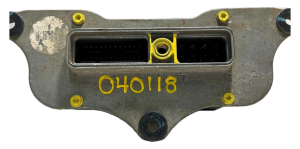
Used OEM Parts in Stock
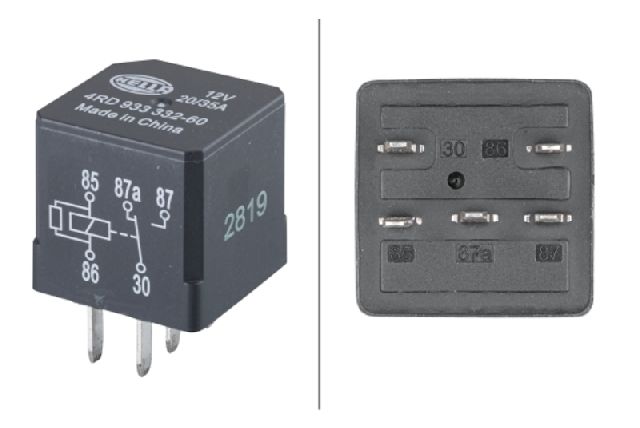
New Aftermarket Parts Available



The information in this article is provided for general reference and educational purposes only. Vehicle specifications, procedures, and part compatibility can vary by production date, trim level, and region. Always consult your vehicle's factory service manual and verify part numbers before purchasing or performing repairs. Safety-critical components such as airbags, seat belts, and braking systems should be installed by a qualified professional.
- Oldsmobile Alero:
- 🧭 Diagnostic Flowchart
- 🎬 Helpful Videos
- 🛍️ Shop This Part
- What's Unique About the 1999-2004 Oldsmobile Alero
- Symptoms You May Notice
- Most Likely Causes
- Rare But Worth Checking
- Diagnosis Steps
- Parts You'll Likely Need
- Related Codes That Often Appear With This One
- Platform-Specific Known Issues
- Mechanic-Grade Diagnostic Values
- Scan Tool Commands That Help
- Wiring & Ground Locations
- Real Owner Repair Stories
- When the Usual Fixes Don't Work
- OEM Part Supersession History
- Model Year Variations Within This Range
- Other Known Issues on This Vehicle
- Used vs. New Parts: Buying Guide for This Vehicle
- Real Owner Stories
- 2001 Oldsmobile Alero
- 1999-2004 Oldsmobile Alero
- Related OBD-II Codes
- Frequently Asked Questions
- 🎟️ Get 5% Off