

U0121 on 2013-2018 Hyundai Santa Fe: Lost Communication with ABS Module Causes and Fixes
On a 2013-2018 Santa Fe, U0121 almost always means the ABS control module has failed, a very common issue for this generation. This will disable the ABS and stability control systems, triggering multiple warning lights. A replacement module is the typical fix, often covered by a safety recall due to fire risk.
- The U0121 code on a 2013-2018 Santa Fe is a serious issue, most often caused by a failed ABS module.
- This is a known factory defect with multiple recalls issued. Check your VIN for open recalls immediately.
- Due to fire risk, it is recommended to park your vehicle outside and away from structures until it is repaired.
- Diagnosis involves checking fuses and power/ground at the module, but the ultimate fix is almost always a replacement ABS module.
- This is not a typical DIY repair due to the safety-critical nature of the system and the need for specialized brake bleeding and potential programming.
What's Unique About the 2013-2018 Hyundai Santa Fe
The 2013-2018 Hyundai Santa Fe (both Sport and long-wheelbase models) is particularly known for ABS module failures. This isn't just a random part failure; it's a well-documented weak point for this specific vehicle generation. Multiple recalls were issued because internal brake fluid leaks or electrical shorts within the Mando-supplied ABS module could cause it to fail, and in some cases, lead to an engine compartment fire even when the vehicle is parked and turned off.
Generation note: The 2013-2018 year range covers the entire third generation of the Santa Fe, which includes the 5-passenger Santa Fe Sport (DM chassis) and the 7-passenger long-wheelbase Santa Fe/Santa Fe XL (NC chassis). The ABS module failure is a known issue across this entire generation and its platform-mate, the Kia Sorento.
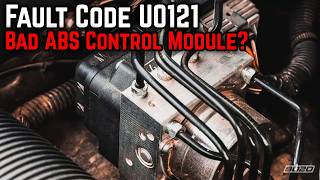
🎬 Watch: DIY diagnosis for Santa Fe and Sorento ABS lightsSymptoms You May Notice
- ABS warning light is on
- Electronic Stability Control (ESC/ESP) warning light is on
- Brake warning light may be on
- Check Engine Light may be on
- Cruise control is disabled
- In some cases, the speedometer may stop working
- Brakes may lock up under hard braking
- A 'spongy' or soft brake pedal feel
- Replacing wheel speed sensors. While wheel speed sensor codes can accompany a U0121, the U0121 code itself points to a communication failure of the entire module, not just a sensor input. 🎬 Watch: Learn what causes a U0121 communication code
- Assuming the code means the ABS module is bad without checking power, ground, and fuses first. A simple blown fuse or bad ground connection can also cause the module to lose communication.
Most Likely Causes
- Faulty ABS Control Module 🔴 High Probability → Shop ABS Control Module This is a well-documented, widespread issue for this Santa Fe generation, leading to multiple recalls (e.g., Recall 205, 218). The modules, made by Mando, were prone to internal brake fluid leaks from piston seals and electrical shorts on the circuit board.
How to confirm: Use a professional scan tool to attempt to communicate directly with the ABS module. If the module does not respond ('offline') and power/ground at the connector are confirmed to be good, the module itself has failed. The recall procedure includes a specific multimeter test to check for internal shorts.
Typical fix: Replace the ABS module and hydraulic unit assembly. The new part may need to be programmed to the vehicle. Due to fire risk, it's critical to check if your vehicle is covered under a recall, as the replacement would be free of charge.
Est. part cost: $500-$1500 - Blown ABS Fuse(s) 🟡 Medium Probability Recalls for this issue (like Recall 205 and 218) involved installing a lower-amperage multi-fuse to prevent an overcurrent situation from causing a fire. A blown fuse is often a symptom of the failing ABS module drawing too much current, but can also be a standalone electrical fault.
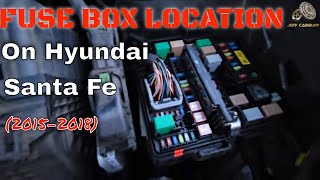
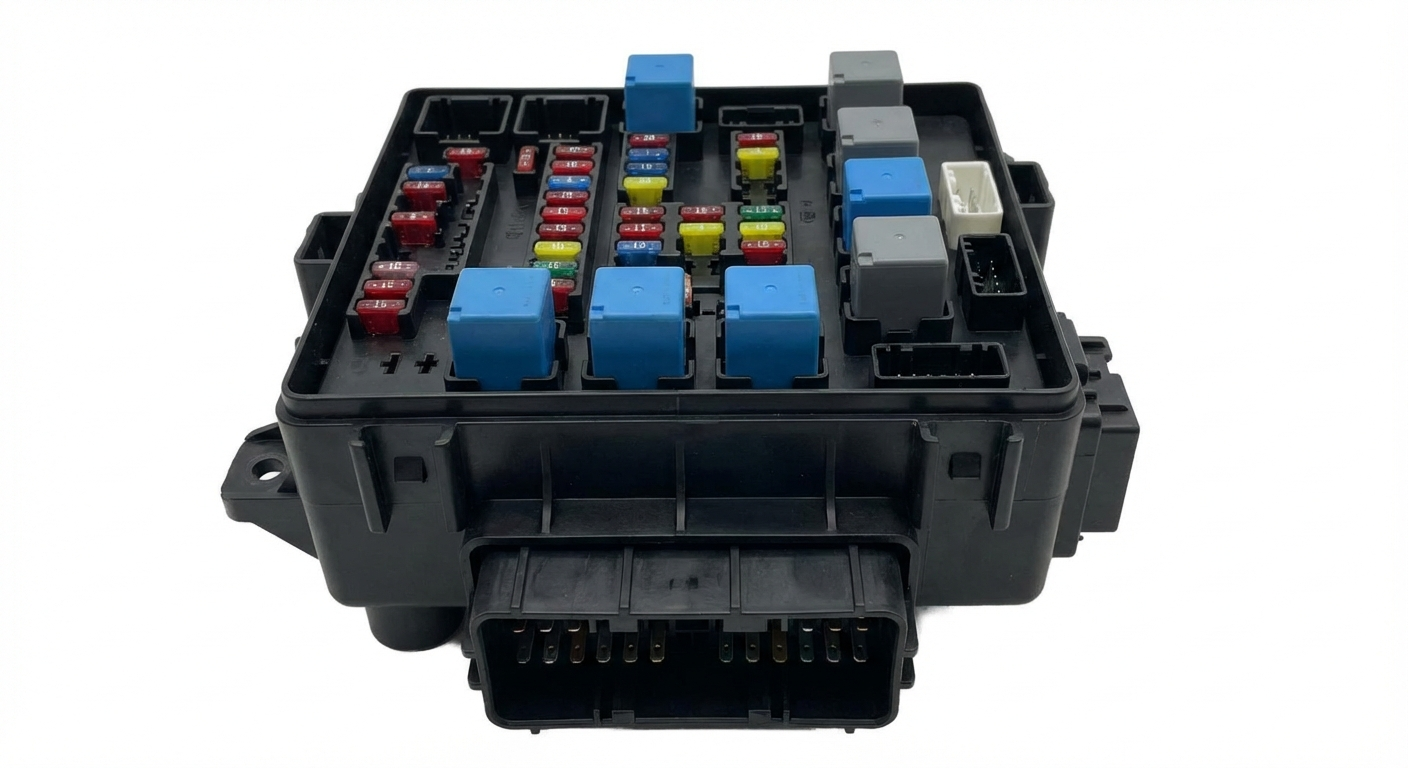
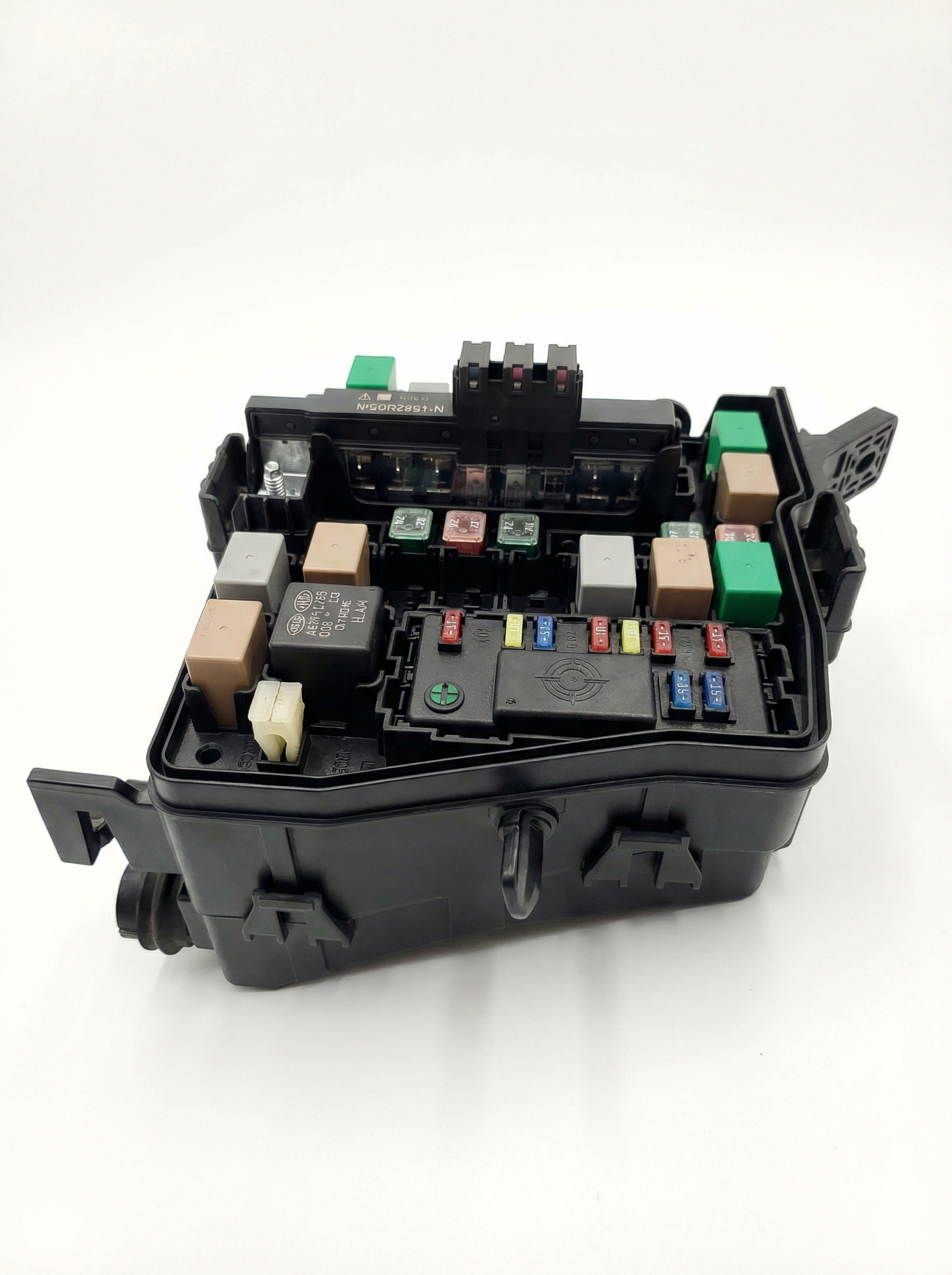
How to confirm: Locate and visually inspect the fuses for the ABS and ESC systems in the vehicle's fuse boxes (both engine compartment and interior). 🎬 See this guide to locating your Santa Fe fuse boxes Test with a multimeter for continuity. The recall-related fuse is a large 'multi-fuse' in the engine bay fuse box.
Typical fix: Replace the blown fuse. If the new fuse blows immediately, there is a short circuit that must be diagnosed. Check for open recalls, as a new multi-fuse kit may be required as part of the remedy.
Est. part cost: $5-$50 - Wiring Harness or Connector Issue ⚪ Low Probability While less common than module failure, wiring can be damaged by road debris, corrosion, or improper repairs. The connector at the ABS module is susceptible to moisture and corrosion.
How to confirm: Visually inspect the wiring harness and connector going to the ABS module for any signs of corrosion, bent pins, or physical damage. Test for proper power, ground, and CAN bus signal voltages at the connector using a multimeter and a wiring diagram.
Typical fix: Repair the damaged section of wiring or clean/replace the connector. This requires identifying the specific broken wire or corroded pin.
Est. part cost: $10-$100
Rare But Worth Checking
- Low Battery Voltage: → Shop Vehicle Battery While not a direct cause, low system voltage can cause communication errors between various modules on the CAN bus. It's a simple and important first check before diving into more complex diagnostics.
Diagnosis Steps
- Check for open recalls using your vehicle's VIN on the NHTSA or Hyundai website. Several recalls (like Hyundai recall 205 and 218) address this exact issue.
- Check the battery and charging system to ensure voltage is stable and above 12.4V. Low voltage can cause various communication codes.
- Inspect all fuses related to the ABS and ESC systems in both the engine bay and interior fuse panels, paying special attention to the large multi-fuse in the engine compartment.
- Connect a professional-grade scan tool. Attempt to communicate with the ABS module. If it's 'offline' or 'not present', this strongly points to a module or power/ground issue.
- If the module is offline, locate the ABS module (typically on the driver's side of the engine bay). Disconnect the electrical connector and inspect for corrosion, moisture, or bent pins.
- Using a multimeter and a wiring diagram, test for battery power and a solid ground at the ABS module connector.
- If power and ground are good, but the module won't communicate, the ABS module has failed and needs to be replaced. This is the most likely outcome for this specific vehicle.
Parts You'll Likely Need
- ABS Modulator / Hydraulic Control Unit (HCU)
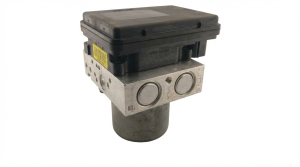
(OEM #58920-4Z000QQH, 58920-4Z200QQH)— This is the most common failure point for the U0121 code on this specific vehicle, often due to internal electrical shorts or fluid leaks as documented in multiple recalls.
Trusted brands: Hyundai (OEM), Mando
OEM price range: $1000-$1800
Aftermarket price range: $400-$800 (Remanufactured) - ABS Multi-Fuse Kit
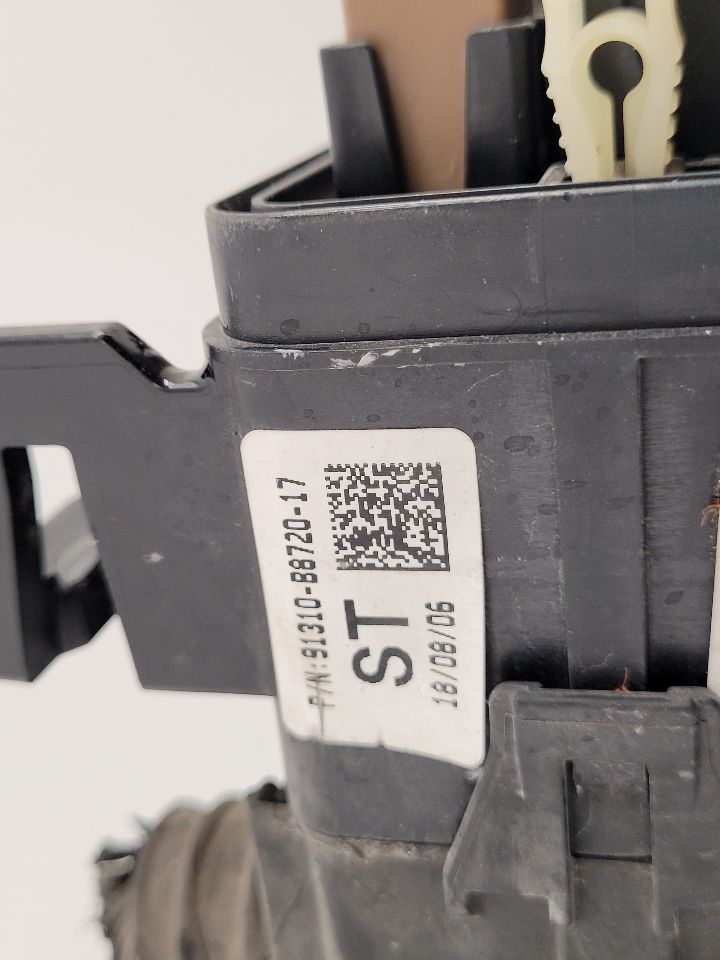
(OEM #91KIT-4ZUSAQQH)— As part of the recall remedy, Hyundai issued a revised, lower-amperage multi-fuse to reduce fire risk from an overcurrent situation in the ABS module. This part is required for the recall fix.
Trusted brands: Hyundai (OEM)
OEM price range: $30-$50
Aftermarket price range: N/A
Technical Service Bulletins (TSBs) & Recalls
- 21-01-052H (Recall 205): Describes the procedure to inspect the ABS module for internal shorts using a multimeter, replace the multi-fuse, and replace the entire ABS module if it fails the inspection on 2013-2015 Santa Fe Sport models.
- 22-01-029H-2 (Recall 218): Details the procedure for replacing the multi-fuse and upper fuse box cover for 2016-2018 Santa Fe and other models to mitigate the fire risk from a potential ABS module short.
- 20-01-046H (Recall 194): An earlier, superseded version of the recall describing the inspection and potential replacement of the ABS module for 2013-2015 Santa Fe Sport models. Recall 205 replaced this action with an improved remedy.
Platform-Specific Known Issues
- Recall 205 (NHTSA 21V-303): Affects 2013-2015 Santa Fe Sport models for internal brake fluid leaks in the ABS module that can cause an electrical short and fire. The fix involves inspecting the module, possibly replacing it, and installing an improved multi-fuse.
- Recall 218 (NHTSA 22V-056): Covers 2016-2018 Santa Fe, 2017-2018 Santa Fe Sport, and 2019 Santa Fe XL models for a similar internal electrical short issue. The primary remedy was to install a revised multi-fuse.
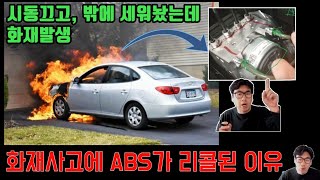
- Fire Risk: Due to the nature of the ABS module failure (internal short circuit), there is a documented risk of an engine compartment fire, even when the vehicle is parked and off. It is strongly recommended to park these vehicles outside and away from structures until the recall is performed.
Mechanic-Grade Diagnostic Values
- CAN Bus Network Resistance — expected: Approximately 60 Ohms. Failure: A reading of 120 Ohms indicates one of the two terminating resistors (or a module containing one) is offline. A reading near 0 Ohms indicates a short between the CAN High and CAN Low wires.
- CAN Bus Voltage (Key On, Engine Off) — expected: CAN High (Pin 6) and CAN Low (Pin 14) should both be around 2.3V to 2.7V at rest.. Failure: A line stuck at 0V or 5V indicates a short or an open circuit pulling the bus down.
- ABS Module Power Supply — expected: Battery voltage (approx. 12.6V with key on, engine off) at the specified power pins on the module connector.. Failure: Voltage below 11V or no voltage indicates a problem with the fuse, relay, or wiring supplying power to the module.
Hidden / Shadow Codes Worth Checking
- C1702: Variant Coding Error. This code is stored in the ABS/ESC module itself and indicates that the module has not been programmed (or 'coded') to the specific vehicle it is installed in. (see via This is a manufacturer-specific 'C' (Chassis) code that requires a professional-grade scan tool, like the Hyundai GDS, capable of reading codes from the ABS/ESC system.)
Scan Tool Commands That Help
- Hyundai GDS (Global Diagnostic System): Variant Coding — This function is mandatory after replacing the ABS control module. It programs the new module with the vehicle's specific configuration (e.g., engine type, drivetrain, presence of other systems). Failure to perform variant coding will result in a C1702 code and the ABS/ESC system will not function.
- Hyundai GDS (Global Diagnostic System): HCU Air Bleeding — After replacing the ABS module and hydraulic unit (HCU), the system must be bled of air. The 'HCU Air Bleeding' procedure on the GDS activates the internal pump and valves to force trapped air out of the hydraulic block, which cannot be removed by manual bleeding alone.
Wiring & Ground Locations
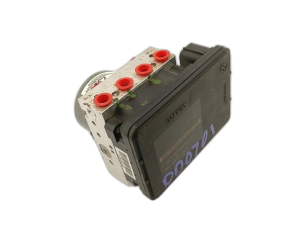
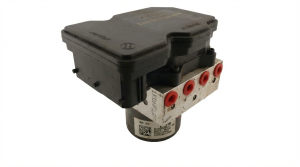
- ABS Module / HECU — In the engine bay, typically located on the driver's side, behind the engine and below the brake fluid reservoir. It is a metal block (the hydraulic unit) with an attached black plastic electronic module (the control unit), made by Mando.. This is the module that has lost communication. Its connector is the primary test point for power, ground, and CAN signals. Corrosion on this connector can also cause the U0121 code.
- OBD-II Data Link Connector (DLC) — Under the driver's side dashboard, to the left of the steering column.. Pins 6 (CAN High) and 14 (CAN Low) on this connector can be used to perform a network-wide resistance and voltage test to quickly check the general health of the CAN bus without accessing individual modules.
OEM Part Supersession History
58920-4Z000QQH→58920-4Z200QQH— Part revision and update, likely related to the issues addressed in the recalls.
Heads up: While the modules may be physically similar, using the wrong part number can lead to programming ('Variant Coding') failures or improper ABS/ESC function. It is critical to match the part number to the vehicle's VIN and production date.
Model Year Variations Within This Range
- 2013-2015 Santa Fe Sport: These models were the primary subject of Hyundai Recall 205, which involved a more intensive inspection and potential replacement of the ABS module due to a high risk of internal brake fluid leaks.
- 2016-2018 Santa Fe / Santa Fe Sport: These models were covered by Hyundai Recall 218. The primary remedy for this recall was the installation of a revised, lower-rated multi-fuse kit to reduce fire risk, rather than a mandatory inspection or replacement of the ABS module itself, suggesting a potential change in the failure mode or module design compared to earlier years.
Diagnostic Flowchart
Other Known Issues on This Vehicle
Issues unrelated to this code that are worth knowing about as an owner of this generation:
- Theta II GDI Engine Failure 🔴 High — Widespread across multiple model years, particularly with the 2.4L and 2.0L Turbo engines. Can occur at various mileages, often preceded by a knocking sound. (Ref: Multiple recalls (e.g., NHTSA 15V-568) and a major class-action lawsuit settlement led to extended warranties and engine replacements for affected vehicles.)
- Flexible Steering Coupler Wear 🟠 Medium — Very common. Owners typically notice a clunking or clicking noise from the steering column when turning at low speeds, usually after 50,000 miles. The original rubber coupler disintegrates over time. (Ref: No recall, but it is a well-known repair. The replacement part (OEM #563152K000FFF) is inexpensive, but labor can be involved.)
- GDI Engine Intake Valve Carbon Buildup 🟠 Medium — An inherent issue with Gasoline Direct Injection (GDI) engines. Becomes noticeable over 60,000-100,000 miles, causing rough idle, hesitation, and reduced fuel economy. (Ref: No recall; this is considered a maintenance item. Regular induction cleaning services are recommended to mitigate the issue.)
- Peeling Exterior Paint 🟡 Low — Common on certain colors (especially white). Paint can begin to delaminate and peel in large sheets, often starting on the roof or hood. (Ref: No recall, but many owner complaints. Some owners have had success getting goodwill repairs from Hyundai, but it is not guaranteed.)
- Crankshaft Position Sensor Failure 🟠 Medium — Can fail intermittently, especially when hot, causing the engine to stall unexpectedly. The engine may restart after cooling down. (Ref: No widespread recall, but a common replacement part for stalling issues.)
Used vs. New Parts: Buying Guide for This Vehicle
When a used part is the smart pick: Given the extremely high failure rate and documented internal fire risk of this specific part, purchasing a used ABS module is NOT recommended for the 2013-2018 Santa Fe. The risk of buying a part that has the same latent defect or is already failing is very high. A new OEM part or a professionally remanufactured unit from a reputable rebuilder with a warranty is a much safer choice.
What to inspect on the donor part:
- If a used part must be considered, verify it comes from a vehicle NOT covered by the major ABS recalls, or has documented proof of replacement under the recall.
- Inspect the electrical connector pins for any signs of corrosion, melting, or heat damage.
- Ensure the part number matches EXACTLY, paying attention to supersession history.
OEM-only on this vehicle (don't cheap out):
- ABS Modulator / Hydraulic Control Unit (HCU)
- ABS Multi-Fuse Kit (Recall Part)
Aftermarket brands forum-validated for this vehicle:
- Mando (This is the Original Equipment Manufacturer)
Brands owners have reported issues with on this vehicle:
- Unknown or unbranded online marketplace sellers offering used units without a warranty or clear history. Due to the safety-critical nature and fire risk, provenance is key.
Real Owner Stories
Aggregated from forums and TSBs cited above. Mileages and costs reflect what owners reported in those sources.
2013 Hyundai Santa Fe Sport
Symptoms: The owner experienced a 'classic trio' of warning lights: the ABS, ESC, and Downhill Brake (DB) lights all illuminated simultaneously.
What fixed it: The issue was discussed as a likely ABS module failure covered under the documented recalls for that model year.
Source hint: https://www.hyundai-forums.com/threads/abs-esc-and-db-warning-lights-all-on.670575/
2013 Hyundai Santa Fe Sport
Symptoms: Concerns regarding the fire risk associated with the ABS module and the safety of parking the vehicle near a home.
What fixed it: Recall 205, which involves inspecting the ABS module for internal shorts and replacing the multi-fuse.
Source hint: https://www.reddit.com/r/Hyundai/comments/n3g9tq/2013_santa_fe_sport_abs_recall_fire_risk/
2013-2015 Hyundai Santa Fe Sport
Symptoms: Owners discussed the dealer procedure and the finality of the fix for the ABS module issues.
What fixed it: Implementation of Recall 205, which superseded the earlier Recall 194 (TSB 20-01-046H) with an improved remedy.
Source hint: https://www.santafeforums.com/threads/abs-recall-205-finally-a-fix.23077/
Related OBD-II Codes
Frequently Asked Questions
Is my 2013-2015 Santa Fe Sport covered under a recall for the ABS module fire risk?
I have a 2017 Santa Fe with a U0121 code; is there a specific TSB for the fuse box fix?
Why does the recall for U0121 involve changing a fuse instead of just replacing the ABS module?
Can I park my Santa Fe in the garage if the ABS light is on?
What is the specific part number for the steering clunk I'm hearing along with my ABS issues?
Does TSB 21-01-052H require the dealer to replace my ABS module for free?
Helpful Videos


We Have This Part in Stock

The information in this article is provided for general reference and educational purposes only. Vehicle specifications, procedures, and part compatibility can vary by production date, trim level, and region. Always consult your vehicle's factory service manual and verify part numbers before purchasing or performing repairs. Safety-critical components such as airbags, seat belts, and braking systems should be installed by a qualified professional.
- Hyundai Santa Fe:
- 🧭 Diagnostic Flowchart
- 🎬 Helpful Videos
- 🛍️ Shop This Part
- What's Unique About the 2013-2018 Hyundai Santa Fe
- Symptoms You May Notice
- Most Likely Causes
- Rare But Worth Checking
- Diagnosis Steps
- Parts You'll Likely Need
- Technical Service Bulletins (TSBs) & Recalls
- Platform-Specific Known Issues
- Mechanic-Grade Diagnostic Values
- Hidden / Shadow Codes Worth Checking
- Scan Tool Commands That Help
- Wiring & Ground Locations
- OEM Part Supersession History
- Model Year Variations Within This Range
- Other Known Issues on This Vehicle
- Used vs. New Parts: Buying Guide for This Vehicle
- Real Owner Stories
- 2013 Hyundai Santa Fe Sport
- 2013 Hyundai Santa Fe Sport
- 2013-2015 Hyundai Santa Fe Sport
- Related OBD-II Codes
- Frequently Asked Questions
- 🎟️ Get 5% Off