

U0121 on 2007-2011 Toyota Tundra: Lost ABS Communication Causes and Fixes
This code means the main computer has lost communication with the ABS module. On a 2007-2011 Tundra, this will disable ABS, VSC, and traction control. The most likely causes are faulty wiring, a blown fuse, or a failed ABS module. Always check wiring and fuses before replacing the expensive module.
- U0121 means your Tundra's ABS, VSC, and Traction Control systems are offline due to a communication failure with the ABS module.
- Always start diagnosis with the simple things: check the battery and inspect the 15A 'STOP' and 7.5A 'ECU-IG No.1' fuses.
- Thoroughly inspect the wiring harness to the ABS module, especially where it runs along the passenger side frame rail, for chafing or damage before condemning the module.
- Replacing the ABS module is expensive and requires a 'Zero Point Calibration' with dealer-level software to restore VSC functionality.
What's Unique About the 2007-2011 Toyota Tundra
On the second-generation Tundra, the ABS, VSC, and TRAC systems are all integrated into a single control module. A U0121 code effectively knocks out all three systems, resulting in a 'Christmas tree' effect on the dashboard. While the ABS module itself can fail, owners and technicians frequently report that the root cause is often simpler, such as rodent-damaged wiring harnesses in the engine bay or under the chassis. A particularly vulnerable spot is the harness that runs along the passenger side frame rail, where it can chafe against the frame or body mounts.
Symptoms You May Notice
- ABS warning light is on
- VSC (Vehicle Stability Control) warning light is on
- Traction Control (TRAC) or 'slipping car' icon is on
- Check Engine Light may be on
- 4HI and 4LO lights may be flashing on 4x4 models
- Cruise control is disabled
- Brake warning light may be on
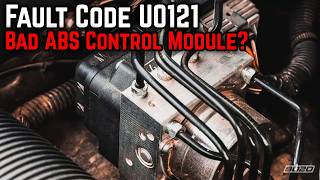
- Replacing a wheel speed sensor. A bad wheel speed sensor will cause ABS/VSC lights but typically sets a specific 'C' code (e.g., C1225, C1236). U0121 is a module communication failure, not a sensor failure. Always get the codes read with an ABS-capable scanner before buying parts. 🎬 Watch: Understanding the U0121 code and its common fixes
Most Likely Causes
- Damaged Wiring Harness or Connectors 🔴 High Probability Wiring harnesses in the engine bay and under the truck are exposed to heat, moisture, and potential rodent damage. Forum users frequently cite wiring damage as a cause. A common failure point is the harness near the passenger side frame rail where it can rub through.
How to confirm: Visually inspect the entire wiring harness leading to the ABS module (located in the engine bay) for any signs of chewing, chafing, melting, or corrosion. Pay close attention to the main connector at the module and the harness routing along the frame.
Typical fix: Repair the damaged section of the wire or replace the corroded connector. Ensure the repair is soldered and sealed against moisture with heat-shrink tubing. 🎬 See this step-by-step ABS harness replacement walkthrough
Est. part cost: $10-$50 for wiring repair supplies - Blown Fuse or Faulty Relay 🟡 Medium Probability Electrical spikes or shorts can blow fuses, cutting power to the ABS module and causing a communication loss.
How to confirm: Check the fuse boxes (both in the engine bay and inside the cabin) for blown fuses. Specifically inspect the fuses labeled 'ABS', 'ECU-B', 15A 'STOP', and 7.5A 'ECU-IG No.1'. Test for 12V power and a solid ground at the ABS module's electrical connector with a multimeter.
Typical fix: Replace the blown fuse. If the fuse blows again immediately, it indicates a short circuit that must be traced.
Est. part cost: $1-$5 - Failed ABS Control Module / Actuator Assembly 🟡 Medium Probability → Shop ABS Control Module Internal electronic failure of the module's circuit board or microcontroller can occur over time, though it's less common than wiring or fuse issues.
How to confirm: This is typically diagnosed by exclusion. If all fuses, power, ground, and CAN bus communication wires are confirmed to be good, the module itself is the likely culprit. A professional scan tool may also show the module is offline and unresponsive.
Typical fix: Replace the ABS module and pump assembly. This must be followed by a brake fluid bleed and a Zero Point Calibration of the VSC system using Techstream software. Some companies offer a repair service for the original module.
Est. part cost: $1000-$1800 for a new OEM part, $300-$600 for a repair service - Low Battery Voltage ⚪ Low Probability → Shop Vehicle Battery A weak or failing battery can cause unpredictable communication errors between various electronic modules on the vehicle as they require stable voltage to operate.
How to confirm: Test the battery voltage with the engine off. A healthy battery should read at least 12.4V. With the engine running, the alternator should be charging at 13.7V to 14.7V.
Typical fix: Charge or replace the vehicle's 12V battery.
Est. part cost: $150-$300
Rare But Worth Checking
- CAN Bus Network Fault: A problem elsewhere on the vehicle's communication network, such as a short in the wiring for another module, can sometimes disrupt the entire network and manifest as a loss of communication with the ABS module. This is rare and usually accompanied by multiple 'U' codes for other modules. Diagnosis is complex and best left to a professional.
Diagnosis Steps
- Read Codes: Use an OBD-II scanner capable of reading ABS/Chassis codes to confirm U0121 is present and check for any other 'U' or 'C' codes.
- Check Battery: Test the battery voltage and the charging system output to rule out low voltage as the cause.
- Inspect Fuses: Check all ABS-related fuses, including 'ABS', 'ECU-B', the 15A 'STOP' fuse, and the 7.5A 'ECU-IG No.1' fuse in the appropriate fuse boxes.
- Inspect Wiring: Thoroughly inspect the wiring harness going to the ABS module in the engine bay. Look for any signs of physical damage, corrosion, or rodent activity. Pay special attention to the harness routing along the passenger-side frame rail for chafing.
- Test Power and Ground: Using a multimeter and a wiring diagram, disconnect the ABS module connector and verify that it is receiving battery voltage on the correct pins and has a solid connection to chassis ground (less than 1 ohm resistance).
- Check CAN Bus: With the battery disconnected, measure the resistance between the two CAN bus wires at the ABS connector (typically Pin 5, CAN-L, and Pin 15, CAN-H). A healthy network should read approximately 60 ohms. If it reads 120 ohms, there is a break in the circuit or a missing terminating resistor. If it reads close to 0 ohms, the CAN wires are shorted together.
- Diagnose Module: If all wiring, power, ground, and CAN bus network tests pass, the ABS module itself is the most likely point of failure. This is a diagnosis by elimination.
Parts You'll Likely Need
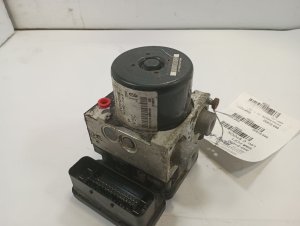
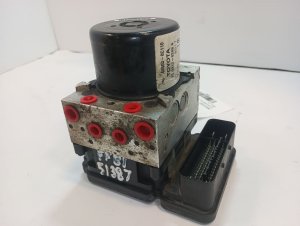
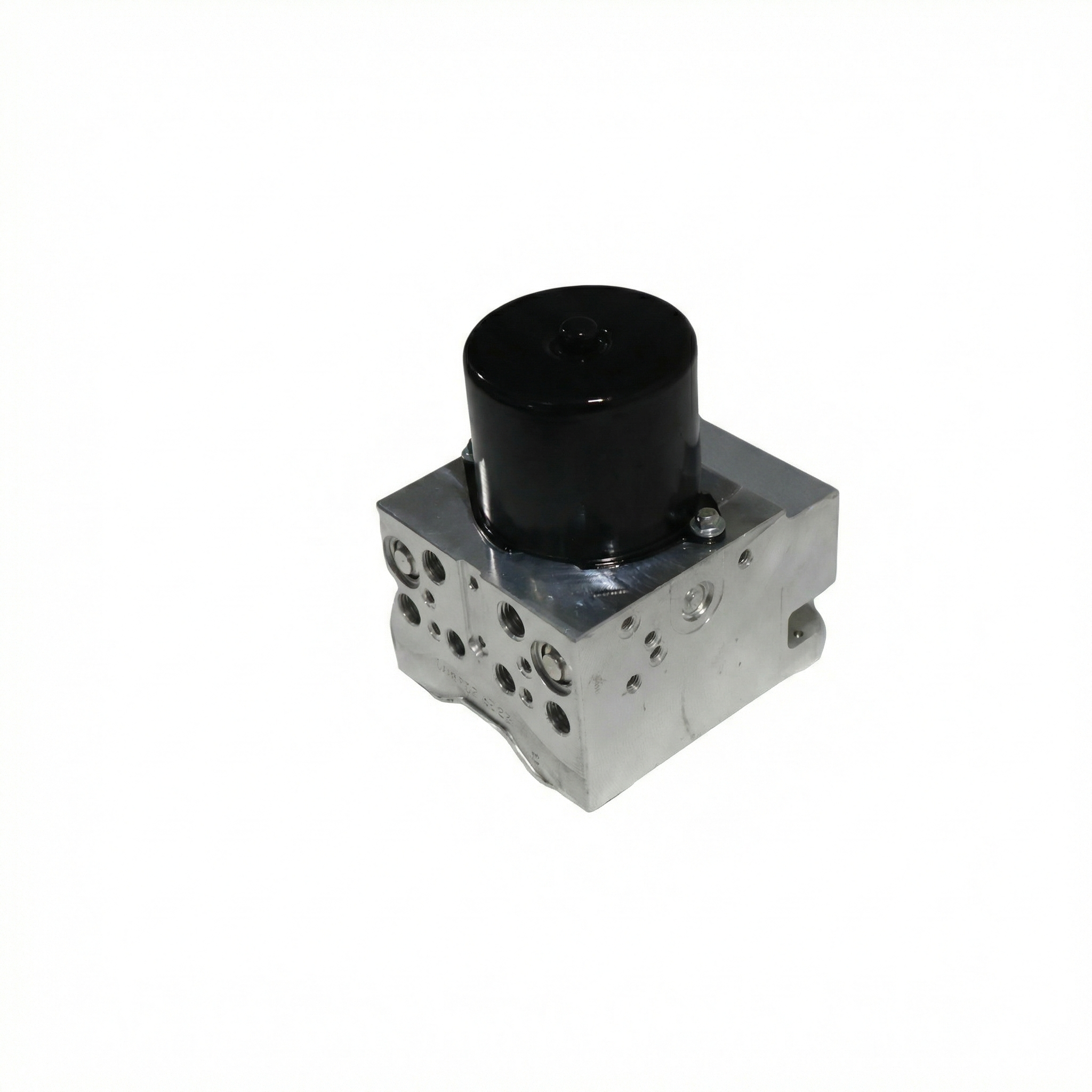
- ABS Control Module / Brake Actuator Assembly
(OEM #44050-0C190, 44050-0C160, 44050-0C171)— This is the part that needs to be replaced if it has failed internally, which is a common cause after wiring and fuses are ruled out. Part numbers vary by cab type, drivetrain, and model year. Always verify with VIN.
Trusted brands: Toyota (OEM), Aisin
OEM price range: $1020-$1800
Aftermarket price range: $800-$1200
Related Codes That Often Appear With This One
- C1223 — This is a general 'ABS Control System Malfunction' code that can be stored alongside the U0121 communication fault.
- C1241 — This code indicates 'Low or High Power Supply Voltage' to the ABS module, which is a direct cause of communication loss and often appears with U0121.
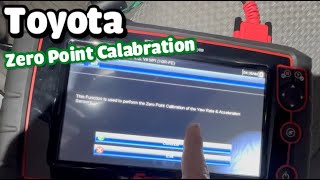
- C1290 — This code for 'Zero Point of Steering Angle Sensor is Not Calibrated' will often appear after an ABS module replacement and indicates the need to perform the Zero Point Calibration procedure. 🎬 Watch: How to perform the Toyota Zero Point Calibration
Technical Service Bulletins (TSBs) & Recalls
- While no TSB directly addresses U0121, TSB T-SB-0350-09 discusses water intrusion into the secondary air injection pump assembly. This highlights the vehicle's vulnerability to water-related electrical issues which could, in theory, affect other systems like the ABS module if connectors are compromised.
- In related Toyota platforms, manufacturer service bulletin ST005-06 notes that an updated Power Steering ECU may be available to address issues where DTCs U0105 and U0121 are present, as noted in NHTSA ODI #11173531.
Platform-Specific Known Issues
- Chafed Wiring Harness: A Tundra owner on Tundras.com with a U0121 code traced the issue to a wire that had rubbed through its insulation where the harness passes near the passenger side exhaust manifold. The repair involved splicing the broken wire and re-routing the harness to provide more clearance.
Mechanic-Grade Diagnostic Values
- CAN Bus Resistance — expected: 54 to 69 Ω. Failure: A reading of ~120 Ω indicates an open in the circuit or a missing terminating resistor. A reading near 0 Ω indicates a short between CANH and CANL wires.
- CAN Bus Voltage (at DLC3) — expected: Nominal 2.5V on both CANH and CANL with key on, engine off. Acceptable range is 1.5V to 3.5V.. Failure: Voltage outside the 1.5V-3.5V range indicates a fault on the network.
- Skid Control ECU Ground Connection Resistance — expected: Below 1.0 Ω. Failure: Resistance above 1.0 Ω indicates a poor ground connection, which can cause communication errors.
- Skid Control ECU Power Supply Voltage — expected: 10 to 14 V. Failure: Voltage below 10V points to a problem with the power supply circuit to the module.
Scan Tool Commands That Help
- Toyota Techstream: Health Check — This is the first step to scan all vehicle modules. It will quickly show which modules are communicating and which are not, confirming the U0121 is a hard fault and revealing any other 'U' codes.
- Toyota Techstream: Active Test — Within the ABS/VSC/TRAC menu, Active Test allows a technician to command individual solenoids and the ABS pump motor to function. If the module is online but setting other codes, this can test the hydraulic unit's functionality.
- Toyota Techstream: Utility -> Reset Memory — Used to clear codes and reset adaptations within the ABS module after a repair.
- Toyota Techstream: Utility -> Test Mode (Signal Check) — This function is used after installing a new or used ABS module. It helps the system recognize the new hardware and run initialization programs to ensure it operates correctly with the vehicle.
- Toyota Techstream: Utility -> Zero Point Calibration — This is a mandatory procedure after replacing the ABS module or certain suspension components. It calibrates the Yaw Rate and G-force sensors so the Vehicle Stability Control (VSC) system functions correctly.
Wiring & Ground Locations
- Skid Control ECU Connector (A17 / A26 / A27) — The main electrical connector on the Brake Actuator Assembly, located in the engine bay.. This is the primary point for testing power, ground, and CAN signals directly at the module. Key pins include: Ground (Pins 1 & 32 on some diagrams), Power (Pin 46 IG1), CANH, and CANL.
- DLC3 (OBD-II Port) — Under the driver's side dashboard.. This is where you connect a scan tool. For network testing, CAN bus resistance is measured between Pin 6 (CANH) and Pin 14 (CANL).
- Main Engine Grounds — The main grounds from the battery cable harness are located at the rear of the cylinder heads, one on each side, near the transmission bell housing.. While not a direct ground for the ABS module, a poor main engine ground can introduce electrical noise and voltage stability issues that affect all vehicle electronics.
- ECU-B Fuse — Located in the engine room junction block (fuse box).. This fuse provides constant power to many ECUs, including the Skid Control ECU. A failure here will cut power and cause a communication loss.
Real Owner Repair Stories
- Tundras.com Forum User (Toyota Tundra, year not specified but within 2nd generation) — Dash lit up 'like a Christmas tree', loss of power to A/C controls and rear view mirror, could not shift out of park without using override.
❌ Tried (didn't work) A mechanic quoted $2,200 for a new ABS control module.
✅ What actually fixed it The owner found the 'ECU-IG No. 1' fuse was blown. Replacing it caused it to blow immediately, indicating a short circuit. The final fix required tracing and repairing a short in the wiring, not replacing the ABS module. This confirmed the ABS module was not the root cause, despite the initial diagnosis. - YouTube video by 'beast n shine' (Toyota Tundra, 4x4, year not specified) — 4x4 not engaging, ABS code C1322 (open circuit in rear speed sensor).
✅ What actually fixed it The problem was caused by moisture and corrosion in the rear ABS wiring harness (Part No. 89516-0C050), which is a common failure point. The entire rear harness, which covers both rear wheel speed sensors, was replaced to resolve the open circuit and restore 4x4 and ABS function. This highlights how a wiring fault can cause communication-related issues. - NHTSA ODI #10465719 — An owner reported a failure involving the electric power steering where the MIL was on with DTCs U0105 and U0121.
OEM Part Supersession History
44050-0C190→N/A— This part number is specific to 2007-2008 Tundra models (CrewMax and Double Cab with 165" wheelbase). It has not been directly superseded but other numbers exist for different configurations.
Heads up: Using a module from a different cab style, drivetrain (2WD vs 4WD), or model year can result in incompatibility and persistent warning lights. Always match the part number exactly or verify with a VIN.
Model Year Variations Within This Range
- 2010-2011: For the 2010 model year, the Tundra received a new mid-range 4.6L V8 (1UR-FE) engine option. While the ABS system functions are the same, there could be minor variations in wiring harnesses or module software to accommodate the different engine ECU.
- 2007-2009 vs 2010-2011: The 4.0L V6 engine received dual VVT-i in 2011, which changed its power output and engine management. While this doesn't directly impact the ABS module's core function, it's a significant electrical and software change on the vehicle's network that could affect diagnostics.
Diagnostic Flowchart
Other Known Issues on This Vehicle
Issues unrelated to this code that are worth knowing about as an owner of this generation:
- Secondary Air Injection System (SAIS) Failure 🔴 High — Very common, often occurs between 60,000 and 120,000 miles. Water intrusion into the air pumps or stuck valves are the typical failure modes, leading to a check engine light and the truck entering 'limp mode'. (Ref: Toyota issued a warranty extension and multiple TSBs (e.g., T-SB-0350-09, T-SB-0144-14) for this issue.)
- Camshaft Tower Seal Leak 🟠 Medium — A common oil leak that develops over time, typically noticed after 100,000 miles. It's a slow seep from where the cam towers are sealed to the cylinder heads. While not immediately critical, it can make a mess and eventually lead to noticeable oil loss.
- Water Pump Failure 🟠 Medium — The water pump, particularly on the 5.7L V8, is a known weak point. Failure often occurs between 80,000 and 150,000 miles, identified by a slow coolant leak from the weep hole.
- Frame Rust/Corrosion 🔴 High — While recalls primarily targeted earlier 2000-2006 models, the 2007+ generation can still be susceptible to significant frame rust, especially in the salt belt. It can affect structural integrity and brake line mounting points. (Ref: Recalls and Limited Service Campaigns (LSCs) were issued for earlier generations, but owners of 2007+ models should still perform regular inspections.)
- Cracked Exhaust Manifolds 🟡 Low — The 5.7L V8 engine's exhaust manifolds can develop cracks, causing an audible 'ticking' noise, especially when the engine is cold. It's an annoyance but doesn't typically cause major performance issues immediately.
Used vs. New Parts: Buying Guide for This Vehicle
When a used part is the smart pick: A used ABS module from a junkyard is a very viable and cost-effective option for this generation of Tundra. Unlike many newer vehicles, this module often does not require VIN programming, making a swap much simpler. The key is to match the OEM part number exactly.
Donor-vehicle mileage cap: roughly under 150000 miles for the part to have meaningful remaining life.
What to inspect on the donor part:
- Match the part number on your original module EXACTLY. There are many variations.
- Inspect the electrical connector pins on the donor module for any signs of corrosion, moisture, or damage.
- If possible, get the module from a vehicle that was in a rear-end collision, suggesting the front-mounted ABS system was likely undamaged and functional.
- Ask the seller for a warranty or return period in case the unit is faulty.
OEM-only on this vehicle (don't cheap out):
- While a used OEM module is a good choice, if buying new, sticking with Toyota (OEM) or the original manufacturer (often Aisin) is strongly recommended over unproven aftermarket brands for a critical safety component like this.
Aftermarket brands forum-validated for this vehicle:
- Module repair services (e.g., ECU Maverick) are a good alternative to buying new. They repair your original unit, which avoids any compatibility issues.
Brands owners have reported issues with on this vehicle:
- Be cautious of no-name, cheap aftermarket modules from online marketplaces, as their long-term reliability and compatibility with the VSC system are unproven.
Real Owner Stories
Aggregated from forums and TSBs cited above. Mileages and costs reflect what owners reported in those sources.
2007-2011 Toyota Tundra
Symptoms: U0121 code with a 'Christmas tree' of dashboard warning lights.
What fixed it: Found and cleaned a faulty ground wire for the ABS module.
Source hint: TundraTalk.net forum user report
2007-2011 Toyota Tundra
Symptoms: U0121 code present; traced to a wire that had rubbed through its insulation.
What fixed it: Spliced the broken wire where the harness passed near the passenger side exhaust manifold and re-routed the harness for better clearance.
Source hint: Tundras.com vehicle_specific_issues
Toyota Tundra (NHTSA ODI #11173531)
Symptoms: Vehicle stopped temporarily while at a stop. Diagnostic showed DTCs U0105 and U0121.
What fixed it: The dealership identified manufacturer bulletin ST005-06 and updated the power steering ECU.
Related OBD-II Codes
Frequently Asked Questions
Which specific fuses should I check on my 2007-2011 Tundra for a U0121 code?
Is there a TSB for the ABS module communication failure on this model?
Can I fix the 'Christmas tree' dash lights (ABS, VSC, TRAC) without replacing the expensive ABS actuator?
How do I perform a Zero Point Calibration after working on the ABS system?
Where is the most common place for wiring damage to cause U0121 on a Tundra?
Will a weak battery cause my 4HI and 4LO lights to flash?
Helpful Videos

We Have This Part in Stock

The information in this article is provided for general reference and educational purposes only. Vehicle specifications, procedures, and part compatibility can vary by production date, trim level, and region. Always consult your vehicle's factory service manual and verify part numbers before purchasing or performing repairs. Safety-critical components such as airbags, seat belts, and braking systems should be installed by a qualified professional.
- Toyota Tundra:
- 🧭 Diagnostic Flowchart
- 🎬 Helpful Videos
- 🛍️ Shop This Part
- What's Unique About the 2007-2011 Toyota Tundra
- Symptoms You May Notice
- Most Likely Causes
- Rare But Worth Checking
- Diagnosis Steps
- Parts You'll Likely Need
- Related Codes That Often Appear With This One
- Technical Service Bulletins (TSBs) & Recalls
- Platform-Specific Known Issues
- Mechanic-Grade Diagnostic Values
- Scan Tool Commands That Help
- Wiring & Ground Locations
- Real Owner Repair Stories
- OEM Part Supersession History
- Model Year Variations Within This Range
- Other Known Issues on This Vehicle
- Used vs. New Parts: Buying Guide for This Vehicle
- Real Owner Stories
- 2007-2011 Toyota Tundra
- 2007-2011 Toyota Tundra
- Toyota Tundra (NHTSA ODI #11173531)
- Related OBD-II Codes
- Frequently Asked Questions
- 🎟️ Get 5% Off