

U0126 on 2015-2019 GMC Yukon Denali: Lost Communication With Steering Angle Sensor Module Causes & Fixes
On a 2015-2019 GMC Yukon Denali, code U0126 is most often caused by a pinched or chafed wiring harness under the driver-side instrument panel or sill plates, as documented in GM Technical Service Bulletins. Repairing the specific damaged wire (often the Communication Enable Circuit 5986) is the likely fix, not replacing the sensor itself. This issue is common across the entire GM K2XX platform, including the Tahoe, Suburban, and Escalade.
- For a 2015-2019 GMC Yukon Denali, U0126 strongly suggests a wiring problem, not necessarily a bad sensor.
- Before buying any parts, thoroughly inspect the wiring harnesses behind the driver's side dash and under the door sill plates, as specified in GM TSBs.
- Driving is possible, but key safety features like stability and traction control will be offline.
- This code is frequently accompanied by other communication codes (U0077, U0121, U0131), all pointing to a single network wiring fault.
- Due to the complexity of CAN bus diagnostics, professional service is recommended if the visual inspection of known problem areas doesn't reveal an obvious fault.
What's Unique About the 2015-2019 Gmc YUKON DENALI
This generation of GMC Yukon, part of the GM K2XX platform, along with its siblings (Chevrolet Tahoe, Suburban, Silverado, and Cadillac Escalade), is known for specific wiring harness issues that can trigger code U0126. Manufacturer TSBs point to harnesses being pinched by an instrument panel bracket near the parking brake pedal or chafed under the door sill plates. This makes a wiring fault a much higher probability on this specific platform compared to a random module failure.
Diagnostic Flowchart
Tap your situation to follow the diagnostic path that matches what you're seeing on this vehicle.
Symptoms You May Notice
- "Service StabiliTrak" or "Service Suspension System" me 🎬 Watch: Real-world symptoms of the Service StabiliTrak and Suspension warnings.ssage on the dashboard.
- ABS and Traction Control warning lights illuminated.
- Loss of power steering assist, making the wheel feel heavy, especially at low speeds.
- Backup camera guidelines may be missing or inoperative.
- Vehicle Settings icon may be grayed out on the infotainment screen.
- Cruise control may become inoperative.
- Replacing the Steering Angle Sensor module without first thoroughly inspecting the wiring harnesses identified in TSBs #PIT5288H and #PIT5457D. The wiring is a more common and well-documented point of failure on this platform.
Most Likely Causes
- Pinched or Chafed Wiring Harness 🔴 High Probability GM has issued multiple Technical Service Bulletins (TSBs) identifying specific locations where the wiring harness can be damaged. TSB #PIT5288H points to the harness being pinched between the left instrument panel mounting bracket and the body, near the parking brake pedal. TSB #PIT5457D identifies issues with the Communication Enable circuit (5986, a dark green wire) being open or shorted under the driver and passenger sill plates due to corrosion or chafing.
How to confirm: Visually inspect the wiring harnesses in the locations specified by the TSBs. For PIT5288H, remove the driver's side dash end panel and look for a harness that is trapped or cannot move freely near the metal I/P bracket. For PIT5457D, remove the sill plates and inspect for corroded splices or damaged wires. A technician would check for voltage on the Communication Enable circuit (Circuit 5986) at the SAS module connector; it should have approximately 12 volts with the key on.
Typical fix: Repair the damaged section of the wire harness by properly splicing, soldering, and protecting the affected wires with heat shrink. Reroute the harness to prevent future damage, ensuring it is clear of the pinching bracket or sharp edges.
Est. part cost: $5-$25 - Failed Steering Angle Sensor (SAS) Module 🟡 Medium Probability → Shop Steering Angle Sensor
How to confirm: After confirming the wiring, power (including the 12V on Circuit 5986), and ground to the SAS module are all good, the module itself becomes the primary suspect. A professional scan tool will show the module as offline or unresponsive. A user on a popular forum confirmed their issue was the sensor after getting codes C0710 and C0455 along with U0126.
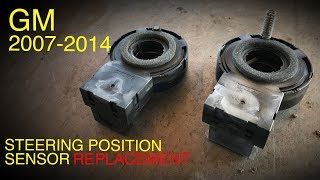
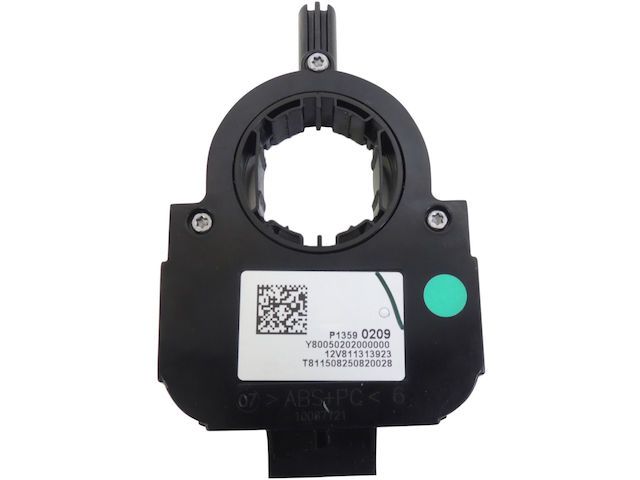
Typical fix: Replace the Steering Angle Sensor module (OEM Part #13590209). This often requires removing the steering wheel and clock spring. 🎬 See this walkthrough for tips on replacing the steering sensor. The new sensor must be programmed and calibrated with a GM-specific scan tool after installation.
Est. part cost: $100-$250 - Low Battery Voltage or Poor Ground ⚪ Low Probability → Shop Vehicle Battery
How to confirm: Test the battery voltage with the engine off; it should be above 12.4V. Check the main battery terminals and chassis ground connections for tightness and corrosion. A weak or failing battery can cause sporadic communication errors across various modules.
Typical fix: Recharge or replace the battery. Clean or tighten ground connections.
Est. part cost: $0-$250 - Software/Calibration Issue Very Low Probability A recall for 2015 models (NHTSA #18V586000) addressed a loss of power steering assist due to a software issue causing low-voltage events, which could potentially set communication codes. However, the primary documented causes for U0126 are physical wiring faults.
How to confirm: A technician can check for any available software updates for the Power Steering Control Module (PSCM) or Electronic Brake Control Module (EBCM), but this should be done after physical wiring checks are complete.
Typical fix: Reprogram the relevant control module with the latest software using a GM MDI tool.
Est. part cost: $0-$150
Rare But Worth Checking
- Faulty Electronic Brake Control Module (EBCM): → Shop ABS Control Module The EBCM is a major hub on the high-speed CAN bus and provides a reference voltage to the SAS. While rare, an internal failure in the EBCM can disrupt network communication and set codes for other modules it communicates with.
Diagnosis Steps
- Scan all vehicle modules for stored Diagnostic Trouble Codes (DTCs) using a scan tool capable of reading 'U' (network) and 'C' (chassis) codes. Note all codes present.
- Check for and review any applicable TSBs, specifically #PIT5288H and #PIT5457D for this vehicle.
- Inspect the wire harness at the left side of the instrument panel. Remove the dash end cap and look for a harness being pinched by the metal I/P support bracket near the parking brake pedal, as per TSB #PIT5288H.
- Remove the driver and passenger door sill plates and lift the carpet to inspect the chassis wiring harness. Look for signs of water intrusion, corrosion on splices, or chafed wires, specifically related to Circuit 5986 as per TSB #PIT5457D.
- If no obvious wiring damage is found, check for power, ground, and network activity at the Steering Angle Sensor connector. Using a multimeter, confirm the Communication Enable circuit (5986, typically a dark green wire) has approximately 12 volts with the key in the 'ON' position.
- Test the CAN bus resistance at the OBD-II port (pins 6 and 14) with the key off and battery disconnected. A healthy network should read approximately 60 ohms.
- If wiring, power, and network integrity are confirmed, the Steering Angle Sensor module itself is the likely culprit.
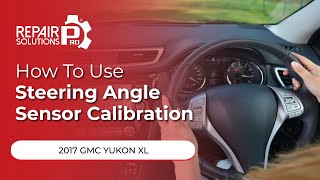
- After any repair, clear all DTCs, and if the sensor was replaced, perform the steering angle sensor calibration procedure using a compatible scan tool. 🎬 Watch: How to perform the steering angle sensor calibration procedure.
Parts You'll Likely Need
- Steering Angle Sensor
(OEM #13590209)— If the wiring harness is intact, the sensor module itself may have failed internally, preventing it from communicating on the network. This part requires calibration after installation.
Trusted brands: ACDelco (OEM), Dorman
OEM price range: $150-$250
Aftermarket price range: $80-$150 - Wiring Repair Supplies — Given the high likelihood of a chafed or pinched harness based on TSBs, you will need quality wire, terminals, heat shrink, and Tesa tape to perform a durable, OEM-style repair.
OEM price range: $10-$30
Aftermarket price range: $5-$20
Related Codes That Often Appear With This One
- U0077 — High Speed Communication Bus (-) shorted to Bus (+). This code, along with U0126, is specifically mentioned in TSBs #PIT5288H and #PIT5457D, pointing to a shared wiring harness issue.
- U0121 — Lost Communication With Anti-Lock Brake System (ABS) Control Module. This often appears with U0126 because the SAS and ABS modules work together and share the same communication network (specifically Circuit 5986), which is likely compromised by the same wiring fault.
- U0131 — Lost Communication With Power Steering Control Module. This is another module on the same network. TSB #PIT5457D lists this code as part of the same wiring harness problem.
- C0710 — Steering Wheel Angle Sensor Signal. This code often accompanies U0126 and points more directly to the SAS circuit. A forum user with a similar vehicle found this code along with others, leading to a diagnosis of a bad sensor.
- U0415 — Invalid Data Received From Anti-Lock Brake System Control Module. This indicates that even if communication isn't completely lost, the data being received is corrupt, often due to a wiring issue. It's cited in both TSBs #PIT5288H and #PIT5457D.
Technical Service Bulletins (TSBs) & Recalls
- PIT5288H: Addresses multiple communication DTCs, including U0126, caused by a pinched wiring harness in the driver's side dash.
- PIT5457D: Points to an open or high-resistance fault in the Communication Enable Circuit (5986) under the driver or passenger sill plates as a cause for U0126 and other communication codes.
Platform-Specific Known Issues
- TSB #PIT5288H documents a condition where the main dash harness can be pinched between the left I/P dash mounting bracket and the body, directly behind the driver's side dash trim panel. This physical stress can break sensitive CAN bus wires.
- TSB #PIT5457D points to the communication enable circuit (5986, a dark green wire) being open or having high resistance. This is often caused by a corroded factory splice (Splice J365) located under the passenger front sill plate.
Mechanic-Grade Diagnostic Values
- CAN Bus Network Resistance — expected: ~60 Ω (Ohms) when measured between Pin 6 (CAN High) and Pin 14 (CAN Low) of the OBD-II port with the battery disconnected.. Failure: A reading of ~120 Ω indicates an open circuit or a missing terminating resistor. A reading near 0 Ω indicates a short between the CAN High and Low wires.
- Communication Enable Circuit (Circuit 5986) Voltage — expected: Approximately 12 Volts with the ignition in the ON position.. Failure: Low or no voltage indicates an open, short, or high resistance in the circuit, a known issue documented in TSB PIT5457D.
- CAN High / CAN Low Voltage (at SAS connector) — expected: CAN High should be ~2.6V and CAN Low should be ~2.4V with the key on.. Failure: Voltages stuck near 0V or 5V, or no voltage differential, indicates a hard fault on the bus.
- Ground Circuit Resistance (at SAS connector) — expected: Less than 0.1 Ω between the ground pin and a clean chassis ground point.. Failure: High resistance indicates a poor ground connection, which can cause intermittent module dropouts.
Scan Tool Commands That Help
- GM GDS2 (Global Diagnostic System 2): Steering Angle Sensor Calibration — This procedure is required after replacing the Steering Angle Sensor or the steering column to zero the sensor's position and ensure accurate data is sent to the StabiliTrak and power steering systems.
- GM GDS2 (Global Diagnostic System 2): Module Communication Test — To actively poll the Steering Angle Sensor module. If the module does not respond, it confirms it is offline, pointing to a power, ground, or network wiring issue, or a failed module.
Wiring & Ground Locations
- Splice J365 — Under the passenger front sill plate, within the main chassis harness.. TSB #PIT5457D identifies this splice as a common failure point for the Communication Enable Circuit (5986) due to corrosion, causing an open or high resistance that disables communication with the SAS and other modules.
- G110 — On the driver's side of the engine near the front, right behind the power steering pump.. A technician identified this as the common ground for the Engine and Transmission Control Modules. While not directly for the SAS, a poor connection here can cause widespread network communication failures and intermittent power steering loss, mimicking U0126 symptoms.
- Frame Grounds (Driver/Passenger Side) — On the frame, located right behind both front wheels.. These grounds are in a terrible location prone to water and road salt splash, leading to corrosion. Poor grounding can cause a host of unpredictable electrical and network issues.
- G218 — Under the driver's side dash, often behind the kick panel or under the carpet/insulation.. This is a major interior ground point. On some GM trucks, foam insulation can get pinched under the ground nut, causing a poor connection and leading to various electrical faults.
Real Owner Repair Stories
- YouTube user comment on a G218 ground fix video (2014-2018 GM Truck (specific model not stated, but platform is the same)) — Unspecified ground issue causing major headaches.
❌ Tried (didn't work) Hours of searching online for a solution.
✅ What actually fixed it Following a video guide to locate ground G218 under the driver's side dash, pulling back the foam insulation that was interfering with the connection, and tightening the ground nut. The fix took 30 minutes. - YouTube video from 'u0100 and u0101 2015 GMC Yukon...' (2015 GMC Yukon) — Intermittent loss of power steering assist, tachometer not working, PRNDL display blank, codes U0100 and U0101.
❌ Tried (didn't work) Initial code scan pointed to ECM/TCM communication loss.
✅ What actually fixed it The technician identified that powertrain flex (shifting from Park to Drive) would sometimes make the connection return, pointing to a physical wiring issue. They located ground G110 on the driver's side of the engine, which is the common ground for the ECM and TCM. Cleaning this ground point and re-securing it resolved the intermittent network communication failure.
Model Year Variations Within This Range
- 2015-2018: Many earlier models in this range were equipped with an 8-speed transmission that was known for issues. Later models (2018+) were more commonly equipped with an improved 10-speed transmission. While not directly related to the SAS, being aware of the 8-speed transmission issues can be important context when diagnosing multiple vehicle faults.
- 2015: 2015 models were subject to a specific recall (NHTSA #18V586000) for a software issue that could cause a temporary loss of electric power steering due to low-voltage events during low-speed turns. This software-induced voltage drop could potentially trigger communication codes like U0126.
Helpful Videos

We Have This Part in Stock

The information in this article is provided for general reference and educational purposes only. Vehicle specifications, procedures, and part compatibility can vary by production date, trim level, and region. Always consult your vehicle's factory service manual and verify part numbers before purchasing or performing repairs. Safety-critical components such as airbags, seat belts, and braking systems should be installed by a qualified professional.
- Gmc YUKON DENALI:
- 🧭 Diagnostic Flowchart
- 🎬 Helpful Videos
- 🛍️ Shop This Part
- What's Unique About the 2015-2019 Gmc YUKON DENALI
- Symptoms You May Notice
- Most Likely Causes
- Rare But Worth Checking
- Diagnosis Steps
- Parts You'll Likely Need
- Related Codes That Often Appear With This One
- Technical Service Bulletins (TSBs) & Recalls
- Platform-Specific Known Issues
- Mechanic-Grade Diagnostic Values
- Scan Tool Commands That Help
- Wiring & Ground Locations
- Real Owner Repair Stories
- Model Year Variations Within This Range
- 🎟️ Get 5% Off