

U0126 on 2018-2022 Honda Accord: Lost Communication With Steering Angle Sensor Fixes
On a 2018-2022 Accord, code U0126 is most often caused by a weak or failing 12V battery, not a bad sensor. Before replacing any parts, fully charge and test your battery. If the battery is healthy, the next most likely cause is a wiring or connector issue near the steering column, or a simple need for sensor recalibration.
- U0126 means the Steering Angle Sensor module has lost communication with the car's network.
- The most likely cause is a weak 12V battery. Always test the battery before buying any parts.
- If the battery is good, check for lost calibration (especially after a battery disconnect) or inspect wiring at the steering column and EPS rack for damage.
- Replacing the Steering Angle Sensor is a later step and requires calibration with a professional scan tool.
- This code disables critical safety systems like VSA and ABS, so it should be addressed promptly.
What's Unique About the 2018-2022 Honda Accord
The 2018-2022 Honda Accord (10th Generation) relies heavily on data from the Steering Angle Sensor for its Honda Sensing™ suite of driver-assist features, including Lane Keeping Assist (LKAS) and Adaptive Cruise Control (ACC). While the U0126 code points to an electrical communication failure, it's important not to confuse it with the well-known 'sticky steering' recall (NHTSA Campaign 24V-744) on 2022+ models. That recall addresses a mechanical issue within the steering rack that does NOT set a trouble code, whereas U0126 is purely an electronic/network fault. A notable vulnerability on this platform and its relatives (like the Civic) is rodent damage to the EPS harness near the steering rack, which can cause an open circuit and trigger this code.
Symptoms You May Notice
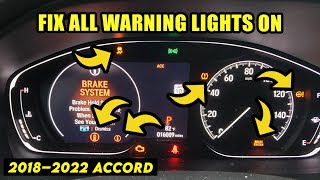
- Multiple warning lights on the dashboard, including ABS, VSA, Power Steering, and Brake System. 🎬 Watch: How to fix all dash warning lights on your Accord
- Loss of power steering assist, making the wheel feel heavy, especially at low speeds.
- Driver-assist systems like Lane Keeping Assist (LKAS) and Adaptive Cruise Control (ACC) become unavailable and show messages on the dash.
- The steering may exhibit a brief, irregular 'jitter' as the system attempts to regain communication.
- In some cases, after disconnecting and reconnecting the battery, the lights may appear and can sometimes be cleared by a steering angle sensor reset procedure.
- Immediately replacing the Steering Angle Sensor without checking the battery and wiring first. Many communication codes are caused by low voltage or wiring faults, not a failed sensor module.
- Replacing the clock spring for an airbag fault when the integrated SAS is the actual point of failure, or vice-versa.
- Confusing this electronic communication fault with the separate mechanical 'sticky steering' issue covered by a recall on later models.
Most Likely Causes
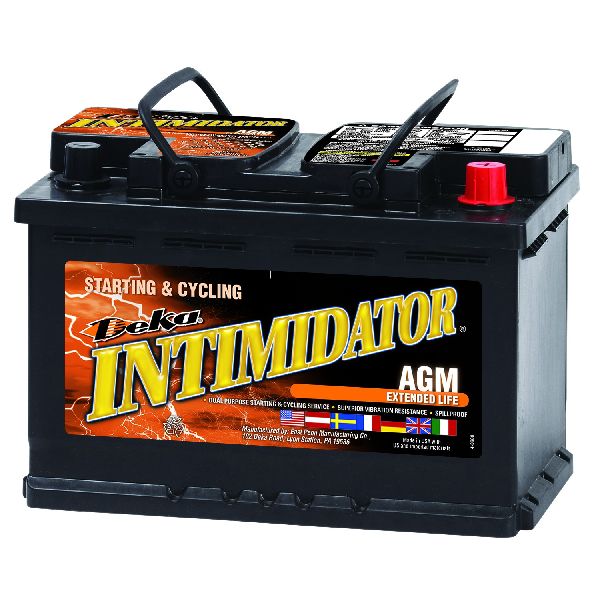
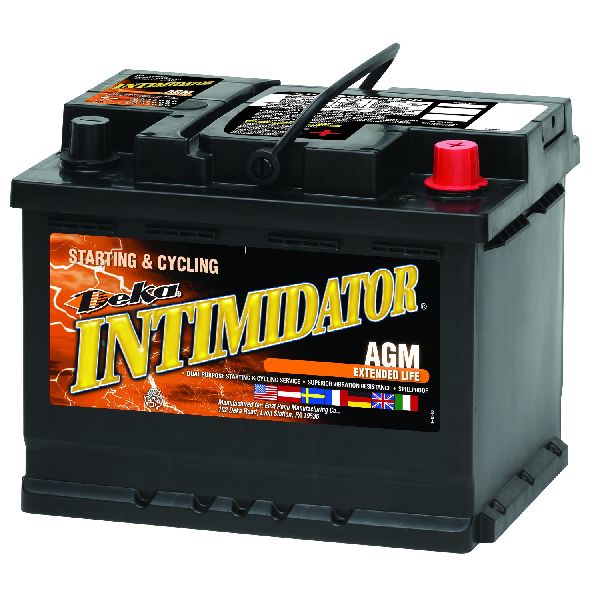
- Low Battery Voltage or Failing Battery 🔴 High Probability → Shop Vehicle Battery Modern vehicles like the 10th gen Accord have numerous electronic modules that are highly sensitive to system voltage. A weak battery can cause modules to drop off the communication network during startup, triggering U-codes before any starting issues are apparent.
How to confirm: Use a multimeter to test the battery voltage with the engine off. A healthy battery should read at least 12.4V. Have the battery professionally load-tested at an auto parts store to confirm its health, as a voltage test alone is not always sufficient.
Typical fix: Recharge or replace the 12V battery.
Est. part cost: $150-$300 - Damaged Wiring or Loose Connector 🟡 Medium Probability Wiring in the steering column can be stressed or disturbed during other repairs. A known issue on Hondas of this era is rodent damage to harnesses, particularly the EPS harness near the steering rack. Connectors can also suffer from corrosion or backed-out pins.
How to confirm: Visually inspect the wiring harnesses and connectors going to the steering column, under the dash, and near the steering rack. Check for pinched wires, corrosion, or signs of rodent nesting/chewing. With the battery disconnected, use a multimeter to check for 60 Ohms of resistance between Pin 6 (CAN-H) and Pin 14 (CAN-L) on the OBD-II port to verify network integrity.
Typical fix: Repair the damaged section of the harness or clean and re-seat the connector.
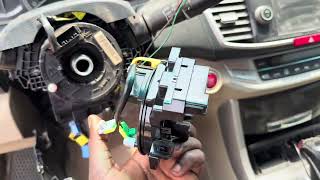
Est. part cost: $5-$100 for repair materials - Faulty Steering Angle Sensor (SAS) Module ⚪ Low Probability → Shop Steering Angle Sensor While less common than power or wiring issues, the sensor module itself can fail internally. This part is often integrated with the clock spring assembly (also known as a cable reel or spiral cable).
How to confirm: This is a process of elimination. If the battery is good, and all wiring, power, and ground connections to the module are verified to be intact, the module itself is the likely culprit. A professional scan tool may show the module as 'offline' or have internal fault codes.
Typical fix: Replace the Steering Angle Sensor module. This part is often integrated with the clock spring assembly. After replacement, the new sensor MUST be calibrated using a bi-directional scan tool.
Est. part cost: $200-$400
Rare But Worth Checking
- Needs Steering Angle Sensor Calibration: → Shop Steering Angle Sensor
Diagnosis Steps
- Check for other Diagnostic Trouble Codes (DTCs). Multiple U-codes suggest a network-wide problem. Codes like C0051-54 point towards a calibration issue.
- Check the battery. Ensure it has a full charge (at least 12.4V) and have it load-tested. A weak battery is the most common cause.
- Clear the codes. Disconnect the battery for 10 minutes or use a scan tool. See if the code returns immediately.
- Attempt a simple SAS recalibration. With the car on, turn the steering wheel all the way to the left, then all the way to the right, then center it. Drive a short distance to see if the lights clear. This is not a guaranteed fix but is simple to try.
- Perform a visual inspection of the wiring and connectors around the steering column, under the driver's side dashboard, and especially the EPS harness near the steering rack for rodent damage.
- With the ignition off and battery disconnected, test the CAN bus resistance at the OBD-II port (pins 6 and 14). A reading of ~60 Ω is healthy; readings of ~120 Ω or infinite resistance indicate an open circuit, while readings below 60 Ω suggest a short.
- If network tests are inconclusive, use a multimeter to verify that the SAS module is receiving proper power (12V) and has a good ground connection (<0.1 Ω resistance to chassis) at its electrical connector.
- If all else fails, the Steering Angle Sensor module is the likely cause. Replacement and calibration are required.
Parts You'll Likely Need
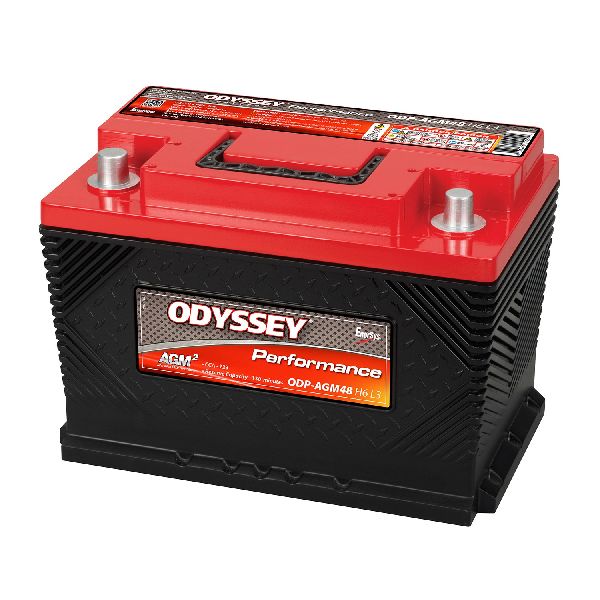
- 12V Battery — A weak or failing battery is the most common trigger for communication codes on modern Hondas.
Trusted brands: Interstate, DieHard, Duracell, Honda OEM
OEM price range: $200-$300
Aftermarket price range: $150-$250 - Steering Angle Sensor
(OEM #35000-TVA-A11 (Verify with VIN, often part of clock spring assembly))— If battery and wiring are confirmed to be good, the sensor module itself is the next logical replacement. It is often part of the clock spring assembly.
Trusted brands: Honda (OEM), Standard Motor Products, Duralast
OEM price range: $300-$400
Aftermarket price range: $170-$300
Related Codes That Often Appear With This One
- U0122 — Lost Communication With Vehicle Dynamics Control (VDC) Module. This module is the central hub for VSA/ABS, and its failure to see the SAS module triggers U0126.
- C0051-54 — Steering Angle Neutral Position Learning Incomplete. This often appears with U0126 after a battery disconnect, indicating a calibration issue is the root cause.
- C0051-96 — Steering Angle Sensor Failure (Sensor Detects Internal Failure). This code points more directly to an internal failure of the SAS module itself.
Platform-Specific Known Issues
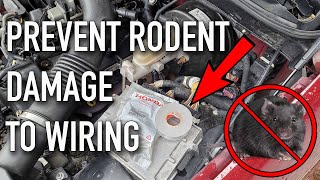
- Rodent Damage to EPS Harness: The soy-based wiring insulation used in many modern cars is attractive to rodents. On 10th gen Accords and Civics, the EPS (Electric Power Steering) harness located near the steering rack is a common target. Chewed wires will break the CAN bus communication and trigger a U0126 code, along with other EPS-related faults. A visual inspection of this area is critical. 🎬 Watch: How to prevent rodent damage to your vehicle's wiring
- Calibration Lost After Battery Change: → Shop Vehicle Battery The 10th generation Accord is highly sensitive to battery disconnections. If the battery is replaced or disconnected for service, the Steering Angle Sensor can lose its calibration, triggering U0126 and a cascade of warning lights immediately upon reconnection. Often, the only 'fix' required is to perform the SAS relearn procedure with a capable scan tool.
Mechanic-Grade Diagnostic Values
- CAN Bus Network Resistance — expected: 54 to 69 Ω (ideally 60 Ω). Failure: A reading of ~120 Ω indicates an open circuit or a missing terminating resistor. A reading near 0 Ω indicates a short between CAN-H and CAN-L.
- SAS Module Power Supply Voltage — expected: 11 to 14 V. Failure: Voltage below 11V with the key on indicates a power supply issue to the module.
- SAS Module Ground Resistance — expected: Below 1.0 Ω. Failure: Resistance higher than 1.0 Ω indicates a poor ground connection, which can cause intermittent communication loss.
- CAN Bus Idle Voltage (Key On, Engine Off) — expected: CAN-H: ~2.6 V, CAN-L: ~2.4 V. Failure: Significant deviation from these voltages or a line stuck high or low indicates a physical layer fault on the bus.
Scan Tool Commands That Help
- Honda HDS (Honda Diagnostic System): F-CAN Bus Connected Unit Check — This function, found under the CAN gateway FUNCTION TEST menu, is used to verify which modules are actively communicating on the network. If the EPS control unit (which includes the SAS) shows as 'Not Available for Bus B', it confirms the communication loss and directs the technician to test that specific bus line.
- Bi-directional Scan Tool (e.g., Autel, Launch): Steering Angle Sensor Calibration / SAS Relearn — This is a mandatory step after replacing the steering angle sensor or after the code appears following a battery replacement or alignment. The procedure electronically resets the 'zero point' of the steering wheel.
Wiring & Ground Locations
- Steering Angle Sensor 4P Connector — Located on the steering column, typically integrated with or near the clock spring assembly, accessible after removing the steering column covers.. This is the primary connection point for the sensor. Verifying power, ground, and CAN signals at this connector is a critical diagnostic step. A loose connection here is a common cause of the fault.
- F-CAN (Fast CAN) & B-CAN (Body CAN) — These are the two main communication networks in the vehicle. The SAS/EPS module communicates on the B-CAN bus with the gauge control module and on the F-CAN bus with the VSA/ABS and TCM modules.. A U0126 code on a 2018-2022 Accord specifically points to a communication failure on the CAN bus line connecting the EPS control unit. Honda service information indicates this is a 'Bus B' fault.
- Steering Column Ground — The steering column itself must be properly grounded to the chassis. Grounding points are typically located under the dashboard near the column's mounting bolts.. While the sensor has a dedicated ground wire, an improperly grounded steering column can introduce electrical noise and intermittent communication problems for all column-mounted electronics.
Real Owner Repair Stories
- Reddit user /u/Temporary_Doubt8765 (2018 Honda Accord) — Power steering would lock up and get stuck, especially during parking after a long drive. A warning light would flash and then disappear without storing a code.
❌ Tried (didn't work) The user was initially unsure of the cause due to the intermittent nature and lack of stored codes.
✅ What actually fixed it Replacing the 12V battery solved the steering lock-up problem. The user noted that the car started without any issues and showed no other typical signs of a weak battery, making the diagnosis difficult. - Honda forum user (2017 Honda Pilot (similar platform/electronics)) — After a battery change at Walmart, the dashboard lit up with multiple warnings, climate/radio were dead, and multiple communication codes appeared, including U0126.
❌ Tried (didn't work) Clearing codes resulted in them returning immediately.
✅ What actually fixed it The suggested and most logical fix, though not explicitly confirmed by the original poster, was to start by cleaning the battery posts and all related ground connections, as the issue began immediately after the battery service. This points to a poor connection causing system-wide voltage instability.
Model Year Variations Within This Range
- 2021-2022: The 2021 model year received a refresh with a restyled grille, new LED headlight options, and easier-to-access USB ports. Inside, an 8-inch Display Audio with Apple CarPlay/Android Auto became standard on all trims. The engine management software for both the 1.5L and 2.0L turbo engines was updated for more responsive throttle control. However, these changes did not fundamentally alter the steering electronics or the root causes of a U0126 code.
Diagnostic Flowchart
Other Known Issues on This Vehicle
Issues unrelated to this code that are worth knowing about as an owner of this generation:
- Leaking A/C Condenser 🔴 High — Very common. Can occur at low mileage. Honda issued a warranty extension. (Ref: Warranty Extension (Honda Service Bulletin 21-018) extends coverage to 10 years/unlimited miles for this specific issue.)
- Failing Fuel Pump 🔴 High — Widespread enough to trigger multiple safety recalls across many Honda/Acura models. (Ref: Safety Recall (e.g., NHTSA 23V-782). Can cause engine to stall while driving.)
- BCM Software Malfunction 🟠 Medium — Affected a large number of vehicles, prompting a recall. (Ref: Safety Recall (e.g., NHTSA 20V-777). Could cause multiple electrical systems (wipers, lights, camera) to fail.)
- Sticky Steering Rack 🔴 High — Primarily affects 2022+ models but is a major issue for the platform. Does not typically set a trouble code. (Ref: Safety Recall (NHTSA Campaign 24V-744))
- Fuel Injector Problems (1.5T Engine) 🟠 Medium — Common on 1.5T engines, can lead to drivability issues and misfire codes. (Ref: Honda has issued TSBs like 19-034 and 23-069 for certain models to address diagnosis and replacement.)
Used vs. New Parts: Buying Guide for This Vehicle
When a used part is the smart pick: A used steering angle sensor/clock spring assembly from a reputable salvage yard can be a cost-effective option, especially if the failure is on a higher-mileage vehicle. Since it's an electronic part not subject to typical mechanical wear, a part from a low-mileage, collision-damaged donor vehicle is often a reliable choice.
Donor-vehicle mileage cap: roughly under 80000 miles for the part to have meaningful remaining life.
What to inspect on the donor part:
- Verify the donor vehicle's VIN to ensure compatibility, as there can be subtle differences between trim levels (e.g., with or without Honda Sensing).
- Inspect the connectors for any signs of corrosion, bent pins, or heat damage.
- Ensure the ribbon cable within the clock spring is not torn or twisted.
- Ask for the donor vehicle's mileage and accident details (avoid flood-damaged vehicles).
OEM-only on this vehicle (don't cheap out):
- Steering Angle Sensor. While trusted aftermarket brands like Standard Motor Products or Duralast exist, the OEM Honda part is strongly recommended to ensure perfect communication with the vehicle's other modules and to avoid calibration issues. Many forum stories involve chasing issues caused by incompatible aftermarket electronics.
Brands owners have reported issues with on this vehicle:
- Generic, unbranded sensors from online marketplaces. These often have a high failure rate or cause communication conflicts on the CAN bus.
Real Owner Stories
Aggregated from forums and TSBs cited above. Mileages and costs reflect what owners reported in those sources.
2017 Honda Civic (Platform Mate)
Symptoms: Classic 'Christmas tree' dash with multiple warning lights including a wheel speed sensor code.
What fixed it: The issue was identified as a wiring or connection problem, as the intermittent nature and multiple codes (U0126, C0051-96) pointed to a network fault.
Source hint: Reddit r/AskMechanics: "how bad is this about to be?"
Related OBD-II Codes
Frequently Asked Questions
Why did my 10th gen Accord show U0126 and a 'Christmas tree' of lights right after I changed the battery?
Can a weak battery cause U0126 even if my Accord still starts fine?
Is there a specific wiring issue I should look for on my Honda Accord regarding this code?
I'm seeing U0126 along with C0051-54; what does that combination mean?
How can I test if my Accord's CAN bus network is healthy at home?
Helpful Videos
We Have This Part in Stock


The information in this article is provided for general reference and educational purposes only. Vehicle specifications, procedures, and part compatibility can vary by production date, trim level, and region. Always consult your vehicle's factory service manual and verify part numbers before purchasing or performing repairs. Safety-critical components such as airbags, seat belts, and braking systems should be installed by a qualified professional.
- Honda Accord:
- 🧭 Diagnostic Flowchart
- 🎬 Helpful Videos
- 🛍️ Shop This Part
- What's Unique About the 2018-2022 Honda Accord
- Symptoms You May Notice
- Most Likely Causes
- Rare But Worth Checking
- Diagnosis Steps
- Parts You'll Likely Need
- Related Codes That Often Appear With This One
- Platform-Specific Known Issues
- Mechanic-Grade Diagnostic Values
- Scan Tool Commands That Help
- Wiring & Ground Locations
- Real Owner Repair Stories
- Model Year Variations Within This Range
- Other Known Issues on This Vehicle
- Used vs. New Parts: Buying Guide for This Vehicle
- Real Owner Stories
- 2017 Honda Civic (Platform Mate)
- Related OBD-II Codes
- Frequently Asked Questions
- 🎟️ Get 5% Off