

U0140 on 2008-2011 Ford Focus: Lost Communication with BCM, Causes and Fixes
On a 2008-2011 Ford Focus, code U0140 is almost always caused by a faulty Instrument Panel Cluster (IPC) with bad solder joints, not the Body Control Module (BCM) itself. The most common fix is having the original cluster repaired by a specialist for $150-$300, which is much more effective than replacing the BCM. This issue is a well-documented factory defect.
- For a 2008-2011 Focus, U0140 almost always means your instrument cluster is failing, not your Body Control Module.
- Before spending any money, try the 'tap test': hit the dash above the cluster with the key on. If gauges flicker or symptoms change, you've found the problem.
- Do not replace the BCM. The most reliable and cost-effective solution is to remove your original instrument cluster and send it to a specialist for repair.
- This issue can cause a sudden no-start or stalling while driving, so it should be addressed immediately.
What's Unique About the 2008-2011 Ford Focus
For the second-generation Ford Focus (2008-2011), the U0140 code is deceptive. While it names the Body Control Module, the root cause is rarely the BCM itself. The true culprit is almost always a well-documented internal failure of the Instrument Panel Cluster (IPC). The IPC acts as a critical gateway and termination resistor for the CAN bus network. Weak, brittle lead-free solder joints on its main electrical connector fail over time due to thermal cycles and vibration. This failure disrupts the entire network, preventing modules from talking to each other and falsely implicating the BCM.
Symptoms You May Notice
- Vehicle will not start or cranks but won't start.
- Engine cuts out intermittently while driving.
- Flashing red immobilizer/anti-theft light on the dash (PATS system fault).
- All gauges on the instrument cluster (speedometer, tachometer) suddenly drop to zero.
- Mileage display shows dashes ('-------').
- Multiple warning lights (Check Engine, ABS, Airbag, etc.) illuminate at once.
- Loss of body electrical functions like power windows, door locks, or interior lights.
- Erratic or non-functional turn signals and headlights.
- Message center displays "Engine Malfunction" or similar warnings.
- Replacing the Body Control Module (BCM). This is the most common misdiagnosis. Owners and shops often replace the BCM based on the code's definition, only to find the problem persists because the true fault lies within the instrument cluster.
- Replacing the battery without confirming it is the cause. While a weak battery can cause this code, the instrument cluster is a far more likely culprit on this specific vehicle.
- Replacing the Powertrain Control Module (PCM). This is an expensive and unnecessary step when the root cause is the IPC communication breakdown.
Most Likely Causes
- Instrument Panel Cluster (IPC) Internal Failure 🔴 High Probability → Shop Instrument Cluster The 2008-2011 Focus is known for having weak, brittle lead-free solder joints on the main connector of the instrument cluster's circuit board. Over time, vibrations and thermal cycles cause these joints to crack, leading to an intermittent or total loss of network communication. This is a widely acknowledged manufacturing defect.
How to confirm: With the key on, firmly tap the top of the dashboard above the instrument cluster. If this action causes the gauges to flicker, warning lights to flash, or the symptoms to appear or disappear, it's a strong confirmation of faulty solder joints. This is often referred to as the 'Tap Test'.
Typical fix: The instrument cluster must be removed and sent to a specialized electronics repair service to have the connector pins re-soldered. This is more reliable and cost-effective than replacement, as even new OEM parts can have the same defect. Repairing preserves the original mileage and key programming.
Est. part cost: $150-$300 for a professional repair service. - Poor Battery Voltage or Bad Ground Connection 🟡 Medium Probability → Shop Vehicle Battery Modern vehicle networks are very sensitive to voltage. While not specific to the Focus, low battery voltage (below 12.4V) can cause various modules to shut down or communicate erratically, triggering a U0140 code.
How to confirm: Test the battery voltage; it should be above 12.4V with the engine off and 13.7-14.7V with the engine running. Check that the battery terminals are clean and tight. Inspect the main chassis ground straps for corrosion or looseness. A common ground point to check is near the battery tray.
Typical fix: Charge or replace the battery. Clean or replace corroded terminals and ground straps.
Est. part cost: $0-$250 - Damaged Wiring or Corroded Connectors ⚪ Low Probability Water can sometimes leak into the passenger footwell area, potentially corroding the connectors on the BCM/fuse box.
How to confirm: Visually inspect the wiring harnesses going to the BCM (located in the passenger footwell, integrated with the fuse box) and the instrument cluster. Look for any signs of chafing, rodent damage, or water intrusion. Check for corrosion on the connector pins themselves.
Typical fix: Repair or replace the damaged section of the wiring harness. Clean any corroded connectors with an electronics cleaner and apply dielectric grease.
Est. part cost: $10-$500 depending on the extent of damage.
Rare But Worth Checking
- Body Control Module (BCM) Failure: → Shop Body Control Module While the code directly points to the BCM, actual failure of the module is rare on this platform compared to the instrument cluster issue. This should only be considered after the cluster, wiring, and grounds have been thoroughly checked and ruled out. Water intrusion is a potential cause of BCM failure.
Diagnosis Steps
- Scan for all codes in all modules. Note if codes like U1900, U0155, or P1260 are present alongside U0140, which strongly points to the IPC.
- Check battery health. Ensure voltage is above 12.4V with the engine off and that the charging system is working correctly (13.7-14.7V running).
- Perform the 'Tap Test': With the ignition on, firmly tap the dashboard above the instrument cluster. If symptoms change, the cluster is almost certainly the fault.
- If the tap test is inconclusive, check fuses related to the BCM and instrument cluster. The BCM is integrated into the passenger compartment fuse box (also called the GEM module).
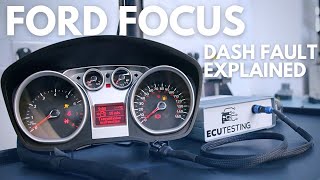
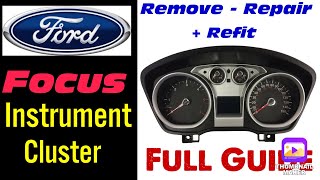
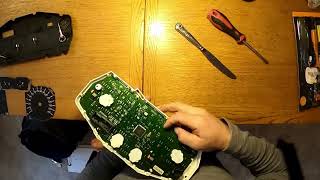
- Inspect the main electrical connector at the back of the instrument cluster for any looseness or visible damage. The cluster is typically held in by just two Torx screws and is easy to access. 🎬 See this walkthrough for removing and refurbishing your instrument cluster.
- Inspect the wiring and connectors at the BCM/passenger fuse box for any signs of water intrusion, corrosion, or damage.
- As an advanced step, check for 60 ohms of resistance between pins 6 (CAN-H) and 14 (CAN-L) on the OBD-II port with the battery disconnected. A reading of 120 ohms can indicate the IPC's terminating resistor is offline due to the fault.
- If all the above steps do not identify the issue, the problem could be a more complex wiring fault or a rare BCM failure, requiring advanced diagnostics with a multimeter and wiring diagrams.
Parts You'll Likely Need
- Instrument Cluster Repair Service
(OEM #N/A (Service))— This is the definitive fix for the common solder joint failure that causes code U0140 on this vehicle. Repairing the original cluster is more reliable than replacing it and avoids the need for reprogramming.
Trusted brands: ECU Testing, Circuit Board Medics, ACTRONICS, Remanx
OEM price range: N/A
Aftermarket price range: $150-$300
Related Codes That Often Appear With This One
- U1900 — This is a general CAN Communication Bus Fault. It often appears with U0140 because the failing instrument cluster disrupts the entire network.
- U0155 — This code means 'Lost Communication with Instrument Panel Cluster'. If other modules are logging this code, it's a very strong indicator that the cluster is the source of the problem.
- P1260 — This code means 'Theft Detected, Vehicle Immobilized'. The anti-theft system (PATS) runs through the instrument cluster. When the cluster fails, the PATS system activates, preventing the car from starting.
- U2012 — Another CAN communication error code that frequently accompanies the cluster failure.
- U2510 — Indicates 'Invalid Security Data Received From PCM', triggered by the PATS immobilizer system when communication with the cluster is lost.
Platform-Specific Known Issues
- The instrument cluster on the 2008-2011 Ford Focus has a known design flaw where the solder on the main connector pins cracks, causing widespread communication failures on the CAN bus network.
- This issue is caused by the transition to brittle, lead-free solder during manufacturing, which cannot withstand long-term thermal cycling and vibration.
Mechanic-Grade Diagnostic Values
- MS-CAN Bus Resistance — expected: ~60 Ω (Ohms) across CAN High and CAN Low pins at the DLC (OBD-II port) with the battery disconnected.. Failure: A reading of ~120 Ω indicates one of the two terminating resistors is offline, which on this vehicle, strongly points to the instrument cluster being disconnected from the network due to the internal solder fault. A reading near 0 Ω indicates a short between the two CAN wires.
- MS-CAN Bus Voltage (Key On, Engine Off) — expected: CAN High (Pin 6 at DLC) and CAN Low (Pin 14 at DLC) should both read approximately 2.5V.. Failure: A CAN High voltage near battery voltage or a CAN Low voltage near 0V indicates a short to power or ground, respectively. Voltages that do not mirror each other during activity suggest a wiring or module fault.
- BCM Power Supply Voltage — expected: 12.2V - 12.8V at the BCM power input pins with the ignition on.. Failure: Voltage below 12V can cause the BCM to shut down or behave erratically, triggering communication codes.
- BCM Ground Resistance — expected: < 0.1 Ω between the BCM ground pins and a clean chassis ground point.. Failure: High resistance indicates a corroded or loose ground connection, a common cause of intermittent module communication issues.
Hidden / Shadow Codes Worth Checking
- U0140 with subtype :87 or :00: Professional scan tools like Ford's IDS may show a subtype. ':87 - Missing Message' explicitly confirms the timeout, while ':00 - No Subtype Information' is a more general fault. Seeing these subtypes confirms the code is being set due to a lack of data from the BCM. (see via Ford Integrated Diagnostic System (IDS) or high-end professional scan tools with manufacturer-specific data capabilities.)
Scan Tool Commands That Help
- Ford IDS or equivalent professional scanner: Network Test / Global Module Scan — This is a primary diagnostic step. The tool attempts to communicate with every module on the vehicle's network and generates a topology map or list. For a U0140, this test will visually confirm if the BCM is 'offline' or if multiple other modules are also not communicating, which points towards a network-wide failure originating from the Instrument Cluster (IPC).
- Ford IDS or equivalent professional scanner: Run KOEO and KOER Self-Tests — Running the Key-On-Engine-Off (KOEO) and Key-On-Engine-Running (KOER) self-tests can help differentiate between intermittent and hard faults. If U0140 appears immediately during the KOEO test, it suggests a hard failure. If it only appears during the KOER test, it might point towards issues related to vibration or electrical noise from the charging system.
Wiring & Ground Locations
- Instrument Cluster Connector — The main 32-pin connector on the rear of the Instrument Panel Cluster (IPC).. This is the physical location of the infamous solder joint failures. The pins for the MS-CAN bus run through this connector, and when the solder cracks, it breaks the entire network communication, leading to U0140 and other 'U' codes.
- BCM / Smart Junction Box (SJB) — In the passenger footwell, behind the kick panel. It is integrated with the main passenger compartment fuse box.. This is the module the code is referencing. While rarely the cause, it can fail due to water intrusion from a leaking windshield seal or clogged cowl drain. Its connectors (C2280A, C2280B, etc.) should be inspected for any green or white corrosion.
- G200 — At the right kick panel, near the Smart Junction Box (BCM).. This is a primary chassis ground for components in the passenger-side dash area. A loose or corroded G200 can cause intermittent power issues for the BCM, leading to communication faults.
- G201 — Located at the center of the dash.. This is another critical ground point for various dash-mounted electronic modules. Verifying its integrity is an important step when diagnosing any network communication issue.
- BCM Connector C2280B — One of the main multi-pin connectors on the Smart Junction Box (BCM) in the passenger footwell.. This specific connector contains the High-Speed CAN bus lines on some configurations. Pin 10 (White/Blue wire) is HS-CAN High, and Pin 9 (White wire) is HS-CAN Low. While the Focus issue is typically on the Medium-Speed (MS-CAN) bus, checking for corrosion or damage here is crucial if other HS-CAN modules are also offline.
Real Owner Repair Stories
- Ford Owners Club forum user 'Bazza24' (Ford Focus Mk2 (2008-2011 platform)) — U0140-e code that appears when the engine is revved past 3,000 RPM.
❌ Tried (didn't work) Disconnecting the alternator plug., Pulling the smart charger fuse.
✅ What actually fixed it The user discovered corrosion on the BCM/SJB connectors and on the internal BCM circuit board itself after removing it from the passenger footwell. After cleaning the corrosion with Isopropyl Alcohol, the problem was investigated further. Another user confirmed that BCM failure from water ingress is a known, albeit less common, cause for these symptoms, second only to the instrument cluster fault. The final resolution was not posted, but the evidence strongly points to a water-damaged BCM.
OEM Part Supersession History
8S4T-10849-xx→Various, including 8V4T-10849-xx, 9S4T-10849-xx— Annual updates and minor revisions.
Heads up: There is no known supersession that definitively fixes the solder joint issue. A replacement cluster, new or used, requires programming to the vehicle's anti-theft system (PATS) and will likely fail in the same way over time. Repairing the original unit is the most reliable and cost-effective solution as it requires no programming.8S4Z-10849-F→Unknown— Part for early production models.
Heads up: This part number is specified for Focus models built up to December 7, 2007. This indicates a possible difference in early 2008 models compared to later ones, reinforcing the need to match part numbers exactly if attempting a replacement.
Model Year Variations Within This Range
- 2008 and early 2009: Instrument clusters in 2008 and early 2009 models do not have a digital coolant temperature gauge integrated into the information display. This feature was added in late 2009 and continued through 2011. Swapping clusters between these versions may result in feature loss or incompatibility, even if the main functions work.
- 2008-2011 vs pre-2008: The facelifted 2008 model introduced a completely different instrument cluster design compared to the pre-facelift (2005-2007) Focus. The failure mode and part numbers are distinct. The post-facelift cluster is the one known for the specific solder joint failure that causes U0140.
Diagnostic Flowchart
Other Known Issues on This Vehicle
Issues unrelated to this code that are worth knowing about as an owner of this generation:
- Passenger-Side Engine Mount Failure 🔴 High — Extremely common. The hydraulic mount often fails, causing severe vibration at idle and a clunking noise. Failure can occur as early as 60,000 miles.
- Rear Wheel Bearing Failure 🟠 Medium — Commonly fails around 90,000-100,000 miles, causing a loud humming or roaring noise from the rear of the vehicle that increases with speed.
- Automatic Transmission Issues (4F27E) 🟠 Medium → Shop Transmission Assembly — The 4-speed automatic can develop issues like harsh shifting, slamming into gear, or solenoid problems. Not as severe as the later DPS6 Powershift issues, but still a notable problem area.
- Frozen or Sticking Door Latches 🟡 Low — Commonly reported issue, especially in colder climates. Moisture gets into the latch mechanism, causing it to freeze or stick, preventing the door from opening or closing properly.
- Valve Cover Gasket and Spark Plug Well Seal Leaks 🟠 Medium — The seals become brittle and leak oil into the spark plug wells, which can cause misfires and damage to ignition coils.
Used vs. New Parts: Buying Guide for This Vehicle
When a used part is the smart pick: A used part is NOT a smart choice for the Instrument Panel Cluster (IPC) due to the high likelihood of the same manufacturing defect being present. A used Body Control Module (BCM) from a junkyard can be a cost-effective option ONLY IF the original has been definitively diagnosed as faulty (e.g., confirmed water damage) and the used part is from a vehicle with no signs of water leaks. Note that a used BCM may require programming.
What to inspect on the donor part:
- For a BCM: Inspect the donor vehicle's passenger footwell for any signs of water staining on the carpet or A-pillar trim before purchase.
- For an IPC: Do not buy a used cluster unless you intend to send it directly to a repair service to be re-soldered before installation.
OEM-only on this vehicle (don't cheap out):
- Instrument Panel Cluster (IPC): While you should repair your original OEM part, avoid complete aftermarket cluster replacements. The integration with the vehicle's anti-theft system is too complex.
Aftermarket brands forum-validated for this vehicle:
- For Repair Services (not parts): Circuit Board Medics, ECU Testing, ACTRONICS, and other reputable electronics rebuilders are known for providing a reliable fix for the original cluster.
Brands owners have reported issues with on this vehicle:
- Any used, un-repaired OEM instrument cluster should be avoided as it carries the same inherent defect.
Real Owner Stories
Aggregated from forums and TSBs cited above. Mileages and costs reflect what owners reported in those sources.
2008-2011 Ford Focus
Symptoms: All lights on the dashboard came on and the dials went dead while driving.
What fixed it: Re-soldering the connector pins on the back of the instrument cluster.
Source hint: Ford Owners Club - Thread: 'Problem With Instrument Cluster'
Documented NHTSA Reports
An owner reported experiencing multiple communication fault codes including U0140 when the ignition was on with the engine off; while these codes disappeared after starting, a steering fault remained (NHTSA ODI #11704877). Another report describes a vehicle displaying U0140 alongside U0155 and U2403, indicating a broader network failure involving the instrument panel cluster (NHTSA ODI #11715107). In a separate case, a technician found U0140:00-08 (BCM missing communication) alongside APIM network malfunctions (NHTSA ODI #11693477). Furthermore, a diagnostic scan on a Ford vehicle revealed U0140 in conjunction with transmission gear ratio errors (NHTSA ODI #11604166), and another record lists U0140:00 appearing with various BCM and power steering control module faults (NHTSA ODI #10937177).
Related OBD-II Codes
Frequently Asked Questions
Why do my 2008-2011 Ford Focus gauges suddenly drop to zero and show dashes in the mileage display?
Is there a simple way to test if my Ford Focus instrument cluster is failing?
Should I replace the instrument cluster or have it repaired to fix code U0140?
Can a bad battery cause a U0140 code on my Focus?
Could water leaks be responsible for the U0140 communication error?
Helpful Videos

The information in this article is provided for general reference and educational purposes only. Vehicle specifications, procedures, and part compatibility can vary by production date, trim level, and region. Always consult your vehicle's factory service manual and verify part numbers before purchasing or performing repairs. Safety-critical components such as airbags, seat belts, and braking systems should be installed by a qualified professional.
- Ford Focus:
- 🧭 Diagnostic Flowchart
- 🎬 Helpful Videos
- What's Unique About the 2008-2011 Ford Focus
- Symptoms You May Notice
- Most Likely Causes
- Rare But Worth Checking
- Diagnosis Steps
- Parts You'll Likely Need
- Related Codes That Often Appear With This One
- Platform-Specific Known Issues
- Mechanic-Grade Diagnostic Values
- Hidden / Shadow Codes Worth Checking
- Scan Tool Commands That Help
- Wiring & Ground Locations
- Real Owner Repair Stories
- OEM Part Supersession History
- Model Year Variations Within This Range
- Other Known Issues on This Vehicle
- Used vs. New Parts: Buying Guide for This Vehicle
- Real Owner Stories
- 2008-2011 Ford Focus
- Documented NHTSA Reports
- Related OBD-II Codes
- Frequently Asked Questions
- 🎟️ Get 5% Off