

U0141 on 2012-2017 Toyota Camry: Lost Communication With Body Control Module Fixes
Code U0141 on a 2012-2017 Camry means the Body Control Module (BCM) has lost communication. The most common causes are a weak battery, a poor ground connection, or a wiring issue. Start by testing the battery; if it's healthy, diagnosis will require checking fuses and wiring connections to the BCM located under the driver's side dash.
- U0141 means the Body Control Module (BCM) is offline.
- Always check the simplest things first: battery health and BCM-related fuses in the driver's side fuse box.
- The BCM is located under the driver's side dash; inspect its connectors and nearby wiring for damage or corrosion.
- Due to the need for complex network diagnostics and module programming, this code is best handled by a professional technician.
- If you replace the BCM, it must be programmed to your car's VIN to function correctly.
What's Unique About the 2012-2017 Toyota Camry
For the 2012-2017 (XV50 generation) Camry, there are no widespread, documented patterns of BCM failure like on some other manufacturers' vehicles. However, sources suggest these models can be prone to breaks or shorts in the CAN bus wiring harness 🎬 See this real-world Camry CAN bus diagnostic case study, which can be difficult to trace. A YouTube video of a 2016 Camry with communication codes showed the cause to be a broken CAN wire near the BCM connector. Additionally, a recall for 2012-2013 models involving a leaking A/C condenser drain can cause water to short out the nearby airbag module, highlighting the potential for water damage to other under-dash electronics, including BCM wiring.
Symptoms You May Notice
- Malfunction of power windows, power door locks, or remote keyless entry.
- Interior lights (dome, map) not working.
- Exterior lights (headlights, taillights, turn signals) behaving erratically or not working.
- Warning lights on the instrument cluster, including a specific BCM warning light on some vehicles.
- Vehicle may not start if the BCM is part of the immobilizer system.
- Instrument cluster gauges (speedometer, fuel gauge) may freeze or flicker.
- A/C or climate control system malfunctions.
- Replacing individual components like light bulbs or window motors when the root cause is a network failure affecting all BCM-controlled systems.
- Immediately replacing the BCM without first thoroughly checking the battery, fuses, and wiring. A weak battery is a very common cause of this code.
Most Likely Causes
- Weak or Failing Battery 🔴 High Probability → Shop Vehicle Battery Modern Toyotas are sensitive to battery voltage. When voltage drops below a stable threshold (approx. 12.4V), modules can fail to initialize correctly, leading to communication dropouts. This is often the first thing to check as it is simple and very common across all modern vehicles.
How to confirm: Test the battery voltage with a multimeter. A healthy, fully charged battery should read approximately 12.6V with the engine off. If the voltage is below 12.4V, or drops below 10V during cranking, the battery is weak and can cause modules to drop off the network.
Typical fix: Charge or replace the battery. After replacement, some owners report needing to drive the car for a 'drive cycle' before all systems are recognized as 'ready' by the ECU.
Est. part cost: $150-$300 - Damaged or Corroded Wiring Harness 🟡 Medium Probability Damage can occur where the harness passes through tight spaces or rubs against brackets under the dash. A technician on YouTube diagnosed a 2016 Camry with U0141 and other communication codes, tracing the fault to a single broken CAN wire right at the BCM connector. 🎬 Watch: Diagnosing a 2016 Camry BCM communication failure
How to confirm: Visually inspect the wiring going to the BCM, which is located under the driver's side dash. Look for chafed, pinched, or corroded wires. A professional may need to test the CAN High and CAN Low wires for continuity and shorts.
Typical fix: Repair the damaged section of the wiring harness. This is often a labor-intensive process of splicing and heat-shrinking the broken wire.
Est. part cost: $10-$50 in wiring supplies - Poor BCM Power or Ground Connection 🟡 Medium Probability Grounding points can corrode over time. While the BCM ground is under the dash, system-wide ground integrity is crucial for stable network communication.
How to confirm: Check all fuses related to the BCM in the interior fuse panel. With a multimeter, verify that the BCM connector has both constant power (approx. 12.6V) and a solid ground connection (resistance to chassis should be very low, ideally < 5 mΩ). A loose or corroded ground strap is a common failure point. Wiring diagrams show key ground points under the dash.
Typical fix: Clean and tighten the ground connection or replace the blown fuse. Ensure the underlying cause for the blown fuse is addressed.
Est. part cost: $1-$20 - Faulty Body Control Module (BCM) ⚪ Low Probability → Shop Body Control Module BCM failure is not a widely reported systemic issue on this platform, making it a less likely cause compared to wiring or power supply issues.
How to confirm: This is diagnosed by exclusion. If the battery is good, and power, ground, and the CAN bus wiring to the BCM have all been tested and confirmed to be intact, the module itself is the likely culprit. A professional scan tool will be unable to communicate with the BCM.
Typical fix: Replace the Body Control Module and have the new unit professionally programmed to the vehicle's VIN.
Est. part cost: $550-$950
Rare But Worth Checking
- Aftermarket Electronics Interference: A poorly installed remote starter, alarm system, or stereo can interfere with the CAN bus network, causing communication codes. If you have any aftermarket accessories, they should be inspected first.
Diagnosis Steps
- Check Battery Health: Ensure the battery has a full charge (12.6V+). Charge or replace the battery if it is weak, as low voltage is a primary cause of communication codes. Consider a 'hard reset' by disconnecting the battery terminals for 30 minutes to clear any glitch states in the modules.
- Scan for All Codes: Use a quality OBD-II scanner to read codes from all vehicle modules, not just the engine computer. Note any other 'U' codes that are present, as they can point to the root cause.
- Inspect Fuses: Check the interior fuse panel (located on the driver's side under the dash) for any fuses labeled 'BCM', 'BODY', or 'MPX-B'. Replace any that are blown.
- Locate and Inspect the BCM: The BCM is located under the driver's side dashboard, often near the steering column. Visually inspect its connectors for looseness, corrosion, or any signs of water intrusion. The A/C drain recall highlights this as a possibility.
- Inspect Wiring: Carefully inspect the wiring harness leading to the BCM. Look for any signs of chafing, pinching, or damage, especially where it might rub against metal brackets. A real-world fix on a 2016 Camry involved repairing a single broken wire at the connector.
- (Professional) Test Power and Ground: A technician will use a multimeter to back-probe the BCM connector to confirm it is receiving proper battery voltage and has a solid connection to chassis ground (resistance should be very low, <1 ohm).
- (Professional) Test CAN Bus: If power and ground are good, a technician will test the CAN bus wires. With the battery disconnected, resistance between CAN-High and CAN-Low should be ~60 ohms. With the key on, CAN-High voltage should be ~2.7V to 3.5V and CAN-Low ~1.5V to 2.3V.
- (Professional) Isolate the Module: If all wiring and power/ground circuits are good, the BCM is condemned. The module is replaced and programmed.
Parts You'll Likely Need
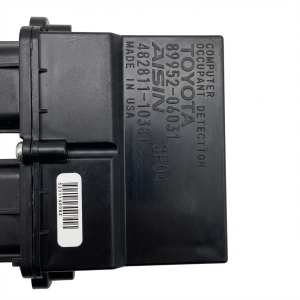
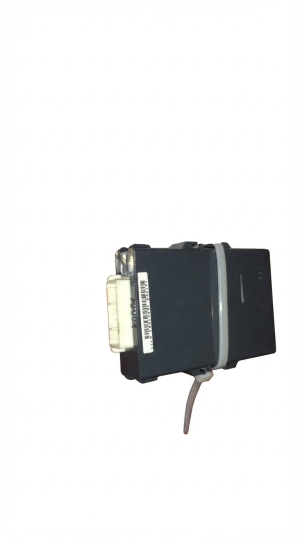
- Body Control Module (Multiplex Network Body Computer)
(OEM #89220-06091)— This is the part that needs to be replaced if it has failed internally. Part numbers vary significantly by year and options (e.g., with/without engine immobilizer), so you must match the number to your vehicle's VIN.
Trusted brands: Toyota (Genuine OEM)
OEM price range: $550-$950
Aftermarket price range: $200-$400 (Used/Remanufactured)
Related Codes That Often Appear With This One
- U0073 — U0073 means the entire communication bus is down, whereas U0141 points to a single module. Seeing both suggests a major network problem rather than just a BCM issue.
- U0155 — This indicates a loss of communication with the Instrument Panel Cluster (IPC). The IPC can act as a gateway module, so its failure can prevent communication with the BCM, triggering U0141 as a secondary code.
Platform-Specific Known Issues
- Recall on 2012-2013 models for a clogged A/C condenser drain hose that could leak water onto the airbag control module. While not the BCM, this indicates a potential for water intrusion in the under-dash area that could affect BCM wiring.
Mechanic-Grade Diagnostic Values
- CAN Bus Resistance (Battery Disconnected) — expected: ~60 Ω across CAN High (Pin 6) and CAN Low (Pin 14) at the DLC.. Failure: A reading of ~120 Ω indicates an open circuit or one of the two terminating modules is offline. A reading near 0 Ω indicates a short between the CAN High and Low wires.
- CAN Bus Voltage (Key On, Engine Off) — expected: CAN High: ~2.5V - 3.5V. CAN Low: ~1.5V - 2.5V. The two voltages should mirror each other during data transmission.. Failure: Voltages outside these ranges, or a flat line on one or both wires, indicates a short to power, short to ground, or an open circuit.
- BCM Ground Connection — expected: < 5 mΩ (milliohms) resistance between the BCM ground pin and a clean chassis ground point.. Failure: High resistance (anything over 1 Ω is suspect) indicates a poor ground, which can cause modules to drop offline intermittently.
- CAN Bus Baud Rate — expected: 500k. Failure: Not a value to measure directly, but must be set correctly in diagnostic tools to communicate with the network.
Scan Tool Commands That Help
- Toyota Techstream: Health Check — To perform a comprehensive scan of all modules on the network to see which ones are communicating and to retrieve all DTCs, not just from the ECM.
- Toyota Techstream: Active Test — To command BCM-controlled functions (e.g., 'Power Windows Up/Down', 'Lock/Unlock Doors') directly. If the command works, it proves the BCM has power, ground, and internal logic, pointing the diagnosis towards a communication wiring issue.
- Toyota Techstream: CAN Bus Check — To get a live status of which modules are currently communicating on the CAN bus, helping to quickly identify which module is offline.
- Toyota Techstream: Wireless Code Registration — This utility is used after replacing a BCM to register the key fobs and immobilizer keys with the new module.
Wiring & Ground Locations
- DLC (OBD-II Port) — Under the driver's side dashboard, to the left of the steering column.. This is the primary access point for testing the main CAN bus. Pin 6 is CAN High and Pin 14 is CAN Low. Resistance and voltage tests can be performed here to assess the health of the entire network.
- BCM Connector — Under the driver's side dash, often attached to the fuse/junction block or near the steering column.. This is the direct connection point to the suspect module. Back-probing this connector is necessary to verify power, ground, and CAN signals directly at the BCM. A broken wire was found at this exact location in a documented repair.
Real Owner Repair Stories
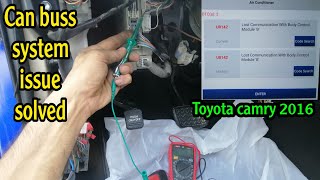
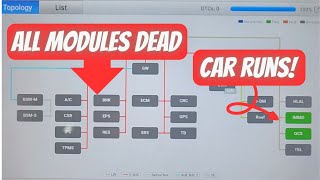
- YouTube - Abdullah Electrician (2016 Toyota Camry) — TPMS light not showing in the cluster, scanner cannot communicate with the BCM, A/C module shows a 'Lost Communication with Body Control Module' code.
❌ Tried (didn't work) Clearing codes with a scan tool; the codes would not clear.
✅ What actually fixed it The technician traced the fault to a broken CAN High wire (pink wire) right at the BCM's main connector. Repairing this single broken wire restored communication with the BCM and cleared all related fault codes.
OEM Part Supersession History
89220-06090→89220-06091— Standard part revision by the manufacturer.
Heads up: The part 89220-06091 is specified for vehicles built up to September 2014. Vehicles built after this date (2015 model year and later) will use a different part number.
Model Year Variations Within This Range
- 2012-2014: Uses Body Control Module part number 89220-06091 (which supersedes 89220-06090).
- 2015-2017: Following the model refresh, a different BCM part number is used for vehicles manufactured after 09/2014. The specific part number must be verified by VIN for these later years.
- All: Different BCM part numbers exist for vehicles with and without the engine immobilizer system. The correct part must be matched to the vehicle's factory options.
Diagnostic Flowchart
Other Known Issues on This Vehicle
Issues unrelated to this code that are worth knowing about as an owner of this generation:
- Torque Converter Shudder 🟠 Medium — Common on 2012-2014 models with the U760E 6-speed automatic, typically between 25-50 mph under light load. Onset can be after 80,000 miles. (Ref: T-SB-0034-14 (later superseded by T-SB-0312-17) was issued. The fix involves a potential ECM reflash and, if shudder persists, replacing the torque converter.)
- Melting/Sticky Dashboard 🟡 Low — This issue primarily affected the prior generation (2007-2011 Camry), but the Warranty Enhancement Program (ZE6) is a well-known Toyota issue. While not chronic for the 2012-2017 models, it's a significant part of the brand's history for this nameplate. (Ref: Warranty Enhancement Program ZE6 covered previous model years.)
- Peeling Exterior Paint (Blizzard Pearl/Super White) 🟡 Low — Certain white paint colors were prone to peeling off in sheets, a cosmetic issue that frustrated many owners. (Ref: Toyota initiated a Customer Support Program to address the issue for affected vehicles.)
- Electric Power Steering (EPS) Module Failure 🔴 High — A recall was issued for some 2015 models for a potentially damaged circuit board in the EPS module, which could lead to a loss of power steering assist. (Ref: NHTSA Campaign ID: 15V375000)
- A/C Condenser Drain Leak 🟠 Medium — A recall was issued for 2012-2013 models where a clogged A/C drain could leak water onto the airbag control module, potentially causing a short circuit. (Ref: NHTSA Campaign ID: 13V383000)
Used vs. New Parts: Buying Guide for This Vehicle
When a used part is the smart pick: For this specific repair, purchasing a used Body Control Module from a junkyard is NOT recommended for a DIY or typical independent shop repair. The module is VIN-locked and integrated with the vehicle's immobilizer system.
What to inspect on the donor part:
- If sourcing a used part is the only option, it is critical to get the BCM, the ignition key(s), and the immobilizer module from the exact same donor vehicle.
OEM-only on this vehicle (don't cheap out):
- Body Control Module (BCM): Due to the need for VIN-specific programming and immobilizer integration, a new Genuine Toyota part programmed by a dealer or a specialist with Techstream is the most reliable solution.
Aftermarket brands forum-validated for this vehicle:
- For a replacement BCM, services that offer remanufacturing and programming of your original unit (if possible) or provide a pre-programmed replacement unit (like Flagship One) are a viable alternative to the dealer.
Brands owners have reported issues with on this vehicle:
- Avoid any used BCM sold 'as-is' without a guarantee of being unlocked or without the matching immobilizer components from the donor car.
Real Owner Stories
Aggregated from forums and TSBs cited above. Mileages and costs reflect what owners reported in those sources.
2016 Toyota Camry
Symptoms: Multiple communication codes present; technician diagnosed no communication with the body control module.
What fixed it: Repaired a single broken CAN wire located right at the BCM connector.
Source hint: YouTube - 'Toyota Camry 2016 || no comunication body control module || solved'
Related OBD-II Codes
Frequently Asked Questions
Could the A/C drain recall on my 2012-2013 Camry be related to the U0141 code?
I replaced my battery to fix U0141; do I need to do anything else for the car to recognize the new battery?
Where is the BCM located on the 2012-2017 Camry if I need to inspect the wiring?
Is the U0141 code related to the torque converter shudder TSB for the 2012-2014 models?
What voltage should I look for when testing the Camry's battery to prevent communication dropouts?
Which fuses should I check on my Camry for a U0141 'Lost Communication with BCM' code?
Helpful Videos
We Have This Part in Stock
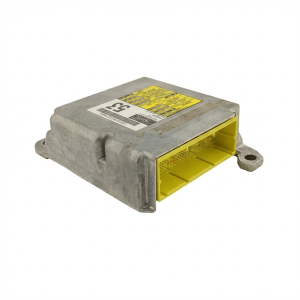

The information in this article is provided for general reference and educational purposes only. Vehicle specifications, procedures, and part compatibility can vary by production date, trim level, and region. Always consult your vehicle's factory service manual and verify part numbers before purchasing or performing repairs. Safety-critical components such as airbags, seat belts, and braking systems should be installed by a qualified professional.
- Toyota Camry:
- 🧭 Diagnostic Flowchart
- 🎬 Helpful Videos
- 🛍️ Shop This Part
- What's Unique About the 2012-2017 Toyota Camry
- Symptoms You May Notice
- Most Likely Causes
- Rare But Worth Checking
- Diagnosis Steps
- Parts You'll Likely Need
- Related Codes That Often Appear With This One
- Platform-Specific Known Issues
- Mechanic-Grade Diagnostic Values
- Scan Tool Commands That Help
- Wiring & Ground Locations
- Real Owner Repair Stories
- OEM Part Supersession History
- Model Year Variations Within This Range
- Other Known Issues on This Vehicle
- Used vs. New Parts: Buying Guide for This Vehicle
- Real Owner Stories
- 2016 Toyota Camry
- Related OBD-II Codes
- Frequently Asked Questions
- 🎟️ Get 5% Off