

U0415 on 2015-2019 Chevrolet Silverado 3500: Invalid ABS Data Causes and Fixes
On a 2015-2019 Silverado 3500, code U0415 is most often caused by a low brake fluid level or damaged wiring. Before replacing any parts, top off the brake fluid and inspect the wire harnesses under the door sill plates (TSB #PIT5457D) and behind the left side of the dash near the parking brake pedal (TSB #PIT5288G/H), as these are known problem areas documented in GM service bulletins.
- Always check the brake fluid level first. Topping it off is a simple, common fix for U0415 on this truck.
- Do not replace the expensive EBCM (ABS module) until you have exhaustively checked for low brake fluid and inspected the known problem wiring areas under the sill plates and behind the dash.
- This code indicates that critical safety systems (ABS, StabiliTrak) are disabled. Prompt diagnosis and repair are essential for safe vehicle operation.
- U0415 is often accompanied by other communication codes (U-codes), which strongly suggests a wiring harness or ground problem rather than a single failed component.
What's Unique About the 2015-2019 Chevrolet SILVERADO 3500
On this generation of Silverado (K2XX platform), U0415 is uniquely tied to specific, well-documented issues that are often not the ABS module itself. Unlike vehicles where module failure is a primary suspect, these trucks are prone to setting this code due to a low brake fluid level, as noted in TSB #PIT5490B. This TSB explains that as fluid sloshes in a low reservoir during turns or braking, it can send a momentary 'low' signal to the EBCM, which the CCM then flags as invalid data. Additionally, multiple TSBs point to known wiring harness failure points, such as corrosion under the door sill plates (TSB #PIT5457D) and a pinched harness behind the instrument panel (TSB #PIT5288G/H), making a thorough fluid check and wiring inspection the critical first steps.
Diagnostic Flowchart
Tap your situation to follow the diagnostic path that matches what you're seeing on this vehicle.
Symptoms You May Notice
- ABS warning light illuminated
- StabiliTrak or Traction Control warning light illuminated
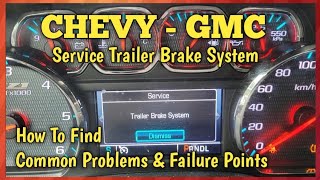
- "Service Trailer Brake System" message in the Driver Information Center (DIC)
- Cruise control may be disabled
- "Steering Assist is Reduced Drive With Care" message
- Alarm may sound when locking doors or door locks may cycle erratically
- Replacing ABS wheel speed sensors. A faulty wheel speed sensor will typically set a specific 'C' code for that sensor circuit (e.g., C0035-C0050), not a general invalid data code like U0415.
- Replacing the Trailer Brake Control Module (TBCM). Although a "Service Trailer Brake" message is common, the fault often originates with an input to the EBCM (like low brake fluid), not the TBCM itself. 🎬 Watch: Common failure points for the service trailer brake message. The CCM commands the message based on the invalid data it receives from the EBCM.
Most Likely Causes
- Low Brake Fluid Level 🔴 High Probability → Shop Brake Fluid Per GM TSB #PIT5490B, the brake fluid level sensor is very sensitive. As fluid sloshes in a reservoir that is near the minimum level, it can send a momentary 'low' signal to the EBCM during turns, braking, or acceleration. The Chassis Control Module interprets this intermittent signal as invalid data, setting U0415.
How to confirm: Visually inspect the brake fluid level in the master cylinder reservoir. If it is below the 'MAX' line, this is the likely cause. A professional scan tool (GDS2) can monitor the 'Brake Fluid Level Sensor' parameter in the EBCM data, which will switch from 'OK' to 'Low' when the event occurs.
Typical fix: Top off the brake fluid to the 'MAX' line with the correct DOT 3 fluid. It is critical to then inspect for the cause of the low fluid, 🎬 Watch this guide to troubleshooting the service trailer brake system. such as worn brake pads or a leak. TSB #PIT5490B specifically advises checking the rear of the master cylinder for leaks into the brake booster if no other cause is found.
Est. part cost: $5-$20 - Damaged/Corroded Wiring Under Sill Plates 🟡 Medium Probability TSB #PIT5457D specifically calls out this issue. Water intrusion from wet boots or clogged drains can damage the wiring harness that runs in the channel under the driver and passenger door sill plates. This causes corrosion (often seen as green crust) and high resistance on communication lines, particularly the 'Communication Enable' circuit 5986.
How to confirm: Remove the plastic sill plates and lift the carpet to visually inspect the wiring harness for green or blue corrosion, chafed wires, or previous poor repairs. Pay close attention to splice J365 under the passenger front sill plate. A multimeter can be used to check for voltage on circuit 5986 at the EBCM connector.
Typical fix: Repair the affected wires by cutting out the corroded sections, soldering in new wire, and protecting the repair with heat-shrink tubing.
Est. part cost: $10-$50 - Pinched Wire Harness in Instrument Panel ⚪ Low Probability TSB #PIT5288G and its successor #PIT5288H note that the instrument panel wire harness can become pinched between the left I/P dash mounting bracket and the body, near the parking brake pedal assembly. This can short various communication circuits, leading to DTCs including U0415.
How to confirm: Inspect the wiring harness behind the left side of the instrument panel, near the parking brake pedal assembly. The TSB notes it can be difficult to see, but check if the harness can be moved freely away from the metal bracket.
Typical fix: Loosen the left I/P dash mounting bracket bolts, free the pinched harness, open the loom to inspect for damaged wires, and repair any chafed or broken circuits.
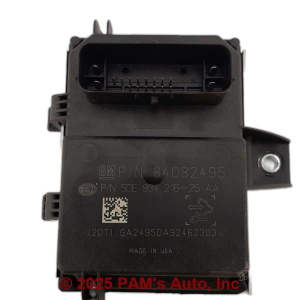
Est. part cost: $5-$25 - Failing Electronic Brake Control Module (EBCM) ⚪ Low Probability → Shop ABS Control Module While less common than wiring or fluid issues, the module can fail internally due to circuit board damage or corrupted firmware, causing it to send corrupt data over the network.
How to confirm: This is a diagnosis of exclusion. If the brake fluid level is correct and all related wiring (sill plates, dash), grounds (EBCM frame ground), and connectors are confirmed to be in good condition with proper voltage, the EBCM is the likely culprit.
Typical fix: Replace the EBCM. The new module will require programming to the vehicle's VIN using a GM GDS2 scan tool or equivalent.
Est. part cost: $260-$700
Rare But Worth Checking
- Weak Battery or Poor Ground Connection: → Shop Vehicle Battery Low system voltage during cranking can cause erratic communication between modules, setting various 'U' codes. A corroded EBCM ground, typically a ring terminal bolted to the frame rail under the driver's door, can also be a cause. Another problematic ground point on the K2XX platform is G218, located under the driver's side A-pillar trim, which can cause widespread electrical issues.
- Power Steering Control Module Software Issue: → Shop Power Steering Control Module A known issue exists where the power steering control module may not clear the U0415 code to history after the initial fault (like a dead battery) is resolved. This may require a software update from a dealer.
Diagnosis Steps
- Check the brake fluid level in the master cylinder. If low, top it off to the MAX line and re-evaluate. This is the most common and simple fix per TSB #PIT5490B.
- If the fluid level is correct, use a professional scan tool (like GM GDS2) to read codes from ALL modules (EBCM, CCM, BCM, etc.) to get a complete picture of the network faults.
- Following TSB #PIT5457D, remove the driver and passenger side door sill plates and lift the carpet. Inspect the wiring harnesses in the channels for any signs of blue/green corrosion, moisture, or physical damage, paying special attention to the Communication Enable circuit 5986.
- Following TSB #PIT5288H, inspect the wire harness behind the left side of the instrument panel near the parking brake pedal for signs of being pinched or chafed against the metal dash bracket.
- Inspect the main EBCM connector for corrosion, moisture, or backed-out pins.
- Check for a poor ground connection at the EBCM ground point, typically located on the frame rail under the driver's door. Remove the bolt, clean the contact surfaces to bare metal, and re-secure. Also inspect body ground G218 under the driver's A-pillar trim.
- If all wiring, connections, and fluid levels are good, the EBCM is likely faulty and may require replacement and programming.
Parts You'll Likely Need
- Brake Fluid (DOT 3) — The most common cause for U0415 on these trucks is a low brake fluid level causing an erratic sensor signal, as documented in TSB #PIT5490B.
Trusted brands: ACDelco, Prestone, Bosch
OEM price range: $10-$20
Aftermarket price range: $5-$15 - Electronic Brake Control Module (EBCM)
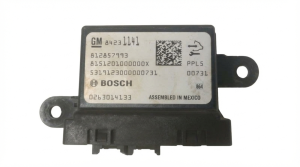
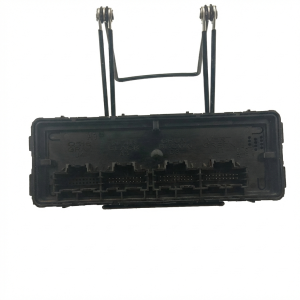
(OEM #84256781)— If all wiring, fluid, and ground issues are ruled out, the module itself may have failed internally. It is a diagnosis of exclusion. This part requires programming by a dealer or a properly equipped independent shop.
Related Codes That Often Appear With This One
- U0077 — This code indicates the high-speed communication bus wires are shorted together, directly pointing to a wiring harness issue, which is a primary cause of U0415. It is cited in TSBs #PIT5288G and #PIT5457D.
- U0121 — This means 'Lost Communication With ABS Control Module' and indicates a more severe communication failure, often pointing to the wiring issues described in TSB #PIT5457D, specifically an open in the Communication Enable circuit 5986.
- U0126 — This indicates a 'Lost Communication With Steering Angle Sensor Module'. This sensor is critical for stability control, and a network fault causing U0415 can also interrupt this module's communication. It is cited in TSBs #PIT5288G and #PIT5457D.
Technical Service Bulletins (TSBs) & Recalls
- PIT5490B
- PIT5457D
- PIT5288G
- PIT5288H
Platform-Specific Known Issues
- TSB #PIT5457D: Documents that open, damaged, or corroded wiring in the harness under the driver and passenger sill plates can cause U0415 and other communication codes. It specifically highlights the Communication Enable circuit 5986 as a point of failure.
- TSB #PIT5288H: Points to a pinched wire harness in the left instrument panel area by the parking brake pedal bracket as a cause for U0415 and a wide range of other electrical faults.
- TSB #PIT5490B: Explains how a low brake fluid level can cause U0415 and a "Service Trailer Brake" message during maneuvers due to fluid sloshing in the reservoir. The TSB directs technicians to fill the reservoir and investigate the cause of the fluid loss.
Mechanic-Grade Diagnostic Values
- High-Speed CAN Bus Network Resistance — expected: Approximately 60 Ohms between Pin 6 (CAN-H) and Pin 14 (CAN-L) at the DLC with the battery disconnected.. Failure: A reading of 120 Ohms suggests an open circuit or a missing terminating resistor. A reading significantly below 60 Ohms indicates a short between the CAN lines.
- Communication Enable Circuit 5986 Voltage — expected: Approximately 12 volts (battery voltage) with the key in ACC, ON, or START.. Failure: Low or no voltage indicates an open, short, or high resistance in the circuit, preventing modules from waking up to communicate.
- Communication Enable Circuit 5986 Load Test — expected: With a 194 bulb connected between circuit 5986 and ground, the bulb should light and voltage across the bulb should be at least 11 volts.. Failure: If the bulb does not light or voltage is below 11V, it indicates high resistance in the circuit that may not be apparent with a simple multimeter test.
- GMLAN-High Signal Voltage — expected: Rests at 2.5V. Driven to ~3.5V to transmit a logic '0'.. Failure: Incorrect voltage levels indicate a fault on the bus, requiring an oscilloscope to diagnose.
- GMLAN-Low Signal Voltage — expected: Rests at 2.5V. Driven to ~1.5V to transmit a logic '0'.. Failure: Incorrect voltage levels indicate a fault on the bus, requiring an oscilloscope to diagnose.
Hidden / Shadow Codes Worth Checking
- U0415 with Symptom Byte 00: This specific code variant, when set in the Electronic Power Steering Control Module (EPSCM), points to a known software/calibration issue rather than a wiring fault. (see via A professional scan tool like the GM GDS2 is required to view the symptom byte associated with a DTC.)
Scan Tool Commands That Help
- GDS2 (GM Global Diagnostic System 2): EBCM Data Display > 'Brake Fluid Level Sensor' — Used to confirm the diagnosis from TSB #PIT5490B. This allows a technician to see the sensor status ('OK' or 'Low') in real-time as reported by the EBCM, verifying if fluid slosh is triggering the fault.
- GDS2 (GM Global Diagnostic System 2): Module Diagnostics > All Modules DTC Information — This is a critical first step to see which other modules are reporting communication faults. A long list of 'U' codes in various modules strongly suggests a network-wide wiring or ground problem rather than a single faulty module.
- GDS2 (GM Global Diagnostic System 2): PSCM (Power Steering Control Module) Programming — If U0415 with symptom byte 00 is present in the PSCM, a software update may be required to fix the issue, as per GM preliminary information bulletin PIC5923A.
Wiring & Ground Locations
- G218 — On the driver's side A-pillar frame, typically accessed by removing the driver's side dash-end cover or kick panel trim.. This is a major body ground point. Factory paint under the ground lug often causes a poor connection, leading to widespread, intermittent electrical issues and communication codes, including U0415. A voltage drop at this ground is a confirmed cause.
- Circuit 5986 (Communication Enable) — A Pink wire that runs from the BCM to multiple modules, including the EBCM. It is located within the large harnesses under the driver and passenger sill plates and behind the instrument panel.. This circuit provides the 12V signal that 'wakes up' modules like the EBCM. An open or short in this wire, often due to corrosion under the sill plates, will prevent the EBCM from communicating, leading to U0121 and U0415 codes.
- EBCM Ground — Typically a ring terminal bolted to the frame rail directly under the driver's door area.. This is the primary ground for the Electronic Brake Control Module. Corrosion at this point can cause the module to malfunction and send invalid data.
- EBCM Connector (X1) — The main electrical connector at the Electronic Brake Control Module, located on the driver's side frame rail.. This is the single point for all power, ground, and communication signals for the ABS system. Testing for power, ground, and network signals is done at this connector's pins.
Real Owner Repair Stories
- YouTube user, comment on video 'Chevy Silverado 2014-2015 Stabilitrak problem FIXED!!!!!!!!!!' (2014/2015 Chevrolet Silverado) — Stabilitrak, ABS, and other warning lights. Unresponsive climate and radio controls.
❌ Tried (didn't work) Initial diagnosis was inconclusive.
✅ What actually fixed it A dealership technician performed a voltage load test on the BCM powers and grounds and found a voltage drop at ground G218. Cleaning and securing the G218 ground connection resolved all issues.
OEM Part Supersession History
23355954, 84074957, 84074960, 84256789→84256781— Part consolidation and potential internal revisions.
Heads up: The replacement module 84256781 requires programming and setup procedures using GM service software (GDS2) to ensure proper operation with the vehicle's specific options and VIN.
Model Year Variations Within This Range
- 2019: A specific recall (19V889000) was issued for some 2019 models due to an EBCM software error that could cause the ESC and ABS to become disabled without warning. The fix is a free software update at a GM dealer.
Helpful Videos
We Have This Part in Stock

The information in this article is provided for general reference and educational purposes only. Vehicle specifications, procedures, and part compatibility can vary by production date, trim level, and region. Always consult your vehicle's factory service manual and verify part numbers before purchasing or performing repairs. Safety-critical components such as airbags, seat belts, and braking systems should be installed by a qualified professional.
- Chevrolet SILVERADO 3500:
- 🧭 Diagnostic Flowchart
- 🎬 Helpful Videos
- 🛍️ Shop This Part
- What's Unique About the 2015-2019 Chevrolet SILVERADO 3500
- Symptoms You May Notice
- Most Likely Causes
- Rare But Worth Checking
- Diagnosis Steps
- Parts You'll Likely Need
- Related Codes That Often Appear With This One
- Technical Service Bulletins (TSBs) & Recalls
- Platform-Specific Known Issues
- Mechanic-Grade Diagnostic Values
- Hidden / Shadow Codes Worth Checking
- Scan Tool Commands That Help
- Wiring & Ground Locations
- Real Owner Repair Stories
- OEM Part Supersession History
- Model Year Variations Within This Range
- 🎟️ Get 5% Off