

U0428 on 2015-2019 GMC Sierra 3500: Invalid Steering Angle Data Causes & Fixes
On a 2015-2019 GMC Sierra 3500, code U0428 is most often caused by damaged wiring under the door sill plates or a poor ground connection at the G218 location under the dash. These electrical faults are well-documented in GM service bulletins and are much more common than a failed steering angle sensor. The fix is often a low-cost wire or ground repair.
- Before buying any parts for code U0428, you MUST inspect the G218 ground under the driver's dash and the wiring harnesses under the door sill plates.
- This code indicates a serious issue with safety systems; StabiliTrak and power steering assist will be compromised.
- The problem is far more likely to be a simple wiring/ground repair or a software update than a failed, expensive sensor.
- If the Steering Angle Sensor is replaced, it must be calibrated with a professional-grade scan tool to restore function.
What's Unique About the 2015-2019 Gmc SIERRA 3500
On this generation of GM HD trucks (K2XX platform), code U0428 is strongly linked to specific, well-documented electrical vulnerabilities rather than a simple part failure. GM has issued Technical Service Bulletins (TSBs) that consistently point technicians toward two main culprits: damaged communication wires in the harnesses that run under the driver and passenger sill plates (TSB PIT5457D), and a poor ground connection at location G218 under the dash (TSB PIT5405C). A third common issue is a software glitch in the Power Steering Control Module (PSCM) that requires reprogramming, covered in TSB 20-NA-113. These issues are far more common than the steering angle sensor itself failing and should always be investigated first.
Diagnostic Flowchart
Tap your situation to follow the diagnostic path that matches what you're seeing on this vehicle.
Symptoms You May Notice
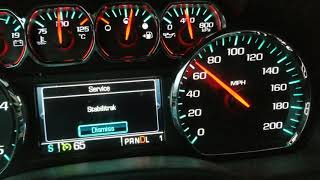
- "Service StabiliTrak" message on the driver information center
- "Service Power Steering" or "Steering Assist is Reduced Drive With Care" message on the driver information center
- ABS and Traction Control warning lights are illuminated
- Reduced, intermittent, or complete loss of power steering assist
- Steering feels jerky or kicks back, especially at low speeds
- Engine may stall when turning at low speeds
- Instrument panel, radio, or HVAC may go blank or reset intermittently (strong indicator of G218 ground issue)
- Door locks cycling or alarm sounding unexpectedly
- Replacing the Steering Angle Sensor without first inspecting the G218 ground and sill plate wiring harnesses.
- Replacing the Power Steering Control Module (PSCM) or Electronic Brake Control Module (EBCM) when the root cause is a simple wiring, ground, or software issue.
- Replacing the entire power steering rack assembly for what is an electrical communication fault.
Most Likely Causes
- Poor Body Control Module (BCM) Ground (G218) 🔴 High Probability TSB #PIT5405C identifies a common assembly line issue where the dash insulator mat gets trapped between the G218 ground eyelet and the vehicle body, preventing a solid connection. This poor ground can cause a host of intermittent electrical and communication problems, especially during high-load situations like turning at low speeds.
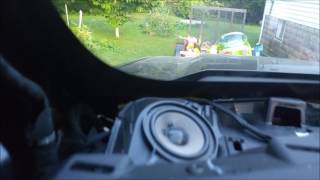
How to confirm: Locate the G218 ground stud under the driver's side dash, typically behind the kick panel 🎬 Watch: How to find and fix the G218 ground issue. or to the left of the steering column near the speaker. Disconnect the battery, remove the 10mm nut, and visually inspect for any trapped black insulation material between the ground ring terminal and the metal body stud.
Typical fix: Remove the 10mm ground nut, pull the terminal(s) off the stud, and cut away or trim the section of dash insulator mat that is interfering. Clean the terminal and the body surface with a wire brush to ensure bare metal contact, then securely retighten the nut to 7 Nm (62 lb-in).
Est. part cost: $0-$5 - Damaged/Corroded Wiring Under Door Sill Plates 🔴 High Probability As documented in TSB #PIT5457D, the wiring harnesses routed under the driver and passenger door sill plates are susceptible to moisture and road salt intrusion, leading to corrosion, high resistance, or open circuits. This specifically affects the 'Communication Enable' circuit (5986), which is a small gauge wire responsible for waking up various modules.
How to confirm: Remove the plastic sill plates and peel back the carpet to visually inspect the wiring harnesses. Look for signs of swelling, chafing, or green/white corrosion, especially at factory splice points like splice J365 under the passenger sill plate. A voltage check on circuit 5986 at the EBCM or PSCM connector should show ~12V when the vehicle is awake.
Typical fix: Cut out the damaged section of wire and splice in a new piece using weatherproof butt connectors or solder and heat shrink. GM service information recommends using woven polyester electrical tape to re-wrap the harness for protection.
Est. part cost: $5-$25 - Power Steering Control Module (PSCM) Software Issue 🟡 Medium Probability GM TSB #20-NA-113 describes a software glitch where the PSCM can hold U0428 as a 'current' code even after the root cause (like a temporary low voltage from a weak battery) is fixed. The module fails to move the old code to 'history,' causing persistent warning messages at every startup.
How to confirm: If the code immediately returns after clearing, but all wiring and ground checks are good, a software issue is likely. A dealer or qualified shop must check the PSCM calibration version against the latest available in GM's TIS2WEB system.
Typical fix: Reprogram the Power Steering Control Module (PSCM) with the latest software calibration. This must be done by a professional with a GM MDI tool and a subscription to TIS2WEB. Stable battery voltage is critical during this procedure.
Est. part cost: $100-$250 (labor cost for programming) - Failing Steering Angle Sensor (SAS) ⚪ Low Probability → Shop Steering Angle Sensor While the sensor can fail, it is much less common on this platform than the wiring, ground, and software issues described above. Misdiagnosis is common, leading to unnecessary replacement.
How to confirm: Using a high-end scan tool, monitor the live data from the steering angle sensor while turning the wheel. The angle should change smoothly and accurately. If the data is erratic, frozen, or absent, and all wiring has been confirmed good, the sensor is likely faulty.
Typical fix: Replace the steering angle sensor. After replacement, the new sensor MUST be calibrated using a compatible scan tool. The sensor is located on the steering column.
Est. part cost: $70-$150
Rare But Worth Checking
- Weak or Failing Battery: → Shop Vehicle Battery A weak battery can cause a low voltage condition during engine cranking, which can trigger a cascade of communication codes, including U0428. This can also trigger the PSCM software glitch mentioned in TSB 20-NA-113.
- Failing Electronic Brake Control Module (EBCM): The EBCM is a primary user of steering angle data. In rare cases, an internal EBCM failure can cause it to misinterpret the signal. This should only be considered after all wiring, grounds, and the sensor itself have been ruled out.
- Loose Battery or Fuse Block Connections: → Shop Vehicle Battery TSB PIT5405C also points to loose connections at the battery terminals or the main battery fuse block. These can cause voltage drops similar to a bad ground, triggering the same communication faults.
- Aftermarket OBD-II Devices: In some cases, leaving an aftermarket OBD-II device (such as a Bluetooth scanner or insurance tracker) plugged in can interfere with the CAN bus communication, causing StabiliTrak and other communication-related warnings. Unplugging the device often resolves the issue immediately.
Diagnosis Steps
- Scan all vehicle modules for DTCs. Note if other communication (U-prefix) codes are present, as this points to a network-wide issue like a bad ground or wiring fault.
- Disconnect the negative battery terminal.
- Inspect the BCM ground G218 under the driver's side dash. Remove the 10mm nut, check for trapped insulation, clean the contacts to bare metal, and retighten securely to 7 Nm (62 lb-in).
- Remove the driver and passenger side sill plates and inspect the wiring harnesses for any signs of corrosion (green/white powder), moisture, or physical damage, as per TSB #PIT5457D. Pay special attention to the Communication Enable circuit (5986).
- If wiring or ground faults are found and repaired, clear all codes, let the vehicle's network go to sleep (wait ~10 mins), and then test drive to see if the code returns.
- If no physical faults are found, use a scan tool to view the live data from the Steering Angle Sensor. Verify the angle reading changes smoothly as you turn the wheel lock-to-lock.
- If the code returns immediately after clearing with no apparent physical cause, consult a dealer or qualified shop to check for and perform a PSCM software update as described in TSB #20-NA-113.
- Only if all wiring, grounds, and software are confirmed good should the Steering Angle Sensor itself be replaced. A calibration is mandatory after replacement.
Parts You'll Likely Need
- Wiring Repair Supplies — To fix corroded or broken wires under the sill plates, which is a high-probability cause.
- Steering Angle Sensor
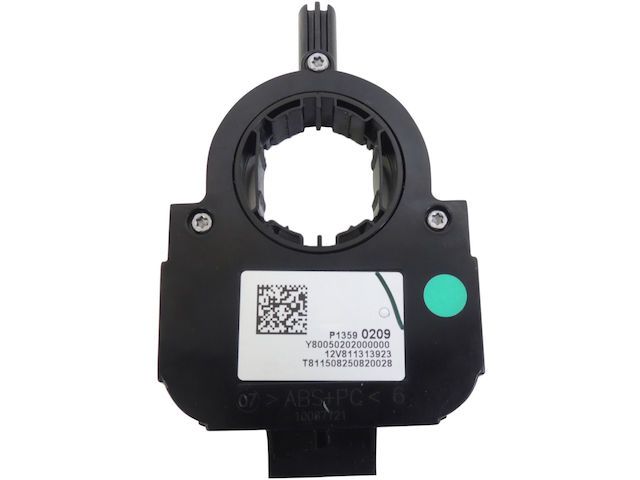
(OEM #13590209)— Replaced only after all wiring, ground, and software issues have been ruled out. This part fits a wide range of GM K2XX vehicles.
Related Codes That Often Appear With This One
- U0131 — Lost Communication With Power Steering Control Module. Often set due to the same G218 ground or sill plate wiring faults.
- U0121 — Lost Communication With Electronic Brake Control Module. Indicates a broader network issue, often linked to the sill plate wiring problem mentioned in TSB #PIT5457D.
- U0077 — High Speed Communication Bus. Also listed in TSB #PIT5457D as a related code caused by the sill plate wiring issue.
- C0710 — Steering Wheel Angle Sensor Signal. This code often appears with U0428 as it relates directly to a signal plausibility failure from the sensor.
- C0544 — Steering Wheel Angle Sensor Calibration. This code may set along with U0428, indicating the system has lost its calibration, often due to the underlying communication fault.
Technical Service Bulletins (TSBs) & Recalls
- PIT5457D: Details communication issues, including U0428, caused by open/corroded wiring under the driver and passenger sill plates. [Bulletin #PIT5457D]
- PIT5405C / 18-NA-161: Documents the G218 ground issue causing numerous electrical DTCs, including U0428.
- 20-NA-113: Describes a PSCM software update to correct an issue where U0428 remains a current code after a repair.
Platform-Specific Known Issues
- TSB #PIT5457D: Documents that communication codes, including U0428, can be caused by damaged or corroded wiring in the harnesses located under the door sill plates. [Bulletin #PIT5457D]
- TSB #PIT5405C: Points to a poor ground at the G218 location as a cause for a long list of DTCs, including U0428, often due to the dash insulator mat getting caught under the ground connection.
- TSB #20-NA-113: Details a software error in the Power Steering Control Module (PSCM) that can cause U0428 to remain 'current' after the initial fault is fixed, requiring a module reprogram.
Mechanic-Grade Diagnostic Values
- Communication Enable Circuit (5986) Voltage — expected: Approximately 12V when the BCM is awake (ignition ON/ACC). Must be load-tested with a small bulb (e.g., 194 bulb) and maintain at least 11V.. Failure: Low or no voltage indicates an open, short, or high resistance in the circuit, often under the sill plates.
- High-Speed CAN Bus Resistance — expected: Approximately 60 Ohms across CAN High and CAN Low pins at the OBD-II port (Pin 6 & 14) with the battery disconnected.. Failure: A reading of 120 Ohms suggests one of the two terminating resistors (often in the EBCM or another module) is offline or there's an open in the circuit. A reading near 0 Ohms indicates a short between the CAN High and Low wires.
- High-Speed CAN Bus Voltage — expected: CAN High (Pin 6) should be ~2.6V and CAN Low (Pin 14) should be ~2.4V with the key on.. Failure: Voltages that are the same (e.g., both 2.5V) suggest a short between the lines. Both at 0V suggests a short to ground.
Hidden / Shadow Codes Worth Checking
- U0428 71: This code with the $71 symptom byte specifically means 'Invalid Serial Data Received'. It confirms a module is receiving data, but the data is corrupt or illogical, pointing towards a data integrity problem (like from a bad ground or wiring) rather than a total loss of communication. (see via GM's GDS2 (Global Diagnostic System 2) or a high-end professional scan tool with manufacturer-specific capabilities.)
Scan Tool Commands That Help
- GDS2: Steering Angle Sensor Calibration — This is a mandatory procedure after replacing the Steering Angle Sensor, Power Steering Control Module, or performing a front-end alignment to reset the sensor's zero-point.
- GDS2: Power Steering Control Module (PSCM) Reprogramming — Used to update the module software to the latest calibration, which is the specific fix for the software glitch described in TSB #20-NA-113 where the U0428 code remains current after a repair.
- GDS2: Module DTC Information — To perform a full vehicle scan and identify all modules that are setting communication codes. Seeing multiple 'U' codes across different modules strongly suggests a network-level fault (wiring/ground) rather than a single component failure.
Wiring & Ground Locations
- G218 — Under the driver's side of the instrument panel, typically behind the kick panel near the speaker. It is a ground stud with a 10mm nut.. This is a primary ground point for the Body Control Module (BCM). As documented in TSB PIT5405C, if this ground is poor, it can cause widespread communication issues, including the invalid data from the SAS that triggers U0428.
- Splice J365 — Located in the wiring harness under the passenger front door sill plate.. This is a known factory splice point within the harness that is susceptible to moisture intrusion and corrosion. A failure here can cause an open or high resistance on the Communication Enable Circuit (5986), leading to U0428 and other codes listed in TSB PIT5457D.
- Communication Enable Circuit 5986 — A wire running from the BCM to multiple modules, including the PSCM and EBCM. It is routed in the harnesses under both the driver and passenger sill plates.. This circuit acts as a 'wake-up' signal for various modules. If it's damaged or corroded, modules won't communicate properly on the CAN bus when the vehicle is started, leading to a host of communication DTCs, including U0428.
Real Owner Repair Stories
- YouTube user '8020 Automotive' (2014 Chevrolet Silverado (K2XX Platform)) — "Service StabiliTrak" and "Traction Control" lights on the dash.
❌ Tried (didn't work) The owner had already replaced the steering angle sensor, which did not fix the problem.
✅ What actually fixed it The technician found a broken wire in the harness that runs along the frame rail to the front wheel speed sensor. Although not the exact sill plate issue, it demonstrates a common theme of wire harness breaks causing these symptoms. A simple wire repair by splicing in a new section of wire resolved all warning lights. - YouTube user 'C Farmer' (2018 Chevrolet Silverado LTZ (K2XX Platform)) — Intermittent "StabiliTrak" light, which would disable cruise control.
❌ Tried (didn't work) Extensive troubleshooting by the owner could not pinpoint the cause.
✅ What actually fixed it The issue was caused by a cheap aftermarket Bluetooth OBD-II scanner that was left plugged into the diagnostic port. The device was interfering with the CAN bus network. The problem completely disappeared after unplugging the device and was confirmed when plugging it into another similar truck caused the same warning light to appear.
OEM Part Supersession History
13513905, 13579709, 13584209, 13589257, 20959922→13589991— Standard part consolidation and potential minor revisions by the manufacturer over the vehicle's lifecycle.
Heads up: This part requires programming and/or special setup procedures (calibration) after installation to ensure proper operation.
Model Year Variations Within This Range
- 2015.5: A mid-year refresh for 2015 introduced a new OnStar system with 4G LTE and some infotainment changes. While not directly related to the steering system, any changes to modules on the CAN bus can have unforeseen effects on network communication. However, the primary causes (G218 ground, sill plate wiring) are consistent across the entire 2015-2019 range.
- 2016-2019: The 2016 model year introduced a visual refresh with a new hood and front fascia, plus the availability of an 8-speed automatic transmission on some trims. These changes did not fundamentally alter the electrical architecture related to the PSCM, BCM, or the known wiring/ground failure points for code U0428.
Helpful Videos

We Have This Part in Stock

The information in this article is provided for general reference and educational purposes only. Vehicle specifications, procedures, and part compatibility can vary by production date, trim level, and region. Always consult your vehicle's factory service manual and verify part numbers before purchasing or performing repairs. Safety-critical components such as airbags, seat belts, and braking systems should be installed by a qualified professional.
- Gmc SIERRA 3500:
- 🧭 Diagnostic Flowchart
- 🎬 Helpful Videos
- 🛍️ Shop This Part
- What's Unique About the 2015-2019 Gmc SIERRA 3500
- Symptoms You May Notice
- Most Likely Causes
- Rare But Worth Checking
- Diagnosis Steps
- Parts You'll Likely Need
- Related Codes That Often Appear With This One
- Technical Service Bulletins (TSBs) & Recalls
- Platform-Specific Known Issues
- Mechanic-Grade Diagnostic Values
- Hidden / Shadow Codes Worth Checking
- Scan Tool Commands That Help
- Wiring & Ground Locations
- Real Owner Repair Stories
- OEM Part Supersession History
- Model Year Variations Within This Range
- 🎟️ Get 5% Off