

U1000 on 2011-2015 Kia Sorento: CAN Communication Failure Causes and Fixes
U1000 on a 2011-2015 Kia Sorento indicates a network communication failure between modules. The most common causes are a weak battery, corroded battery terminals, or bad ground connections. Start with these simple electrical checks before suspecting a more complex wiring or module fault.
- U1000 means there is a communication problem on your Sorento's internal computer network.
- Before suspecting expensive parts, ALWAYS check the simplest things first: test the battery and clean all battery and ground connections.
- This code is often accompanied by other 'U' codes. Use a scan tool that can read all modules to see which specific ones are reporting a communication loss.
- Diagnosing the network itself is complex and best left to a professional with the right tools if the basic electrical checks don't solve the problem.
- Do not replace any control modules based on a U1000 code alone.
What's Unique About the 2011-2015 Kia Sorento
While the U1000 code is a generic communication fault, there is not a widely documented, single common failure point for it on the 2011-2015 Sorento. Unlike some vehicles with known problematic modules or wiring sections, Sorento owner forums and TSBs do not point to a specific recurring cause for a general U1000. However, a related code, U0100 (Lost Communication with ECM), is often traced back to basic electrical issues like a weak battery or poor grounds on this platform. A user on Kia-Forums reported solving a U0101 (Lost Communication with TCM) by cleaning corrosion from the main PCM connector located behind the battery, highlighting the sensitivity of this area to connection issues. Therefore, the diagnostic approach for a U1000 on a Sorento should strongly prioritize these fundamental electrical checks first. A significant model refresh occurred in 2014, introducing a new chassis, engines, and more complex electronics, which can affect diagnostic approaches between the 2011-2013 and 2014-2015 models.
Symptoms You May Notice
- Check Engine Light is on
- Other warning lights (ABS, Traction Control, Airbag) may illuminate simultaneously
- Intermittent loss of features like radio, power windows, or climate control
- Engine may stall, run rough, or not start in severe cases
- Gauges on the instrument cluster may behave erratically or drop to zero
- Transmission may enter 'limp mode' or fail to shift properly
- Replacing a control module (like the ECM or TCM) without first thoroughly testing the battery, grounds, and wiring. A communication code rarely means the first module you suspect is bad; it's more often a problem with the network connecting them.
Most Likely Causes
- Weak or Failing Battery 🔴 High Probability → Shop Vehicle Battery Modern vehicles are highly sensitive to voltage. A battery that provides insufficient voltage during startup or operation can cause modules to drop off the network, triggering communication codes. A low voltage condition is one of the most common and easily fixed causes for a U1000 code.
How to confirm: Test the battery voltage with a multimeter. A healthy, resting battery should be at or above 12.4V (ideally 12.6V). Perform a load test to check its ability to hold a charge under stress. Check for parasitic drain if the battery dies repeatedly.
Typical fix: Replace the vehicle's 12V battery.
Est. part cost: $150-$250 - Corroded or Loose Battery Terminals / Ground Straps 🟡 Medium Probability → Shop Engine Ground Strap Corrosion on battery terminals or poor connections at the main chassis and engine ground points creates high resistance, which can interrupt stable voltage to critical control modules. Key grounding points are from the battery to the chassis, and from the engine block to the chassis. A grounding bolt is often located near the interior fuse panel as well.
How to confirm: Visually inspect the battery terminals for white or blue-green corrosion. Locate and inspect the main ground straps from the battery to the chassis and from the engine block to the chassis for tightness and corrosion. A voltage drop test across the ground strap can confirm a bad connection.
Typical fix: Clean the battery terminals and posts with a wire brush and baking soda solution. Clean or replace corroded ground straps. 🎬 Watch this quick guide on how to clean and fix car ground connections.
Est. part cost: $5-$50 - Damaged CAN Bus Wiring Harness ⚪ Low Probability While not exceptionally common, wiring can be damaged from previous repairs, rodent activity, or chafing against vehicle components. The harness leading to the PCM behind the battery is a known area to check for corrosion or damage.
How to confirm: Visually inspect wiring harnesses, especially around the engine bay, under the dashboard, and at connectors for any signs of damage, chafing, or corrosion. This often requires a professional to trace the CAN wiring.
Typical fix: Repair the specific section of damaged wiring. This is a labor-intensive job.
Est. part cost: $10-$100
Rare But Worth Checking
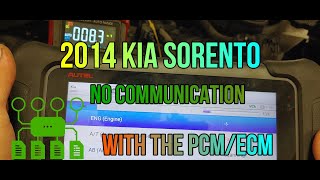
- Faulty Control Module: A single faulty module (e.g., ECM, BCM, ABS module) can fail in a way that it brings down the entire communication network. A diagnostic video on a 2014 Sorento showed a faulty PCM was the ultimate cause of a no-start and communication codes. 🎬 Watch this diagnostic walkthrough of a faulty Sorento PCM. This is typically the last thing to check after ruling out all wiring and connection issues.
- Aftermarket Electronics: Improperly installed aftermarket equipment, such as remote starters, alarms, or stereo systems, can interfere with the CAN bus network and cause communication errors. When installing an aftermarket head unit, a specific CAN bus decoder is often required to integrate with factory systems; using a generic or low-quality decoder can introduce network errors.
- Faulty Smart Junction Box (SJB): The interior fuse box is a 'Smart Junction Box' (SJB), which is a control module itself. It is known to be susceptible to failure from water intrusion due to leaks from the windshield or sunroof drains. A failing SJB can cause widespread communication and electrical issues. If replaced, it requires programming by a dealer or locksmith for the vehicle to start.
Diagnosis Steps
- Scan for all codes in all modules. A generic U1000 is not very helpful, but other codes (like U0100, U0101, etc.) will point to which module is offline.
- Check battery health. Test the battery's state of charge and perform a load test. A weak battery is a very common cause.
- Inspect all power and ground connections. Clean the battery terminals. Check the main engine and chassis ground straps for tightness and corrosion.
- Visually inspect wiring harnesses for obvious damage, especially any that may have been disturbed during previous repairs. Pay close attention to the PCM connector area behind the battery.
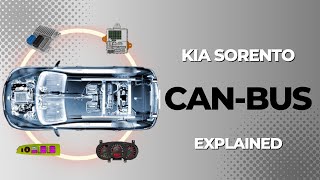
- If the basics are good, the next steps require a professional. This involves using a multimeter to check for 60 ohms of resistance across the CAN High (Pin 6) and CAN Low (Pin 14) pins at the OBD-II port (with the battery disconnected). This verifies the integrity of the network's two 120-ohm terminating resistors.
- With the key on and engine off, check voltage. CAN High (Pin 6 to ground) should be ~2.5V and CAN Low (Pin 14 to ground) should be ~2.5V.
- Use an oscilloscope to view the CAN signal to check for data transmission and look for signal abnormalities.
- Isolate modules one by one. A technician may unplug modules one at a time to see if communication on the network is restored, which can help pinpoint a faulty module that is disrupting the network.
Parts You'll Likely Need
- 12V Automotive Battery — A weak or failing battery is the most common cause of intermittent communication faults in modern vehicles.
Trusted brands: Bosch, Interstate, DieHard
OEM price range: $200-$300
Aftermarket price range: $150-$250 - Battery Terminal Ends / Ground Straps
(OEM #91865C6010 (Example Ground Cable))— Corroded terminals or ground straps create high resistance, leading to voltage drops that cause communication issues.
Trusted brands: Standard Motor Products, Dorman, Kia Genuine Parts
OEM price range: $20-$75
Aftermarket price range: $10-$40
Related Codes That Often Appear With This One
- U0100 — U0100 specifically means 'Lost Communication with ECM/PCM'. If the U1000 code is present, it's very likely you will see other 'U' codes that point to the specific module(s) that are not communicating.
- U0101 — U0101 means 'Lost Communication with TCM'. On this Sorento, the TCM is integrated into the PCM, so this code points to an issue with the main computer or its connections.
- P06xx — Codes in the P06xx range often relate to internal computer or module faults, which can be a root cause of a module failing to communicate on the network.
- P0562 — This code for 'System Voltage Low' often accompanies 'U' codes, as the low voltage condition is a primary cause of modules dropping off the communication network.
Technical Service Bulletins (TSBs) & Recalls
- CS1603: Customer Satisfaction Program for 2011 Sorento door latches. While not directly for U1000, it addresses known electrical/mechanical component failures on the vehicle.
- SA104: Notes a potential for a starter solenoid wire in a wiring harness to contact a coolant line bracket, possibly resulting in a short to ground which could disrupt network communication.
- KT2009083101: A general Kia TSB advising technicians to thoroughly check all main powertrain ground connections before replacing parts when diagnosing any powertrain-related DTCs, as poor grounds are a common cause of misdiagnosis.
- TSB NTB06-009: While originally issued for a different manufacturer, this bulletin describes a U1000 CAN communication circuit fault that can put a vehicle into "limp mode" (as noted in NHTSA ODI #10150585).
Platform-Specific Known Issues
- A user on Kia-Forums with a 2011 Sorento experiencing a U0101 (TCM communication loss) ultimately solved the problem by finding and cleaning corrosion from the large PCM connector located behind the battery. This area is susceptible to moisture and corrosion and should be a primary inspection point for any communication codes.
Mechanic-Grade Diagnostic Values
- CAN Bus Network Resistance — expected: ~60 Ohms. Failure: A reading of ~120 Ohms indicates one of the two terminating resistors is missing or the circuit is open to it. A reading near 0 Ohms indicates a short between CAN High and CAN Low wires.
- CAN High Voltage (Key On, Engine Off) — expected: ~2.5V to 3.5V. Failure: Significant deviation from this range points to a wiring issue or a module pulling the voltage down.
- CAN Low Voltage (Key On, Engine Off) — expected: ~1.5V to 2.5V. Failure: Significant deviation from this range points to a wiring issue or a module pulling the voltage up.
- Charging System Voltage (Engine Running) — expected: 13.5V to 14.7V. Failure: Voltage below 13.5V indicates a failing alternator; voltage below this level can cause modules to randomly drop off the network.
Scan Tool Commands That Help
- Kia GDS (Global Diagnostic System): Network Scan / Topology Check — This is the primary dealer-level function to get a visual map of all control modules on the CAN bus. It shows which modules are online (green), offline (red), or reporting codes, quickly identifying which module is not communicating.
- Kia GDS (Global Diagnostic System): Resetting Adaptive Values — After addressing a physical repair (like cleaning a ground or replacing a module), this function in the GDS can be used to reset learned values in control modules, which may be necessary to clear persistent communication-related faults.
- Kia GDS (Global Diagnostic System): Vehicle S/W Management (Special Function) — This is used for programming or updating module software. If a TSB indicates a software update is available to fix a communication bug, this function is used to perform the flash. It is also required when replacing certain modules like the Smart Junction Box.
Wiring & Ground Locations
- OBD-II DLC Port — Under the driver's side dashboard, often behind a small removable cover labeled 'FUSE' or 'OBD'.. This is the primary access point for network diagnostics. Pin 6 (CAN High) and Pin 14 (CAN Low) are used for resistance and voltage checks of the entire network.
- Smart Junction Box (SJB) / Interior Fuse Box — Located under the driver's side dashboard, accessible by removing a trim panel.. This is not just a fuse panel; it's a control module that acts as a central hub for many electronic functions. It's a known failure point due to water intrusion and can cause network-wide communication faults.
- Instrument Cluster — In the dashboard, in front of the driver.. On many Sorento models, the instrument cluster acts as a gateway module, bridging communication between the powertrain CAN bus and the body CAN bus. A failure in the cluster can therefore sever communication between major systems.
- Main Powertrain Ground — Typically a strap from the engine block or transmission housing to the vehicle's chassis/frame.. A Kia Technical Service Bulletin emphasizes checking this ground thoroughly when diagnosing any powertrain codes, as a poor connection here is a common root cause for seemingly complex electronic issues.
Real Owner Repair Stories
- Reddit user 6godsuavay (2012 Kia Sorento V6) — No crank, no start, single click when trying to start.
❌ Tried (didn't work) Swapping relays
✅ What actually fixed it The issue was the PDM (Power Distribution Module) relay box. Replacing this box resolved the no-start and communication issues. - Reddit user Ok_Acanthaceae_3657 (2012 Kia Sorento LX GDI (non-push-start)) — Intermittent no-crank, no-start. Tapping the positive battery terminal would sometimes allow it to start. The car would lose all power, but then wiggling the positive terminal wires would restore it and allow it to crank.
❌ Tried (didn't work) Cleaning the battery terminals (battery was new), Replacing the positive terminal with a generic one (this solved the power loss but not the intermittent no-crank)
✅ What actually fixed it The final fix was replacing the positive battery terminal with the specific, correct OEM terminal for the vehicle. The generic terminal did not provide the proper connection for the starter and alternator wires.
Documented NHTSA Reports
- An owner reported a U1000 code where the diagnostic failed because the instrument cluster could not communicate, despite power and ground being present; the fix involved replacing the cluster and BCM (NHTSA ODI #10970695).
- NHTSA ODI #11461728 describes a U1000 code for lost communication with the TCM, where the module reportedly overheats because it is located directly on the transmission under the battery box.
- A report in NHTSA ODI #10681194 defines U1000 as a ground harness problem, noting that cleaning battery terminals did not resolve the issue.
- NHTSA ODI #10171770 describes a scenario where a vehicle stalled due to a loss of ignition input, with a scan revealing codes U1000, U1016, U1152, B1372, and U1088.
Model Year Variations Within This Range
- 2014-2015: The 2014 model year introduced a major refresh with an all-new chassis, a new direct-injection V6 engine, electric power steering, and a more advanced UVO infotainment system. Over 80% of the parts were new or redesigned. This means wiring diagrams, module locations, and even potential failure points can differ significantly from the 2011-2013 models. For example, the instrument cluster and infotainment systems are more complex and integrated, creating different potential gateway or network failure scenarios.
- 2011-2013 vs 2014-2015: The instrument cluster, which can act as a CAN gateway, has different part numbers and designs between the pre- and post-refresh models. For example, part number 94001-1U011 is specific to 2011-2013 models with the 3.5L V6. The 2014+ models use different clusters with more advanced screens. These parts are not interchangeable.
Diagnostic Flowchart
Other Known Issues on This Vehicle
Issues unrelated to this code that are worth knowing about as an owner of this generation:
- Catastrophic Theta II Engine Failure 🔴 High — Widespread across 2.4L and some V6 models. Caused by manufacturing debris (metal shavings) blocking oil passages, leading to connecting rod bearing failure and engine seizure. Can occur at various mileages, but many reports are in the 60,000-120,000 mile range. (Ref: Multiple recalls (e.g., NHTSA #17V-224) and a class-action lawsuit settlement led to engine replacement programs and a Knock Sensor Detection System (KSDS) software update.)
- Faulty Door Latch Mechanisms 🟠 Medium — Very common, especially on 2011 models. The exterior door handle fails to open the door, creating a safety concern. (Ref: Kia issued Customer Satisfaction Program CS1603, which involved inspecting/upgrading front latches and extending the warranty on rear door latches to 10 years/unlimited mileage.)
- Hydraulic Electronic Control Unit (HECU) Fire Risk 🔴 High — Affects certain 2013-2015 models. Brake fluid can leak inside the HECU, causing an electrical short that can lead to an engine compartment fire, even when the vehicle is parked. (Ref: NHTSA recall #20V-519 was issued to address this issue.)
- Excessive Oil Consumption 🟠 Medium — Common on Theta II engines, often beginning around 60,000-80,000 miles. Can be caused by carbon buildup on piston rings or other internal engine wear, potentially leading to oil starvation if not monitored. (Ref: A 2020 TSB acknowledged excessive oil consumption in various Kia models with Theta engines from 2011-2022.)
- Peeling 'Snow White Pearl' Paint 🟡 Low — Common on vehicles with this specific paint color (2013-2016). Paint delaminates in large sheets, exposing the primer or bare metal. (Ref: No formal recall, but a widespread, well-documented owner complaint.)
Used vs. New Parts: Buying Guide for This Vehicle
When a used part is the smart pick: Used parts can be a cost-effective solution for components that do not require programming and have low failure rates. For a U1000 fault, this is limited. A used battery ground cable or a specific connector pigtail from a junkyard can be a smart buy if the original is corroded or damaged. A used engine bay fuse box (Power Distribution Center) is also generally safe as it typically does not require programming.
Donor-vehicle mileage cap: roughly under 80000 miles for the part to have meaningful remaining life.
What to inspect on the donor part:
- For any electrical part, inspect connectors for green or white corrosion.
- Check wiring harnesses for signs of rodent damage (chewed wires), brittleness, or previous sloppy repairs (excessive electrical tape).
- If buying a module like a fuse box, ensure it comes from a vehicle that did not have water damage. Look for rust on internal metal brackets or a musty smell.
OEM-only on this vehicle (don't cheap out):
- Smart Junction Box (SJB) / Interior Fuse Box: While a used unit can be installed, it MUST be reprogrammed by a dealer or a well-equipped locksmith to match your vehicle's keys and options. The hassle and extra cost of programming can negate the savings. A new part from the dealer is often a more reliable path.
- Positive Battery Terminal: As noted in a real repair story, generic terminals may not provide a secure connection for the multiple integrated wires (starter, alternator). Using the specific OEM terminal is critical for proper function.
Brands owners have reported issues with on this vehicle:
- Unspecified CAN Decoders: When replacing the radio, using a low-quality or generic CAN bus adapter instead of a reputable one (like PAC, Axxess) is a known cause of network communication errors.
Real Owner Stories
Aggregated from forums and TSBs cited above. Mileages and costs reflect what owners reported in those sources.
2011 Kia Sorento
Symptoms: Experienced a U0101 code indicating TCM communication loss.
What fixed it: Finding and cleaning corrosion from the large PCM connector located behind the battery.
Source hint: Kia-Forums.com - A thread discussing U0101 on a 2011 Sorento where the fix was cleaning the PCM connector behind the battery.
2011 Kia Sorento — 120000 miles
Symptoms: Airbag warning light illuminated.
What fixed it: Replacement of the clockspring.
Source hint: BobIsTheOilGuy.com - A 2016 thread discussing the 2011-2013 Sorento mentions general reliability.
Related OBD-II Codes
Frequently Asked Questions
Could the U1000 code on my 2011 Sorento be related to the door latch recall?
Is there a Kia TSB for checking ground connections on my Sorento?
I have a U1000 and my Sorento is stalling; could this be the Theta II engine issue?
Can a short in the starter solenoid wiring cause communication codes like U1000?
Where is the most common place to check for wiring corrosion on a 2011 Sorento?
Could my Sorento's U1000 code be caused by a fire risk in the brake system?
Helpful Videos

We Have This Part in Stock

The information in this article is provided for general reference and educational purposes only. Vehicle specifications, procedures, and part compatibility can vary by production date, trim level, and region. Always consult your vehicle's factory service manual and verify part numbers before purchasing or performing repairs. Safety-critical components such as airbags, seat belts, and braking systems should be installed by a qualified professional.
- Kia Sorento:
- 🧭 Diagnostic Flowchart
- 🎬 Helpful Videos
- 🛍️ Shop This Part
- What's Unique About the 2011-2015 Kia Sorento
- Symptoms You May Notice
- Most Likely Causes
- Rare But Worth Checking
- Diagnosis Steps
- Parts You'll Likely Need
- Related Codes That Often Appear With This One
- Technical Service Bulletins (TSBs) & Recalls
- Platform-Specific Known Issues
- Mechanic-Grade Diagnostic Values
- Scan Tool Commands That Help
- Wiring & Ground Locations
- Real Owner Repair Stories
- Documented NHTSA Reports
- Model Year Variations Within This Range
- Other Known Issues on This Vehicle
- Used vs. New Parts: Buying Guide for This Vehicle
- Real Owner Stories
- 2011 Kia Sorento
- 2011 Kia Sorento — 120000 miles
- Related OBD-II Codes
- Frequently Asked Questions
- 🎟️ Get 5% Off