

U1000 on 2016-2020 Kia Sorento: Network Communication Failure Causes and Fixes
This code means there's a communication breakdown between your car's computers. On the 2016-2020 Sorento, the most likely causes are a weak battery or a corroded main ground strap. Always check these simple electrical issues before suspecting a failed computer module. A surprising number of network issues are resolved by simply replacing an aging battery.
- U1000 means there is a communication problem on your Sorento's internal computer network.
- Before suspecting expensive computer failures, test your battery and clean/tighten the main ground straps. These are the most common fixes.
- Do not replace any modules unless you are 100% certain it has failed; the problem is more likely in the wiring or power supply to the module.
- If the battery and grounds are good, the problem is likely in the wiring or a module, which requires professional diagnosis with advanced tools.
What's Unique About the 2016-2020 Kia Sorento
While there are no widely documented, recurring factory defects that cause a U1000 code on the third-generation (2016-2020) Sorento, owner experiences with similar communication codes (like U0100) point to basic electrical issues. A common vulnerability is the main engine-to-chassis ground strap, which can corrode and cause a host of communication problems. Additionally, like many modern vehicles, this Sorento generation uses soy-based wire insulation, which can occasionally attract rodents that chew through wiring, leading to network faults. In some cases, a failing peripheral module, like a backup camera shorted by water ingress, can bring down the entire CAN bus, triggering a U1000 code.
Symptoms You May Notice
- Check Engine Light is on
- Other warning lights may illuminate (ABS, Traction Control, etc.)
- Vehicle may not start or is difficult to start
- Engine may stall or run rough
- Erratic or non-functional gauges on the instrument cluster
- Loss of functionality for electrical features like power windows, radio, or climate control
- Dimming or flickering headlights
- Backup camera not working
- Replacing the ECM or another control module without first verifying battery health and the integrity of all power and ground connections. This is an expensive mistake, as the root cause is often a simple electrical issue.
Most Likely Causes
- Weak or Failing Battery 🔴 High Probability → Shop Vehicle Battery Modern vehicles are highly sensitive to voltage. A battery that is weak but still able to start the engine can cause voltage to drop low enough during cranking to disrupt communication between modules, triggering a U1000 code.
How to confirm: Test the battery with a multimeter or an electronic battery tester. A healthy, fully charged battery should read approximately 12.6 volts with the engine off and 13.7-14.7 volts with the engine running. Check for a voltage drop during startup; if it drops below 9.6V, the battery is weak.
Typical fix: Recharge or replace the battery. Ensure battery terminals are clean and tight, free of blue or white corrosion. An owner report in NHTSA ODI #11653700 noted that even after replacing a battery, a U1000-01 code persisted, indicating the communication circuit itself may be the culprit.
Est. part cost: $150-$300 - Corroded or Loose Ground Strap 🟡 Medium Probability → Shop Engine Ground Strap Based on owner reports for similar codes on this platform, the main ground strap between the engine/transmission and the chassis is a known weak point for corrosion. A poor ground can cause flickering lights and communication errors.
How to confirm: Visually inspect the main ground straps for corrosion, fraying, or looseness. One is typically near the battery connecting to the fender, and another from the engine block or transmission to the frame. Perform a voltage drop test from the battery negative post to the engine block and to the chassis; it should be less than 0.2 volts with the engine running.
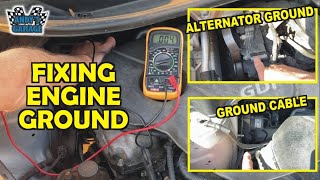
Typical fix: Remove, clean the contact points on the strap and chassis with a wire brush until shiny, and re-secure. 🎬 Watch: How to clean and fix engine ground issues If the strap is badly corroded or broken, it must be replaced. Cross-manufacturer reports such as NHTSA ODI #10681194 and NHTSA ODI #10169405 specifically identify U1000 as an electrical and ground wire problem.
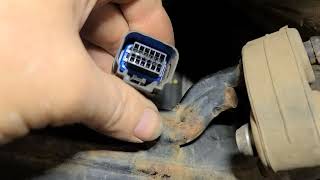
Est. part cost: $20-$70 - Damaged Wiring Harness or Connectors ⚪ Low Probability The use of soy-based wire insulation can attract rodents, which may chew through the CAN bus wiring, causing an open or short in the network. Connectors for modules exposed to the elements (e.g., backup camera, ABS wheel speed sensors) are also prone to corrosion.
How to confirm: Visually inspect wiring harnesses, especially around the engine bay, under the vehicle, and near the rear hatch for signs of chewing, chafing, or corrosion. Pay close attention to the twisted pair of CAN wires (often CAN High and CAN Low). This can be difficult to find without tracing the specific harness using a diagram.
Typical fix: Repair the damaged section of wire. This often involves soldering in a new piece of wire and protecting it with heat shrink tubing. Corroded connectors may need to be cleaned or replaced.
Est. part cost: $5-$50
Rare But Worth Checking
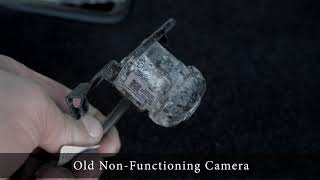
- Faulty Control Module: While possible, a module (like the ECM, BCM, or TCM) failing is much less common than a wiring or power/ground issue. A module should only be replaced after all other possibilities have been exhausted and the module itself has been proven to be the point of failure. Sometimes a peripheral module, like a shorted backup camera, can be the culprit. 🎬 See this step-by-step backup camera replacement guide
- Aftermarket Electronics: Improperly installed aftermarket accessories like remote starters, alarms, or audio equipment can interfere with the CAN bus network and cause communication codes. These devices are often tapped into the network wiring incorrectly.
- Ignition Switch Failure: → Shop Ignition Switch In some instances, a loss of ignition input can trigger multiple communication codes including U1000, as described in NHTSA ODI #10171770.
Diagnosis Steps
- Scan for All Codes: Use a quality OBD-II scanner to pull all codes from all modules, not just the engine computer. Note any other 'U' codes, as they can help pinpoint which module is offline.
- Check Battery Health: Test the battery voltage with the car off (should be ~12.6V) and running (should be 13.7-14.7V). Perform a load test or check voltage during cranking to ensure it doesn't drop excessively. Test the battery terminals for cleanliness and tightness.
- Inspect Main Grounds: Locate and inspect the primary ground straps. Check the negative battery cable to the chassis and the engine/transmission to chassis strap. Look for green/white corrosion or looseness. Clean and tighten as needed. Perform a voltage drop test on the ground circuit.
- Inspect Fuses: Check fuses related to the various control modules (ECM, TCM, BCM, Instrument Cluster) in both the interior and under-hood fuse boxes.
- Visual Wiring Inspection: Look for any obvious signs of damaged wiring, particularly from rodents or chafing against other components. Pay special attention to wiring for exposed modules like the backup camera.
- Perform a Module 'Roll Call': A more advanced scan tool can poll all modules on the network to see which one(s) are not responding. This is a key step in professional diagnosis.
- Test the CAN Bus: If a module is suspected, a technician can test the two CAN bus wires at the module's connector for proper resistance (typically 60 ohms across the circuit with the battery disconnected) and voltage. This requires a wiring diagram and a multimeter.
Parts You'll Likely Need
- Battery — A weak or failing battery is a primary cause of network communication codes on modern vehicles.
Trusted brands: Bosch, Interstate, DieHard
OEM price range: $200-$350
Aftermarket price range: $150-$300 - Engine Ground Strap
(OEM #91865-C6010, 91865-C6020)— This part is prone to corrosion on the Sorento and can cause a U1000 code when its connection becomes poor.
Trusted brands: Kia Genuine Parts, Standard Motor Products
OEM price range: $30-$70
Aftermarket price range: $20-$40
Related Codes That Often Appear With This One
- U0100 — Lost Communication With ECM/PCM. U1000 is a general network code, while U0100 specifies the Engine Control Module is the one that's offline. They often appear together.
- U0101 — Lost Communication with TCM. Similar to U0100, this points to the Transmission Control Module being offline. If both appear, a network-wide fault is likely.
- P0562 — System Voltage Low. This code directly supports the theory that a weak battery or charging system problem is the root cause of the communication failure.
- C1616 — CAN Bus Off. This indicates the CAN controller has shut down due to excessive errors on the bus, pointing to a significant network wiring or module fault.
Technical Service Bulletins (TSBs) & Recalls
- TSB PI1803: This Product Improvement Campaign involves a software update for the Knock Sensor Detection System (KSDS) to help detect early signs of engine bearing wear related to the Theta II engine problems.
- TSB TSB_ELE338: Relates to software updates for the head unit on 2022-2023 models to fix CarPlay/Android Auto connectivity, showing that modules often require software flashes to fix communication-related bugs.
- TSB TSB_ELE303_R1: A software update for 2020-2024 models to fix a non-responsive radio, another example of communication issues being resolved by software.
- TSB ELE205: Acknowledges that moisture intrusion into the backup camera can cause a blurry image or complete failure, a known cause of CAN bus issues on this platform.
Platform-Specific Known Issues
- Backup Camera Failure Causing Network Crash: In a documented case for a 2016 Sorento, multiple warning lights and network codes were traced back to a faulty backup camera. Salt water had gotten inside the camera, causing it to short out and take down the CAN C bus. Replacing the camera resolved the network issues. This generation is known for camera failures due to moisture, and Kia issued a Technical Service Bulletin (TSB ELE205) for this issue.
Mechanic-Grade Diagnostic Values
- CAN Bus Network Resistance — expected: ~60 Ohms (±3 Ohms). Failure: A reading of ~120 Ohms indicates an open circuit in the harness or a fault in one of the two terminating modules. A reading significantly lower than 60 Ohms indicates a short between the CAN High and CAN Low wires.
- CAN Bus Voltage (Key-On, Engine-Off) — expected: CAN High (Pin 6): ~2.5V to ~3.5V during communication. CAN Low (Pin 14): ~2.5V to ~1.5V during communication. Both lines should be at ~2.5V when idle.. Failure: Voltages stuck high or low, or no voltage at all, indicate a short to power, a short to ground, or an open circuit.
- Ground Strap Voltage Drop — expected: < 0.2 Volts (200mV). Failure: A reading higher than 0.2V indicates excessive resistance in the ground connection, which can cause communication errors.
Scan Tool Commands That Help
- Kia GDS (Global Diagnostic System): Fault Code Searching (All Systems) — This is the first step to get a complete picture of network health. It polls every module on the vehicle and reports which ones are communicating and which have stored DTCs. This is more comprehensive than a standard OBD-II scan.
- Kia GDS (Global Diagnostic System): Vehicle S/W Management — This function is used for special functions like resetting adaptive values or programming a new module (like a BCM) to the vehicle. A replacement BCM will likely require programming with GDS to function and allow the vehicle to start.
- Kia GDS (Global Diagnostic System): Current Data / Live Data — After identifying a potentially problematic module, a technician can use GDS to view its live data stream to see if it is receiving inputs and sending logical outputs, helping to confirm if the module is functioning internally.
Wiring & Ground Locations
- Interior Fuse Box — Located behind a cover on the lower part of the dashboard on the driver's side, below the steering wheel.. This panel contains fuses for many interior modules that communicate on the CAN bus, such as the Instrument Panel Cluster, Airbag module (SRS), and Body Control Module (BCM). A blown fuse here can take a module offline.
- Engine Compartment Fuse Box — Located in the engine bay, typically near the battery.. This box contains main fuses and relays for critical modules like the ECM, TCM, and ABS control unit. A failure here can cause a widespread network shutdown.
- OBD-II Data Link Connector (DLC) — Under the driver's side dashboard, used for connecting a scan tool. Pins 6 (CAN High) and 14 (CAN Low) are the primary diagnostic points for the main CAN bus.. This is the most accessible point for testing the overall health of the CAN bus network, allowing for resistance and voltage checks without having to access individual modules.
- Engine-to-Chassis Ground Strap — A braided metal strap connecting the engine block or transmission housing to the vehicle's frame/chassis.. This is a critical ground path. Corrosion or looseness here is a common cause of intermittent electrical issues and communication codes like U1000 on this platform.
Real Owner Repair Stories
- YouTube video by 'Update' (2016 Kia Sorento) — Multiple warning lights on the dash, backup camera not working, and multiple network codes stored.
❌ Tried (didn't work) Initial diagnosis pointed to a general CAN bus failure with many codes, making it hard to pinpoint the source.
✅ What actually fixed it The root cause was a faulty backup camera. Salt water had leaked into the camera assembly, causing an internal short that was disrupting and taking down the entire CAN C bus. Replacing the backup camera resolved all network codes and warning lights. - Kia Forums user report (cited in a related article) (2017 Kia Sorento) — No-crank, no-start condition with a U0100 code (Lost Communication with ECM).
❌ Tried (didn't work) Checking battery and fuses, which were found to be good.
✅ What actually fixed it The problem was a severely corroded main ground strap between the engine and chassis. Cleaning the contact points and replacing the strap restored communication and allowed the vehicle to start. - NHTSA ODI #11727548 — An owner reported a systemic U1000 electrical network jam resulting in critical failures where airbags were disabled.
OEM Part Supersession History
91865-C6010→N/A— Engine Ground Strap for 2.0L and 3.3L engines.91865-C6020→N/A— Engine Ground Strap for 2.4L engines.
Model Year Variations Within This Range
- 2019-2020: The 2019 model year received a facelift with revised front/rear fascias, new headlights/taillights, and interior updates including a new steering wheel, shifter, and revised instrument cluster. The infotainment system was also upgraded. While the core CAN bus architecture remained similar, these new/updated electronic components introduce slight variations in potential failure points (e.g., different head unit, full LED lighting on some trims). The 2.0L turbo engine was also discontinued for 2019.
- 2016-2018: The Kia GDS (Global Diagnostic System) factory scan tool provides full diagnostic coverage, including module programming and special functions, for vehicles up to the 2018 model year. For 2019+ models, Kia transitioned to a newer diagnostic system.
Diagnostic Flowchart
Other Known Issues on This Vehicle
Issues unrelated to this code that are worth knowing about as an owner of this generation:
- Catastrophic Engine Failure (Theta II GDI) 🔴 High — Widespread issue affecting 2.4L and 2.0L Turbo engines, often occurring between 60,000-100,000 miles. Caused by manufacturing debris leading to connecting rod bearing failure. (Ref: Multiple recalls and a class-action lawsuit settlement led to extended lifetime warranties for affected engines, contingent on receiving the Knock Sensor Detection System (KSDS) software update (e.g., PI1803).)
- Excessive Oil Consumption 🟠 Medium — Common on the 2.4L engine, with many owners reporting consumption rates exceeding 1 quart per 1,000 miles. Often a precursor to more severe engine wear. (Ref: Kia's official stance is that 1 quart per 1,000 miles is 'acceptable,' leading to disputes over warranty repairs.)
- Peeling White Paint (Snow White Pearl) 🟡 Low — The 'Snow White Pearl' (SWP) paint is known to delaminate and peel off in sheets, often due to an improper bond with the primer from the factory. (Ref: No official recall, but Kia has offered extended warranties or goodwill repairs on a case-by-case basis after customer complaints.)
- Engine Compartment Fire Risk 🔴 High — Recalls were issued for potential shorts in the ABS or Hydraulic Electronic Control Unit (HECU), which could cause a fire even when the vehicle is parked. (Ref: NHTSA Campaign Number 20V519000 is one of the key recalls for this issue.)
- Faulty Accelerator Pedal Position Sensor 🔴 High — A recall was issued for 2016 models where a faulty sensor could cause the vehicle to lose acceleration and enter limp mode. (Ref: NHTSA Recall Number 16V815000)
Used vs. New Parts: Buying Guide for This Vehicle
When a used part is the smart pick: For major control modules like the BCM (Body Control Module) or ECM (Engine Control Module), a used part from a reputable automotive recycler can offer significant savings. Since these are electronic components, physical wear is not the primary concern.
Donor-vehicle mileage cap: roughly under 80000 miles for the part to have meaningful remaining life.
What to inspect on the donor part:
- Verify the part number on the used module EXACTLY matches the original. Sorentos have many variations based on trim and options.
- Purchase from a seller that offers a warranty or return policy.
- Inspect the connector pins for any signs of corrosion, moisture, or physical damage.
- Ensure the donor vehicle was not involved in a flood or fire.
OEM-only on this vehicle (don't cheap out):
- Engine Ground Strap: This is a low-cost but critical part. Given that corrosion is the primary failure mode, installing a new OEM strap (e.g., 91865-C6010 or 91865-C6020) is the most reliable repair.
- Backup Camera: While used is an option, the 2016-2020 models are known for camera failure due to moisture. A new, improved OEM replacement part is recommended to prevent a repeat failure.
Brands owners have reported issues with on this vehicle:
- Generic, no-name backup cameras: While cheaper, they often have inferior image quality, lack of dynamic guidelines, and may require wire splicing, creating new potential points of failure.
Real Owner Stories
Aggregated from forums and TSBs cited above. Mileages and costs reflect what owners reported in those sources.
2016 Kia Sorento
Symptoms: Multiple warning lights illuminated and network codes were present; the backup camera was also failing.
What fixed it: Replacing the backup camera. Salt water had entered the unit, causing a short that crashed the CAN C bus.
Source hint: vehicle_specific_issues citing TSB ELE205 and documented case
2017 Kia Sorento
Symptoms: Vehicle experienced a no-start condition and a U0100 communication code.
What fixed it: Replacing the main ground strap which had become corroded.
Source hint: forum_citations
Related OBD-II Codes
Frequently Asked Questions
Can a faulty backup camera really cause a U1000 communication code on my 2016 Kia Sorento?
Is there a TSB for the radio or head unit not responding on the 2020 Sorento?
I have a 2017 Sorento that won't start; could this be related to a ground strap?
Does the Knock Sensor Detection System (KSDS) update relate to communication codes?
Why are my headlights flickering along with the U1000 code?
Could a weak battery cause a U1000 even if my Sorento still starts?
Helpful Videos
We Have This Part in Stock


The information in this article is provided for general reference and educational purposes only. Vehicle specifications, procedures, and part compatibility can vary by production date, trim level, and region. Always consult your vehicle's factory service manual and verify part numbers before purchasing or performing repairs. Safety-critical components such as airbags, seat belts, and braking systems should be installed by a qualified professional.
- Kia Sorento:
- 🧭 Diagnostic Flowchart
- 🎬 Helpful Videos
- 🛍️ Shop This Part
- What's Unique About the 2016-2020 Kia Sorento
- Symptoms You May Notice
- Most Likely Causes
- Rare But Worth Checking
- Diagnosis Steps
- Parts You'll Likely Need
- Related Codes That Often Appear With This One
- Technical Service Bulletins (TSBs) & Recalls
- Platform-Specific Known Issues
- Mechanic-Grade Diagnostic Values
- Scan Tool Commands That Help
- Wiring & Ground Locations
- Real Owner Repair Stories
- OEM Part Supersession History
- Model Year Variations Within This Range
- Other Known Issues on This Vehicle
- Used vs. New Parts: Buying Guide for This Vehicle
- Real Owner Stories
- 2016 Kia Sorento
- 2017 Kia Sorento
- Related OBD-II Codes
- Frequently Asked Questions
- 🎟️ Get 5% Off