

U1000 on 2011-2016 Kia Sportage: Causes and Fixes for Network Communication Failure
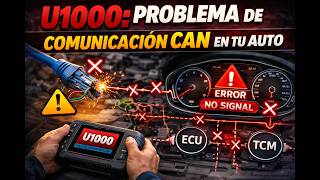
On a 2011-2016 Kia Sportage, a U1000 code usually points to a CAN bus network communication failure. The most common causes are a weak battery, corroded ground connections, or damaged wiring. Before suspecting a costly module failure, always start by testing the battery and cleaning all major ground points, particularly the main chassis and engine grounds.
- U1000 on your Sportage means there's a communication breakdown between the vehicle's computers.
- Do not immediately assume a major component has failed. Start your diagnosis with the simplest and most common causes: the battery and ground connections.
- A weak or old battery is the number one culprit for this code. Get it professionally load tested.
- Thoroughly inspect, clean, and tighten the main battery and engine ground connections.
- Due to the complexity of network diagnostics and the potential for serious underlying issues, professional service is strongly recommended if a bad battery or ground is not the obvious cause.
What's Unique About the 2011-2016 Kia Sportage
While U1000 is a generic network code, on the 2011-2016 Sportage (primarily the third generation 'SL'), the diagnostic path is heavily influenced by common platform weaknesses. These vehicles are known for issues that can trigger communication faults, such as failing batteries and poor ground connections. Furthermore, this generation Sportage is subject to major engine recalls and a lifetime warranty extension for the Theta II engine due to bearing failure issues caused by manufacturing debris. These engine problems can sometimes manifest with related electrical codes, so it's crucial to rule out simple electrical faults before assuming a more complex module or engine issue. Additionally, a recall for the ABS module (HECU) on 2014-2016 models for fire risk means this module should be inspected as a potential cause of network disruption.
Generation note: This range covers the majority of the third generation Sportage (SL, 2011-2015) and the first model year of the fourth generation (QL, 2016). The causes are generally similar, as they relate to basic electrical principles. However, the third generation is more commonly associated with the Theta II engine recalls. The 2014-2016 models are specifically included in a recall for the ABS module (HECU) which can short circuit and cause communication issues or even a fire.
Symptoms You May Notice
- Check Engine Light is on
- Multiple other warning lights may illuminate (ABS, Traction Control, Airbag)
- Engine may stall, run poorly, or not start
- Transmission may not shift correctly or may enter 'limp mode'
- Electrical features like power windows or the radio may work intermittently or not at all
- Scan tool may be unable to communicate with one or more modules
- Instrument cluster gauges behaving erratically or going dead
- Headlights flickering or dimming
- Replacing the Engine Control Module (ECM) without first verifying its power and ground supplies are perfect. A bad ground or power feed to the ECM will make it appear faulty when it is not.
- Replacing random modules without performing a network diagnosis to see which module is actually offline or causing the interference.
Most Likely Causes
- Weak or Failing Battery 🔴 High Probability → Shop Vehicle Battery Low system voltage is a primary cause of communication glitches on all modern vehicles. During startup, a weak battery's voltage can drop below the 10V threshold required for stable module operation, triggering a U1000 code.
How to confirm: Test the battery voltage at rest (should be ~12.4V or higher). Perform a load test; voltage should not drop below 10.0V while cranking. Many auto parts stores offer free battery testing.
Typical fix: Replace the vehicle battery.
Est. part cost: $150-$250 - Poor Ground Connections 🔴 High Probability Like many vehicles, the Sportage relies on multiple chassis and engine ground points. Over time, these connections can corrode or loosen, creating electrical resistance that disrupts module communication. This is a well-documented cause for communication codes on many platforms. In a cross-manufacturer example, NHTSA ODI #10681194 describes U1000 as a "ground harness problem" where cleaning battery terminals was insufficient to resolve the fault.
How to confirm: Visually inspect the main battery-to-chassis ground strap, engine-to-chassis ground strap, and grounds for the ECM. Look for corrosion (green or white powder) or looseness. Use a multimeter to perform a voltage drop test between the battery negative post and the module's ground point; a reading above 0.2V indicates a problem.
Typical fix: Disconnect, clean all contact surfaces on the strap and chassis with a wire brush until they are shiny, and securely re-fasten the ground connections. Applying dielectric grease can prevent future corrosion.
Est. part cost: $1-$10 - Damaged Wiring or Connectors 🟡 Medium Probability The CAN bus network relies on twisted-pair wires. Damage from vibrations, improper repairs, rodent activity, or moisture intrusion can cause a short or open circuit, bringing down the network.
How to confirm: Visually inspect wiring harnesses, especially those near the ECM, fuse box, and any areas where aftermarket accessories have been installed. Check for chafed wires, corrosion in connectors, or rodent damage. An advanced diagnostic step is to measure resistance between pins 6 (CAN High) and 14 (CAN Low) at the OBD-II port; it should be 60 ohms with the battery disconnected. A reading of 120 ohms suggests a break in the circuit or a missing terminating resistor.
Typical fix: Repair the damaged section of wiring or replace the affected connector. This often requires soldering and heat-shrinking for a durable repair.
Est. part cost: $10-$100
Rare But Worth Checking
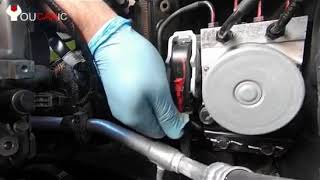
- Faulty ABS Control Module (HECU): → Shop ABS Control Module For 2014-2016 models in particular, the ABS module (HECU) is subject to a recall for an internal short circuit that can cause a fire. This internal failure can also disrupt CAN bus communication, leading to a U1000 code. If other codes like U0121 are present, suspicion on the ABS module increases. 🎬 See how to disconnect the ABS module connector
- Faulty Control Module (ECM, BCM, etc.): A single module (like the ECM, TCM, or BCM) can fail internally and broadcast junk data, disrupting the entire network. NHTSA ODI #10970695 notes a case where an instrument cluster had no communication despite power and ground being present, leading to a U1000 and CAN system diagnosis failure. Similarly, NHTSA ODI #11461728 describes a U1000 resulting from a TCM overheating due to its physical location.
- Improperly Installed Aftermarket Electronics: Accessories like remote starters, alarms, or aftermarket stereos that are improperly tapped into the vehicle's data lines can introduce electrical noise and cause network communication failures.
Diagnosis Steps
- Scan for all codes from all modules. Note which modules are not responding and what other codes are present. This is a critical first clue.
- Check the battery. Perform a voltage and load test. Ensure terminals are clean and tight. A resting voltage below 12.4V warrants a charge and re-test.
- Inspect all major power and ground connections. Focus on the battery terminals, main chassis ground (from negative terminal to body), and engine ground strap (from engine block to chassis). Disconnect, clean all contact points to bare metal, and re-tighten.
- Visually inspect the wiring harnesses connected to the main control modules (ECM, TCM, BCM, ABS) for any signs of physical damage, corrosion, or moisture.
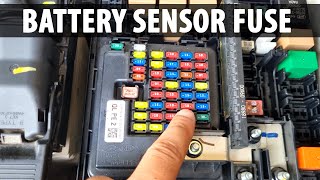
- Check fuses for all critical control modules in the interior and under-hood fuse boxes. Pay special attention to fuses related to the ECM, BCM, and ABS module. 🎬 Watch: Locate the battery sensor fuse on a Sportage NHTSA ODI #10171770 highlights a scenario where a vehicle stalled due to a lost ignition input, throwing codes U1000 and U1016, eventually requiring an ignition switch replacement.
- If the above steps don't resolve the issue, perform advanced network testing with the battery disconnected. Measure the resistance of the CAN bus at the OBD-II port between Pin 6 (CAN High) and Pin 14 (CAN Low). It should be 60 Ohms. If it's 120 Ohms, one of the two terminating resistors (usually in the ECM and Instrument Cluster) is offline.
- As a final step, if a specific module is suspected, a technician may try to isolate it by unplugging it to see if communication with other modules is restored. This is best left to a professional.
Parts You'll Likely Need
- Vehicle Battery — A weak battery causing low system voltage is the most frequent cause of intermittent communication codes like U1000.
Trusted brands: Bosch, ACDelco, DieHard, Interstate
OEM price range: $200-$300
Aftermarket price range: $150-$250 - Ground Strap — Corrosion or breakage of the main engine or chassis ground straps is a common point of failure leading to network instability.
Trusted brands: Standard Motor Products, Dorman
OEM price range: $30-$50
Aftermarket price range: $10-$25
Related Codes That Often Appear With This One
- U0100 — U0100 specifically means 'Lost Communication with ECM/PCM'. If the ECM is the module that has gone offline, you will see U0100 alongside the general U1000 code.
- U0101 — This code means 'Lost Communication with TCM'. A network-wide problem will often cause communication loss with multiple critical modules.
- U0121 — This code means 'Lost Communication With Anti-Lock Brake System (ABS) Control Module'. Seeing this with U1000 points the diagnosis toward the ABS module's circuit, a known issue on this platform.
- P0562 — This code means 'System Voltage Low'. It frequently appears with communication codes because a weak battery or failing alternator is the root cause of the network glitch.
- P1326 — This code is specific to the Knock Sensor Detection System on these engines. While not directly a network code, its presence along with a U-code could indicate a more serious underlying engine issue that is causing electrical havoc or that the engine is in limp-home mode due to the Theta II engine defect.
Technical Service Bulletins (TSBs) & Recalls
- NHTSA Recall 23V-652000 / Kia SC227: Covers 2014-2016 Sportage (and others) for ABS module internal short circuit risk, causing fire. This is a potential root cause for U1000.
- Kia Service Action SA139: Noted the need for battery positive and negative cable terminal replacement on some earlier models, highlighting known issues with the primary electrical connections.
- Kia Service Action SA115: Acknowledged that some early third-gen Sportage (SL) vehicle batteries may become discharged, pointing to potential underlying electrical draws or battery issues.
- TSB BOD306: While for a newer generation, it details cleaning and repair procedures for panoramic sunroofs affected by dust and debris, a common complaint on the 2011-2016 models as well.
Platform-Specific Known Issues
- This vehicle generation was subject to recalls and a lifetime warranty extension for the Theta II engine related to bearing wear from manufacturing debris. While a U1000 code is electrical, be aware that severe engine problems can sometimes trigger communication faults.
- A major safety recall (NHTSA ID 23V-652000, SC227) was issued for the ABS module (HECU) on 2010-2013 and 2014-2016 Sportage models due to risk of an electrical short causing a fire, even when parked. This faulty module is a prime suspect for a U1000 code.
- Owners have reported issues with the panoramic sunroof, including noise, slow operation, or failure, sometimes related to debris in the tracks (TSB BOD306) or blown fuses. While not directly a U1000 cause, it points to the sensitivity of the vehicle's electrical systems.
Documented NHTSA Reports
- NHTSA ODI #11244385 reports a vehicle losing engine power and displaying a "Check Stabilitrak" light alongside codes P0700, U0073, and U1000, with symptoms including the car bucking and gauges like the odometer and RPM behaving erratically.
Mechanic-Grade Diagnostic Values
- CAN Bus Network Resistance — expected: Approximately 60 Ω (Ohms) when measured between Pin 6 (CAN-H) and Pin 14 (CAN-L) at the OBD-II port with the battery disconnected.. Failure: A reading of 120 Ω indicates that one of the two terminating resistors is offline or there is a break in the circuit. A reading near 0 Ω indicates a short between the CAN-H and CAN-L wires.
- Ground Voltage Drop — expected: Less than 0.2V (200mV) between the battery negative post and a component's ground point (e.g., ECM casing, chassis ground stud).. Failure: A reading higher than 0.2V indicates excessive resistance in the ground circuit, which can cause modules to malfunction and set communication codes.
- CAN Bus Voltage (Key On, Engine Off) — expected: CAN High (Pin 6) should be ~2.5V to 3.5V. CAN Low (Pin 14) should be ~1.5V to 2.5V. Both lines should mirror each other.. Failure: Voltages stuck at 0V, 5V, or 12V, or not showing the characteristic mirror image on a scope, indicate a short to ground, short to power, or an open circuit.
- PCM CAN Bus Pin Resistance (Theta II 2.4L GDI) — expected: With the PCM disconnected, resistance between pin 77 (C-CAN High) and pin 76 (C-CAN Low) should be approximately 120 Ω, as this is typically a terminating module.. Failure: An open circuit (infinite resistance) or a short (near 0 Ω) indicates an internal failure of the terminating resistor within the PCM.
Scan Tool Commands That Help
- Kia GDS (Global Diagnostic System): Fault Code Searching (All Systems) — This is the first step to get a complete overview of the network health. It will poll every module on the vehicle and report which ones are communicating and which are not, helping to isolate the source of the U1000 code.
- Kia GDS (Global Diagnostic System): Body Control Module Option Treatment > User Option — While not a direct fix for U1000, this function allows a technician to view and modify user-configurable settings within the BCM. In some cases, network issues can be triggered by corrupted configuration data, and accessing these menus can be a part of a comprehensive diagnostic to check module health.
- Advanced Bi-directional Scan Tool: Module Isolation / Roll Call — After identifying which modules are offline, a technician can use the scan tool to attempt to communicate with each module individually. Some tools allow for a 'network roll call' to see which modules respond, which is faster than manually unplugging each one.
Wiring & Ground Locations
- Instrument Panel Fuse Box — Located behind a cover on the driver's side of the instrument panel, to the left of the steering column.. This panel contains fuses for many interior modules, including the BCM, Instrument Cluster, and SRS Control Module. A blown fuse here can take a critical module offline, causing a U1000 code.
- Engine Compartment Fuse Box (Main) — Located in the engine bay, typically near the battery.. This box contains main fuses and relays for critical systems like the ECM, TCM, and ABS (HECU) module. The HECU fuses, subject to recall, are located here. A failure in this box can cut power to a major controller.
- Main Chassis Ground — The primary ground cable runs from the battery's negative terminal to a stud on the vehicle's body or frame, usually near the battery itself.. This is the master ground for most of the vehicle's electronic systems. Corrosion or looseness here can create widespread, intermittent electrical problems and communication faults.
- Engine Block Ground Strap — A braided metal strap connecting the engine block or cylinder head to the firewall or chassis frame.. This ground ensures the engine's electronics (including the ECM and its sensors) have a solid return path. A poor engine ground can cause erratic sensor readings and ECM communication failures.
- PCM C-CAN Pins (Theta II 2.4L GDI) — On the Powertrain Control Module (PCM) connector for the 2.4L GDI engine, Pin 77 is C-CAN High and Pin 76 is C-CAN Low.. When diagnosing a potential PCM or network wiring issue, these are the specific pins to test for voltage, resistance, and signal integrity with an oscilloscope.
Real Owner Repair Stories
- JustAnswer user report (2012 Kia Sportage) — Car kept cutting out and restarting only to travel a few yards before cutting out again. Engine management and immobilizer warning lights were on.
❌ Tried (didn't work) The issue started 12 hours after the vehicle had the HECU recall service performed (fuse replacement).
✅ What actually fixed it The diagnosis pointed towards a fault in a module, potentially the ignition or stability module, caused by the recent work. The key takeaway is that a U1000-like symptom (stalling, multiple lights) occurred immediately following a dealer service on the HECU, suggesting the HECU or related wiring was the root cause. A full diagnostic scan was required to pinpoint the exact fault.
OEM Part Supersession History
ABS1 40A and ABS2 40A fuses→ABS1 30A and ABS2 20A fuses— Safety Recall SC284. To prevent an overcurrent condition in the HECU circuit board that could lead to a fire, the fuse amperage was lowered.
Heads up: Vehicles under this recall must use the lower amperage fuses. Installing the original 40A fuses defeats the purpose of the safety recall and re-introduces a fire risk.
Model Year Variations Within This Range
- 2014-2016: These model years are specifically highlighted in recalls for HECU (ABS module) internal shorts that can cause fires and communication faults. Diagnosis for a U1000 on these years should place a higher suspicion on the ABS module and its circuits.
- 2011-2012: A specific issue was noted where the doors could be locked with the smart key inside the vehicle. The fix involves using the Kia GDS tool to access 'Body Control Module Option Treatment' and change the '2-Turn Unlock' function, demonstrating a specific software interaction with the BCM for these early models.
Diagnostic Flowchart
Other Known Issues on This Vehicle
Issues unrelated to this code that are worth knowing about as an owner of this generation:
- Theta II Engine Failure (Rod Bearing) 🔴 High — Widespread across 2.0L and 2.4L GDI engines. A class-action lawsuit resulted in a lifetime warranty for this specific failure. Onset can be as early as 60,000 miles. (Ref: Multiple recalls (e.g., NHTSA 17V-224000) and a lifetime warranty extension program.)
- Excessive Oil Consumption 🔴 High — Common on Theta II engines, often a precursor to more severe engine wear. Owners report needing to add oil between changes. (Ref: Covered under some engine-related TSBs and warranty extensions.)
- ABS Module (HECU) Fire Risk 🔴 High → Shop ABS Control Module — Affects 2014-2016 models. An internal short can cause a fire even when the vehicle is off. (Ref: NHTSA Recall 23V-652000 (Kia recall SC227).)
- A/C Compressor or Clutch Failure 🟠 Medium — Reports of A/C blowing warm air are common, often traced to a failed compressor clutch, relay, or the compressor itself.
- Panoramic Sunroof Malfunction 🟡 Low — Common complaints of creaking, rattling, or failure to open/close, often due to debris in the tracks or faulty fuses/switches. (Ref: TSB BOD306 (for later models, but relevant))
- Brake Light Switch Failure 🟠 Medium — A faulty brake light switch was common on earlier models, potentially causing a no-start condition or the ESC warning light to illuminate. (Ref: Recall RC086)
Used vs. New Parts: Buying Guide for This Vehicle
When a used part is the smart pick: For a U1000 code, buying a used control module (like an ECM, BCM, or Instrument Cluster) from a reputable salvage yard can be a cost-effective option, BUT ONLY after confirming the original module is faulty. These parts are generally reliable and not common wear items. A used battery or ground strap is never recommended.
Donor-vehicle mileage cap: roughly under 100000 miles for the part to have meaningful remaining life.
What to inspect on the donor part:
- For control modules, ensure the part number matches EXACTLY, including any suffix letters.
- Check the donor vehicle's VIN to ensure it was not part of a flood, fire, or major front-end collision.
- Inspect the connector pins on the used module for any signs of corrosion, moisture, or physical damage.
- Ask the salvage yard for a short warranty (e.g., 30-90 days) to ensure the part is functional.
OEM-only on this vehicle (don't cheap out):
- ABS Control Module (HECU): Due to the significant safety recall and fire risk, it is strongly recommended to only use a new, genuine Kia part if a replacement is needed. An aftermarket or used unit may have the same internal defect or be incompatible with recall-related software updates.
Aftermarket brands forum-validated for this vehicle:
- Battery: Bosch, Interstate, DieHard, ACDelco
- Ground Straps: Standard Motor Products, Dorman
Brands owners have reported issues with on this vehicle:
- Avoid 'no-name' or unbranded electronic modules from online marketplaces. They often have high failure rates and can cause more complex diagnostic issues.
Real Owner Stories
Aggregated from forums and TSBs cited above. Mileages and costs reflect what owners reported in those sources.
2014 Kia Sportage
Symptoms: Multiple warning lights appearing with a U-code; concern regarding potential electrical shorts.
What fixed it: Addressed the ABS module (HECU) internal short circuit risk under NHTSA Recall 23V-652000.
Source hint: kia-forums.com
2011 Kia Sportage — ~65000 miles
Symptoms: U1000 code appearing alongside multiple unrelated electrical issues.
What fixed it: Checking and cleaning ground connections, specifically focusing on the chassis and engine ground points.
Source hint: sportage-forums.com
2012 Kia Sportage
Symptoms: Battery frequently discharging and triggering communication codes.
What fixed it: Battery positive and negative cable terminal replacement as per Kia Service Action SA139.
Source hint: Kia Service Action SA139
Related OBD-II Codes
Frequently Asked Questions
Could the ABS recall on my 2014-2016 Sportage be causing the U1000 code?
My 2011 Sportage has multiple warning lights and a U1000; should I replace the battery cables?
Is there a specific ground point I should check for communication issues?
Can a weak battery really cause a U1000 code on a Kia Sportage?
Does the Theta II engine warranty extension cover U1000 diagnostics?
What resistance should I see when testing the CAN bus at the OBD-II port?
Helpful Videos
We Have This Part in Stock


The information in this article is provided for general reference and educational purposes only. Vehicle specifications, procedures, and part compatibility can vary by production date, trim level, and region. Always consult your vehicle's factory service manual and verify part numbers before purchasing or performing repairs. Safety-critical components such as airbags, seat belts, and braking systems should be installed by a qualified professional.
- Kia Sportage:
- 🧭 Diagnostic Flowchart
- 🎬 Helpful Videos
- 🛍️ Shop This Part
- What's Unique About the 2011-2016 Kia Sportage
- Symptoms You May Notice
- Most Likely Causes
- Rare But Worth Checking
- Diagnosis Steps
- Parts You'll Likely Need
- Related Codes That Often Appear With This One
- Technical Service Bulletins (TSBs) & Recalls
- Platform-Specific Known Issues
- Documented NHTSA Reports
- Mechanic-Grade Diagnostic Values
- Scan Tool Commands That Help
- Wiring & Ground Locations
- Real Owner Repair Stories
- OEM Part Supersession History
- Model Year Variations Within This Range
- Other Known Issues on This Vehicle
- Used vs. New Parts: Buying Guide for This Vehicle
- Real Owner Stories
- 2014 Kia Sportage
- 2011 Kia Sportage — ~65000 miles
- 2012 Kia Sportage
- Related OBD-II Codes
- Frequently Asked Questions
- 🎟️ Get 5% Off