

U1000 on 2013-2016 Nissan TITAN: Causes and Fixes for CAN Communication Errors
U1000 on a 2013-2016 Nissan Titan means there's a communication failure between the truck's computers. This is most often caused by a bad ground connection, a faulty IPDM E/R (power distribution module), low battery voltage, or a wiring issue, not a failed module. Diagnosis should start with checking battery health and all major ground points before replacing any parts.
- U1000 is a network communication code, not a specific component failure.
- Do NOT start by replacing the computer that logged the code. The problem is almost always elsewhere.
- The most likely fixes are simple and cheap: check the battery, clean all major ground connections, and inspect for obvious wiring damage.
- This code spans two different Titan generations (2013-15 and 2016), which have different electrical layouts.
- Due to the complexity of network diagnostics, professional help with the right tools is strongly recommended if the basic checks don't solve the issue.
What's Unique About the 2013-2016 Nissan TITAN

The 2013-2016 Titan range spans two completely different generations: the first-gen (A60, 2013-2015) and the second-gen (A61, starting with the 2016 Titan XD). While the U1000 code's meaning is the same, the physical wiring, ground locations, and module placements are different. On first-gen Titans, wiring issues near the exhaust or poor grounds are common culprits. For all Titans, Nissan TSBs frequently point to poor ground connections as a root cause for various electrical gremlins, including communication codes. The Intelligent Power Distribution Module (IPDM), which is a known failure point on this platform, can also cause widespread communication issues.
Diagnostic Flowchart

Tap your situation to follow the diagnostic path that matches what you're seeing on this vehicle.
Generation note: This range covers the end of the first generation (A60, 2013-2015) and the start of the second generation (A61, 2016 Titan XD). The electrical architecture is completely different between these two generations, so diagnostic procedures, wiring diagrams, and part numbers will not be interchangeable. The fundamental causes (wiring, grounds, modules) are similar, but their physical locations vary significantly. For example, the first-gen is known for IPDM issues that were revised in later models.
Symptoms You May Notice

- Check Engine Light is on
- No-start or intermittent starting issues
- Erratic behavior of gauges or instrument cluster
- ABS, VDC (Vehicle Dynamic Control), or Slip lights may illuminate
- Immobilizer (NATS) warning light stays on
- Transmission may enter a limp mode or exhibit harsh shifting
- Electrical glitches like non-functional power windows, radio, or HVAC controls
- Engine may stall, hesitate, or lack power
- Replacing the control module that stored the U1000 code. TSB NTB10-066A explicitly states that this module is typically operating normally and the fault is external to it.
- Replacing the ABS actuator when U1000 is the only code present. TSB NTB10-145B advises against this, instructing technicians to perform a full CAN system diagnosis first.
Most Likely Causes

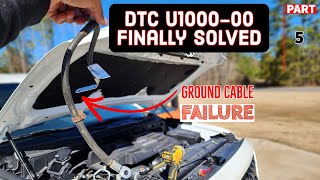
- Poor Ground Connections 🔴 High Probability Nissan vehicles are known for having electrical issues stemming from corroded or loose ground points. The main battery-to-chassis ground, engine-to-chassis ground, and various smaller grounds for specific modules can all be points of failure. A video for a 2019 Titan showed that simply cleaning the main ground cable contacts resolved a U1000 code, even when they looked visually fine.
How to confirm: Visually inspect all major ground straps and connection points for looseness or corrosion. Key locations include the negative battery cable connection to the body, the ground strap from the engine block to the firewall/chassis, and smaller grounds on the inner fender wells. Use a multimeter to perform a voltage drop test from the battery negative post to the engine block and to the chassis; a reading above 0.2 volts indicates a poor ground.
Typical fix: Remove the ground connection, clean the terminal and the chassis/engine mounting point to bare metal with a wire brush, apply dielectric grease, and securely re-fasten.
Est. part cost: $0-$25 - Low Battery Voltage or Weak Battery 🔴 High Probability → Shop Vehicle Battery If system voltage drops below 10V during startup, modules can fail to initialize properly and drop off the CAN network, triggering a U1000 code. This is a very common trigger and should be the first system checked.
How to confirm: Test the battery with a digital load tester. A simple voltage check is not sufficient. The battery should maintain above 9.6 volts during a load test. Also, check the alternator's output (typically 13.5-14.5 volts when running).
Typical fix: Charge or replace the battery. Ensure battery terminals are clean and tight.
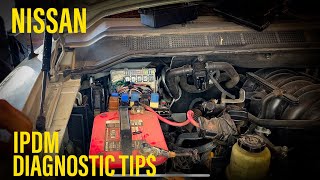
Est. part cost: $150-$350 - Faulty IPDM E/R (Intelligent Power Distribution Module Engine Room) 🟡 Medium Probability → Shop Fuse Box The IPDM is a 'smart' fuse and relay box that controls power to many modules. Nissan issued a TSB for earlier Titans regarding failing internal ECM relays within the IPDM, which can cause stalling and communication codes. A failing IPDM can fail to power up other modules, causing them to drop off the network and trigger a U1000 code in the modules that are still online.
How to confirm: A technician can perform a self-test on the IPDM. 🎬 See how to perform a Nissan IPDM self-test yourself. If a scan tool shows that multiple modules powered by the IPDM are offline, the IPDM itself is a strong suspect. A Reddit user with a no-start and U1000 found the IPDM was one of the modules not being detected at all.
Typical fix: On some older models, Nissan provided a replacement ECM relay (Part No. 284B7-CW29E). However, for most IPDM failures, the entire unit must be replaced as the relays are often not designed to be serviced individually.
Est. part cost: $200-$700 - Damaged or Chafed Wiring Harness 🟡 Medium Probability Wiring harnesses can be damaged by friction against other components, heat from the exhaust, or rodent damage. On first-generation Titans, there are reports of the harness that runs along the passenger side frame rail being melted by exhaust leaks.
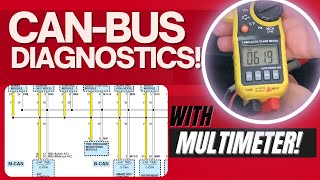
How to confirm: Visually inspect the CAN bus wiring harnesses (typically a twisted pair of wires) for any signs of physical damage, melting, or chafing. This is a difficult task that requires tracing wires based on a factory service manual. A multimeter can be used to check for continuity and shorts between the CAN High and CAN Low wires. 🎬 Watch: How to test CAN bus resistance with a multimeter.
Typical fix: Repair the damaged section of the wire by soldering in a new piece and protecting it with heat-shrink tubing. In severe cases, a section of the harness may need to be replaced.
Est. part cost: $10-$1000 - Incorrect Audio/Navigation Unit Configuration ⚪ Low Probability A specific Nissan TSB (NTB13-106E) notes that a U1000 code can be stored by the Around View Monitor (AVM) control unit if the audio/navigation system is not configured correctly. This is a software/configuration issue, not a hardware failure. This is most likely after a unit replacement or software update.
How to confirm: This must be confirmed with a Nissan-specific diagnostic tool (like CONSULT) to check the configuration of the A/V system. This is most relevant if audio system symptoms are also present.
Typical fix: Correct the configuration of the Audio/Navigation unit using a dealer-level scan tool.
Est. part cost: $0
Rare But Worth Checking
- Failed Control Module (BCM, ECM, IPDM): While a failed module is a possible cause, it's far less common than wiring or ground issues. According to Nissan's own TSB, the module reporting the U1000 is usually not the one that has failed. All other possibilities should be exhausted before replacing a module.
- Poorly Installed Aftermarket Electronics: Aftermarket alarms, remote starters, or stereos that are improperly tapped into the vehicle's wiring can interfere with the CAN bus and cause communication errors. An owner with an aftermarket air suspension system traced a U1000 code to a poor power connection for the suspension controller.
Diagnosis Steps
- Read All Codes: Use a high-quality scanner that can read codes from ALL modules (ECM, BCM, ABS, etc.), not just the engine. Note which modules are reporting U1000 and which, if any, are not communicating at all. This is a critical first step.
- Check Battery and Charging System: Perform a load test on the battery. Ensure terminals are clean and tight. With the engine running, verify alternator output is between 13.5 and 14.5 volts. A weak battery is a very common cause.
- Inspect All Grounds: Visually inspect and physically check the main battery-to-chassis ground, engine block ground, and any other accessible body grounds. Look for corrosion or looseness. Clean them even if they look okay.
- Check Fuses and IPDM: Inspect all fuses related to control modules, particularly in the IPDM (Intelligent Power Distribution Module). Consider performing the IPDM self-test if applicable to your model year to check its functions.
- Check CAN Bus Resistance: With the battery disconnected and the network asleep, measure the resistance between Pin 6 (CAN High) and Pin 14 (CAN Low) at the OBD-II port. A healthy network should read approximately 60 ohms. A reading of 120 ohms indicates an open circuit or a problem with one of the two terminating resistors (often in the ECM or BCM). A reading below 60 ohms suggests a short circuit.
Parts You'll Likely Need
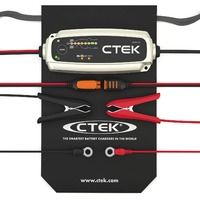
- Battery — A weak or failing battery is a very common cause of low voltage conditions that trigger communication codes like U1000.
Trusted brands: Interstate, DieHard, Duralast
OEM price range: $200-$350
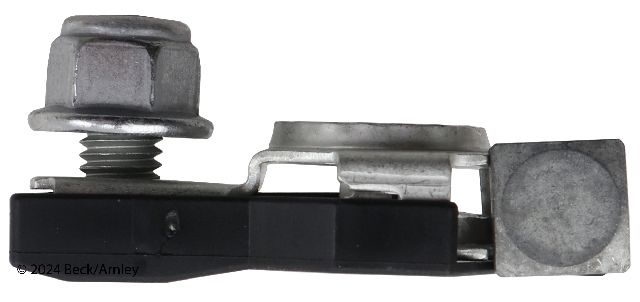
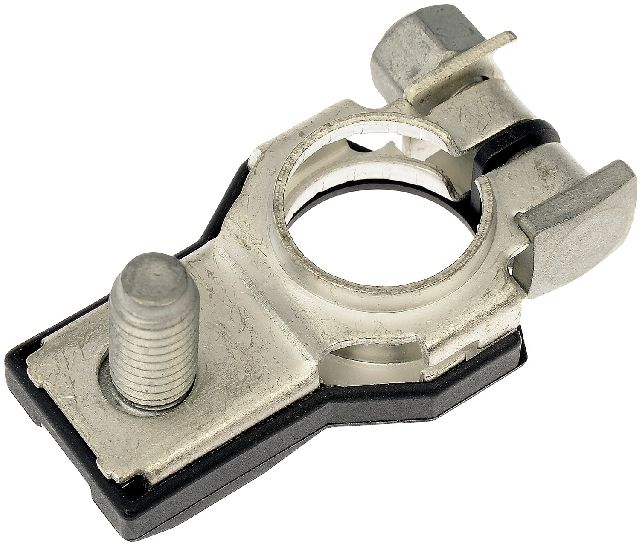
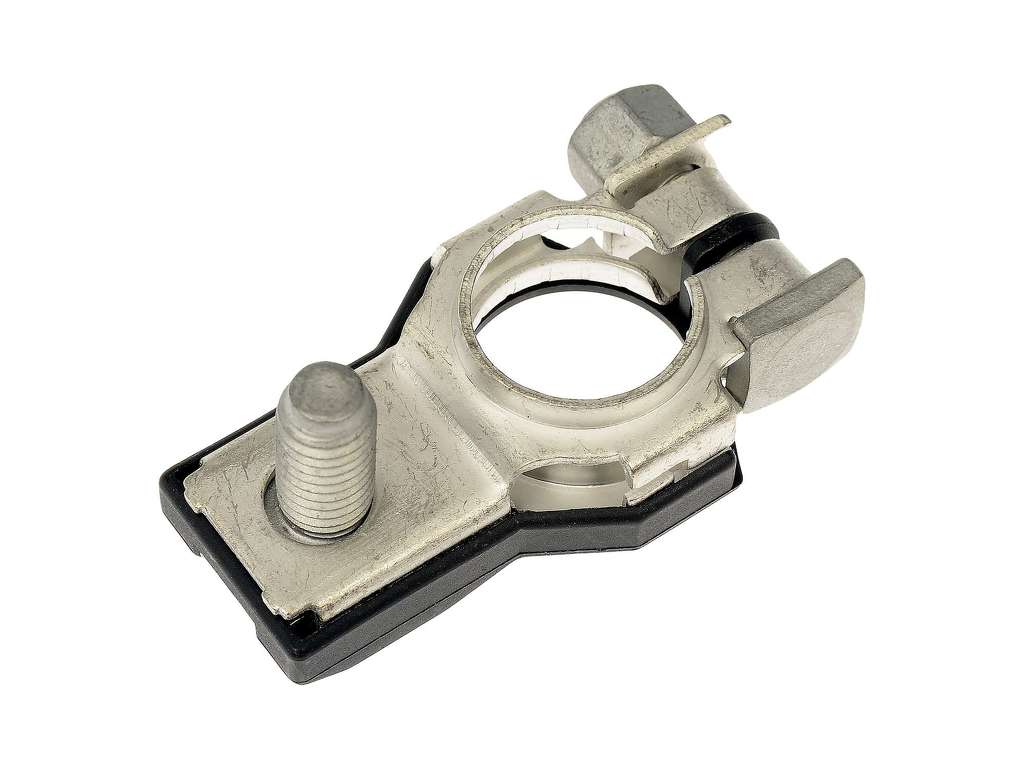
Aftermarket price range: $150-$250 - Battery Ground Cable / Terminal — The factory ground connections are a known weak point. Replacing a corroded cable or terminal is often required to fix the root cause.
Trusted brands: Nissan OE, Standard Motor Products
OEM price range: $40-$80
Aftermarket price range: $20-$50
Related Codes That Often Appear With This One
- U1001 — U1001 is also a CAN communication code, often specific to a communication loss with the ECM. Seeing them together points strongly to a network-wide problem, often originating from a power or ground fault affecting the ECM.
- P1610, P1614 — These are immobilizer (NATS) related codes. If the BCM and ECM can't communicate, the immobilizer system will fail, preventing the truck from starting and logging these codes alongside the U1000.
Technical Service Bulletins (TSBs) & Recalls
- NTB10-066A / NTB10-066B: States that the module reporting a U1000 code is typically operating normally and the fault is external to it on the CAN network. It advises diagnosing communication codes first.
- NTB13-106E: Notes that a U1000 code can be stored by the Around View Monitor (AVM) if the audio/navigation system is incorrectly configured.
- NTB10-145B: Advises against replacing the ABS/VDC actuator if U1000 is the only code stored, and instead to perform a full CAN system diagnosis.
- NTB20-066: Provides reference values for lane camera aiming on 2020 Titan/Titan XD models, which is a system that communicates over the CAN bus.
Platform-Specific Known Issues
- {'title': 'Owner Experience: Cleaning Grounds Solves U1000', 'description': 'A YouTube video for a 2019 Titan demonstrates resolving a U1000 code by disconnecting the main battery ground cable and thoroughly cleaning all contact points (battery post, chassis connection, engine connection) with a wire brush. The issue was resolved even though there was no visible corrosion, emphasizing the importance of cleaning grounds as a primary step.'}
- {'title': 'Owner Experience: Aftermarket Accessory Power Issue', 'description': 'An owner with an aftermarket air suspension kit traced a U1000 code and other electrical issues to the power connection for the suspension\'s control unit. Cleaning the battery terminals and ensuring a solid power connection for the aftermarket part resolved the code.'}
Mechanic-Grade Diagnostic Values
- CAN Bus Resistance — expected: ~60 Ω (ohms). Failure: A reading of ~120 Ω indicates an open circuit or a problem with one of the two terminating resistors. A reading significantly below 60 Ω suggests a short between the CAN H and CAN L lines.
- CAN Bus Voltage (Normal Operation) — expected: CAN-H: ~2.6V, CAN-L: ~2.4V. Failure: Voltages that are stuck high (e.g., 5V or 12V) or low (0V) on either line indicate a short to power or ground.
- System Voltage (During Cranking) — expected: Above 10.0V. Failure: If voltage drops below 10V during startup, various modules can fail to initialize and communicate, triggering a U1000 code.
Scan Tool Commands That Help
- Nissan CONSULT-II / CONSULT-III Plus: CAN Diagnosis Support Monitor — This function performs a network-wide roll call, showing which modules are actively communicating and which are not responding. It is the primary starting point for diagnosing a U1000 code at the dealer level.
- Nissan CONSULT-III Plus: IPDM E/R Auto Active Test — This bidirectional command allows the technician to force the IPDM to activate various outputs (like wipers, lights, fuel pump) to confirm if the IPDM itself is functional and receiving commands, helping to isolate the fault if multiple systems are dead.
- Nissan CONSULT-III Plus: SAVE COMPUTER DATA / RESTORE COMPUTER DATA — Before replacing a major module like an ECM, this function is used to save vehicle-specific configuration and injector data, which must then be restored to the new module to ensure proper function.
Wiring & Ground Locations

- Main Battery Ground — Negative battery cable bolts directly to the vehicle body/chassis, typically on the driver's side inner fender near the battery.. Corrosion or looseness at this primary ground point can cause system-wide voltage drops and is a very common cause of U1000 codes.
- E15 / E24 (First Gen Titan) — E15 is on the right side of the engine compartment; E24 is on the left front of the engine compartment. These are major grounding points for engine-related components.. A poor connection at these points can affect the ECM and other critical engine bay modules, preventing them from communicating on the CAN bus.
- M57 / M61 (First Gen Titan) — M57 is located behind the left side of the dashboard; M61 is behind the center of the dash. These are primary interior ground points.. These grounds are critical for interior modules like the BCM, instrument cluster, and A/V unit. A fault here can cause U1000 codes to be logged by these modules.
- CAN Bus Wiring — A twisted pair of wires running throughout the vehicle. While colors can vary, Nissan often uses a Pink wire for CAN-H and a Blue wire for CAN-L in the main harness.. These two wires are the physical communication network. A short or open on either wire will bring down the entire network or a segment of it.
Real Owner Repair Stories
- YouTube user 'BT' (2019 Nissan Titan (demonstrates a common issue applicable to the 2013-2016 range)) — Intermittent no-start, U1000 code stored.
❌ Tried (didn't work) Replacing the battery, Replacing camshaft sensors, Replacing crankshaft sensor
✅ What actually fixed it The negative battery ground cable connection to the chassis was the culprit. Despite looking visually clean, removing the cable, cleaning the contact points on the cable end and the chassis with a wire brush to restore a shiny metal surface, and re-securing it resolved the U1000 code and starting issue. - Reddit user in r/NissanTitan (First-generation Nissan Titan) — No-start, multiple electrical issues, U1000 code active in BCM, IPDM and Immobilizer modules not detected by scan tool.
❌ Tried (didn't work) Replacing camshaft and crankshaft sensors, Replacing crankshaft sensor sub-harness
✅ What actually fixed it The user was in the process of advanced diagnosis with an oscilloscope, suspecting a faulty BCM or IPDM after confirming CAN resistance was correct (60 ohms). This story illustrates a common diagnostic dead-end where basic checks pass, but the fault is likely a non-communicating module (IPDM) or a wiring issue preventing it from powering up. The lack of communication from the IPDM is the most critical clue.
OEM Part Supersession History
Various older IPDM relays→284B7-CW29E— The original ECM relays within the IPDM on some Nissan trucks and SUVs were prone to failure, causing stalling and no-start issues. This part is the official replacement relay issued by Nissan to address the problem.
Heads up: This is a specific fix for the serviceable relay inside the IPDM on applicable first-generation (A60) models. It is not a solution for second-generation (A61) Titans or if the IPDM has failed in a way not related to this specific relay.284B6-EZ30A→284B6-EZ30B, 284B6-EZ30C— Revisions to the IPDM for the second-generation (A61) Titan XD.
Heads up: Part numbers for the IPDM are trim-specific. For example, 284B6-EZ30A is for S/SV trims, while 284B6-EZ30B is for PRO-4X/SL/Platinum trims. Using the wrong IPDM will cause network communication errors. Always verify the correct part number with the vehicle's VIN.
Model Year Variations Within This Range
- 2013-2015 (First Generation 'A60'): These models are known for IPDM failures where the internal, serviceable ECM relay can be replaced (Part No. 284B7-CW29E). Grounding points and harness routing are well-documented in forums for this generation.
- 2016 (Second Generation 'A61' Titan XD): This is a completely different electrical platform. The IPDM is a different design and part numbers are not interchangeable with the first generation. Diagnostic procedures and wiring diagrams from the first generation will not apply. For example, the IPDM part numbers start with 284B6-EZXXX and vary by trim level.
Helpful Videos
We Have This Part in Stock

The information in this article is provided for general reference and educational purposes only. Vehicle specifications, procedures, and part compatibility can vary by production date, trim level, and region. Always consult your vehicle's factory service manual and verify part numbers before purchasing or performing repairs. Safety-critical components such as airbags, seat belts, and braking systems should be installed by a qualified professional.
- Nissan TITAN:
- 🧭 Diagnostic Flowchart
- 🎬 Helpful Videos
- 🛍️ Shop This Part
- What's Unique About the 2013-2016 Nissan TITAN
- Symptoms You May Notice
- Most Likely Causes
- Rare But Worth Checking
- Diagnosis Steps
- Parts You'll Likely Need
- Related Codes That Often Appear With This One
- Technical Service Bulletins (TSBs) & Recalls
- Platform-Specific Known Issues
- Mechanic-Grade Diagnostic Values
- Scan Tool Commands That Help
- Wiring & Ground Locations
- Real Owner Repair Stories
- OEM Part Supersession History
- Model Year Variations Within This Range
- 🎟️ Get 5% Off