

Choosing the Right Ignition Coil for Your 1960-1972 Chrysler 300
Keep your classic Chrysler's big block engine firing on all cylinders with a reliable new ignition coil.
- A failing ignition coil will cause your entire engine to run poorly, stall, or not start at all.
- Always inspect and consider replacing the ballast resistor when you replace the ignition coil.
- For a stock engine, a standard replacement coil from a brand like Standard Ignition or NGK is sufficient.
- If you have an electronic ignition conversion, ensure your new coil's resistance matches the system's requirements.
Is Your Ignition Coil Failing? Common Symptoms
A bad ignition coil on a 1960-1972 Chrysler 300 will cause noticeable engine problems. Because these cars have a single coil, any failure affects the entire engine, not just one cylinder. Watch for these signs:
- No-Start or Hard Starting: The engine cranks but won't fire up, or takes many tries to start. This happens because the spark plugs aren't getting enough voltage to create a spark.
- Engine Stalling: The car may start and run for a bit, then suddenly die. This can be intermittent, especially when the coil gets hot. A common sign of a failing Mopar ballast resistor is the engine starting but dying as soon as you release the key from the 'start' position.
- Rough Idle and Misfires: The engine may shake, sputter, or run unevenly. This feels like a jerking or stumbling, especially under acceleration.
- Poor Performance and Power Loss: Your car may feel sluggish, hesitate when you press the gas, and struggle to accelerate.
- Worse Fuel Economy: When the coil is weak, the engine burns fuel less efficiently, meaning you'll be stopping for gas more often.
- Engine Backfiring: A loud pop or bang from the exhaust can occur when unburned fuel ignites in the exhaust system due to a weak or mistimed spark.
Don't Forget the Ballast Resistor!
Classic Chryslers from this era use a ballast resistor in the ignition circuit. Its job is to lower the voltage going to the coil while the engine is running to protect the ignition points and coil. A failing ballast resistor can cause the same symptoms as a bad coil, and a bad resistor can even damage a new coil. It's a common and inexpensive part that many classic Mopar owners recommend replacing at the same time as the coil.
Choosing a New Aftermarket Ignition Coil
For a classic vehicle like the 1960-1972 Chrysler 300, new OEM parts are not available. Aftermarket parts are your only option, but the quality is often as good or better than the original factory components. They fall into two main categories:
Standard Replacement Coils
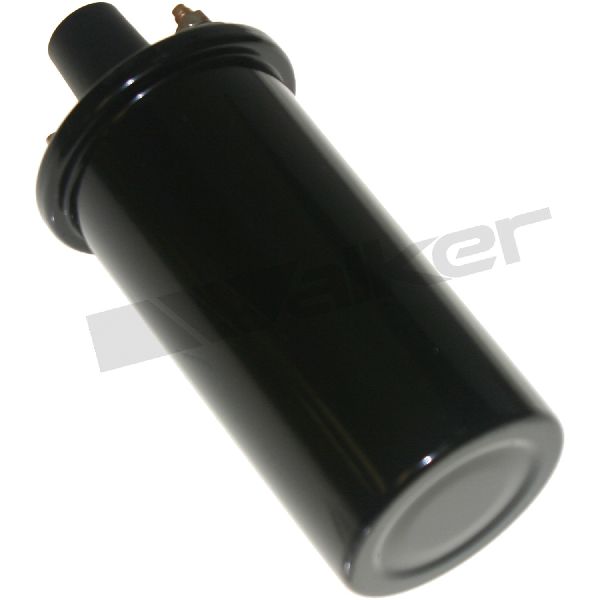
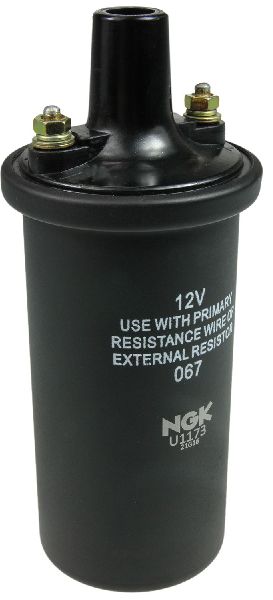
These coils are designed to work just like the original part. They are perfect for stock engines and normal driving. Brands like Standard Ignition (SMP), NGK, and Spectra offer reliable, canister-style coils that are a direct fit. For most owners, a quality standard replacement is all that is needed.
Performance Upgrade Coils
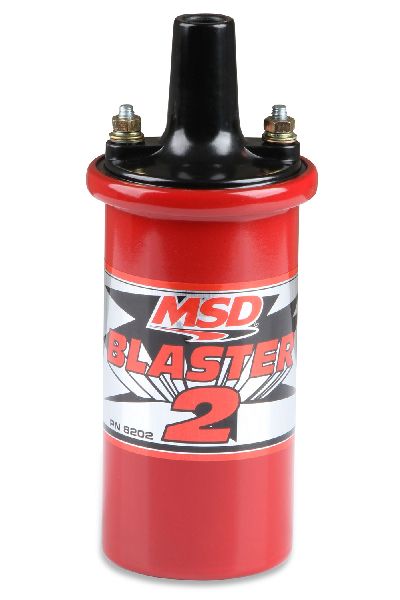
If you have modified your engine or simply want a hotter, more reliable spark, a performance coil is a good choice. Brands like Accel and MSD are popular in the classic Mopar community. These coils often provide higher voltage, which can lead to a more complete fuel burn, smoother idle, and better performance, especially at high RPMs. However, for a mostly stock engine, you may not notice a significant difference. Be sure to match the coil's primary resistance to your ignition system's requirements (with or without a ballast resistor).
| Brand Tier | Brands | Typical Cost | Best For |
|---|---|---|---|
| Standard Replacement | DriveWire, Global Parts, NGK, Spectra, Standard Ignition, WAI Global, Walker Products | $27.98 - $55.00 | Stock engines, daily drivers, and restorations aiming for original performance. |
| Performance Upgrade | Accel, MSD | $60.00 - $85.56 | Modified engines, improved spark energy, and high-RPM reliability. |
Frequently Asked Questions (FAQ)
Do I need a special coil if I've upgraded to electronic ignition?
Yes, it's important to match the coil to your ignition system. Most electronic ignition conversion kits (like Pertronix or Mopar electronic distributors) have specific requirements for coil primary resistance and whether or not you should still use the ballast resistor. Check the instructions from your ignition system's manufacturer to ensure you buy the correct coil.
Is installing a new ignition coil a difficult job?
No, this is a very easy job for a DIY mechanic. The coil is usually mounted to the engine with a simple bracket and held by one or two bolts. It involves disconnecting the battery, unplugging three wires from the old coil, unbolting it, and then reversing the process for the new coil. It typically takes less than 30 minutes.
What is an oil-filled canister coil?
The original style of coil for your Chrysler 300 is a canister filled with oil. The oil helps to cool the internal windings of the coil and provide insulation. Most standard and performance replacement coils for this vehicle will be this classic canister style.
How can I test my old ignition coil?
You can perform a basic test on a canister coil using a multimeter set to measure resistance (ohms). You'll measure the primary resistance between the positive (+) and negative (-) terminals, and the secondary resistance between the center tower and one of the primary terminals. A typical primary resistance for a points system coil is around 1.5 ohms, while secondary resistance should be in the range of 5,000 to 15,000 ohms. However, a coil can test good when cold but still fail when it gets hot, which is a common failure mode.
Technical Specifications
The 1960-1972 Chrysler 300 uses a single, external, canister-style ignition coil. The specific primary resistance needed depends on the ignition system (points or electronic) and the use of a ballast resistor. For a stock points-style system, a coil with a primary resistance of approximately 1.4-1.6 ohms is typically used in conjunction with the ballast resistor.
We Have This Part in Stock


The information in this article is provided for general reference and educational purposes only. Vehicle specifications, procedures, and part compatibility can vary by production date, trim level, and region. Always consult your vehicle's factory service manual and verify part numbers before purchasing or performing repairs. Safety-critical components such as airbags, seat belts, and braking systems should be installed by a qualified professional.