

Land Rover Range Rover Ignition Coil Guide: 1970-1986
Solve common starting problems and rough running in your classic Range Rover by understanding its ignition coil.
- You must determine if your vehicle has a ballasted (1.5 Ohm coil) or non-ballasted (3.0 Ohm coil) system before purchasing a replacement.
- Symptoms of a bad coil are similar to other ignition faults; also inspect the distributor cap and rotor arm.
- Replacement is a very simple DIY task that can be completed in under 30 minutes with basic tools.
- For this vehicle, choosing the correct specification is more important than the specific brand.
Is a Bad Ignition Coil Causing Your Rover Problems?
The ignition system on the 1970-1986 Range Rover is straightforward, but a failing coil can cause a lot of headaches. Symptoms often start small and get worse, sometimes leaving you stranded. Because other parts like the distributor cap, rotor, or ignition amplifier can cause similar issues, it's important to know what to look for. A coil can fail completely, or it can fail intermittently when it gets hot.
Symptoms of a Failing Ignition Coil
- No-Start or Hard Starting: The engine cranks but won't fire up, or takes a long time to start. This happens when the coil fails to produce enough voltage for a spark.
- Engine Misfires: The vehicle may jerk, sputter, or hesitate during acceleration because a cylinder isn't firing correctly.
- Stalling: The engine may stall unexpectedly, especially after it has warmed up. It might restart after cooling down for a while, which is a classic sign of a heat-related coil failure.
- Rough Idle: The engine idles unevenly or vibrates more than usual.
- Loss of Power: Your Range Rover feels sluggish and doesn't accelerate as it should.
The Most Important Choice: Ballasted vs. Non-Ballasted
Before buying a coil, you MUST know if your Range Rover has a ballasted or non-ballasted ignition system. Using the wrong one can damage your new coil or other ignition parts.
- Ballasted Systems (Common up to 1985): These use an external resistor (a ceramic block or a special wire in the harness) to lower the voltage to the coil during normal running. They require a coil with low primary resistance (around 1.5 Ohms). The system sends a full 12V only during startup for a stronger spark.
- Non-Ballasted Systems: These systems supply a full 12V to the coil all the time. They require a coil with high primary resistance (around 3.0 Ohms).
Pro Tip: To check, use a multimeter to measure the voltage at the coil's positive (+) terminal with the ignition key in the 'On' position (engine off). A reading of around 6-9 volts suggests a ballasted system. A reading of ~12 volts suggests a non-ballasted system.
Choosing an Aftermarket Ignition Coil
For a classic Range Rover, original OEM parts are scarce. Aftermarket is the most common and practical choice. Brands like Bosch were used as original equipment alongside Lucas, and many owners on forums report good reliability with them. While the original brand was often Lucas, the quality of modern parts sold under that name can be inconsistent. A standard aftermarket coil from a reputable brand will perform well, as long as you have selected the correct type (ballasted or non-ballasted) for your vehicle.
Cost of Replacing a Range Rover Ignition Coil (1970-1986)
| Part Type | Estimated Cost |
|---|---|
| New Aftermarket Coil | $30 - $60 |
| New OEM (NOS) Coil | $100 - $250+ (if found) |
| Shop Labor | $50 - $100 |
Frequently Asked Questions
How difficult is it to replace the ignition coil?
It is very easy. The coil is typically mounted to the inner fender or engine and held by a simple bracket. The job requires basic hand tools to disconnect two small wires and one large wire, and unbolt the bracket. It can usually be done in 15 minutes.
My engine dies when it's hot but restarts when it cools. Is that the coil?
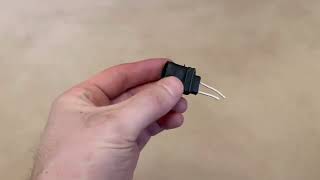
This is a classic symptom of a failing ignition coil or electronic ignition amplifier. 🎬 Watch: Troubleshooting engine cut-outs and ignition amplifier wiring repairs. As the component heats up, internal connections can separate, cutting the spark. When it cools, the connection is restored. If you experience this, the coil is a primary suspect.
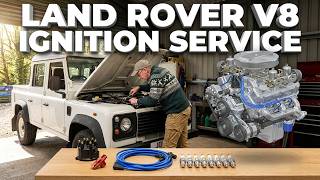
Should I replace other parts with the coil? 🎬 See this guide on servicing V8 ignition coils and components.
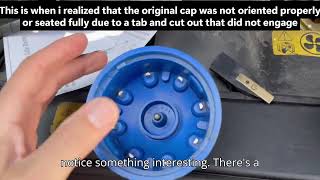
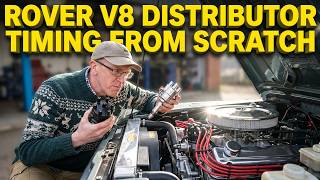
If your ignition components are old, it's a good idea. The coil works with the distributor cap, rotor arm, and spark plug wires. If the coil has failed, these other parts may be old and worn as well. Poor quality rotor arms are a known failure point 🎬 Watch: How to set up your Rover V8 distributor and timing. on these vehicles.
What is the difference between a Lucas, Bosch, or Global Parts coil?
For this application, the brand is less important than the specification. Lucas was an original supplier, but modern quality can vary. Bosch is also a well-regarded option. A standard aftermarket brand like Global Parts will work fine, provided you have correctly identified whether you need a ballasted or non-ballasted coil. Focus on getting the correct resistance (Ohms) for your system.
Helpful Videos
Technical Specifications
OEM Part Numbers: RTC5628 DLB198 DLB102
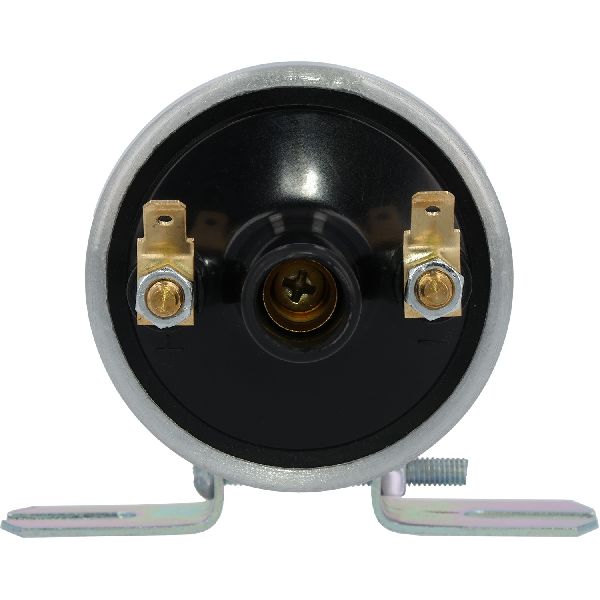
System Type: Ballasted or Non-Ballasted Primary Resistance (Ballasted): ~1.5 Ohms Primary Resistance (Non-Ballasted): ~3.0 Ohms Voltage: 12V Style: Canister
We Have This Part in Stock

The information in this article is provided for general reference and educational purposes only. Vehicle specifications, procedures, and part compatibility can vary by production date, trim level, and region. Always consult your vehicle's factory service manual and verify part numbers before purchasing or performing repairs. Safety-critical components such as airbags, seat belts, and braking systems should be installed by a qualified professional.
- 🎬 Helpful Videos
- 🛍️ Shop This Part
- Is a Bad Ignition Coil Causing Your Rover Problems?
- Symptoms of a Failing Ignition Coil
- The Most Important Choice: Ballasted vs. Non-Ballasted
- Choosing an Aftermarket Ignition Coil
- Cost of Replacing a Range Rover Ignition Coil (1970-1986)
- Frequently Asked Questions
- 🎟️ Get 5% Off