

Universal Joint Replacement Guide for the 1973-1981 Buick Century
Everything you need to know about choosing the right U-joint and fixing that driveline clunk or vibration.
- A clunking noise when shifting into gear is the most common sign of a bad U-joint.
- For this vehicle, aftermarket parts are the only option; Dana Spicer is the most recommended brand for quality and durability.
- It is strongly recommended to replace both U-joints on the driveshaft at the same time.
- Failure to replace a worn U-joint can lead to a critical failure where the driveshaft detaches from the vehicle.
Is Your Buick Century's U-Joint Failing?
A worn-out universal joint is a common issue on older, rear-wheel-drive cars. The needle bearings inside the U-joint's caps wear down, creating excessive play in the driveshaft. This leads to some very distinct symptoms. Ignoring them can be dangerous, as a complete failure can cause the driveshaft to disconnect from the vehicle while driving.
Key Symptoms of a Bad U-Joint:
- Loud Clunking Noise: The most common sign is a sharp 'clunk' or 'bang' when you shift into Drive or Reverse. This is the sound of the driveshaft slamming into place because of the slack in the worn joint.
- Vibrations While Driving: You may feel a vibration throughout the car that gets worse as you increase speed. This is often confused with an unbalanced tire, but a U-joint vibration is usually felt in the floor or seat.
- Squeaking or Chirping: A rhythmic squeaking noise that changes with your speed can mean a U-joint is dry and running without grease.
- Visible Rust or Wear: If you look under the car, you might see rust-colored dust around the U-joint caps, which indicates the needle bearings inside are grinding themselves to dust.
Choosing the Right Aftermarket U-Joint
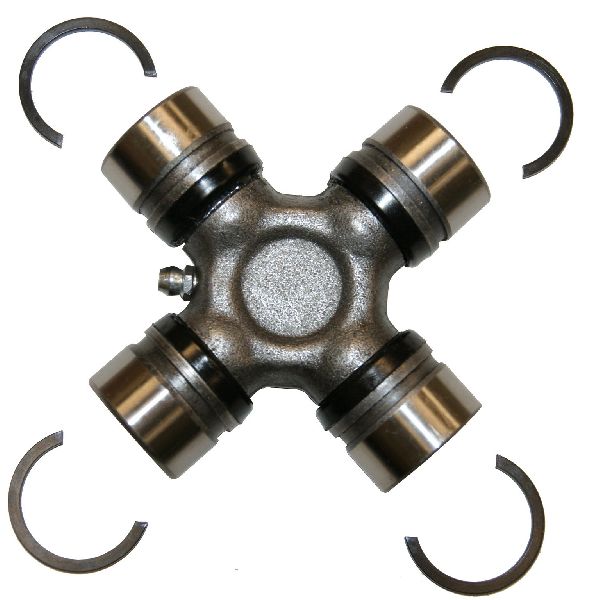
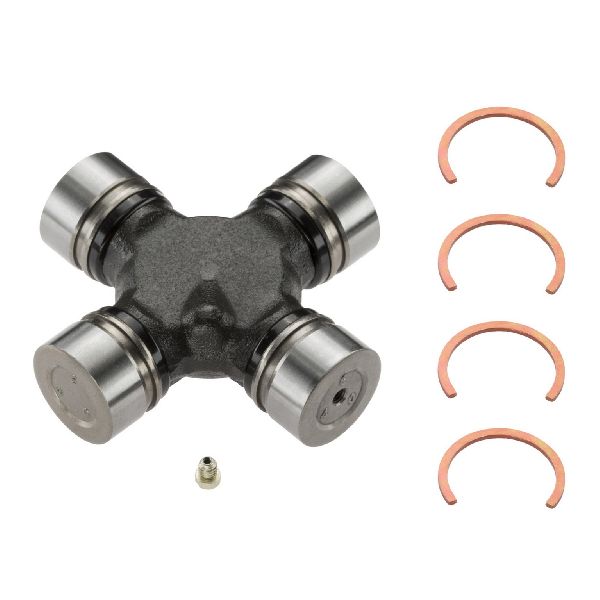
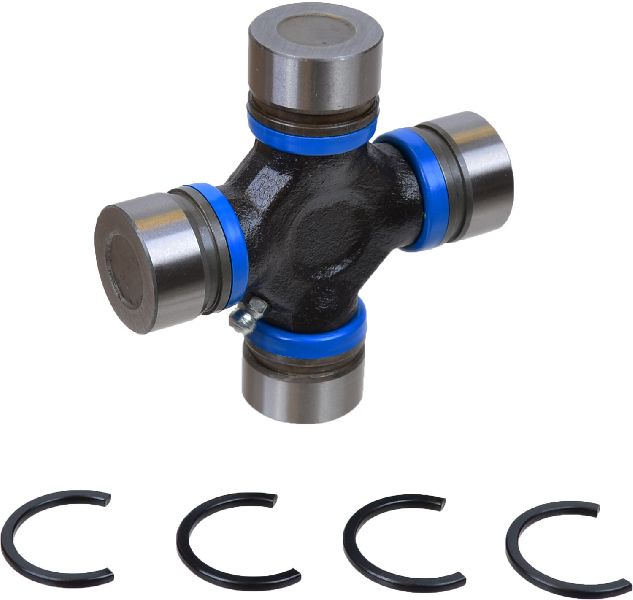
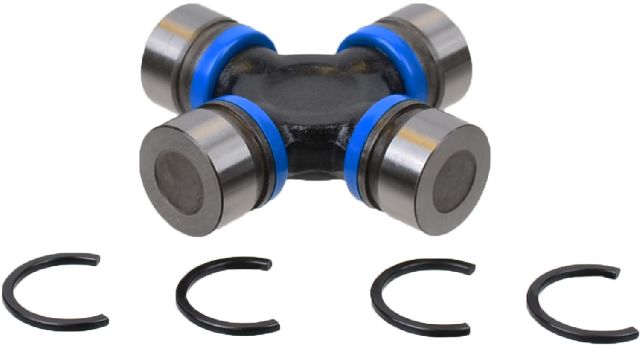
For a vehicle from this era, new OEM parts from Buick are no longer available. Your original U-joints were likely held in with a plastic injection that must be melted or broken out during replacement. All new aftermarket parts use easy-to-install C-clips for retention. Aftermarket is your only option, and the quality varies by brand.
Brand Tiers for Your Buick
| Brand Tier | Brands | Quality & Cost Assessment |
|---|---|---|
| Premium / OEM Supplier | Dana Spicer Chassis | Often the original equipment supplier for GM, Dana Spicer is widely considered the best choice for durability and fit. They are the top recommendation in classic car forums. Non-greasable versions are considered stronger. |
| Quality Aftermarket | Moog, SKF | Moog has a long-standing reputation for quality suspension parts, though some enthusiasts feel their recent quality isn't what it used to be. SKF is a well-respected bearing manufacturer that offers reliable U-joints, often seen as a solid alternative to Spicer. |
| Standard / Value | GMB | GMB offers a cost-effective replacement that meets standard requirements. It's a functional choice for drivers on a budget who need to solve a U-joint problem without paying for a premium brand. |
Pro Tip: Greasable vs. Non-Greasable?
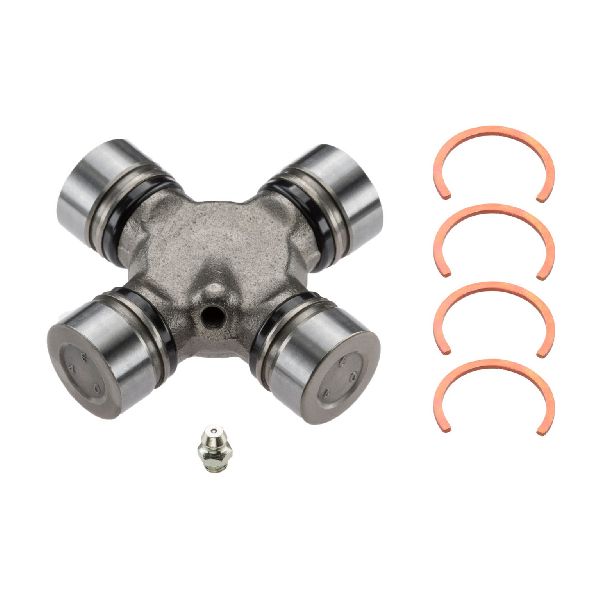
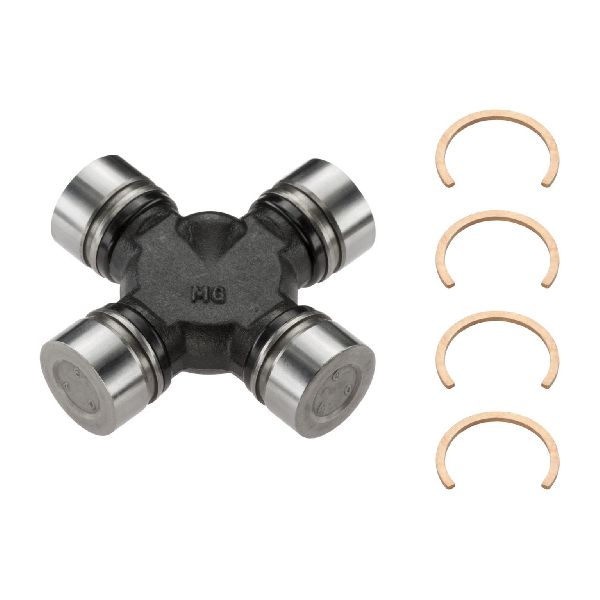
You'll see options for U-joints with or without a zerk fitting for adding grease. Non-greasable (sealed) joints are generally stronger because the main body isn't drilled, which can be a weak point. They are filled with high-quality grease at the factory and designed to last. Greasable joints can last a very long time, but only if you commit to greasing them regularly. For most owners, a high-quality sealed joint from a brand like Spicer is a fit-and-forget solution.
Known Issues, Recalls, or TSBs
No specific recalls or Technical Service Bulletins (TSBs) have been issued by the NHTSA for universal joint failure on the 1973-1981 Buick Century. However, a recall was issued in 1981 for 1978-1981 models regarding rear lower control arm bolts that could fracture, which is in the same area of the vehicle. The U-joint failures on these cars are typically due to age and normal wear and tear.
Frequently Asked Questions (FAQ)
How many U-joints does my 1973-1981 Century have?
Your car has two universal joints on the main driveshaft. One connects the driveshaft to the transmission, and the other connects it to the rear axle differential. It is highly recommended to replace both at the same time.
Is it hard to replace a U-joint on my Buick?
It is a moderately difficult job for a DIYer. You must remove the driveshaft from the car. The old U-joints must be pressed out using a large bench vise, a hydraulic press, or a specific U-joint tool. If the original joints have never been replaced, you may need to use a torch to melt out the original plastic retainers. If you are not comfortable with this, a repair shop can do it.
Do I need to balance my driveshaft after replacing the U-joints?
If you carefully mark the driveshaft's orientation to the yokes before disassembly and put it back the same way, you typically do not need to rebalance it for a simple U-joint swap. However, if you still have a vibration after the repair, the driveshaft may be out of balance.
What is the most common mistake when ordering?
The most common mistake is not buying two U-joints. While only one may be showing symptoms, the other is the same age and has seen the same amount of wear. Replacing them in pairs saves you from having to do the job again in the near future. The Dana Spicer 5-795X is a common part number that fits many GM cars of this era, including the Century.
Technical Specifications
The 1973-1981 Buick Century uses two universal joints on the rear driveshaft. A common replacement part number that covers this application is the Dana Spicer 5-795X, which is a GM 3R series joint. Original joints were retained with injected plastic, while all aftermarket replacements use internal 'C' clips.
We Have This Part in Stock

The information in this article is provided for general reference and educational purposes only. Vehicle specifications, procedures, and part compatibility can vary by production date, trim level, and region. Always consult your vehicle's factory service manual and verify part numbers before purchasing or performing repairs. Safety-critical components such as airbags, seat belts, and braking systems should be installed by a qualified professional.