

A Mechanic's Guide to the 1979-1987 GMC K1500 Timing Cover Gasket Set
Stop that messy oil leak from the front of your engine with the right gasket set for your classic truck.
- An oil leak from the front of the engine is the most common sign of a failed timing cover gasket on your K1500.
- Aftermarket gaskets with modern materials like silicone are often an upgrade over the original cork or paper gaskets.
- Due to the labor involved, it is highly recommended to also replace the water pump and front crankshaft seal at the same time.
- Properly cleaning the engine block and timing cover surfaces before installing the new gasket is critical for a leak-free repair.
Is Your K1500's Timing Cover Gasket Failing?
For a truck that's four decades old, gaskets are a common failure point. The original materials simply break down over time due to countless heat cycles and exposure to oil. If your timing cover gasket is failing, you'll likely see one or more of these signs:
- Oil Leaks: This is the most common symptom. You'll notice engine oil dripping from the front of the engine, often collecting on the crossmember or leaving puddles on the ground.
- Low Oil Level: A steady leak will cause your oil level to drop between changes, potentially triggering the oil warning light.
- Grime Buildup: A slow leak can attract a lot of dirt and road grime, creating a thick, greasy mess on the front of your engine, water pump, and surrounding parts.
- Coolant Leaks: On some engine configurations, the timing cover is also sealed to water pump passages. A gasket failure here can cause coolant to leak or mix with the oil, which is a more serious problem.
Don't Ignore the Leak
While a small oil leak might seem minor, it shouldn't be ignored. A significant leak can lead to low oil levels, which can cause serious internal engine damage. It's best to address the issue as soon as you notice it.
Choosing the Right Aftermarket Gasket Set
For a 1979-1987 GMC K1500, new OEM gaskets are generally not available or practical. Aftermarket gaskets are the standard, and modern materials often provide a better, longer-lasting seal than the original 1980s technology. The key is choosing the right material and brand for your needs.
Brand & Material Tiers
Your choice of gasket will depend on your truck's use and your budget. Here’s a breakdown of the available brands and common materials:
- Premium Performance (Cometic, Edelbrock): Brands like Cometic specialize in high-performance gaskets, such as Multi-Layered Steel (MLS), which are excellent for high-compression or modified engines but can be overkill for a stock truck. Edelbrock also offers quality gasket sets, often paired with their performance timing covers. These are your top-tier, highest-cost options.
- OEM-Quality Replacement (Victor Reinz): Victor Reinz is a well-respected brand, often considered an OEM supplier for many European cars, and known for making quality replacement gaskets. They provide a reliable seal for stock or mildly modified engines and are a solid choice for a daily driver or restoration.
- Standard Replacement (Apex, Sce Gaskets, Trans-dapt, Victor Gaskets): These brands offer affordable, standard replacement gaskets that meet or exceed original specifications. For a stock K1500 that sees regular use, a quality rubber or silicone gasket from one of these brands is a perfectly acceptable and cost-effective solution.
Pro Tip: Material Matters
For a stock Small Block Chevy, the material is often more important than the brand name. Modern one-piece rubber or silicone gaskets are generally superior to older multi-piece cork designs. They are more forgiving of minor surface imperfections and less prone to drying out and cracking.
| Part/Service | Estimated Cost |
|---|---|
| New Aftermarket Gasket Set | $12 - $77 |
| Shop Labor | $300 - $600 |
| Total Professional Replacement | $312 - $677 |
Costs are estimates and can vary based on your location and the specific hourly rate of the repair shop.
Frequently Asked Questions (FAQ)
What else should I replace at the same time?
Since replacing the timing cover gasket requires removing the water pump and harmonic balancer, it is highly recommended to replace the water pump, front crankshaft seal (which is usually included in the gasket set), and any worn belts or hoses. It's also a good time to inspect the timing chain and gears for wear.
Do I need to use sealant with the new gasket?
This depends on the gasket type. Many modern rubber or silicone gaskets are designed to be installed dry. However, it is standard practice to apply a small dab of RTV silicone sealant at the corners where the timing cover, engine block, and oil pan meet to ensure a leak-free seal. Always follow the gasket manufacturer's instructions.
Is this a difficult job to do myself?
This is a moderately difficult job for a DIY mechanic. It requires draining the coolant, removing several accessories, and using a special tool (a harmonic balancer puller) to remove the crankshaft pulley. If you are not comfortable with these steps, it is best to have a professional mechanic perform the work.
Are there any recalls for the timing cover gasket on my truck?
No. A search of the National Highway Traffic Safety Administration (NHTSA) database shows no recalls or technical service bulletins (TSBs) related to the timing cover gasket for the 1979-1987 GMC K1500. Failures are typically due to the age and degradation of the original gasket material.
Technical Specifications
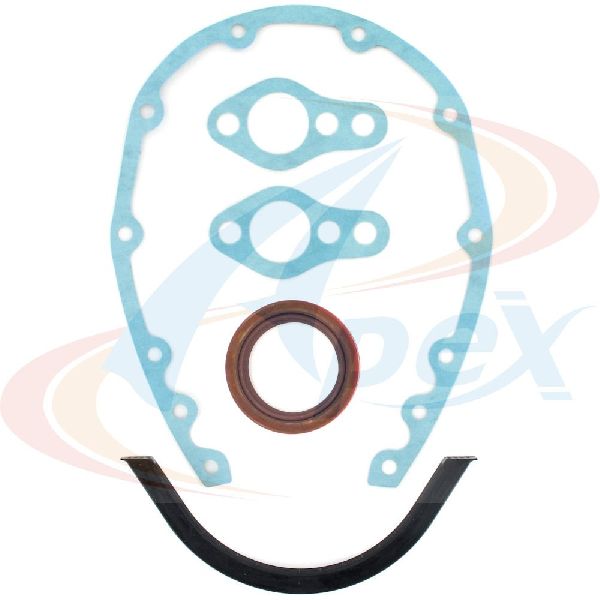
Gasket sets for the 1979-1987 GMC K1500 with Small Block V8 engines typically include the main timing cover gasket, a front crankshaft (harmonic balancer) seal, and sometimes a gasket for the oil pan to timing cover seal. Materials vary from traditional paper and cork to modern rubber and silicone.
We Have This Part in Stock


The information in this article is provided for general reference and educational purposes only. Vehicle specifications, procedures, and part compatibility can vary by production date, trim level, and region. Always consult your vehicle's factory service manual and verify part numbers before purchasing or performing repairs. Safety-critical components such as airbags, seat belts, and braking systems should be installed by a qualified professional.