

Universal Joint Replacement Guide for the 1979-1987 GMC K3500
Don't let a clunking or vibrating driveline sideline your classic one-ton GMC truck.
- Loud clunks when shifting and vibrations at speed are the most common signs of a failing U-joint on your K3500.
- For a heavy-duty truck, investing in a top-tier brand like Dana/Spicer or SKF is highly recommended for long-term durability.
- Your truck has multiple U-joints; if one fails, it is wise to replace all of them on that driveshaft at the same time.
- Driving with a severely worn U-joint is dangerous and can lead to the driveshaft detaching from the vehicle.
Is Your K3500's U-Joint Failing?
A failing U-joint gives clear warning signs. Ignoring them can lead to a detached driveshaft, causing serious damage and a loss of control. Listen and feel for these symptoms:
- Clunking Noise: A loud "clunk" or "bang" when you shift from Park into Drive or Reverse is a classic sign of a worn U-joint with too much play.
- Drivetrain Vibration: You may feel a vibration that gets worse as you speed up. This is often confused with a tire imbalance, but if balancing the wheels doesn't fix it, your U-joints are a likely suspect.
- Squeaking or Chirping: A rhythmic squeaking that changes with your speed often means a U-joint has lost its grease and the internal needle bearings are running dry.
- Visible Rust or Wear: Look under your truck at the driveshafts. If you see rust-colored dust around the U-joint caps, it's a sign that moisture has gotten inside and the bearings are failing.
Warning: Do Not Drive with Severe Symptoms
If you experience severe vibrations or loud clunking, it is unsafe to drive the vehicle. A complete U-joint failure can cause the driveshaft to separate from the truck, potentially digging into the pavement and leading to a total loss of control.
Choosing the Right Aftermarket U-Joint
For a vintage truck like the 1979-1987 K3500, original OEM parts are likely discontinued. The good news is that aftermarket U-joints are readily available and often offer superior strength and design. The main choice you'll make is between a greasable and a non-greasable (sealed) joint.
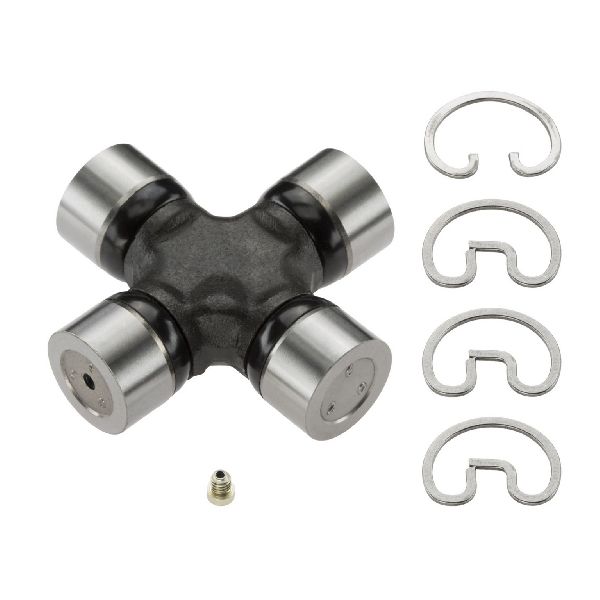
- Non-Greasable (Sealed): These are designed like the original factory joints. They are strong and maintenance-free. Many professionals prefer high-quality sealed joints from top brands because they have better seals and a solid-body design that is inherently stronger than a drilled, greasable joint.
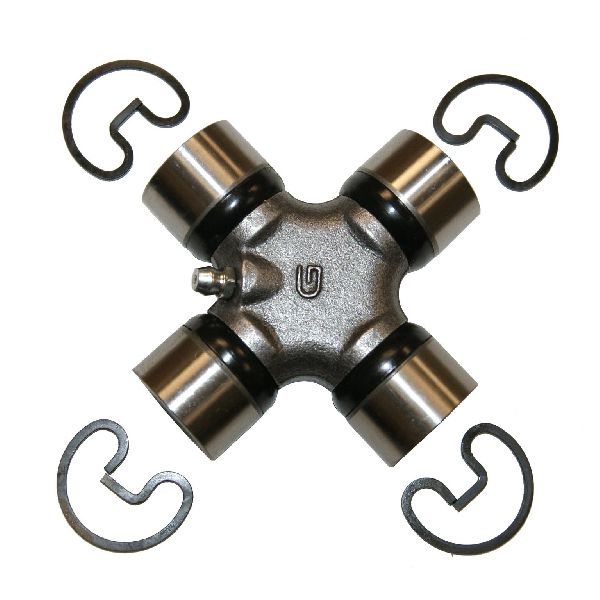
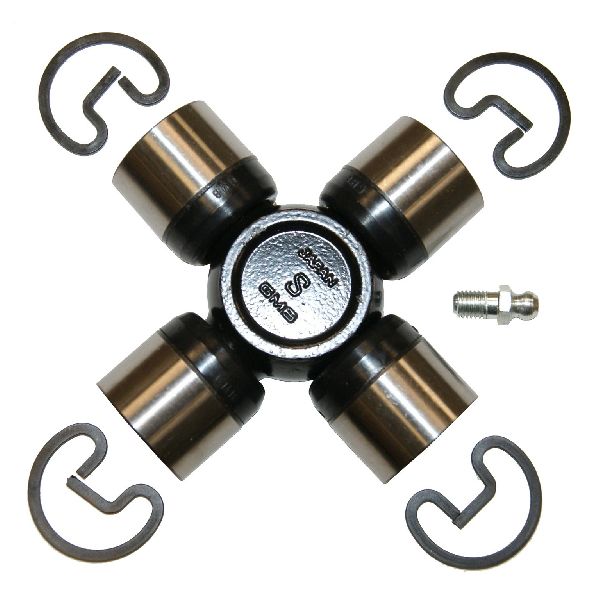
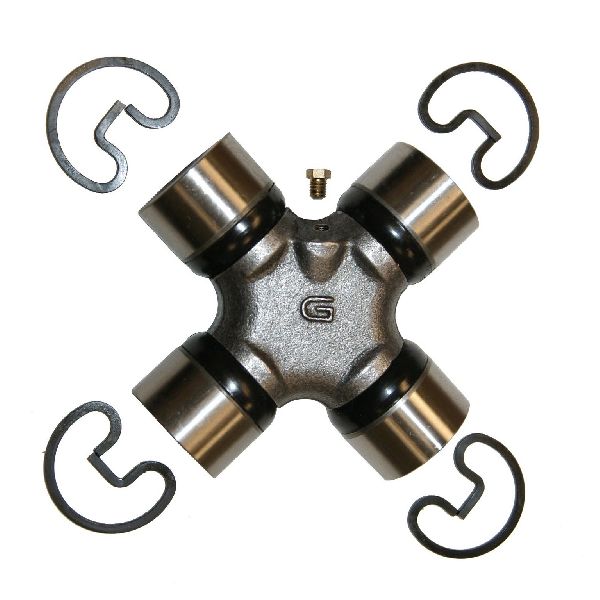
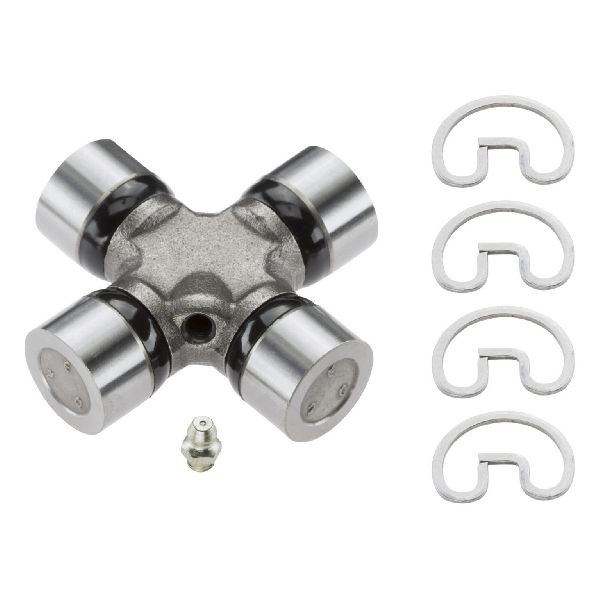
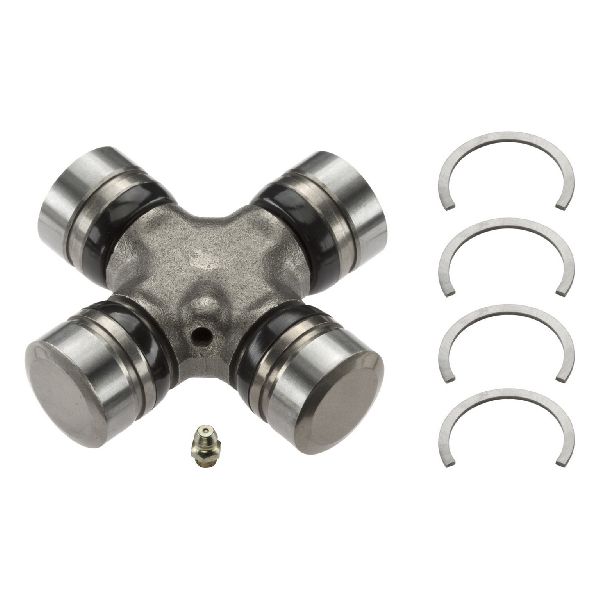
- Greasable: These joints have a zerk fitting that allows you to add fresh grease periodically. This can extend the life of the joint, but only if you are diligent about maintenance. For heavy-duty use like towing or off-roading, many owners prefer greasable joints. When installing, make sure the zerk fitting is oriented for easy access with a grease gun.
Brand Quality Tiers for Your K3500
Not all brands are created equal. Based on owner forums and mechanic feedback, here's a general breakdown for heavy-duty truck applications:
- Top Tier (Professional's Choice): Dana/Spicer is widely considered the gold standard. They were often the original equipment manufacturer for GM and their aftermarket parts are known for durability and quality. SKF is another highly-regarded brand offering excellent quality.
- Mid-Tier (Reliable Performers): Moog has a long-standing reputation, but some users report inconsistent quality in recent years, so it's important to ensure you're getting their premium or "Super Strength" line. ACDelco is GM's in-house brand and generally offers reliable, OE-spec parts.
- Economy Tier (Budget-Focused): Brands like GMB and Crown Automotive are more budget-friendly. They can be a suitable choice for a vehicle that sees light duty, but for a one-ton K3500 that works hard, investing in a higher-tier brand is recommended for long-term reliability.
Pro Tip: Replace in Pairs or Sets
Your K3500 has multiple U-joints—at least two on the rear driveshaft and two on the front driveshaft axle shafts. Long-bed models may have a two-piece rear driveshaft with a third U-joint and a carrier bearing. If one joint has failed due to age and mileage, the others are likely not far behind. It's good practice to replace all the U-joints on a driveshaft at the same time.
Frequently Asked Questions (FAQ)
How many U-joints does my 1979-1987 K3500 have?
It depends on your truck's configuration. All 4x4 models have two U-joints in the front axle shafts (one per side). The rear driveshaft will have at least two. If you have a long-bed model with a two-piece rear driveshaft, you will have a third U-joint and a carrier bearing in the middle. It's best to inspect your specific truck to confirm the exact number.
What's the difference between greasable and non-greasable U-joints?
Non-greasable (sealed) U-joints are filled with grease at the factory and sealed for life. They are generally stronger due to their solid cross design. Greasable U-joints have a fitting (zerk) that allows you to add new grease. This can flush out contaminants and extend their life, but requires regular maintenance.
Can I replace a U-joint myself?
Yes, this is a DIY-feasible job for someone with moderate mechanical experience and the right tools. However, it can be challenging. Original factory U-joints may have injected plastic retainers that need to be melted out with a torch. Removing the old joint and pressing in the new one requires a heavy-duty bench vise, a ball joint press, or a hydraulic press. Improper installation can damage the new joint's needle bearings, leading to premature failure.
What happens if a U-joint fails completely?
A complete failure is extremely dangerous. The driveshaft can detach from the vehicle while you are driving, potentially digging into the road and causing you to lose control. It can also cause extensive damage to the transmission, transfer case, exhaust, and underside of your truck. This is why it's critical to address the warning signs early.
Technical Specifications
Your K3500 may use different U-joint series (like 1350 or 1410) depending on the year, specific axle (Dana 60, Corporate 14-bolt), and driveshaft (front/rear, one-piece/two-piece). It is critical to measure your existing U-joint or use vehicle-specific fitment data to order the correct part. Some original joints used internal C-clips, while replacements often use external clips.
We Have This Part in Stock

The information in this article is provided for general reference and educational purposes only. Vehicle specifications, procedures, and part compatibility can vary by production date, trim level, and region. Always consult your vehicle's factory service manual and verify part numbers before purchasing or performing repairs. Safety-critical components such as airbags, seat belts, and braking systems should be installed by a qualified professional.