

Dodge Avenger Suspension Control Arm Guide (1995-2001)
Clunking noises and sloppy steering in your Avenger could be a bad control arm—here's what you need to know before you buy a new one.
- A clunking noise over bumps is the #1 symptom of a failing control arm on the 1995-2001 Avenger.
- A critical recall was issued for lower ball joint failure; replacing the control arm assembly resolves this.
- Always replace control arms in pairs (left and right) to ensure balanced handling.
- A wheel alignment is mandatory immediately after replacement to prevent unsafe handling and rapid tire wear.
Is My Dodge Avenger Control Arm Failing?
The control arms on the first-generation Dodge Avenger are known to wear out, particularly the bushings and ball joints. A major recall was issued for the lower ball joints on these cars, so it's a known weak point. If you're experiencing suspension problems, a worn control arm is a likely culprit. Watch for these common symptoms:
- Clunking or Popping Noises: This is the most common sign. You'll hear clunks, pops, or bangs from the front suspension, especially when driving over bumps, potholes, or during sharp turns. 🎬 Watch this guide to help identify specific suspension noises. This noise is caused by a worn ball joint or deteriorated bushings allowing metal parts to hit each other.
- Steering Wander: Your Avenger may feel like it's wandering or pulling to one side, forcing you to constantly correct the steering wheel to stay straight. This indicates the worn arm can no longer hold the wheel in the correct alignment.
- Vibrations: Excessive vibrations felt through the steering wheel, especially at higher speeds, can be caused by worn bushings that no longer dampen road forces.
- Uneven Tire Wear: Check your front tires. If the inside or outside edges are wearing out faster than the center, it’s a classic sign of an alignment problem caused by a bad control arm.
Recall Notice: Lower Ball Joint Failure
There was a significant safety recall (NHTSA Campaign ID: 99V066003) for the 1995-2000 Dodge Avenger regarding the front lower lateral arm ball joints. The original rubber boots could fail, allowing dirt and water in, which leads to corrosion and potential separation of the ball joint. A separation can cause a total loss of steering control. When replacing your control arms, you are also addressing this critical potential failure point.
Choosing the Right Aftermarket Control Arm
For a vehicle like the 1995-2001 Avenger, aftermarket control arms offer the best value. They are affordable, widely available, and come as complete assemblies with new bushings and ball joints pre-installed, which simplifies installation and addresses the original recall issue. OEM parts are harder to find and not cost-effective for this model year.
Brand Tiers: What to Expect
When shopping, you'll likely encounter these brands:
- Dorman: A very common and affordable aftermarket brand. Dorman parts are a standard, budget-friendly choice for daily drivers. They provide a cost-effective solution that meets basic requirements, though they may not have the same longevity as more premium options.
- Suspensia: This is a brand with manufacturing based in Turkey. While less known than Dorman, some user reviews are positive, noting good quality and designs that can make installation easier. They can be a solid alternative if available.
Pro Tip: Always replace control arms in pairs (both left and right sides). Since they have been subjected to the same amount of wear and tear, if one has failed, the other is likely not far behind. Replacing them in pairs ensures balanced handling and saves you from having to do the job twice.
What Does a Control Arm Replacement Cost?
The cost to replace a control arm on your Avenger is reasonable, especially if you can do the work yourself. The parts are inexpensive, and the labor is straightforward for a mechanic.
| Part/Service | Estimated Cost |
|---|---|
| New Aftermarket Control Arm Assembly | $71.80 - $83.46 (per side) |
| Shop Labor | $150 - $225 (per pair) |
| Wheel Alignment (Required) | $100 - $150 |
| Total Professional Replacement (Pair) | $390 - $595 |
Frequently Asked Questions
Is replacing a control arm a DIY job?
Yes, for those with mechanical experience and the right tools. The process involves jacking up the car, removing the wheel, and unbolting the control arm from the frame and steering knuckle. You may need a ball joint separator (pickle fork) to free the old arm. Always use jack stands for safety. 🎬 See a step-by-step walkthrough of the removal and replacement process. If you are not comfortable with this, a professional mechanic can do the job in about 1.5-2.5 hours.
Do I need a wheel alignment after replacing the control arms?
Yes, absolutely. Replacing the control arms will always change your vehicle's wheel alignment. You must get a professional alignment immediately after the replacement to ensure your Avenger drives straight, handles safely, and doesn't cause premature tire wear.
Should I replace just the bushings or the whole arm?
For the 1995-2001 Avenger, replacing the entire control arm assembly is the best option. The cost of a complete assembly is often close to the cost of buying bushings and a ball joint separately, plus paying for the labor to press the old ones out and new ones in. A new assembly is faster, easier, and ensures all components are new.
What are the different control arms on my Avenger?
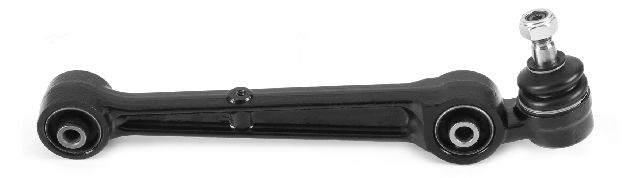
The front suspension on this car is a multi-link design. You have upper and lower control arms. The most common failure point, and the part subject to the recall, is the lower arm assembly. This guide focuses on the lower control arms, which are the most frequently replaced.
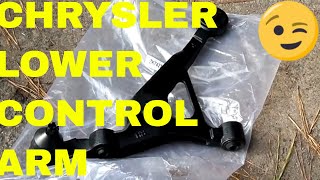
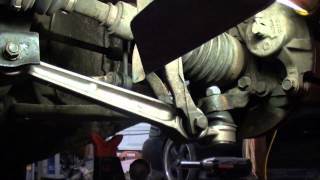
🎬 Watch a demonstration of the lower lateral control arm replacement.Helpful Videos

Technical Specifications
OEM Part Numbers: MB864727 MB914441
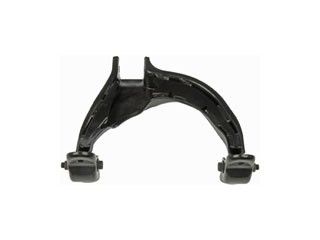
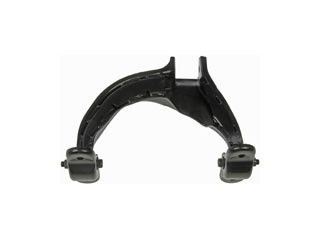
The front suspension is a multi-link design, with upper and lower control arms. Most aftermarket replacements are sold as a complete assembly including the control arm body, pre-installed bushings, and a new ball joint.
We Have This Part in Stock

The information in this article is provided for general reference and educational purposes only. Vehicle specifications, procedures, and part compatibility can vary by production date, trim level, and region. Always consult your vehicle's factory service manual and verify part numbers before purchasing or performing repairs. Safety-critical components such as airbags, seat belts, and braking systems should be installed by a qualified professional.
- Dodge Avenger: