

Suspension Strut Mount Guide for the 1995-2003 BMW M5
Keep your high-performance M5 handling like it should by understanding when and how to replace your strut mounts.
- Verify your M5's year; 1995 E34 and 1998-2003 E39 models use different parts.
- Clunking over bumps is the most common sign of a failed strut mount.
- Always replace strut mounts in pairs (both front or both rear) and whenever you replace the struts themselves.
- For best results, use OE-quality brands like Lemförder or Corteco to maintain your M5's specific handling characteristics.
Understanding Your M5's Strut Mounts
The user-specified range of 1995-2003 covers two distinct M5 generations: the E34 (ending in 1995) and the E39 (1998-2003). There was no M5 produced from 1996-1997. It is critical to know that the suspension parts for the 1995 E34 M5 are different from the 1998-2003 E39 M5. This guide will focus primarily on the E39 M5, as it covers the majority of the years requested and is the more common model. Always verify the part number for your specific vehicle before ordering.
Symptoms of a Failing Strut Mount
Worn strut mounts are a common issue on aging performance cars like the E39 M5. The rubber deteriorates and the bearing wears out, leading to several noticeable problems. Look out for these signs:
- Clunking or Knocking Noises: This is the most common symptom. You'll hear a distinct clunk or pop from the front or rear suspension when driving over bumps or uneven roads.
- Poor Steering Response: The steering may feel vague, loose, or less precise than it used to. In some cases, you might feel a "memory steer" effect where the wheel doesn't return to center easily after a turn.
- Excessive Vibration: A bad mount loses its ability to dampen road vibrations, which you may feel through the steering wheel or the entire car.
- Uneven Tire Wear: A failed mount can alter the suspension geometry (alignment), causing tires to wear unevenly.
- Visible Wear: If you look at the top of the strut tower in the engine bay, you may see visible cracks in the rubber of the mount or excessive movement if you have a helper push down on the fender.
A Note on Rear Mounts
While front mounts are more commonly discussed, rear shock mounts on the E39 also fail. Symptoms are similar, with clunking noises from the rear over bumps. In some rare cases, a complete failure of the rear mounting point has been reported, which is a serious safety concern. It's wise to inspect and replace rear mounts at the same time as the fronts if they are original.
Choosing the Right Aftermarket Strut Mount
When replacing strut mounts on your M5, you have a choice between OEM (Original Equipment Manufacturer) and aftermarket parts. For a car like the M5, the quality of suspension components is not something to overlook.
OEM/OE Brands: Brands like Lemförder are often the original equipment supplier for BMW. These parts offer a guaranteed fit and performance identical to the factory original. They are the safest bet for restoring the original ride and handling.
Quality Aftermarket Brands:
- Corteco: Corteco is a well-regarded brand in the European car community and is often an OE supplier for seals and mounts. Many owners report positive experiences with Corteco mounts, finding them to be a high-quality alternative to Genuine BMW parts, sometimes at a lower cost.
- DEA Strut: DEA is generally positioned as a standard replacement or budget-friendly option. While it may meet the functional requirements, owners of high-performance vehicles like the M5 often prefer to stick with OE-equivalent brands to ensure longevity and maintain the specific handling dynamics of the car.
Pro Tip: When replacing struts or coil springs, it is highly recommended to replace the strut mounts at the same time. The additional cost is minimal compared to the labor required to access them again if they fail later.
| Part / Service | Estimated Cost |
|---|---|
| New OEM Front Strut Mount (Each) | $85 - $180 |
| New Aftermarket Front Strut Mount (Each) | $60 - $73 |
| Shop Labor (Per Axle) | $300 - $800 |
Frequently Asked Questions
Do I need to replace strut mounts in pairs?
Yes. If one strut mount has failed, the other on the same axle is likely in a similar condition. Replacing them in pairs ensures balanced handling and prevents you from having to do the same job twice in the near future.
Is a special tool needed for this job?
Yes. Replacing a strut mount requires disassembling the entire strut assembly, which includes a compressed coil spring. A spring compressor is required for this job. This tool can be very dangerous if used improperly. If you are not experienced, this job is best left to a professional mechanic.
Are there any recalls for the E39 M5 suspension?
Searches found a 2005 recall for front strut spring support plates on high-mileage examples. More prominently, there is a major, ongoing "Do Not Drive" recall for Takata airbags in 2000-2003 M5 models. While not a suspension issue, it is a critical safety recall that owners must address immediately. There are no widespread recalls specifically for the strut mounts themselves.
Should I upgrade my strut mounts?
For most owners, a high-quality OE-equivalent mount like Corteco or Lemförder is the best choice to maintain the factory ride. Some companies offer adjustable camber plates that replace the strut mount for track-focused drivers who need to alter their alignment for performance driving, but this will compromise ride comfort for daily use.
Technical Specifications
OEM Part Numbers: 31331091708
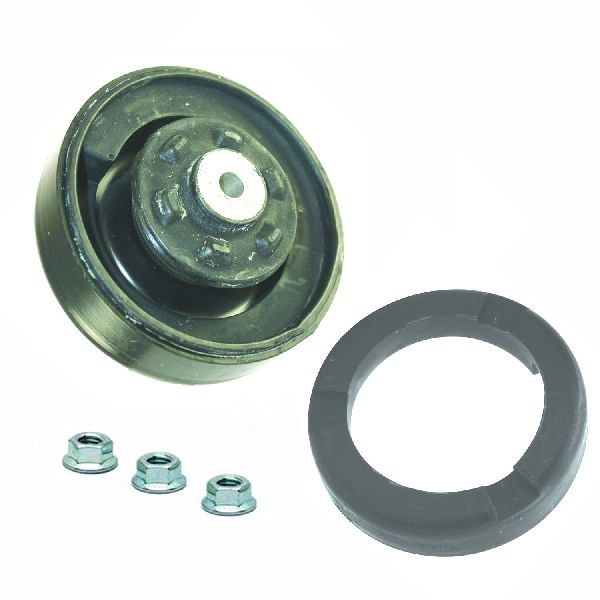
The front strut mount for the E39 M5 is a non-adjustable mount that includes an integrated bearing to allow for steering pivot. It is designed to fit the MacPherson strut front suspension used on V8 E39 models.
We Have This Part in Stock

The information in this article is provided for general reference and educational purposes only. Vehicle specifications, procedures, and part compatibility can vary by production date, trim level, and region. Always consult your vehicle's factory service manual and verify part numbers before purchasing or performing repairs. Safety-critical components such as airbags, seat belts, and braking systems should be installed by a qualified professional.
- BMW M5: