

Ford Mustang Ignition Coil Guide for 1996-2009 Models
Experiencing misfires or a rough idle? Your Mustang's ignition coils might be the culprit.
- First, identify your system: 1996-98 models use two coil packs, while 1999-09 V8s use eight individual Coil-on-Plugs (COPs).
- A flashing check engine light indicates a severe misfire; reduce speed immediately to prevent expensive catalytic converter damage.
- For most owners, a quality OEM-equivalent brand like Denso provides the best value and reliability.
- Use the 'swap test' to confirm a specific coil has failed before spending money on parts.
Is Your Mustang Running Rough? It Could Be the Ignition Coils

If your 1996-2009 Ford Mustang is sputtering, hesitating, or the check engine light is on, a failing ignition coil is a likely cause. These parts don't last forever and are a common replacement item. This guide will help you understand the symptoms of a bad coil, how to choose the right aftermarket replacement, and what to expect during the repair.
Understanding Your Mustang's Ignition System: Coil Packs vs. Coil-On-Plug (COP)
Before buying parts, you need to know what ignition system your Mustang has. This 14-year span includes two different designs:
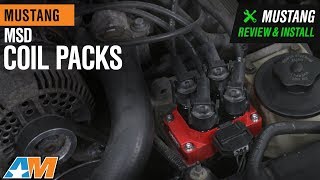
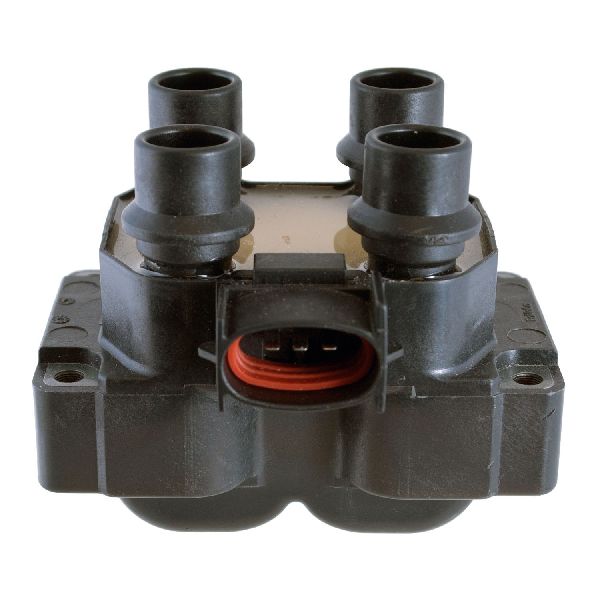
- 1996-1998 (SN95): V8 (4.6L 2V) and V6 (3.8L) models use a 'wasted spark' system with two coil packs. Each pack provides spark for multiple cylinders.
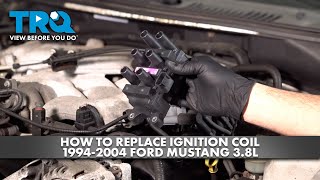
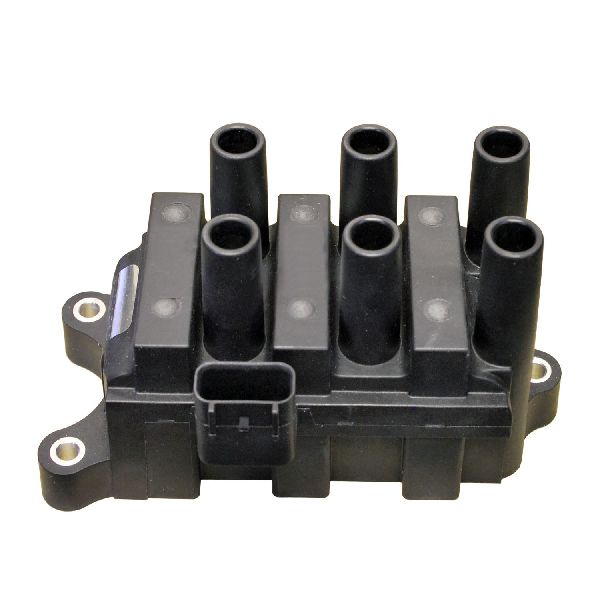
- 1999-2004 ('New Edge' SN95): The V8 GT models switched to a Coil-On-Plug (COP) system, where each cylinder has its own coil mounted directly on the spark plug. The 3.8L V6 models continued to use a single coil pack. 🎬 See how to replace the ignition coil on a 3.8L V6.
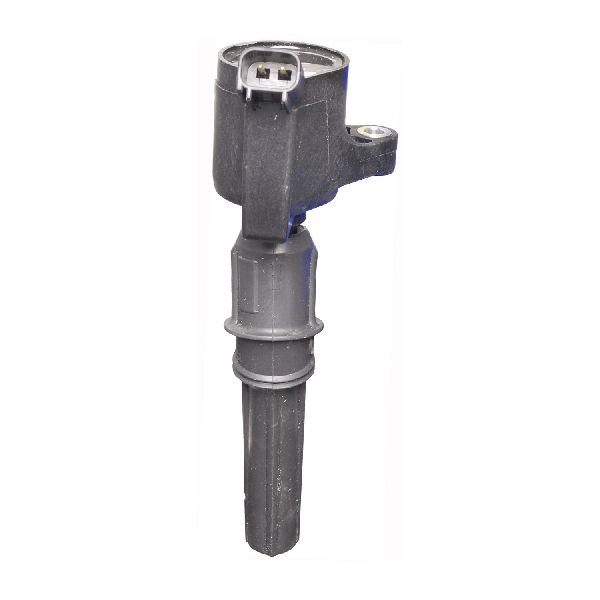
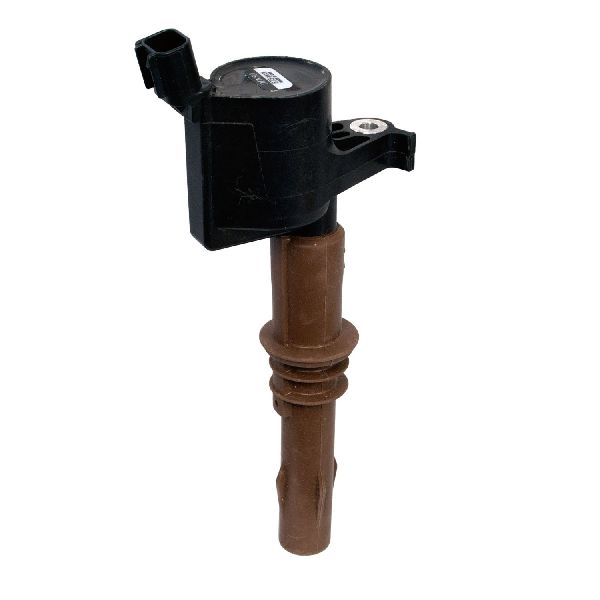
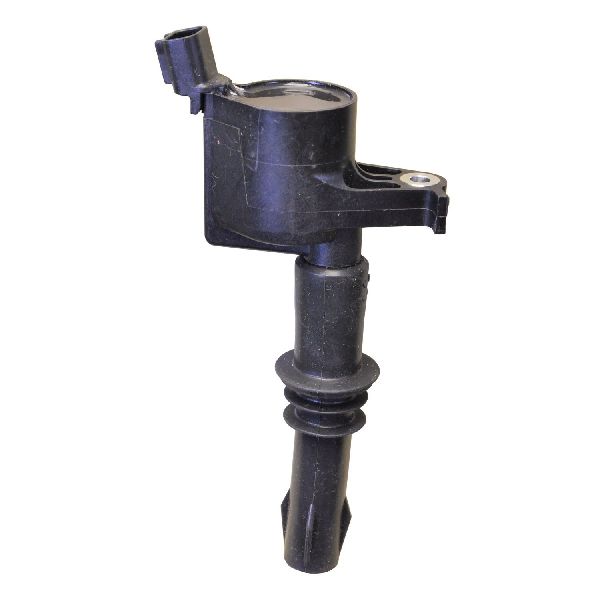
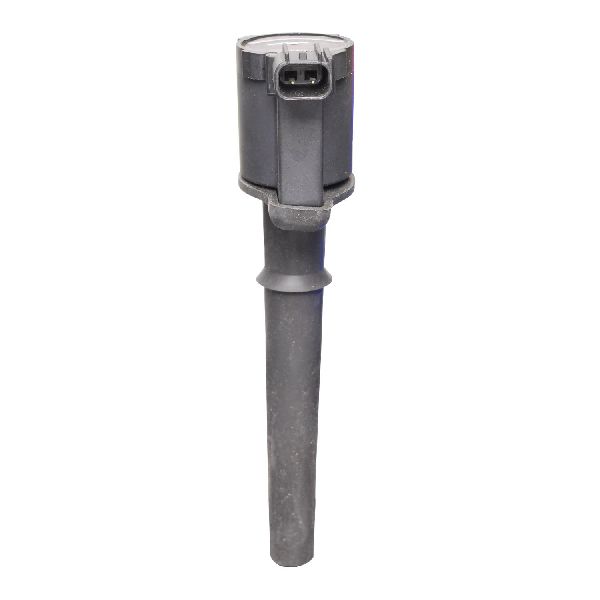
- 2005-2009 (S197): All engines, both the 4.0L V6 and the 4.6L 3V V8, use the individual Coil-On-Plug (COP) system for more precise spark control.
Pro Tip: Confirm Your System
The easiest way to confirm is to look at your engine. If you see thick spark plug wires running from a blocky component on the front of the engine, you have coil packs. If you see small, individual units bolted directly on top of the valve cover at each cylinder, you have Coil-on-Plugs.
Choosing the Right Aftermarket Ignition Coil

When it comes to ignition coils for Ford vehicles, many owners and mechanics stand by the original equipment (OEM) Motorcraft parts for their reliability. However, high-quality aftermarket parts can offer similar performance at a better price. Some aftermarket brands are even the original manufacturer for Ford.
Brand Tiers for Your Mustang
- OEM-Equivalent (Best Value): Brands like Denso and Hella are known to be OEM suppliers for many automakers, including Ford. Forum users frequently recommend Denso as a reliable, cost-effective alternative to Motorcraft, with some suggesting they are the exact same part without the Ford branding. These are an excellent choice for daily drivers and stock vehicles.
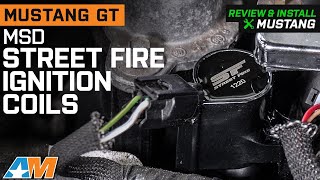
- Performance (For Modified Engines): Brands like MSD and Granatelli offer higher voltage coils. While they claim performance gains like a smoother idle and better throttle response, these benefits are most noticeable on modified or supercharged engines. For a stock or lightly modified Mustang, the power increase is often minimal, and the primary benefit comes from replacing old, weak coils. Some users report inconsistent quality with performance brands, so the extra cost may not be worth it 🎬 Check out this review and installation of MSD Street Fire coils. for a daily driver.
- Standard/Budget (Use with Caution): Brands like Accel and Prenco fall into a more budget-friendly category. While some users have success, others report higher failure rates compared to OEM or premium aftermarket options. If your budget is tight, they can work, but be aware of potential longevity issues.
A Note on "Performance" Gains
Be skeptical of claims of large horsepower gains from just swapping coils on a stock engine. Most of the "felt" improvement comes from replacing worn-out coils that were causing a misfire. A healthy stock ignition system is more than adequate for a stock engine.
Cost of Replacing Ford Mustang Ignition Coils

| Part Type | Estimated Cost (Per Coil/Pack) |
|---|---|
| New Aftermarket (Standard) | $21 - $50 |
| New Aftermarket (Performance) | $50 - $122 |
| New OEM (Motorcraft) | $50 - $90 |
| Shop Labor | $75 - $150 |
Frequently Asked Questions (FAQ)

Do I need to replace all ignition coils at once?
While you can replace just the one failed coil, it's good practice to replace them all, especially on higher-mileage vehicles. Ignition coils are subjected to the same heat and wear, so if one has failed, others are likely nearing the end of their service life. Replacing them as a set ensures reliability and consistent performance.
How do I test an ignition coil?
The easiest diagnostic method is the "swap test." If you have a misfire code for a specific cylinder (e.g., P0304 for cylinder 4), swap that coil with one from a known good cylinder (e.g., cylinder 5). Clear the codes and drive the car. If the code returns as P0305, you've confirmed the coil is bad. If the code stays as P0304, the issue is likely the spark plug or something else in that cylinder.
Are expensive performance coils from brands like MSD or Granatelli worth it?
For most stock or daily-driven Mustangs, the answer is no. The stock ignition system is very efficient. You will see the biggest benefit on highly modified, supercharged, or turbocharged engines where a stronger, more consistent spark is needed to prevent blowout under high cylinder pressures. For a daily driver, a quality OEM-style replacement like Denso offers the best balance of performance and value.
Were there any recalls or TSBs for Mustang ignition coils?
Searches did not reveal any specific recalls for ignition coil failure on 1996-2009 Ford Mustangs. However, Ford did issue a Technical Service Bulletin (TSB 05-22-8) providing diagnostic tips for Coil-On-Plug systems experiencing misfires, which covers many of these models. This indicates it was a recognized issue, but not one that prompted a full safety recall.
Helpful Videos
Technical Specifications
OEM Part Numbers: DG508 F7TZ-12029-BA F7TZ-12029-CC 1L2U-12029-AA 3W7Z-12029-AA
System Type: Coil Pack (1996-1998 V8/V6, 1999-2004 V6) or Coil-On-Plug (1999-2009 V8, 2005-2009 V6). Connector: 2-pin or 3-pin depending on year and model.
We Have This Part in Stock

The information in this article is provided for general reference and educational purposes only. Vehicle specifications, procedures, and part compatibility can vary by production date, trim level, and region. Always consult your vehicle's factory service manual and verify part numbers before purchasing or performing repairs. Safety-critical components such as airbags, seat belts, and braking systems should be installed by a qualified professional.
- Ford Mustang:
- 🎬 Helpful Videos
- 🛍️ Shop This Part
- Is Your Mustang Running Rough? It Could Be the Ignition Coils
- Understanding Your Mustang's Ignition System: Coil Packs vs. Coil-On-Plug (COP)
- Pro Tip: Confirm Your System
- Choosing the Right Aftermarket Ignition Coil
- Brand Tiers for Your Mustang
- A Note on "Performance" Gains
- Cost of Replacing Ford Mustang Ignition Coils
- Frequently Asked Questions (FAQ)
- 🎟️ Get 5% Off