

Ford E-150 Econoline 1997-2003: Engine Intake Manifold Gasket Set Guide
Understanding coolant leaks, rough idling, and choosing the right replacement intake manifold gasket for your van.
- The original composite intake manifolds on V8 models are a common failure point; inspect yours for cracks when replacing the gaskets.
- Symptoms of failure include coolant leaks from the top of the engine, overheating, rough idle, and a Check Engine Light with lean codes (P0171, P0174).
- This is a labor-intensive job. Plan to also replace the thermostat, injector O-rings, and inspect the coolant pipe under the manifold while you have access.
- Choosing a quality aftermarket brand like Victor Reinz or an upgraded metal-frame gasket set can provide a more durable repair than basic plastic replacements.
Understanding Intake Gasket Failures on Your E-150
If you own a 1997-2003 Ford E-150, especially one with a V8 engine, you might eventually face an intake manifold gasket issue. The original gaskets on these engines, particularly those paired with a plastic or composite intake manifold, are known weak points. Over many years and heat cycles, the original plastic and rubber components can become brittle, crack, and fail. This is a common problem that can lead to coolant leaks, vacuum leaks, or both.
Known Issue: Plastic Intake Manifolds
Many Ford vehicles from this era, including the E-150 with the 4.6L and 5.4L V8 engines, used a composite plastic intake manifold. The plastic where the coolant crossover tube mounts at the front of the engine is a frequent failure point. It can crack, causing a significant coolant leak that may appear to be from the gasket but is actually the manifold itself. When replacing the gaskets, it is critical to inspect this area of the manifold for cracks or degradation. Often, the entire manifold assembly needs to be replaced along with the gaskets.
Choosing the Right Aftermarket Gasket Set
When it's time for a replacement, you have several aftermarket options. The quality can vary, so it's important to choose wisely to avoid doing the job twice.
Brand Tiers & Quality
- Premium Brands (Cometic, Victor Reinz): Brands like Victor Reinz are often considered OEM-quality or better and are used in engine remanufacturing plants. They use high-quality, durable rubber and materials designed to resist modern coolants and high temperatures. Cometic is known for high-performance gaskets, often made from durable Aramid fiber, which can be a great upgrade for longevity. These are excellent choices if you want the most reliable, long-lasting seal.
- Mid-Grade/OEM-Style Brands (Dorman, Apex): Dorman is a very common aftermarket brand that often provides complete kits, sometimes including an updated intake manifold design. While some users have success, others have noted differences in quality compared to OEM, such as requiring different hardware. Apex is another available brand. These brands can be a good value, but inspect the parts carefully upon arrival.
- General Considerations: Many mechanics and experienced DIYers recommend using well-known, reputable brands for critical seals like the intake gasket. Some aftermarket sets offer an upgrade over the original design, such as metal-reinforced gaskets instead of all-plastic ones, which can provide a longer service life.
Pro Tip: Replace More Than Just the Gaskets
Since replacing the intake manifold gasket is a labor-intensive job, it's wise to replace other related components at the same time. Consider replacing the thermostat and its gasket, injector O-rings, and inspect all vacuum lines and coolant hoses connected to the manifold. On V8 models, inspect the coolant tube that runs under the intake manifold for rust or leaks, as it's a common failure point that is impossible to access otherwise.
Frequently Asked Questions (FAQ)
What is the difference between an upper and lower intake gasket?
On some engines, like the 4.2L V6, the intake manifold is a two-piece design. The lower intake gasket seals the manifold to the cylinder heads, while an upper gasket (or plenum gasket) seals the two halves of the manifold together. V8 models typically have a one-piece manifold and only use lower gaskets. Your gasket set should include all necessary seals for your specific engine.
Can I reuse my intake manifold if the gasket failed?
Possibly, but you must inspect it carefully. On the V8 engines with composite manifolds, look for cracks, especially at the front coolant crossover and around the gasket channels. If the sealing surfaces are pitted, warped, or cracked, the manifold must be replaced to ensure a proper seal with the new gaskets.
Are there any recalls for this issue?
Searches of the National Highway Traffic Safety Administration (NHTSA) database did not reveal any specific recalls for the intake manifold gaskets on the 1997-2003 Ford E-150 Econoline. However, some Technical Service Bulletins (TSBs) exist for similar issues on related Ford engines, indicating it is a known problem area.
Why are my new gaskets made of metal when the old ones were plastic?
Some premium aftermarket gasket sets use metal carriers or frames as an upgrade. The original all-plastic gaskets can become brittle and crack over time. The metal reinforcement provides better durability and resistance to heat and pressure, helping to prevent a repeat failure.
Technical Specifications
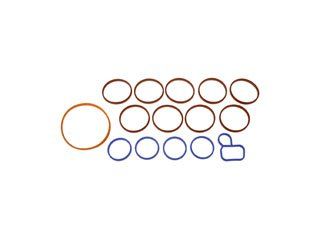
Varies by engine (4.2L V6, 4.6L V8, 5.4L V8). Gasket sets may be for upper, lower, or a complete set. Material can be composite, rubber, or metal-reinforced.
We Have This Part in Stock


The information in this article is provided for general reference and educational purposes only. Vehicle specifications, procedures, and part compatibility can vary by production date, trim level, and region. Always consult your vehicle's factory service manual and verify part numbers before purchasing or performing repairs. Safety-critical components such as airbags, seat belts, and braking systems should be installed by a qualified professional.
- Ford E-150 Econoline: