

A Guide to the CV Axle Shaft on Your 2000-2004 Audi A3 (8L)
Understanding when and how to replace a failing CV axle on your first-generation Audi A3.
- The 2000-2004 Audi A3 (8L) was not sold in North America; verify parts for your European model.
- A clicking noise when turning is the most definitive sign of a failing CV axle.
- Replacing the entire axle assembly with an aftermarket part is the most common and cost-effective repair.
- Special 'triple square' sockets are required to remove the inner axle bolts from the transmission.
A Note on This Vehicle
The first-generation Audi A3 (known as the 8L chassis) from 2000-2004 was not officially sold in the North American market. This guide is based on information for the European models. While most mechanical parts are similar to other Volkswagen and Audi models of the era, always verify part fitment using your vehicle's specific details.
Symptoms of a Failing CV Axle
When a CV axle starts to fail, it usually gives you clear warning signs. The most common cause of failure is a torn or cracked rubber boot. This boot holds grease in and keeps dirt and water out. Once the boot is torn, the grease leaks out and contaminants get in, quickly destroying the joint.
- Clicking or Popping Noise When Turning: This is the most classic symptom. You'll hear a rhythmic clicking or popping sound from the front of the car when making sharp, low-speed turns, like in a parking lot. This noise is caused by wear in the outer CV joint.
- Vibrations While Driving: A damaged inner CV joint can cause a noticeable vibration that gets worse as you accelerate. This can be felt in the steering wheel or through the floor of the car.
- Grease on the Inside of Your Wheel: If the protective rubber boot tears, it will sling grease onto the inside of your wheel, tire, and suspension components. This is a sure sign that the joint is no longer protected and will fail soon.
- Clunking Sound: You might hear a clunk when you shift from drive to reverse or when you accelerate or decelerate suddenly. This indicates excessive play has developed in the worn-out joint.
Choosing the Right Aftermarket Part
For a vehicle over 20 years old, finding new original equipment (OEM) parts can be difficult and expensive. Aftermarket CV axles are a practical and affordable solution. However, quality can vary.
- OEM Axles: Made by GKN or a similar supplier for Audi, these are the highest quality and most expensive option. They are often unnecessary for an older, daily-driven vehicle.
- Premium Aftermarket: Brands that specialize in drivetrain parts may offer a higher-quality axle that is a good balance between cost and durability.
- Standard Aftermarket (e.g., Surtrak): These are economy-focused parts. Forum discussions suggest brands like Surtrak are a budget-friendly option that works for normal driving. While the metallurgy and boot quality may not match OEM standards, they come at a much lower price point and often include a warranty, making them a sensible choice for keeping an older car on the road without a large investment. 🎬 See a mechanic replace the CV axle on an Audi A3.
Pro Tip: For this generation of Audi, it is almost always more cost-effective and easier to replace the entire axle shaft assembly rather than trying to replace just the boot or a single joint.
Replacement Cost
The cost to replace a CV axle can vary widely based on whether you do the work yourself or hire a professional. The parts themselves are relatively inexpensive.
| Part/Service | Estimated Cost |
|---|---|
| New Aftermarket Axle (Single) | $97.85 - $129.33 |
| New OEM Axle (Single) | $400 - $700+ |
| Shop Labor | $250 - $500 |
| Total Professional Replacement (Aftermarket Part) | $350 - $630 |
Cost estimates are approximate and can vary by location and repair shop. Labor costs are based on general estimates for this type of job.
Frequently Asked Questions (FAQ)
Can I drive with a bad CV axle?
You can for a short time, but it is not recommended. A clicking axle will eventually get worse and could fail completely. A total failure means the car will lose power to that wheel and you will be stranded. It is a serious safety issue.
Is it better to replace just the boot?
If you catch a torn boot very early before the joint starts making noise or vibrating, you can replace just the boot and repack the joint with grease. However, this is a messy and time-consuming job. Since the cost of a complete new aftermarket axle is low, most mechanics and DIYers choose to replace the entire assembly.
🎬 Watch: How to replace just the outer CV joint.Are the left and right CV axles the same?
No, they are not. The driver's side (left) and passenger's side (right) axles are different lengths and are not interchangeable. You must order the correct side for your vehicle.
What is a "triple square" bolt?
The inner CV joint on many Audi and VW models is attached to the transmission with six special bolts. These are not standard hex or Torx bolts; they require a specific "triple square" or 12-point bit to remove and install. Attempting to use a different tool will strip the bolt head, making removal very difficult. Ensure you have the correct M10 triple square socket before starting the job.
🎬 Watch this MK4 VW axle removal and installation walkthrough.Helpful Videos
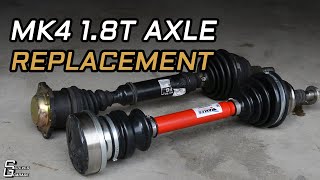


Technical Specifications
Requires M10 triple square socket for inner joint bolts. Axle lengths are different for driver and passenger sides.
We Have This Part in Stock


The information in this article is provided for general reference and educational purposes only. Vehicle specifications, procedures, and part compatibility can vary by production date, trim level, and region. Always consult your vehicle's factory service manual and verify part numbers before purchasing or performing repairs. Safety-critical components such as airbags, seat belts, and braking systems should be installed by a qualified professional.
- Audi A3: