

Engine Coolant Thermostat Guide for the 2002-2006 Honda Civic
Understand, diagnose, and choose the right replacement thermostat for your seventh-generation Civic.
- A stuck-closed thermostat will cause overheating; pull over immediately to prevent engine damage.
- A stuck-open thermostat is the most common failure, leading to a P0128 code and poor heater performance.
- For reliability, choose an OEM or OEM-equivalent brand like Aisin. Always replace the thermostat gasket.
- This generation of Civic (and its D17 engine) is known for cooling system issues, sometimes related to the head gasket, so proper diagnosis is key.
Is Your Civic's Thermostat Failing?

A bad thermostat can cause serious problems, but the signs are usually clear. The part can fail in two ways: stuck open or stuck closed. A stuck-closed thermostat is the most dangerous, as it will cause the engine to overheat. A stuck-open thermostat is less critical but will prevent your engine from reaching the right temperature, leading to poor performance and heater function.
Watch for Overheating
If your temperature gauge ever goes into the red, pull over and shut off the engine immediately. Driving with an overheating engine can cause catastrophic damage, including a warped cylinder head or a blown head gasket—a known issue on these D17 engines.
Common Failure Symptoms

- Overheating: The temperature gauge climbs into the hot zone or the red. This is the most critical symptom, often caused by a thermostat stuck closed.
- Engine Slow to Warm Up: The temperature gauge takes a very long time to reach the middle, or never gets there at all. This usually means the thermostat is stuck open.
- Temperature Gauge Fluctuates: The needle moves back and forth between normal and cool, especially during highway driving. This can indicate a thermostat that is opening and closing erratically.
- Poor Heater Performance: If the thermostat is stuck open, the engine coolant never gets hot enough to provide good heat to the cabin.
- Check Engine Light: A code like P0128 (Coolant Temperature Below Thermostat Regulating Temperature) is a common indicator of a thermostat that is stuck open or opening too soon. 🎬 Watch this guide to diagnosing a P0128 trouble code.
Choosing the Right Aftermarket Thermostat

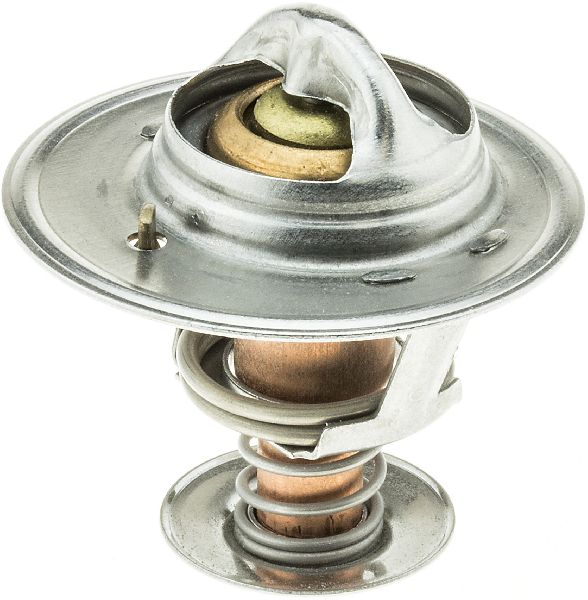
For a critical part like a thermostat, quality matters. While an OEM Honda thermostat is always a safe choice, several aftermarket brands offer excellent quality, often at a better price.
| Brand Tier | Brands | Assessment |
|---|---|---|
| OEM & OEM-Equivalent | Aisin, Beck Arnley | Aisin is a known OEM supplier to Honda. Choosing an Aisin thermostat is like getting the OEM part without the dealer packaging. Beck Arnley sources parts from various manufacturers, often including the OEM supplier, making them a reliable choice. |
| Quality Aftermarket | Gates, Calorstat | Gates is a well-respected name in the aftermarket for cooling system components. Calorstat is also considered a quality option by many mechanics. These brands provide a good balance of quality and value. |
| Performance | Mishimoto | Mishimoto offers "racing" thermostats that open at a lower temperature (around 154°F). These are intended for highly modified or track-driven cars to increase the cooling system's efficiency under extreme loads. For a daily-driven Civic, a lower-temp thermostat can negatively affect performance, fuel economy, and heater function, and is generally not recommended. |
| Economy / Mixed Reviews | Motorad, Facet | While widely available, brands like Motorad have mixed reviews from professional mechanics and DIYers, with some reporting premature failures. While they may be less expensive, the risk of a repeat repair often makes a higher-quality part a better long-term value. |
Always Replace the Gasket
No matter which thermostat you choose, always install a new gasket or seal. Most quality thermostats come with one included. Reusing the old gasket is a guaranteed recipe for a coolant leak.
Frequently Asked Questions (FAQ)

What temperature thermostat do I need for my 2002-2006 Civic?
For all non-Si models with the 1.7L D17 engine, you need a standard temperature thermostat, which opens around 170-172°F (78°C). The Si models with the K20 engine use a similar temperature thermostat. Avoid lower-temperature "racing" thermostats for a daily-driven vehicle.
Is it hard to replace the thermostat on a 7th gen Civic?
No, it's a relatively straightforward job for a DIYer with basic tools. The thermostat is located on the engine where the lower radiator hose connects. The main steps involve draining the coolant, removing two bolts on the housing, swapping the part, 🎬 See this step-by-step walkthrough for replacing your thermostat. and then refilling and bleeding the air from the cooling system.
Are there any recalls or TSBs for the thermostat?
There are no specific recalls for the thermostat on the 2002-2006 Honda Civic. However, Honda did issue a Technical Service Bulletin (TSB #1003) for an issue where the computer could incorrectly set a P0128 or P1486 trouble code after a cold start, which is related to the cooling system and thermostat function. This highlights the importance of accurate diagnosis.
What kind of coolant should I use?
It is highly recommended to use genuine Honda Type 2 Antifreeze/Coolant (the blue kind). These cooling systems are sensitive, and using a generic green or orange coolant can sometimes cause issues. After replacing the thermostat, you will need to top off or replace the coolant you drained.
🎬 Learn how to properly drain and bleed your radiator.Helpful Videos

Technical Specifications
OEM Part Numbers: 19301-PAA-306 19301-PLC-315 19301-PNA-003
Standard opening temperature: 170-172°F (78°C). Located at the engine block end of the lower radiator hose.
We Have This Part in Stock


The information in this article is provided for general reference and educational purposes only. Vehicle specifications, procedures, and part compatibility can vary by production date, trim level, and region. Always consult your vehicle's factory service manual and verify part numbers before purchasing or performing repairs. Safety-critical components such as airbags, seat belts, and braking systems should be installed by a qualified professional.
- Honda Civic: