

A Guide to the Engine Intake Manifold Gasket Set for the 2006-2010 Ford Mustang
Solving common vacuum and coolant leaks in your S197 Mustang starts with the right intake gaskets.
- First, identify your engine; the 4.0L V6 and 4.6L V8 have different gasket designs and common failure points.
- On the 4.6L V8, a coolant leak is often from the heater hose assembly under the intake or the crossover O-rings, not the main gaskets themselves.
- A vacuum leak on the 4.0L V6 is a very common cause of lean codes (P0171/P0174) and rough idle.
- Choose a premium aftermarket brand like Fel-Pro or Victor Reinz for an affordable, reliable repair.
Is Your Mustang a V6 or V8? It Matters.
Before you shop for an intake manifold gasket, you need to know which engine your 2006-2010 Mustang has. The problems, gaskets, and repair procedures are completely different for the 4.0L V6 and the 4.6L V8 GT models.
Known Issues for the 4.0L V6 Engine
The most common issue on the 4.0L V6 is a vacuum leak from old, hardened intake manifold gaskets. These engines use a two-piece intake manifold (upper and lower), and both have gaskets that can fail over time. 🎬 Watch this step-by-step V6 upper and lower gasket replacement guide. A leak lets extra air into the engine that the computer doesn't know about, causing a lean condition. Symptoms often include a rough idle, hissing noises, and a check engine light for codes P0171 and P0174.
🎬 See how to diagnose these lean condition codes on your Mustang.Known Issues for the 4.6L V8 (GT) Engine
On the 4.6L V8, the most common complaint is a coolant leak at the front of the engine, often dripping down from under the intake manifold. While it's easy to blame the main intake gaskets, the leak is frequently caused by other nearby parts. Before ordering a full gasket set, check these two common failure points:
- Heater Hose Assembly: A plastic and metal tube runs under the intake manifold to carry coolant to the heater core. This assembly is a known failure point and can leak coolant into the engine valley.
- Coolant Crossover O-Rings: The front of the intake manifold has a crossover passage for coolant. The O-ring seals for this crossover can degrade and leak.
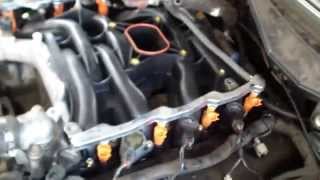
In many cases on the V8, the main intake-to-head gaskets are fine, but you must remove the intake manifold to replace the leaking heater hose or crossover seals, so you will need a new set of intake gaskets for the re-installation.
Check for Manifold Cracks
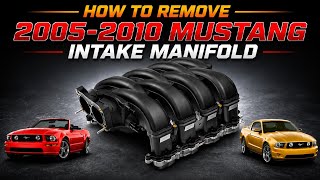
While more common on pre-2005 models, the plastic intake manifolds on 4.6L engines can crack, especially around the coolant crossover. If you see a crack in the manifold itself, the entire manifold will need to be replaced, 🎬 Follow this walkthrough to replace the entire V8 intake manifold. not just the gaskets.
Choosing the Right Aftermarket Gasket Brand
For a part that requires significant labor to replace, it's best to avoid the cheapest option. Using a quality gasket from a reputable brand is crucial for a long-lasting repair.
- Premium Aftermarket (Recommended): Brands like Fel-Pro and Victor Reinz are highly regarded in the Mustang community and by mechanics. They often meet or exceed OEM quality at a much lower price. Victor Reinz is known to be an original equipment supplier for many automakers, and Fel-Pro is a trusted standard in the aftermarket.
- OEM (Motorcraft): Ford's OEM gaskets are high quality but are typically the most expensive option. Unless a newer, updated OEM design fixed a specific flaw, a premium aftermarket gasket provides the best value.
- Budget Brands: While the low price is tempting, store-brand or unbranded gaskets can be a gamble. Given the labor involved, saving a few dollars on the part isn't worth the risk of having to do the job twice.
When ordering, make sure you get the correct set for your specific engine (V6 or V8) and year. Some kits for the V6 include both upper and lower gaskets, which is ideal. For the V8, ensure your kit includes the throttle body gasket and any necessary O-rings for the coolant crossover.
Cost of Replacing the Intake Manifold Gasket Set
| Part Type | Estimated Cost |
|---|---|
| New Aftermarket Gasket Set | $33 - $58 |
| New OEM (Motorcraft) Gasket Set | $70 - $150+ |
| Shop Labor | $200 - $400 |
| Total Professional Replacement | $250 - $650+ |
Costs are estimates and can vary based on your location and the specific needs of your vehicle.
Frequently Asked Questions (FAQ)
Can I reuse my old intake manifold gaskets?
No. Intake gaskets are a one-time-use part. They crush and deform to create a seal. Once the manifold is removed, the old gaskets will not seal properly again and must be replaced.
Do I need to use RTV sealant with the new gaskets?
Generally, no. Modern molded rubber gaskets like those used on the Mustang are designed to be installed clean and dry. However, a small dab of RTV sealant is often recommended at the corners where engine blocks, cylinder heads, and intake manifolds meet. Always follow the instructions included with your specific gasket set.
Are the V6 and V8 intake gaskets the same?
No, they are completely different and are not interchangeable. The 4.0L V6 and 4.6L V8 have unique intake manifold and cylinder head designs requiring specific gaskets.
Should I replace my intake manifold bolts?
Most intake manifold bolts on this generation of Mustang are not torque-to-yield and can be reused. However, it is critical to clean the threads and follow the correct torque sequence and specification during reinstallation to ensure an even seal.
Helpful Videos


Technical Specifications
Gasket material is typically molded rubber on a steel or composite carrier. Sets vary depending on engine type (4.0L V6 vs 4.6L V8). V6 kits may include upper and lower plenum gaskets. V8 kits should include two intake-to-head gaskets.
We Have This Part in Stock


The information in this article is provided for general reference and educational purposes only. Vehicle specifications, procedures, and part compatibility can vary by production date, trim level, and region. Always consult your vehicle's factory service manual and verify part numbers before purchasing or performing repairs. Safety-critical components such as airbags, seat belts, and braking systems should be installed by a qualified professional.
- Ford Mustang:
- 🎬 Helpful Videos
- 🛍️ Shop This Part
- Is Your Mustang a V6 or V8? It Matters.
- Known Issues for the 4.0L V6 Engine
- Known Issues for the 4.6L V8 (GT) Engine
- Check for Manifold Cracks
- Choosing the Right Aftermarket Gasket Brand
- Cost of Replacing the Intake Manifold Gasket Set
- Frequently Asked Questions (FAQ)
- 🎟️ Get 5% Off