

A Guide to Replacing the CV Axle Shaft on Your 2006-2015 Mazda 5
Hearing a clicking or popping noise when you turn? Your CV axle is the most likely reason.
- The classic sign of failure is a clicking noise when turning; don't ignore it.
- Inspect the rubber boots for tears and grease leaks, as this is the first sign of a problem.
- For most owners, a new aftermarket axle from a quality brand is the best balance of cost and reliability.
- Always replace the inexpensive transmission axle seal at the same time to prevent future leaks.
Is Your Mazda 5's CV Axle Failing?

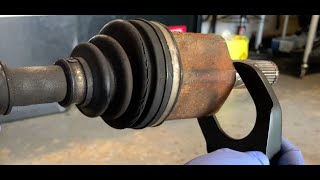
The CV axle on a 2006-2015 Mazda 5 is a common wear item. The part itself is tough, but the rubber boots that protect the joints are not. Over time, these boots can crack or tear. When this happens, the special grease packed inside leaks out, and dirt and water get in. This quickly ruins the joint, leading to failure.
Key Symptoms of a Bad CV Axle
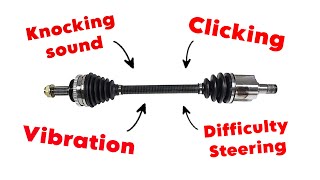
🎬 Watch: A visual guide to identifying these 5 common symptoms.- Clicking or Popping When Turning: This is the most classic sign of a bad outer CV joint. The noise is most obvious in slow, sharp turns, like in a parking lot. The sound will get faster as your speed increases.
- Vibration During Acceleration: A shudder or vibration that you feel through the car when you speed up often points to a problem with the inner CV joint. This is different from a tire vibration, as it's most noticeable when the engine is under load.
- Grease on Inside of Wheel: If you see dark, heavy grease splattered on the inside of your wheel, along the fender liner, or on suspension parts, it's a sure sign the CV boot has torn.
- Clunking Noise: A clunk when you shift from drive to reverse or when you get on or off the gas can mean there is too much play in a worn-out joint.
Don't Ignore the Noise
While you can drive with a clicking CV axle for a short time, it's not safe long-term. If the joint fails completely, the axle can break apart, leaving you stranded. It's best to replace it as soon as you confirm the problem.
Choosing the Right Aftermarket Axle

When replacing your Mazda 5's CV axle, you have options. OEM axles from Mazda are high quality but very expensive. Most owners choose new aftermarket axles. However, quality can vary greatly.
Many owners on forums report bad experiences with the cheapest store-brand axles, citing premature failure, vibrations, and incorrect fitment. It's a common complaint that some aftermarket axles are missing the rubber harmonic damper found on the original part, though it's unclear if this causes major issues. Rebuilding the original axle is an option, but it requires special tools and is only possible if the joint isn't already damaged. For most people, a new, complete axle assembly is the easiest and most reliable repair.
- Economy Brands (like Surtrak): These are budget-friendly options that get the job done. They are generally considered better than no-name parts but are built to a price point. They may not have the same lifespan or perfect balance as more expensive options.
- Standard/Premium Brands (like DSS): These brands often use better materials, such as higher-quality neoprene for the boots and better grease for the joints. They are a good middle ground, offering better reliability than economy parts without the high cost of OEM.
Pro Tip: Replace the Seal
While you have the axle out, it is highly recommended to replace the transmission axle seal. It's an inexpensive part that can prevent a future transmission fluid leak, saving you from having to do the job all over again.
Cost to Replace a Mazda 5 CV Axle
| Part/Service | Estimated Cost |
|---|---|
| New Aftermarket CV Axle | $93 - $156 (per side) |
| Shop Labor | $125 - $200 (per side) |
| Total Professional Job | $220 - $360 (per side) |
Frequently Asked Questions

Is replacing a CV axle a DIY job?
For an experienced DIY mechanic with the right tools, yes. The job requires lifting the car, removing the wheel, and using tools like a 32mm axle nut socket, a pry bar, and possibly a ball joint separator. It can be a physically demanding job, and seized parts can add time and frustration. For beginners, it's best left to a professional.
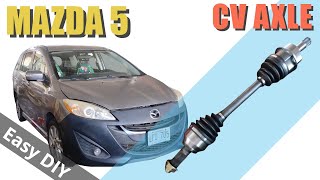
🎬 See this step-by-step walkthrough of a driver side axle replacement.Should I replace just the boot or the whole axle?
If you catch a torn boot very early before the joint is contaminated, you can replace just the boot. However, it's a messy and difficult job. For most people, and especially if the axle is already clicking, replacing the entire axle assembly is faster, easier, and ensures a reliable repair.
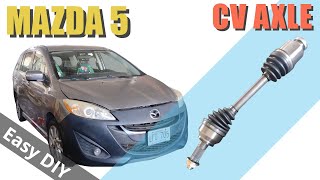
🎬 Watch: How to replace the passenger side axle yourself.Do I need an alignment after replacing a CV axle?
It is a good idea. The process involves removing and reinstalling suspension components. While you might be able to get things back to where they were, an alignment is the only way to be sure your vehicle's steering and tire wear are correct.
Why do some aftermarket axles look different from the OEM one?
The most common difference is the lack of a rubber damper (balancer) on the shaft. This is a cost-saving measure by aftermarket companies. While the OEM damper is there to reduce vibrations, many owners report no noticeable difference after installing an axle without one.
Helpful Videos

Technical Specifications
The axle nut is typically a 32mm socket size. Aftermarket axles may not include the OEM rubber harmonic damper.
We Have This Part in Stock


The information in this article is provided for general reference and educational purposes only. Vehicle specifications, procedures, and part compatibility can vary by production date, trim level, and region. Always consult your vehicle's factory service manual and verify part numbers before purchasing or performing repairs. Safety-critical components such as airbags, seat belts, and braking systems should be installed by a qualified professional.
- Mazda 5: