

Guide to the 2007-2011 BMW 335i Turbocharger Boost Sensor
Experiencing sudden power loss or seeing a 'half-engine' light? Your Turbocharger Boost Sensor might be the culprit.
- A failing boost sensor will likely put your 335i into a low-power 'limp mode' and trigger a check engine light with codes like 2ABC or P0238.
- The sensor is located on the charge pipe before the throttle body and is an easy DIY replacement for most owners.
- For best results, choose an OEM-supplier brand like Bosch or a reputable aftermarket brand like Standard Ignition or Walker Products.
- Always clear engine fault codes after replacement to ensure the car exits limp mode and recognizes the new part correctly.
Symptoms of a Failing Boost Sensor on a 335i
When the boost sensor on your 335i starts to fail, the symptoms are hard to ignore. Because the sensor provides vital data to the engine computer (DME), a bad signal can cause significant performance problems. You're not just losing a little power; the car will often protect itself by limiting performance drastically.
Common Failure Symptoms:
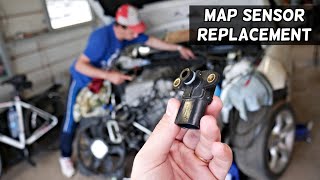
- Sudden Loss of Power (Limp Mode): This is the most common symptom. Your car will feel extremely sluggish, as the DME defaults to a low-boost protective map to prevent engine damage. This is often accompanied by a "half-engine" power light on your dashboard. 🎬 Watch: How one owner diagnosed and fixed a sudden limp mode.
- Check Engine Light: A failing sensor will trigger specific fault codes. Common BMW codes include 2ABC (Boost-pressure sensor, electric) and 3100 (Boost-pressure control, deactivation). You may also see generic OBD-II codes like P0238 (Turbocharger Boost Sensor 'A' Circuit High).
- Rough Idle or Stalling: Incorrect air pressure readings can lead to an improper air-fuel mixture, causing the engine to run rough or even stall.
- Poor Fuel Economy: If the DME receives incorrect data, it may inject more fuel than necessary, leading to a noticeable drop in gas mileage.
Choosing the Right Aftermarket Boost Sensor
For a critical sensor on a high-performance engine like the one in your 335i, part quality matters. While an OEM sensor from BMW provides a guaranteed fit and performance, quality aftermarket options can offer significant savings. Here’s how to choose.
Brand Quality Tiers
- Tier 1: OEM Supplier (Bosch): Bosch is a frequent original equipment manufacturer for BMW. Choosing a Bosch-branded sensor often gets you the exact same part that came on your car from the factory, just without the BMW logo and dealership price tag. This is the safest bet for aftermarket quality.
- Tier 2: Reputable Aftermarket (Standard Ignition, Walker Products): Brands like Standard Motor Products and Walker Products are well-known in the aftermarket industry. They produce direct-fit replacement parts that are engineered to meet or exceed original specifications and undergo extensive testing. For many owners, these brands provide a reliable balance of cost and quality.
- Tier 3: Economy Brands (Replacement): These are budget-focused brands. While the low price is tempting, the sensor's accuracy and longevity can be a gamble. For a turbocharged BMW, a faulty sensor can lead to poor performance and frustrating diagnostic issues. It may be worth spending more for a part from a higher-tier brand to avoid replacing it again soon.
Cost of Replacing a 335i Boost Sensor
| Part Type | Estimated Cost |
|---|---|
| New OEM (from BMW Dealer) | $115 - $165 |
| New Aftermarket (Bosch, Standard, Walker) | $30 - $180 |
| Shop Labor | $50 - $100 |
Frequently Asked Questions
Where is the turbo boost sensor located on the 2007-2011 335i?
The primary boost pressure sensor (TMAP) is located on the charge pipe, which is the plastic or metal tube that runs from the intercooler to the engine's throttle body. It's on the driver's side of the engine bay and is typically easy to see and access once the plastic engine cover is removed.
Can a bad boost sensor cause the BMW 30FF code?
While a bad boost sensor can cause boost-related issues, the 30FF code ("charge-air pressure too low") is more commonly caused by a physical boost leak. This could be from a cracked charge pipe, leaking vacuum lines, or faulty wastegates. A failing sensor is more likely to throw codes like 2ABC or P0238.
🎬 Watch: Troubleshooting common boost issues on the N54 engine.Is this the same as a MAP sensor?
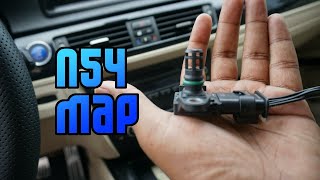
It's a bit more advanced. While often called a boost or MAP (Manifold Absolute Pressure) sensor, the one on the 335i charge pipe is a TMAP sensor—it measures both pressure and temperature. There is a separate, 3-pin MAP sensor located on the intake manifold itself on N54 engines. The sensor discussed here is the 4-pin TMAP on the charge pipe.
Do I need to reset anything after replacing the sensor?
It is highly recommended to clear the fault codes from the DME using a capable scan tool after replacing the sensor. While the car may run better immediately, clearing the codes ensures the DME is no longer in a protective or limp mode and can re-adapt to the new, correct sensor readings.
Helpful Videos


Technical Specifications
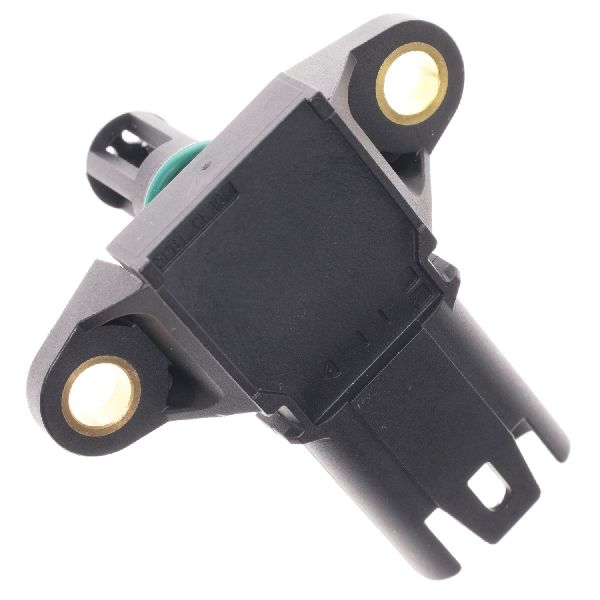
OEM Part Numbers: 13627585493 13627551429 13629797773
4-Pin TMAP (Temperature and Manifold Absolute Pressure) Sensor
We Have This Part in Stock


The information in this article is provided for general reference and educational purposes only. Vehicle specifications, procedures, and part compatibility can vary by production date, trim level, and region. Always consult your vehicle's factory service manual and verify part numbers before purchasing or performing repairs. Safety-critical components such as airbags, seat belts, and braking systems should be installed by a qualified professional.
- BMW 335i: