

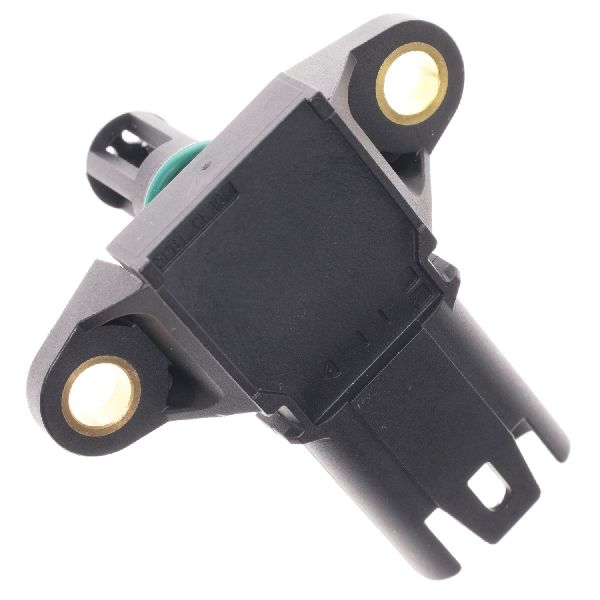
A Guide to the Turbocharger Boost Sensor for the 2011 BMW 1 Series M
Keep your 1M's N54 engine performing at its peak by understanding its critical boost pressure sensors.
- Your 1 Series M has two identical boost sensors; one on the charge pipe and one on the intake manifold.
- For a critical engine part, use an OEM-equivalent brand like Bosch to ensure accurate performance and avoid future issues.
- Symptoms often include a sudden loss of power (limp mode) and a check engine light with boost-related fault codes.
- This is a simple, low-cost DIY replacement that most owners can perform in under 30 minutes.
Symptoms of a Failing Boost Sensor
A bad boost pressure sensor can cause noticeable problems with your 1 Series M's performance. Because the sensor's data is so important for engine calculations, a faulty signal can confuse the computer and lead to several issues. You might experience one or more of the following signs.
Reduced Power or "Limp Mode"
The most common symptom is a sudden and significant loss of power. The car's computer (DME) will detect an illogical pressure reading and protect the engine by limiting turbo boost and throttle response. This is often accompanied by a "Service Engine Soon" or check engine light on your dashboard.
Poor Acceleration and Rough Idle
If the sensor is failing but hasn't triggered limp mode, you may still notice sluggish acceleration, hesitation, or a rough, inconsistent idle. This happens because the DME is working with bad data, leading to an incorrect air-fuel mixture that hampers performance and smoothness.
Check Engine Light and Fault Codes
A failing boost sensor will almost always trigger a Check Engine Light. If you scan the car for codes, you may find faults related to boost pressure being too high or too low, such as code 30FE (Turbocharger, Boost Pressure Too High) or 30FF (Boost Pressure Too Low).
Choosing the Right Aftermarket Boost Sensor
When replacing a critical engine sensor on a high-performance car like the 1 Series M, part quality matters. While saving money is tempting, a cheap, low-quality sensor can fail prematurely or provide inaccurate readings, leading to the same performance issues you were trying to fix. Here’s a breakdown of your options.
Tier 1: OEM and OEM-Equivalent Brands
Genuine BMW parts are the benchmark for quality and fitment, but they come at the highest price. For this specific part, Bosch is widely known to be the original equipment manufacturer for BMW. Choosing a Bosch-branded sensor often gets you the exact same part as the Genuine BMW one, without the dealership markup. This is the recommended choice for maintaining factory performance and reliability.
Tier 2: Reputable Aftermarket Brands
Brands like Standard Ignition and Walker Products are established names in the aftermarket. They produce reliable parts that meet or exceed OEM specifications and are a good balance between cost and quality. These are a solid choice if a Bosch or Genuine BMW part is not in your budget.
Tier 3: Budget-Friendly Brands
Brands listed simply as "Replacement" are typically the most affordable option. While they can get your car back on the road, their long-term reliability and the accuracy of their readings may not match up to OEM or Tier 2 brands. For a sensitive, high-strung engine like the N54, it's generally best to invest in a higher-quality sensor to avoid potential issues.
Cost of Replacing a Turbocharger Boost Sensor
The cost to replace a boost sensor on your 2011 1 Series M can vary based on the part you choose and whether you do the work yourself. The job is simple enough for most DIY mechanics.
| Part / Service | Estimated Cost |
|---|---|
| New OEM / OEM-Equivalent Sensor (e.g., Bosch) | $140 - $180 |
| New Aftermarket Sensor (e.g., Standard, Walker) | $30 - $130 |
| Shop Labor | $60 - $90 |
| Total Professional Replacement | $200 - $270 |
Frequently Asked Questions (FAQ)
Where are the boost sensors located on the 2011 1 Series M?
The N54 engine has two boost sensors. The first is located on the plastic charge pipe, just before the throttle body. The second is on the top of the intake manifold, closer to the firewall. Both are easily accessible.
Is this a difficult part to replace myself?
No, this is a very DIY-friendly job. Replacement typically involves removing the engine cover, disconnecting an electrical plug, and removing one or two small bolts holding the sensor in place. The sensor then pulls straight out. The entire process for one sensor should take less than 30 minutes.
Are there any recalls for the boost sensor on my 1M?
No, there are no specific recalls or technical service bulletins (TSBs) from BMW or the NHTSA for the turbocharger boost sensors on the 2011 BMW 1 Series M.
What is a 3.5 BAR sensor and do I need one?
A 3.5 BAR sensor is an upgraded sensor that can read higher levels of boost pressure than the stock sensor. You only need this if your car is heavily modified with an aftermarket engine tune designed to run significantly more boost than the factory setting (over ~20 PSI). For a stock or lightly tuned car, the standard replacement sensor is the correct choice.
Technical Specifications
OEM Part Numbers: 13627585493 13627551429 13629797773 13627585492
Includes integrated air temperature sensor. 4-prong oval electrical connector.
We Have This Part in Stock


The information in this article is provided for general reference and educational purposes only. Vehicle specifications, procedures, and part compatibility can vary by production date, trim level, and region. Always consult your vehicle's factory service manual and verify part numbers before purchasing or performing repairs. Safety-critical components such as airbags, seat belts, and braking systems should be installed by a qualified professional.
- BMW 1 Series M:
- 🛍️ Shop This Part
- Symptoms of a Failing Boost Sensor
- Reduced Power or "Limp Mode"
- Poor Acceleration and Rough Idle
- Check Engine Light and Fault Codes
- Choosing the Right Aftermarket Boost Sensor
- Tier 1: OEM and OEM-Equivalent Brands
- Tier 2: Reputable Aftermarket Brands
- Tier 3: Budget-Friendly Brands
- Cost of Replacing a Turbocharger Boost Sensor
- Frequently Asked Questions (FAQ)
- 🎟️ Get 5% Off