

Toyota Prius V ABS Speed Sensor: A Guide for 2012-2017 Models
Understand the warning lights on your dash and choose the right replacement ABS sensor for your Prius V.
- A bad ABS sensor will disable your ABS, traction control, and stability control systems.
- The most common symptom is the ABS, VSC, and TRAC warning lights appearing on the dash.
- Genuine Toyota (OEM) sensors are highly recommended for reliability, as cheap aftermarket sensors are known to fail.
- For 2012-2014 models, have a mechanic rule out a brake booster issue covered by a Toyota Customer Support Program before replacing the sensor.
Is a Failing ABS Sensor a Big Deal?
Yes, it is. When an ABS speed sensor fails on your 2012-2017 Prius V, it disables key safety features. Your anti-lock brakes, traction control, and stability control will not function correctly. You may also lose regenerative braking, which can negatively impact your fuel economy. While the car's standard brakes will still work, you will not have the assistance of the ABS in an emergency stop, which can increase your stopping distance and risk of skidding. It is important to address this issue to ensure your vehicle's safety systems are fully operational.
Check for Other Issues First
Before replacing a sensor, be aware that Toyota issued a Customer Support Program (20TE07) for the Brake Booster and Brake Booster Pump on some 2012-2014 Prius V models. This issue can also trigger brake-related warning lights. A professional diagnosis can confirm if the problem is a sensor or the brake booster assembly, potentially saving you from an unnecessary repair.
Symptoms of a Bad ABS Speed Sensor
The most common sign of a bad sensor is a combination of warning lights on your dashboard. 🎬 Watch: Identifying the 'screaming' sound that signals brake booster failure. You will likely see the ABS, VSC, and/or traction control lights illuminate. Other symptoms you might experience include:
- Brakes feeling strange, pulsating, or grabbing unexpectedly at low speeds.
- The brake pedal feeling unresponsive or hard.
- A noticeable loss of regenerative braking, leading to worse gas mileage.
- In rare cases, the speedometer may behave erratically or stop working.
Choosing the Right Aftermarket Sensor
When it comes to electronic parts on a Toyota, there is a significant difference in quality between Original Equipment (OEM) and many aftermarket options. Forum discussions with Prius owners show that very cheap aftermarket ABS sensors (often under $30) have a high failure rate. Problems include being dead-on-arrival or failing within a few months.
OEM: Genuine Toyota sensors are the most reliable choice and are guaranteed to be compatible with your car's computer system. However, they are also the most expensive option.
Premium Aftermarket: Brands like Beck/Arnley, NTK, or Duralast are generally considered more reliable than budget brands and offer a middle ground on price. Some premium aftermarket suppliers may even repackage the same parts used by the original manufacturer.
Budget Aftermarket ('Replacement' brand): While the low price is tempting, be cautious. These parts have a higher reported failure rate. If you are paying a mechanic for labor, a failed aftermarket part could mean paying for the same job twice. If you are doing the repair yourself, the risk is lower, but the hassle remains.
Pro Tip: Check the Part Number
The front ABS sensors are different for the driver and passenger sides. Ensure you are ordering the correct one. The OEM part number for the Front Left (Driver Side) is typically 89543-47030, and the Front Right (Passenger Side) is 89542-47030. Always verify fitment for your specific vehicle.
Cost to Replace a Prius V ABS Speed Sensor
The cost can vary significantly based on the part you choose and whether you do the work yourself.
| Part/Service | Estimated Cost |
|---|---|
| New OEM Part | $235 - $345 |
| New Aftermarket Part | $25 - $110 |
| Shop Labor | $95 - $200 |
| Total (Shop Repair) | $120 - $545 |
Frequently Asked Questions
Can I replace the ABS sensor myself?
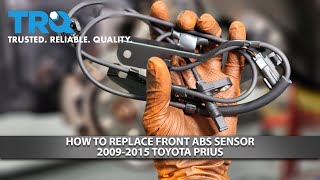
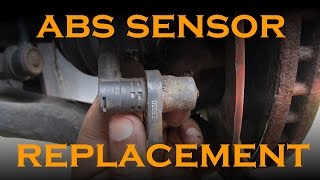
Yes, replacing a front ABS speed sensor is a DIY-friendly job for someone with basic tools. It involves removing the wheel, taking out a single 10mm bolt holding the sensor in the steering knuckle, and unplugging the wire harness. 🎬 See this step-by-step walkthrough for replacing the front sensor. The main challenge can be if the old sensor is corroded and stuck in place.
Do I need to replace the wheel bearing too?
For the front wheels on a 2012-2017 Prius V, the ABS speed sensor is a separate, bolt-on part. You do not need to replace the wheel bearing. On some other vehicles, the rear sensors are integrated into the wheel bearing hub assembly, but that is not the case for the front on this model.
Will the warning lights turn off after I replace the sensor?
Usually, yes. After replacing the faulty sensor, the warning lights should turn off after driving a short distance. However, sometimes the diagnostic trouble code (DTC) needs to be cleared from the car's computer using an OBD2 scanner.
🎬 Watch: How to reset your ABS and VSC warning lights.Why are there so many warning lights for one bad sensor?
The ABS, traction control (TRAC), and vehicle stability control (VSC) systems all rely on data from the wheel speed sensors. When one sensor provides bad or no data, the computer disables all of these related safety systems as a precaution, triggering their respective warning lights.
Helpful Videos

Technical Specifications
OEM Part Numbers: 89543-47030 (Front Left) 89542-47030 (Front Right)
Magnetic pickup sensor that bolts to the steering knuckle.

The information in this article is provided for general reference and educational purposes only. Vehicle specifications, procedures, and part compatibility can vary by production date, trim level, and region. Always consult your vehicle's factory service manual and verify part numbers before purchasing or performing repairs. Safety-critical components such as airbags, seat belts, and braking systems should be installed by a qualified professional.
- Toyota Prius V: