

Ford Mustang Starter Replacement Guide for 2019-2023 Models
Everything you need to know before replacing the starter on your S550 Mustang.
- A bad starter on a 2019-2023 Mustang typically causes a single click, slow crank, or grinding noise.
- Before replacing the starter, always test the battery and check for clean, tight terminal connections.
- There are no major recalls for the starter itself, so failure is usually an isolated incident.
- Replacement is an intermediate DIY job (1.5-2.5 hours), but access is tight.
Is Your Mustang's Starter Failing?

A bad starter will leave you stranded. For 2019-2023 Ford Mustang owners, starting problems are often first blamed on the battery, but the starter itself can be the culprit. Recognizing the signs early can save you the headache of a car that won't start at all. Unlike some parts that give you plenty of warning, a starter can fail with little notice.
Common Symptoms of a Bad Starter
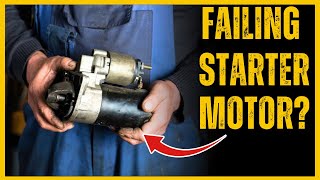
🎬 Watch: 5 common signs your starter motor is failing- Single Loud Click: You press the start button and hear one sharp click, but the engine doesn't turn over. This often means the starter solenoid is engaging, but the motor isn't spinning.
- No Sound at All: If you press the start button and nothing happens—no click, no crank—it could be a dead battery, but it might also be a completely failed starter or a bad starter relay.
- Slow or Lazy Engine Crank: The engine turns over much slower than usual, as if the battery is weak. While this is a classic weak battery symptom, a failing starter can also draw too much power and cause a slow crank.
- Grinding or Whirring Noise: If you hear a grinding sound when trying to start the car, it could be the starter's gear failing to engage properly with the flywheel. A high-pitched whirring noise after the engine has started could mean the starter isn't disengaging.
- Intermittent Starting: The car starts fine one day but refuses to start the next. This can be caused by a dead spot on the starter motor's internal components.
First, Check the Simple Things
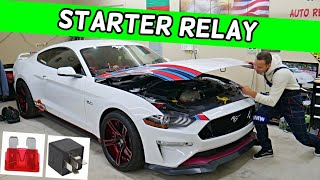
Before you condemn the starter, make sure your battery is fully charged and the terminals are clean and tight. Corrosion on the battery terminals can prevent the starter from getting enough power. Also, check the starter relay, which is located in the under-hood fuse box; 🎬 See how to locate and replace your starter relay you can often swap it with an identical relay (like the one for the windshield wipers) for a quick test.
Known Issues, Recalls, and TSBs

As of early 2026, there are no active recalls or widespread Technical Service Bulletins (TSBs) specifically for starter motor failure on the 2019-2023 Ford Mustang. However, some related issues exist:
- TSB 21-2390: Some 2020-2021 Mustang GT500 models could experience a no-crank/no-start condition, but this was linked to low oil levels and PCM software, not the starter motor itself.
- Other Recalls: This generation of Mustang has had recalls for issues with the instrument cluster, powertrain control module (PCM), and brake module software, some of which could present as electrical or starting-related problems.
Most starting problems on these cars are isolated incidents related to the battery, connections, or the starter motor wearing out.
Choosing a New Aftermarket Starter

When your starter fails, you have a choice between an Original Equipment Manufacturer (OEM) part from Ford or an aftermarket part from a third-party company. OEM parts guarantee a perfect fit and original quality but come at a higher price. Aftermarket parts are more affordable and can offer comparable or even improved performance.
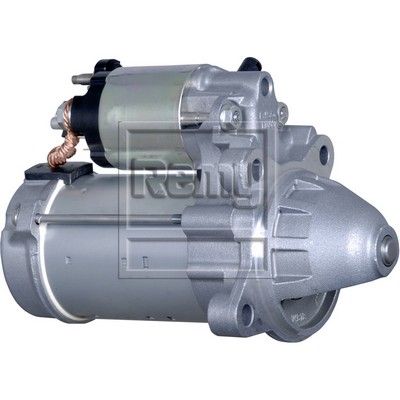
For the 2019-2023 Mustang, a quality new aftermarket starter is a reliable and cost-effective choice. Brands like Remy have a generally positive reputation among vehicle owners. Some users report that new Remy starters provide more torque and faster cranking than the original stock unit, viewing it as an upgrade. While any brand can have occasional negative reviews, a new unit from a reputable aftermarket manufacturer is a solid option that balances cost and quality.
| Part Type | Part Cost | Shop Labor Cost | Total Estimated Cost |
|---|---|---|---|
| New OEM | $190 - $310 | $120 - $250 | $310 - $560 |
| New Aftermarket (Remy) | $228.68 | $348 - $478 |
Cost estimates are based on national averages and may vary by location and vehicle specifics (2.3L vs. 5.0L). Prices as of early 2026.
Frequently Asked Questions (FAQ)

Can I drive my Mustang with a bad starter?
No, you cannot. If the starter is completely dead, the engine will not be able to turn over and start. You will need to have the vehicle towed for repair.
How do I know if it's the starter or just a dead battery?
A dead battery usually results in a slow crank or rapid clicking sound from the relays. A bad starter often produces a single, loud click or a grinding noise. The best way to be sure is to test the battery first. If the battery is fully charged (above 12.4 volts) and the terminals are clean, but the car still won't start, the starter is the likely suspect.
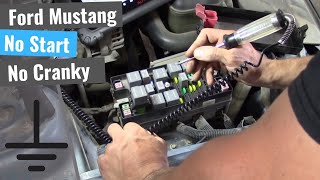
🎬 Watch this diagnostic guide for a no-start, no-crank conditionHow difficult is it to replace a 2019-2023 Mustang starter?
It is an intermediate-level job. The starter is held on by two or three bolts and is located on the passenger side where the engine meets the transmission. Access is tight, and you will need to safely lift the vehicle on jack stands. Some mechanics remove exhaust components for easier access, but it may be possible to do without. For a DIYer with the right tools and some experience, it is a feasible job that takes about 1.5 to 2.5 hours.
Are there different starters for the EcoBoost and GT models?
Yes, the starter motors are different for the 2.3L EcoBoost and 5.0L GT engines, and can also differ between automatic and manual transmissions. It is critical to order the correct part for your specific vehicle configuration. Using your vehicle's VIN is the best way to ensure you get the right part.
Helpful Videos
Technical Specifications
OEM Part Numbers: JR3Z-11002-A (5.0L, Auto Trans) GR3Z-11002-A (5.0L, Manual Trans) JR3Z-11002-B (2.3L EcoBoost)
The starter is a 12-volt, high-torque electric motor. For the 2019-2023 Mustang, it is typically a Permanent Magnet Planetary Gear Reduction (PMGR) style starter, which is smaller, lighter, and more efficient than older designs.
We Have This Part in Stock

The information in this article is provided for general reference and educational purposes only. Vehicle specifications, procedures, and part compatibility can vary by production date, trim level, and region. Always consult your vehicle's factory service manual and verify part numbers before purchasing or performing repairs. Safety-critical components such as airbags, seat belts, and braking systems should be installed by a qualified professional.
- Ford Mustang: