

2013-2019 Ford Flex & Lincoln MKT Power Seat Track: Problems, Recall, and Replacement
A complete guide to diagnosing and replacing the 8-way power seat track in your Ford Flex or Lincoln MKT, including a critical safety recall you can't ignore.
- A critical safety recall (14C10) exists for the 2014 Ford Flex passenger seat track that can disable the airbag. Verify this has been addressed.
- Symptoms like a stuck seat, twisting, or clicking often point to a failed motor or switch, but always check fuses and wiring first.
- When buying a used track, you must transfer your original seat control module and wiring harness if your car has memory, heated, or cooled seats.
- A new OEM track is extremely expensive (over $940), making a quality used OEM part the most economical and practical solution.
Symptoms of a Failing Seat Track
When the power seat track in a 2013-2019 Ford Flex or Lincoln MKT begins to fail, the symptoms are usually obvious. Understanding these signs can help you distinguish between a simple issue, like a blown fuse, and a more complex mechanical or electrical failure.
- Seat Won't Move: The most common symptom is a seat that is completely unresponsive or will only move in some directions but not others. For example, the recline might work, but the forward/backward adjustment is dead.
- Clicking Without Movement: You press the switch and hear a 'click' from under the seat, but nothing happens. This usually means the motor is receiving power but is seized internally or the track is jammed.
- Grinding or Whirring Noises: Loud grinding sounds during adjustment suggest stripped or broken gears inside one of the motors.
- Twisting Seat: When you try to move the seat forward or back, only one side of the track moves, causing the seat to twist into a crooked position. This indicates one of the two slide motors has failed.
- Intermittent Operation: The seat works sometimes but not others. This often points to a failing switch, a loose electrical connection under the seat, or a problem with the seat control module.
Known Issues, Recalls, and Technical Service Bulletins
These vehicles have a few documented issues related to the front seats that owners should be aware of. The most critical is a safety recall affecting 2014 models.
Safety Recall 14C10: Passenger Seat Airbag Sensor
Warning: Certain 2014 Ford Flex vehicles were recalled due to a manufacturing defect in the front passenger seat track assembly. There was not enough clearance between the seat frame and the track, which could cause the Occupant Classification System (OCS) to misread the passenger's weight. This could lead to the passenger airbag being improperly suppressed in a crash, increasing the risk of injury. The fix involves dealers modifying the seat track to create proper clearance and recalibrating the sensor. Before purchasing a used passenger seat track for a 2014 model, it is crucial to verify if this recall work has been performed.
Related Issue: Multi-Contour Seat Module Connectors
While not directly affecting the standard 8-way power seat track, Ford issued TSB 19-2390 for vehicles with optional multi-contour (massaging) seats where the feature would become inoperative. The cause was identified as microscopic corrosion (fretting) in an electrical connector under the seat, not a failure of the expensive control module itself. This is a valuable lesson for any power seat issue: always inspect the wiring and connectors under the seat for corrosion or damage before assuming a motor or module is bad.
Diagnosing the Problem: Track, Switch, or Module?
Before spending money on parts, follow these steps to narrow down the cause:
- Check the Fuses: Your first step should always be to check the fuse box. A power seat system has dedicated fuses. A blown fuse can be the cause, but it can also be a symptom of a shorted motor drawing too much current.
- Listen Carefully: As mentioned in the symptoms, the sounds (or lack thereof) are a big clue. No sound at all points toward a lack of power (fuse, wiring) or a bad switch. A click suggests a bad motor.
- Isolate the Switch: If some seat functions work but one direction doesn't, the switch is a strong possibility. The contacts for that specific direction may have worn out.
- Inspect Under the Seat: Look for anything obvious. Has an object jammed the track? Is the main electrical connector loose or disconnected? Are any wires frayed or cut? Wires can be damaged by items sliding under the seat or from the seat's own movement over time.
Pro Tip: If you have a multimeter, you can perform a definitive test. Disconnect the connector at the non-working motor. Have a helper operate the seat switch while you test for voltage at the two pins leading to the motor. If you see 12V (and it reverses polarity when the switch is pressed the other way), but the motor doesn't run, the motor is bad. If you get no voltage, the problem is upstream with the switch, module, or wiring.
Buying a Used Seat Track Bracket: What to Inspect
Given that a new OEM seat track assembly can cost over $1,000, a used OEM part is an excellent value. However, you must verify compatibility and inspect the part carefully.
Compatibility Check
- Verify Seat Functions: The most important step. This guide covers the 8-way power track with lumbar. Confirm the donor vehicle had the exact same seat functions as yours.
- Memory, Heated, and Cooled Seats: If your vehicle has memory, heated, or cooled seats, you will likely need to transfer your original seat control module and wiring harness to the replacement track. The used track may not have the correct module for your vehicle's options. Be prepared for this extra step.
- Driver vs. Passenger: The tracks are side-specific and not interchangeable.
Physical Inspection Checklist
- Check for Rust and Corrosion: Inspect the metal tracks and motor housings for excessive rust, which can cause them to bind up.
- Examine Wiring: Look for any cut, spliced, or frayed wires. Pay close attention to the main connector plugs to ensure no pins are corroded, bent, or pushed out.
- Inspect Gears: If possible, look at the plastic and metal gears on the motors. Check for stripped or broken teeth.
- Test the Motors: If you have a 12V power source (like a car battery), you can briefly touch the leads to the pins for each motor to confirm they spin. This is the best way to ensure you're getting a functional part.
Cost to Replace a Seat Track Bracket (2013-2019 Flex & MKT)
Replacing the entire seat track is often more cost-effective than paying a shop to diagnose and replace individual components like a single motor or switch.
| Part or Service | Estimated Cost |
|---|---|
| New OEM Seat Track Assembly | $940 - $1,500 |
| Used OEM Seat Track Assembly | $150 - $400 |
| Shop Labor to Replace Track | $150 - $250 (1.5-2.5 hours) |
| For Comparison: New OEM Switch Only | $280 - $500 (Part Only) |
| For Comparison: New OEM Motor Only | ~$380 (Part Only) |
Replacement Overview & Difficulty
Replacing the seat track is a manageable DIY job for someone with basic mechanical skills, but the seat itself is heavy and awkward.
- Difficulty: 3 out of 5
- Estimated Time: 2 hours
- Process: The basic steps involve disconnecting the vehicle's battery, unbolting the four bolts holding the seat to the vehicle floor, carefully tilting the seat to disconnect all electrical connectors, and removing the entire seat assembly. Once out, the track is unbolted from the seat cushion.
Warning: If your seat is stuck in the far-back position, it can be extremely difficult or impossible to access the rear mounting bolts. In some cases, you may need to manually power the motor using an external 12V source or try to manually turn the motor drive cable to move the seat forward enough to access the bolts.
Frequently Asked Questions (FAQ)
Can I just replace the broken motor instead of the whole track?
Yes, individual motors are available and can be replaced. However, the labor can be intensive, and you must be certain the motor is the problem. If another part of the track fails later, you will have to do the job again. Replacing the complete used assembly is often a faster and more reliable long-term repair.
My seat has memory and heating. Do I need a special track?
Yes and no. The base track is often the same, but the control module and wiring harness are different. As stated in the guide, the safest and most reliable method is to transfer the seat control module and wiring from your original seat to the replacement used track. This ensures all features function correctly with your vehicle's computer system.
Do I need to do any programming after installing a new seat track?
If you reuse your original seat control module, no programming is typically required. However, if you use the module that came with the used track, there is a chance it may need to be programmed by a dealer or a technician with advanced tools like FORScan, especially for memory seat functions to work correctly.
Why does my seat rock or feel loose?
A rocking or loose feeling in the seat is often caused by worn-out bushings in the seat track mechanism or loose mounting bolts. While checking that the four main bolts are tight is a good first step, persistent looseness usually points to internal wear within the track assembly, requiring its replacement.
Helpful Videos
Technical Specifications
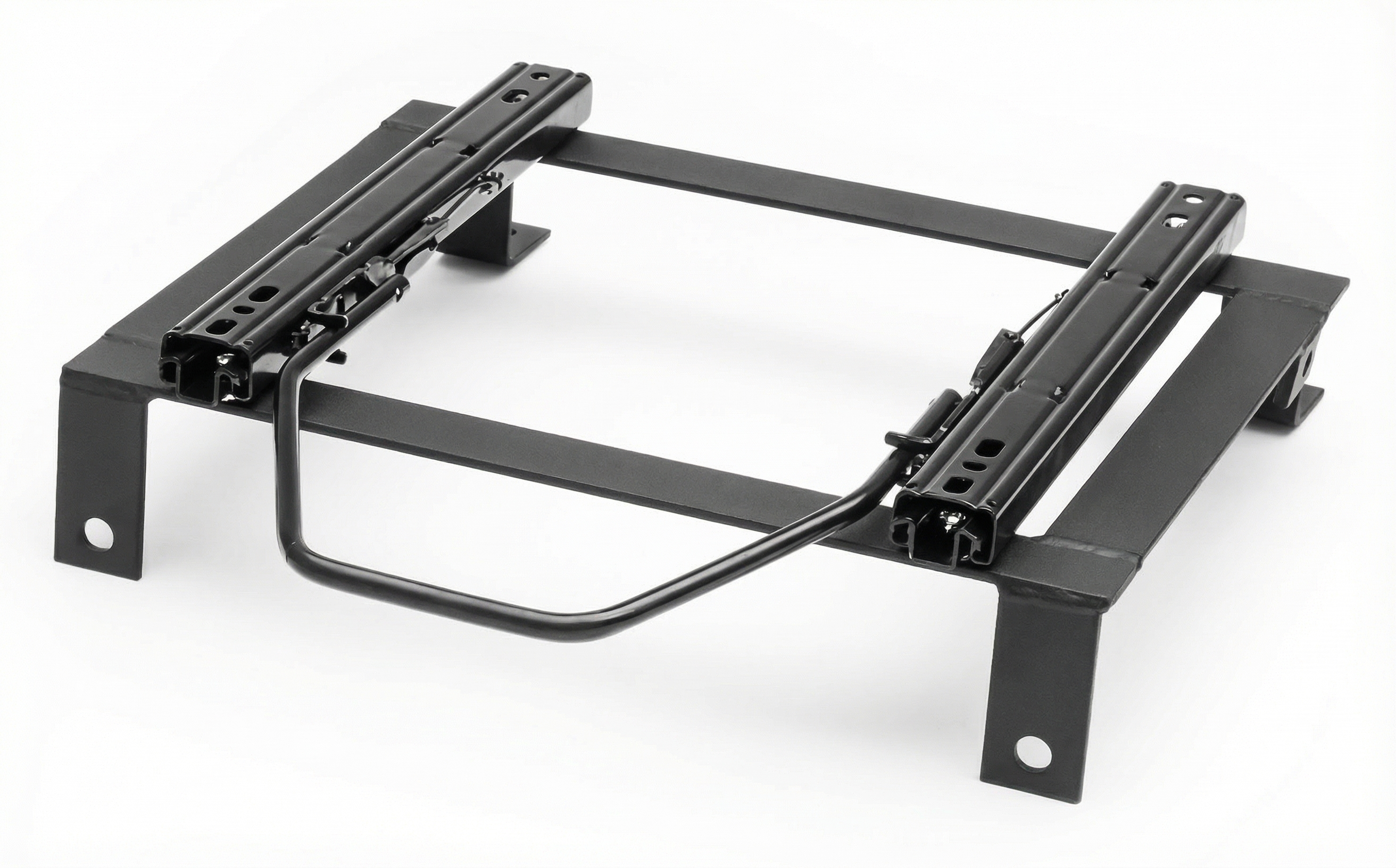
OEM Part Numbers: DG1Z-9661710-E DG1Z-9661710-C
Fits 8-way power seats with lumbar support. May require transfer of seat control module and wiring for memory/heated/cooled functions.
We Have This Part in Stock

The information in this article is provided for general reference and educational purposes only. Vehicle specifications, procedures, and part compatibility can vary by production date, trim level, and region. Always consult your vehicle's factory service manual and verify part numbers before purchasing or performing repairs. Safety-critical components such as airbags, seat belts, and braking systems should be installed by a qualified professional.
- Ford Flex:
- Lincoln MKT:
- 🎬 Helpful Videos
- 🛍️ Shop This Part
- Symptoms of a Failing Seat Track
- Known Issues, Recalls, and Technical Service Bulletins
- Safety Recall 14C10: Passenger Seat Airbag Sensor
- Related Issue: Multi-Contour Seat Module Connectors
- Diagnosing the Problem: Track, Switch, or Module?
- Buying a Used Seat Track Bracket: What to Inspect
- Compatibility Check
- Physical Inspection Checklist
- Cost to Replace a Seat Track Bracket (2013-2019 Flex & MKT)
- Replacement Overview & Difficulty
- Frequently Asked Questions (FAQ)
- 🎟️ Get 5% Off