

2016-2025 Audi A3, A4, Q3 & More Speaker Guide: Standard vs. Premium Audio Explained
Learn to diagnose a rattling or dead Audi speaker and, most importantly, how to identify your sound system to ensure you buy the correct used replacement part.
- You must verify if your car has the Standard, Bang & Olufsen (B&O), or Sonos audio system before buying a replacement speaker, as they are not interchangeable.
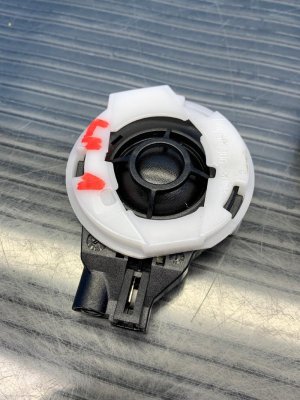
- Part number 4H0-907-601-E is an engine sound actuator, not a music subwoofer, and cannot be used as a replacement.
- A rattling sound is not always a blown speaker; check for loose interior trim panels or cracked plastic components on the speaker itself first.
- Replacement is a DIY-friendly job for most models, with the main task being the careful removal of interior trim panels to access the speaker.
The Most Important Step: Identify Your Sound System

Warning: Before purchasing any speaker or subwoofer, you MUST correctly identify which audio system is in your vehicle. Audi offered several different systems on these models, and the speakers are NOT interchangeable. Installing the wrong speaker will result in it not working or, in some cases, potentially damaging the vehicle's amplifier.
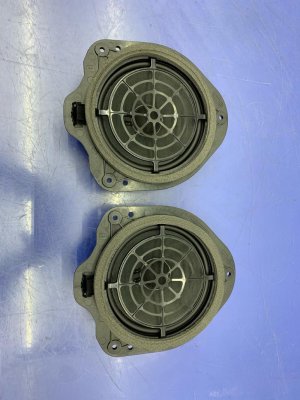
- Standard Audio System: This is the base system. The speaker grilles are typically plain black plastic with no branding.
- Bang & Olufsen (B&O) Premium Sound System: This is a common upgrade. Look for silver-trimmed speaker grilles with a "Bang & Olufsen" logo clearly visible, especially on the front door speakers and dashboard tweeters.
- Sonos Premium Sound System: Found on some newer models like the Q3 and the latest A3 generation, this system will have "Sonos" branding on the speaker grilles.
You can also check your vehicle's original window sticker or look within the MMI (Multi Media Interface) sound settings for brand-specific options like surround sound modes that indicate a premium system.
Symptoms of a Failing Speaker or Subwoofer

Speaker failure is usually obvious to the ear. The most common symptoms include:
- Rattling, Buzzing, or Popping: This is the most frequent complaint. It can be caused by a torn speaker cone or a separated voice coil. The noise is often most noticeable at specific frequencies or volumes.
- Distorted or "Farty" Sound: When a speaker is blown, it can no longer reproduce sound clearly, leading to a muffled or distorted output, especially with bass-heavy music.
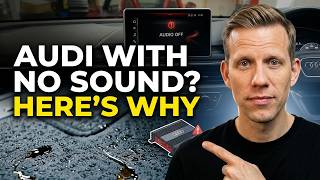
- No Sound from One Area: A complete loss of sound from one speaker points to either a dead speaker or a wiring/amplifier issue. 🎬 Watch: Troubleshooting guide for when your speakers have no sound You can use the balance and fader controls in your MMI to isolate the problematic speaker.
- Lack of Bass: If your music sounds "tinny" or flat, the subwoofer may have failed completely, leaving the 🎬 Watch: Common signs that your subwoofer is about to fail smaller speakers to handle all the frequencies.
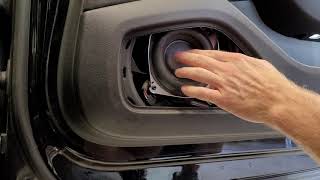
Pro Tip: Sometimes, a rattling sound isn't a blown speaker at all. It can be a loose door panel, a vibrating piece of trim, or a cracked plastic dust cap on the speaker itself. Before replacing the speaker, gently press on the door panel or speaker grille while the noise is happening to see if the rattle stops.
Vehicle-Specific Information and Part Number Variants

While many of these vehicles share platforms, the exact speaker and part number can vary by body style, model year, and audio system. The key is to match the part number from your original speaker.
A Special Note on Part Number 4H0-907-601-E
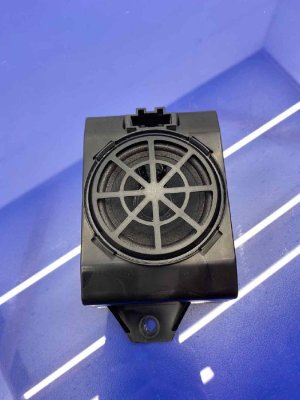
Compatibility Warning: Part number 4H0-907-601-E (and its variants) is NOT a music subwoofer. This part is a "Sound Actuator" or "Body Impact Sound Actuator." Its purpose is to generate synthesized engine noise to enhance the driving experience, particularly in performance models or vehicles with smaller, quieter engines. It will not function as a replacement for a speaker in your audio system.
Common Speaker Part Numbers
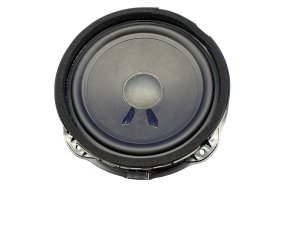
- Part No. 83A-035-411: This is a common rear door woofer found in the 2019+ Audi Q3 and the 2020+ A3, S3, and RS3. It is specifically for vehicles without the premium audio system.
- Part No. 83A-035-411-A: This part looks identical to the one above but is designed for vehicles with the premium audio system (B&O or Sonos). The internal specifications are different to match the premium amplifier.
- Part No. 8Y0-035-382-A: This is a rear compartment subwoofer for the newest generation (2022+) A3, S3, and RS3 models equipped with the premium audio system.
This pattern of a base part number for the standard system and a similar number with a suffix (like '-A') for the premium system is common across the model range. Always verify the full part number on the part you are replacing.
Buying a Used Speaker: What to Check

A used OEM speaker is often an excellent, cost-effective choice, as it preserves the original sound tuning for your vehicle's interior. Here’s what to look for:
- Verify Compatibility: This is the most critical step. Double-check that the part number exactly matches the one you need for your vehicle's specific sound system (Standard, B&O, or Sonos).
- Inspect the Cone: The speaker cone (the paper or composite cone that moves to create sound) should be free of any rips, tears, or holes.
- Check the Surround: The flexible ring (usually foam or rubber) that connects the cone to the speaker basket should be pliable and fully attached. Look for any signs of cracking, crumbling, or separation, which is known as "surround rot."
- Examine the Connector: The electrical connector pins should be clean and free of corrosion.
- Gentle Push Test: Gently and evenly press on the center of the cone. It should move in and out smoothly without any scratching or scraping sounds. A scraping noise indicates a damaged voice coil, and the speaker is bad.
| Item | Estimated Cost |
|---|---|
| New OEM Speaker/Subwoofer | $150 - $350 |
| New Aftermarket Speaker (may require modification) | $80 - $250 |
| Used OEM Speaker/Subwoofer | $30 - $120 |
| Shop Labor for Replacement | $100 - $250 |
Installation Overview
Replacing a factory speaker or subwoofer is generally a straightforward task for a DIYer with basic tools. The difficulty is typically a 2 out of 5.
- Access the Speaker: This is the most time-consuming part. For door speakers, you will need to carefully remove the interior door panel. For rear subwoofers, you will need to remove trunk liners or the rear parcel shelf trim. Use plastic trim removal tools to avoid scratching panels.
- Remove the Old Speaker: The speaker is usually held in by a few screws or bolts (often Torx bits are required). Once unbolted, carefully disconnect the single electrical connector.
- Install the New Speaker: Connect the electrical plug to the replacement speaker, bolt it into place, and reassemble the trim panels in the reverse order of removal.
Frequently Asked Questions (FAQ)
How can I be 100% sure which sound system I have?
The easiest way is to look for logos. If you see "Bang & Olufsen" or "Sonos" on any speaker grille, you have a premium system. If the grilles are plain black plastic, you have the standard system. You can also enter your VIN into an online decoder or check the sound settings menu in your car's MMI for branded audio options.
Can I 'upgrade' my standard subwoofer with a B&O or Sonos one?
No, this is not a direct swap. The premium speakers have different impedance and power handling specifications designed to work with the more powerful premium amplifier. Plugging a premium speaker into a standard system will likely result in very low volume or no sound at all.
My speaker is rattling. Does that mean it's definitely blown?
Not always. The rattle could be a loose door panel, a window switch, or another piece of trim vibrating against the speaker frame. In some older Bose systems, a plastic dust cap on the speaker itself was known to crack and cause a rattling sound that mimicked a blown speaker. It's worth investigating 🎬 See how to perform a free repair on a rattling speaker for loose items before buying a new speaker.
What is a "Sound Actuator" and why can't I use it for music?
A sound actuator (like part 4H0-907-601-E) is a device that vibrates against the car's body or firewall to create an artificial engine sound inside the cabin. It receives a specific signal from the engine computer, not an audio signal from the radio, so it cannot be used to play music.
Helpful Videos
Technical Specifications
OEM Part Numbers: 4H0-907-601-E 4H0907601E 83A035411 83A035411A 83A035453 83A035454 83A035709 8Y0035382 8Y0035382A 8Y5035405 8Y5035406 8V0035412B
Specifications like impedance (ohms) and power handling (watts) vary depending on the audio system. Standard and premium system speakers are not interchangeable.
We Have This Part in Stock

The information in this article is provided for general reference and educational purposes only. Vehicle specifications, procedures, and part compatibility can vary by production date, trim level, and region. Always consult your vehicle's factory service manual and verify part numbers before purchasing or performing repairs. Safety-critical components such as airbags, seat belts, and braking systems should be installed by a qualified professional.
- Audi A3:
- Audi S3:
- Audi RS3:
- Audi Q3:
- Audi A3 Quattro:
- Audi A4:
- Audi A5:
- Audi A8:
- Audi Q5:
- Audi Q7:
- 🎬 Helpful Videos
- 🛍️ Shop This Part
- The Most Important Step: Identify Your Sound System
- Symptoms of a Failing Speaker or Subwoofer
- Vehicle-Specific Information and Part Number Variants
- A Special Note on Part Number 4H0-907-601-E
- Common Speaker Part Numbers
- Buying a Used Speaker: What to Check
- Installation Overview
- Frequently Asked Questions (FAQ)
- 🎟️ Get 5% Off