

2012-2018 Audi A6, A7, S6, S7 & RS7 Steering Wheel: A Guide to Swaps, Airbags, and Common Faults
From worn leather and sticky buttons to critical airbag compatibility, here’s what to know when diagnosing, replacing, or upgrading the steering wheel on your C7 platform Audi.
- Airbag compatibility is the #1 priority: Round steering wheels and flat-bottom steering wheels use different, non-interchangeable airbags.
- When upgrading to a flat-bottom wheel, you must buy both the wheel and a compatible airbag as a set.
- A "Steering defective" warning with a no-start condition is a fault with the steering rack or column lock, NOT the steering wheel itself.
- Replacement is a manageable DIY job, but requires disconnecting the battery and waiting 30 minutes before handling the airbag to prevent accidental deployment.
Steering Wheel Variants for the C7 Platform

Audi offered several steering wheel styles for the A6, A7, and their high-performance S and RS variants between 2012 and 2018. Understanding which wheel your car has is the first step in any repair or upgrade. The primary styles include:
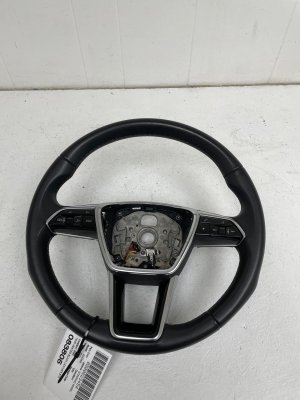
- 4-Spoke Standard Wheel: Commonly found on base and Premium Plus A6 and A7 models, this wheel prioritizes comfort. It can be optioned with heating.
- 3-Spoke "Sport" Round Wheel: A common upgrade included in sport packages, this wheel has a sportier design, thicker grip, and typically includes paddle shifters. It is available with or without a heating function.
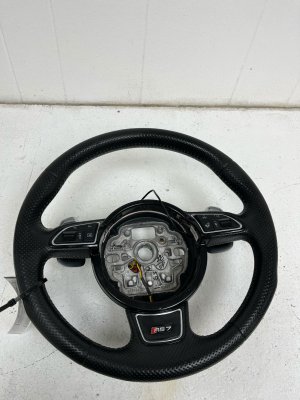
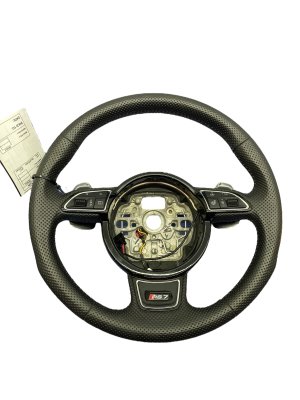
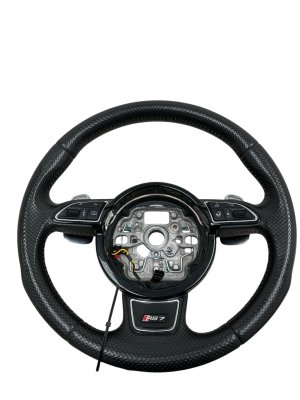
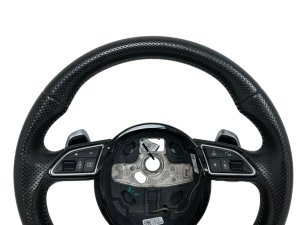
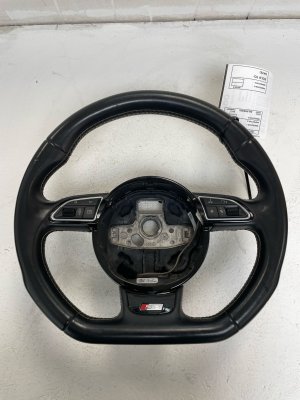
- 3-Spoke "Super Sport" Flat-Bottom Wheel: The most desirable style, this wheel was standard on S6, S7, and RS7 models and optional on A6/A7 S-Line vehicles. It features a distinctive flat bottom, perforated leather or Alcantara, and prominent S or RS badging. Generally, flat-bottom wheels from this era did not come with a heating function, though some later models or special editions may be exceptions.
Warning: The shape of the steering wheel dictates the shape of the airbag. Airbags from round steering wheels are not compatible with flat-bottom steering wheels, and vice-versa. This is the most critical factor when purchasing a used steering wheel.
Symptoms of a Failing Steering Wheel

Failures of the steering wheel itself are typically related to wear and tear or electronic glitches in the integrated controls.
Common Failure Symptoms:
- Worn or Peeling Leather/Alcantara: The most common issue is cosmetic wear from high mileage and hand oils, leading to a shiny, smooth surface on the leather or matting of the Alcantara.
- Malfunctioning Buttons: Volume, track selection, or navigation buttons may become intermittent or stop working entirely. This is often caused by a failure in the button control module or, more commonly, the clock spring (also called a ribbon cable) behind the steering wheel.
- Heated Steering Wheel Inoperative: If your car is equipped with a heated wheel, it may fail to warm up or only heat in certain spots. This points to a burnt-out heating element within the wheel or a problem with the control module. Some owners report weak heating performance even when new.
- Sticky or Damaged Buttons: Spills or improper cleaning can cause buttons to become sticky. Physical damage to the plastic trim or buttons can also occur.
Issues Often Mistaken for a Bad Steering Wheel
Several serious steering-related issues on this platform are not caused by the steering wheel itself. It's important to distinguish these to avoid a misdiagnosis.
- "Steering defective! Do not drive vehicle!" Warning: This message, often appearing with a yellow or red steering icon and sometimes preventing the car from starting, is typically caused by a failure of the electronic steering column lock or the main power steering rack, not the wheel.
- Complete Loss of Power Assist: If the steering becomes extremely heavy and difficult to turn, the fault lies with the electronic power steering rack located low in the front of the car, not the steering wheel.
- Clunking Noises or Vibration When Turning: Noises or vibrations felt through the wheel are almost always caused by suspension components like worn control arm bushings, not the steering wheel itself.
Buying a Used Steering Wheel: A Step-by-Step Guide

Purchasing a used OEM steering wheel is a great way to restore your interior or upgrade to a sportier style. Follow these steps to ensure you get the right part.
Step 1: Verify Compatibility
The most important rule is that the airbag must match the steering wheel.
- A round airbag is required for a 3-spoke or 4-spoke round wheel.
- A shaped airbag is required for a 3-spoke flat-bottom wheel.
Furthermore, there may be an important split between model years. Some sources indicate that airbags differ between pre-facelift (2012-2015) and facelift (2016-2018) models, especially when upgrading. To be safe, always try to purchase a steering wheel and airbag that came from the same vehicle or are confirmed to be a matched set for your specific model year.
Step 2: Physical Inspection
When buying a used wheel, carefully inspect the following:
- Leather/Alcantara Condition: Look for deep scratches, tears, or excessive shininess on leather. For Alcantara, check for heavy matting or fraying.
- Button and Trim Condition: Check for peeling soft-touch coating on buttons and deep scratches on the plastic or aluminum trim.
- Connectors: Ensure the wiring harnesses and plastic connectors on the back of the wheel are intact with no broken clips or frayed wires.
- Paddle Shifters: If equipped, check that the paddles have a solid, tactile click and are not loose or damaged.
Step 3: Why Used OEM is the Best Choice
While many aftermarket carbon fiber and custom-wrapped steering wheels are available, there are strong reasons to stick with a genuine used OEM part. The steering wheel's internal frame is a critical safety structure designed to deform in a specific way during a collision. Aftermarket wheels may not have undergone the same rigorous safety testing. A quality used OEM wheel provides factory-grade safety and fitment at a significant savings over a new part.
Known Issues, TSBs, and Recalls
While there are no major recalls specifically for the steering wheel on these models, a critical safety recall involving the airbag system is relevant.
- NHTSA Campaign 18V378000 (Audi Recall 74D5): This recall affects all 2012-2018 A6, A7, S6, S7, and RS7 models. The issue is a faulty Passenger Occupant Detection System (PODS) mat in the front passenger seat. This can cause the system to fail to detect a passenger, preventing the passenger airbag from deploying in a crash. Before working on any part of the airbag system, it is wise to have an Audi dealer verify that all safety recalls have been completed on your vehicle.
Replacement Overview
Replacing the steering wheel is a feasible DIY task for those comfortable with basic mechanical and electrical work, but it requires extreme caution due to the airbag.
- Difficulty: 3 out of 5
- Estimated Time: 1 hour
- Required Tools: Flathead screwdriver, Torx T55 or 12-point triple square socket, socket wrench, trim removal tools.
Warning: The airbag is a pyrotechnic device. To prevent accidental deployment and serious injury, you MUST disconnect the negative terminal of the car's battery and wait at least 30 minutes before beginning work. This is not an optional step.
High-Level Replacement Steps:
- Disconnect the battery and wait.
- Turn the steering wheel 90 degrees to one side to access a small hole on the back. Insert a flathead screwdriver to release an internal spring clip holding the airbag.
- Turn the wheel 180 degrees the other way and repeat for the second clip.
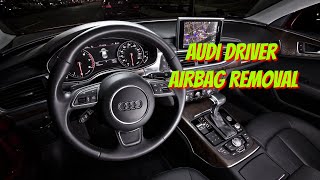
- Carefully pull the airbag unit away from the wheel and disconnect its electrical connectors. 🎬 Watch: A professional demonstration of the Audi driver's airbag removal procedure.
- With the steering wheel pointed straight, use the T55 Torx or triple square socket to remove the center bolt.
- Note the alignment marks and pull the steering wheel straight off the column.
- Transfer the multifunction buttons, trim, and paddle shifters to the new wheel if necessary.
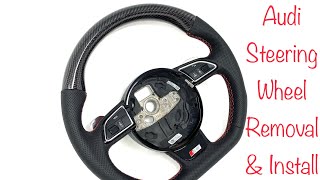
- Installation is the reverse of removal. Ensure the center bolt is torqued to specification. 🎬 See this walkthrough for removing and installing your C7 steering wheel.
| Part Type | Estimated Cost |
|---|---|
| New OEM (Wheel Only) | $1,200 - $1,800+ |
| New OEM (Airbag Only) | $800 - $1,200 |
| Used OEM (Wheel Only) | $150 - $450 |
| Used OEM (Airbag Only) | $250 - $500 |
| Shop Labor for Installation | $100 - $250 |
Frequently Asked Questions (FAQ)
Can I upgrade my standard round steering wheel to a flat-bottom one?
Yes, this is a very popular upgrade. 🎬 Watch: A complete guide to Audi steering wheel swaps and upgrades. However, you MUST purchase both the flat-bottom steering wheel and the corresponding flat-bottom airbag. Your original round airbag will not fit.
If I swap to a wheel without heating, will I get an error code?
Yes, if you replace a heated wheel with a non-heated version, the car will likely show a fault code and an error message in the climate control display. This can usually be coded out using diagnostic tools like VCDS, but the heating function will be lost.
My steering wheel buttons and horn stopped working. Is the wheel bad?
This is a classic symptom of a failed clock spring (also called a ribbon cable or slip ring). This part is located in the steering column behind the wheel and maintains electrical contact for all wheel functions as it turns. It is a separate part from the steering wheel itself.
What's the difference between an S-Line, S6, and RS7 steering wheel?
The differences are mostly cosmetic. All are typically flat-bottomed, but an S-Line wheel will have an 'S-Line' badge, an S6/S7 wheel will have an 'S6' or 'S7' badge and often contrast stitching, and an RS7 wheel will have an 'RS7' badge and is often available with Alcantara and unique stitching colors. The core function and fitment are the same, and the badges can often be swapped.
Helpful Videos


Technical Specifications
OEM Part Numbers: 4G0419091S
Fits C7 platform vehicles. Available in 4-spoke, 3-spoke round, and 3-spoke flat-bottom configurations. Requires a 12-point triple square or T55 Torx socket for the center bolt.
We Have This Part in Stock

The information in this article is provided for general reference and educational purposes only. Vehicle specifications, procedures, and part compatibility can vary by production date, trim level, and region. Always consult your vehicle's factory service manual and verify part numbers before purchasing or performing repairs. Safety-critical components such as airbags, seat belts, and braking systems should be installed by a qualified professional.
- Audi A7:
- Audi A6:
- Audi RS7:
- Audi S7:
- Audi S6:
- 🎬 Helpful Videos
- 🛍️ Shop This Part
- Steering Wheel Variants for the C7 Platform
- Symptoms of a Failing Steering Wheel
- Common Failure Symptoms:
- Issues Often Mistaken for a Bad Steering Wheel
- Buying a Used Steering Wheel: A Step-by-Step Guide
- Step 1: Verify Compatibility
- Step 2: Physical Inspection
- Step 3: Why Used OEM is the Best Choice
- Known Issues, TSBs, and Recalls
- Replacement Overview
- High-Level Replacement Steps:
- Frequently Asked Questions (FAQ)
- 🎟️ Get 5% Off