

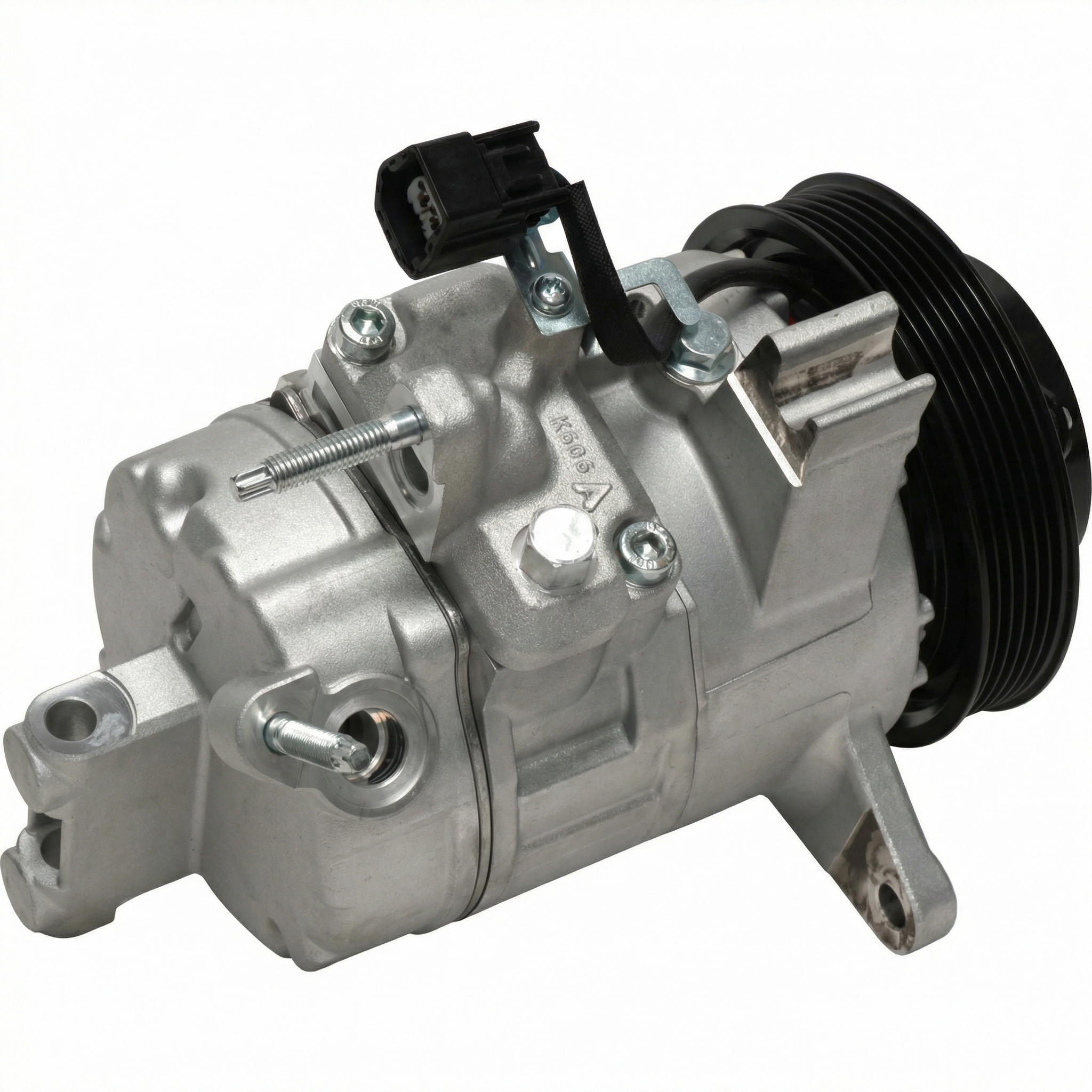
2006-2011 Buick Lucerne & Cadillac DTS 4.6L V8 A/C Compressor Guide
A complete reference for diagnosing, replacing, and buying a used A/C compressor for the V8-powered Buick Lucerne and Cadillac DTS.
- This compressor fits ONLY the 4.6L V8 engine in the 2006-2011 Buick Lucerne and Cadillac DTS.
- When replacing the compressor, you MUST also replace the A/C accumulator and orifice tube to prevent premature failure and to validate any warranty.
- Before buying a used compressor, spin the pulley by hand to check for a bad bearing and turn the center hub to ensure the compressor isn't seized.
- Replacement is not a simple DIY job because it requires specialized equipment to safely evacuate and recharge the R-134a refrigerant.
A/C Compressor for 2006-2011 Buick Lucerne & 2006-2011 Cadillac DTS: The Definitive Guide
Critical Compatibility Warning: This A/C compressor is specifically for the 4.6L Northstar V8 engine used in the Buick Lucerne and Cadillac DTS. It will not fit models equipped with the 3.8L or 3.9L V6 engines. The initial data also notes this part is for vehicles without the 'Hot Climate Provisions' option. Research suggests this option likely involves a different, more efficient A/C condenser rather than a different compressor. However, it is crucial to verify compatibility using your vehicle's specific details before purchase.
Symptoms of a Failing A/C Compressor
A failing A/C compressor can present several distinct symptoms. Identifying them correctly can save you from replacing the wrong parts.
- No Cold Air: The most common symptom is the A/C system blowing air that is warm or not as cold as it used to be. A failing compressor cannot properly pressurize the refrigerant, preventing the cooling cycle from working.
- Loud Noises When A/C is On: Unusual noises that start when you turn on the air conditioning are a major red flag.
- A high-pitched squealing or a deep grinding sound often points to a failing internal bearing.
- A chattering or rattling noise could indicate a problem with the compressor's clutch assembly.
- Visible Leaks: The compressor contains oil to lubricate its internal moving parts. If you see oily, greasy residue on the body of the compressor, it may indicate a failing shaft seal, which is a common leak point.
- Stuck or Non-Engaging Clutch: The clutch is the plate on the very front of the compressor pulley. When you turn the A/C on, you should hear a 'click' as this clutch engages and starts spinning with the pulley. If the clutch does not engage, it could be a bad clutch coil, a bad relay, or an issue with the system's pressure sensors. If the clutch is seized, it will be engaged permanently.
Known Issues, TSBs, and Recalls
While there are no widespread recalls specifically for the A/C compressor on the 2006-2011 Buick Lucerne or Cadillac DTS, several other recalls and common issues are relevant to owners of these V8-powered vehicles.
- NHTSA Recall 06026: Affecting some 2006 models with the V8 engine, this recall was for a power steering hose that could leak fluid onto hot engine components, creating a fire risk. While not directly related to the A/C, it involves work in the same crowded engine bay.
- NHTSA Recall for 2010-2011 Models: A recall was issued for the starter or alternator cable potentially rubbing against a power steering line, which could cause a fluid leak.
- NHTSA Recall 14V355: A major recall affecting both the Lucerne and DTS involved the ignition switch. Heavy keychains could cause the key to move out of the 'run' position, shutting off the engine and disabling power steering, power brakes, and airbags.
- Common Oil Leaks: The 4.6L Northstar V8 engine is known for developing oil leaks, particularly from the engine block case halves. This is a significant repair that requires removing the engine.
Pro Tip: Since the Buick Lucerne and Cadillac DTS of this era are built on the same GM platform and share mechanical systems when equipped with the V8, they suffer from the same common problems. Issues found on one model are almost always applicable to the other.
Buying a Used A/C Compressor: What to Check
A used OEM compressor can be a reliable and cost-effective alternative to expensive new parts, especially when cheap aftermarket units often have lower quality bearings and clutches. Here’s what to inspect before you buy:
- Confirm Part Numbers: Verify the part number matches one of the known OEM numbers for your vehicle, such as 21992588. This part number is known to have superseded older numbers like 1521593 and 1521470. One source indicates it has been further replaced by part number 19435649.
- Check the Pulley Bearing: Hold the compressor body and spin the outer pulley by hand. It should spin smoothly and silently. Any roughness, grinding, or wobbling indicates a bad bearing, and you should reject the part.
- Check the Compressor Internals: Try to turn the center hub of the clutch plate (or the small bolt in the center). It should turn with some resistance but should not be seized or locked up. If it doesn't turn at all, the compressor has failed internally and is useless.
- Inspect the Clutch Face: Look at the metal surfaces of the clutch plate and the pulley. They should be clean and flat. A large amount of reddish-brown dust or visible heat scoring and cracks are signs that the clutch has been slipping, overheating, and is worn out.
- Look for Leaks: Carefully inspect the area around the front shaft seal (behind the pulley) and the seams where the compressor body is bolted together. Any oily residue or caked-on dirt and grime suggests an oil and refrigerant leak. The ports where the A/C lines connect should be clean and capped.
- Examine the Electrical Connector: Ensure the electrical connector on the compressor body is not cracked, broken, or corroded. A damaged connector can prevent the clutch from engaging.
Replacement Overview & Difficulty
Replacing the A/C compressor on the V8 Lucerne and DTS is a moderately difficult job that requires specialized tools.
- Installation Difficulty: 4 out of 5.
- Key Steps: The process requires having the refrigerant professionally evacuated from the system first. Access is gained by removing the passenger-side front wheel and inner fender liner. The serpentine belt is removed, the electrical connector is unplugged, and the A/C lines are disconnected (requiring special tools). The compressor is then unbolted from its mounting bracket.
- DIY Feasibility: While a skilled DIY mechanic can physically swap the compressor, the job is not truly DIY-friendly. The system must be legally and safely evacuated before starting and professionally vacuum-tested and recharged after installation. Failure to do this will result in poor performance and potential damage to the new compressor.
Warning: You must replace the A/C Accumulator/Receiver-Drier and the Orifice Tube whenever you replace the compressor. The old compressor may have sent metal debris through the system, and the accumulator contains a desiccant that absorbs moisture. A new compressor warranty is almost always void if these components are not replaced at the same time.
Cost of A/C Compressor Replacement
Prices can vary based on location and the parts chosen. Here is a general cost comparison:
| Part/Service | Estimated Cost | Notes |
|---|---|---|
| New OEM (GM Genuine) | $450 - $780 | Highest quality and price. |
| New Aftermarket | $200 - $550 | Wide range of quality and price. |
| Used OEM | $75 - $200 | Cost-effective, but requires careful inspection. |
| Remanufactured | $150 - $300 | A rebuilt unit, quality can vary. |
| Shop Labor & Recharge | $250 - $400 | Includes system evacuation, installation, vacuum test, and recharge. Labor costs for the DTS tend to be slightly higher than for the Lucerne. |
| Total Professional Job (New OEM Part) | $850 - $1,550+ | Represents a typical repair shop quote using a new part. |
Frequently Asked Questions (FAQ)
Can I just replace the A/C compressor clutch and not the whole compressor?
Yes, the clutch assembly can be replaced separately, and it can sometimes be done without removing the compressor from the vehicle. However, if the compressor is high-mileage or if the bearing failure was caused by excessive heat from internal compressor problems, it is often more efficient and reliable to replace the entire unit. Often, a complete new aftermarket or used OEM compressor is similar in price to just a new OEM clutch kit.
Do I need to add oil to the new compressor?
Yes, but the amount is critical. New compressors often come pre-filled with some oil, but it may not be the correct amount for your system. The standard procedure is to drain the oil from the old compressor, measure how much came out, and add that same amount of new, specified PAG 46 oil to the new compressor. Consult a service manual for the exact system capacity and procedure.
What is the difference between an orifice tube and an expansion valve?
They perform the same basic function: creating a pressure drop to allow refrigerant to get cold in the evaporator. These GM vehicles use a fixed orifice tube system, which is simpler and located in the liquid A/C line leading to the evaporator. Systems with an expansion valve (TXV) have the valve mounted directly at the evaporator inlet. An orifice tube system is paired with an accumulator, while a TXV system is paired with a receiver-drier.
Is the A/C compressor the same on the V6 and V8 Lucerne?
No, they are completely different parts with different mounting points and part numbers. This guide and the parts listed are only for the 4.6L V8 engine.
Technical Specifications
OEM Part Numbers: 21992588 19435649 1521593 10360860 10360861 1521470
Pulley: 6-groove serpentine. Refrigerant: R-134a. Oil: PAG 46.
We Have This Part in Stock

The information in this article is provided for general reference and educational purposes only. Vehicle specifications, procedures, and part compatibility can vary by production date, trim level, and region. Always consult your vehicle's factory service manual and verify part numbers before purchasing or performing repairs. Safety-critical components such as airbags, seat belts, and braking systems should be installed by a qualified professional.
- Buick Lucerne:
- Cadillac DTS:
- 🛍️ Shop This Part
- A/C Compressor for 2006-2011 Buick Lucerne & 2006-2011 Cadillac DTS: The Definitive Guide
- Symptoms of a Failing A/C Compressor
- Known Issues, TSBs, and Recalls
- Buying a Used A/C Compressor: What to Check
- Replacement Overview & Difficulty
- Cost of A/C Compressor Replacement
- Frequently Asked Questions (FAQ)
- 🎟️ Get 5% Off