

2007-2012 Ford E-Series Van A/C Compressor: Failure Symptoms and Replacement Guide
This guide covers common A/C compressor problems, replacement costs, and what to look for when buying a used unit for your 2007-2012 Ford E-150, E-250, E-350, or E-450 Super Duty van.
- This compressor fits 2007-2012 Ford E-Series vans with gasoline engines built ONLY up to March 7, 2012.
- When replacing the compressor, you MUST also replace the accumulator/drier and orifice tube to prevent premature failure of the new unit.
- A grinding or seized compressor can break the serpentine belt, disabling the vehicle and making it unsafe to drive.
- When buying a used compressor, check for leaks, smooth pulley operation, and absolutely no metal shavings in the ports.
Symptoms of a Failing A/C Compressor
When the A/C compressor in your Ford E-Series van begins to fail, it will usually provide several warning signs. Ignoring these symptoms can lead to more extensive and costly damage to the entire A/C system.
- Warm Air from Vents: The most common symptom of a failing compressor is the A/C system blowing warm or lukewarm air instead of cold air. This happens when the compressor can no longer adequately pressurize the refrigerant.
- Loud Noises: Grinding, squealing, rattling, or clanking sounds from the engine bay when the A/C is turned on often point to a failing compressor. These noises can be caused by worn-out internal bearings or a failing clutch.
- Compressor Clutch Not Engaging: The clutch on the front of the compressor pulley is what activates the unit. You should hear a distinct 'click' when you turn on the A/C, and the outer plate of the clutch should start spinning with the pulley. If it doesn't engage, remains stationary, or cycles on and off too frequently, the clutch or the compressor itself may be faulty.
- Refrigerant Leaks: The seals within the compressor can fail over time, leading to refrigerant leaks. You might notice an oily residue on the body of the compressor, as the refrigerant carries lubricating oil with it.
- Damaged or Squealing Drive Belt: If the compressor's internal components seize, the pulley will stop turning. This can cause the serpentine belt to squeal loudly or even break, which would lead to a loss of power steering and the alternator, causing the engine to stall.
Warning: A seized compressor can break the serpentine belt. If this happens, your vehicle will lose power steering and the ability to charge the battery, making it unsafe to drive.
Known Issues for 2007-2012 Ford E-Series Vans
The A/C compressor used in the 2007-2012 Ford E-150, E-250, E-350 Super Duty, and E-450 Super Duty with gasoline engines is generally reliable but is prone to failure from common causes like leaks, clutch failure, or internal wear after high mileage. There are no major recalls or widespread TSBs specifically targeting this compressor for these model years, but owners should be aware of a critical mid-year parts change.
Important Compatibility Note: Mid-2012 Production Change
This specific A/C compressor fits vehicles built up to March 7, 2012. For vans built from March 8, 2012, and later, Ford uses a different A/C compressor. It is crucial to verify your vehicle's build date before purchasing a replacement part to ensure compatibility.
Buying a Used A/C Compressor: What to Check
A used OEM A/C compressor can be a cost-effective alternative to an expensive new unit, but careful inspection is key to avoiding a bad part that could damage your entire A/C system. Here’s what to look for:
- Check for Leaks: Inspect the compressor body thoroughly for any oily residue, especially around the seals and line connections. This indicates a refrigerant leak.
- Inspect the Clutch and Pulley: Manually spin the pulley. It should rotate smoothly and quietly. If it feels rough, makes a grinding noise, or has excessive wobble, the bearing is bad. Check the clutch plate on the front for signs of heat damage, warping, or cracks.
- Look for Internal Contamination: Look inside the suction and discharge ports. If you see any metal shavings or a black, gritty substance, reject the compressor immediately. This is a sign of internal failure, often called "black death," which means the compressor has disintegrated and sent metal debris throughout the A/C system. Installing a contaminated compressor will destroy the new components.
- Verify Part Numbers: Whenever possible, match the part number on the used compressor to your original one to ensure a perfect fit.
- Low Mileage is Key: A compressor from a lower-mileage vehicle is always a better bet. Compressors typically see increased wear after 60,000 to 70,000 miles.
Pro Tip: When replacing your compressor—even with a good used one—you MUST also replace the A/C accumulator/receiver-drier and the orifice tube or expansion valve. It is also highly recommended to flush the condenser and evaporator to remove any old oil and potential contaminants. Failure to do so can cause your replacement compressor to fail prematurely.
A/C Compressor Replacement Cost Comparison
The cost to replace an A/C compressor can vary significantly based on the type of part used and labor rates. The job typically involves recovering old refrigerant, replacing the compressor and related components, evacuating the system to remove moisture, and recharging with new refrigerant.
| Part Type | Estimated Part Cost | Estimated Labor Cost | Estimated Total Cost | 🎬 Watch: How to save money on your E-Series A/C repair
|---|---|---|---|
| New OEM | $450 - $770 | $214 - $315 | $664 - $1,085+ |
| New Aftermarket | $150 - $300 | $214 - $315 | $364 - $615+ |
| Used OEM | $85 - $160 | $214 - $315 | $299 - $475+ |
| Remanufactured | $150 - $250 | $214 - $315 | $364 - $565+ |
Installation and System Recharge Overview
Replacing the A/C compressor on a Ford E-Series van is a moderately difficult job. Access to the compressor, located low on the engine, can be tight. On some models, it may be necessary to remove other components like the steering stabilizer or even slightly raise the engine to get enough clearance to remove the mounting bolts.
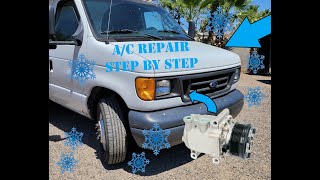
🎬 See this DIY walkthrough for removing the compressorThis is not a simple bolt-off, bolt-on repair. The A/C system is a closed loop that must be properly handled. The process involves:
- Refrigerant Recovery: The R134a refrigerant in the system must be evacuated by a certified technician using a special recovery machine. It is illegal and harmful to the environment to release it into the atmosphere.
- Component Removal: The serpentine belt, electrical connector, refrigerant lines, and mounting bolts are removed to free the old compressor.
- System Flush & Parts Replacement: The accumulator and orifice tube must be replaced. The rest of the system should be flushed to remove contaminants.
- New Compressor Installation: The new compressor is installed, and the correct amount of PAG 46 oil is added.
- Vacuum and Recharge: The system is put under a deep vacuum for at least 30-60 minutes to boil off any moisture. Then, it is recharged with the precise amount of R134a refrigerant specified on the under-hood sticker.
Frequently Asked Questions (FAQ)
Can I just replace the A/C clutch?
While sometimes only the clutch fails, it is often more cost-effective and reliable to replace the entire compressor assembly. If the clutch failed due to an internal compressor issue (like a pending seizure), a new clutch will fail again quickly.
Do I need to add oil to my replacement compressor?
Yes. New and used compressors may or may not come with oil. You must drain any existing oil and add the correct type (PAG 46) and amount as specified by Ford for your vehicle's A/C system capacity. Too little or too much oil will damage the new compressor.
Why did my A/C stop working after a recharge?
If your A/C works for a short time after a recharge and then stops, you almost certainly have a refrigerant leak. The compressor is a common source of these leaks, but hoses and connections should also be checked. Simply adding more refrigerant without fixing the leak is a temporary solution.
Is it safe to drive with a bad A/C compressor?
You can drive with a bad compressor as long as the pulley bearing is intact and spinning freely. However, if the compressor has seized or the bearing is making a loud grinding noise, it can cause the serpentine belt to break, leading to a complete vehicle breakdown. It is best to address the issue promptly.
OEM Part Numbers
This guide covers the A/C compressor and related components for gasoline-engine Ford E-Series vans built up to March 7, 2012. Part numbers can supersede over time. Always verify fitment with the vehicle's VIN.
- 7C2Z19703A
- 8C2Z19703AA
- CC2Z19703D
- 7C2419497AB
- 8C2419497BA
- 8C2419497BB
- 9C2419497AA
- 9C2419497BA
Helpful Videos
Technical Specifications
OEM Part Numbers: 7C2Z19703A 8C2Z19703AA CC2Z19703D 7C2419497AB 8C2419497BA 8C2419497BB 8C2Z19D784B 8C2Z19D786B 8C2Z19D798A 8L2Z19D786B 9C2419497AA 9C2419497BA
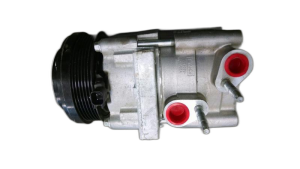
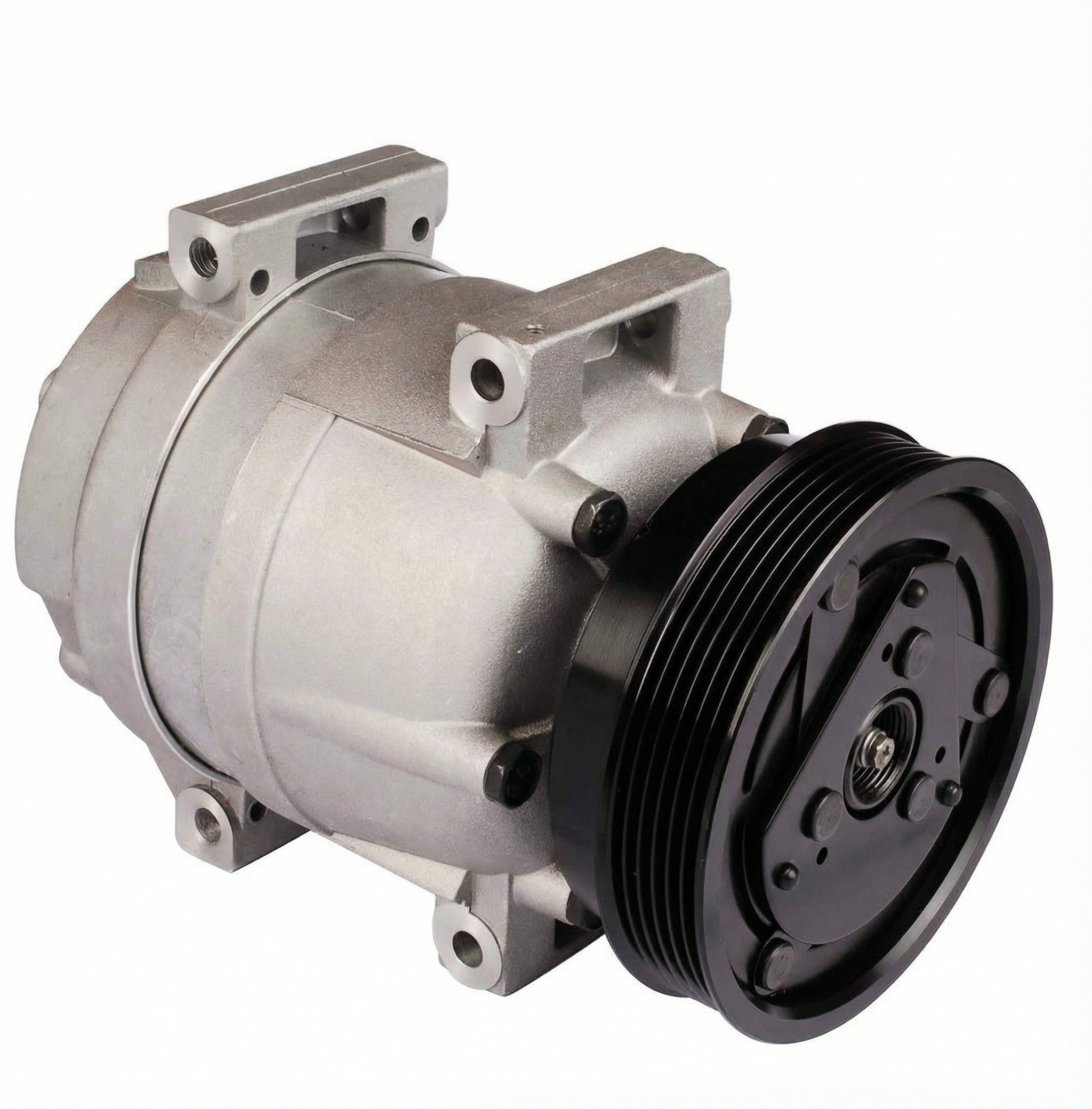
Compressor Type: FS18, Pulley Grooves: 6, Refrigerant: R134a, Oil Type: PAG 46
We Have This Part in Stock

The information in this article is provided for general reference and educational purposes only. Vehicle specifications, procedures, and part compatibility can vary by production date, trim level, and region. Always consult your vehicle's factory service manual and verify part numbers before purchasing or performing repairs. Safety-critical components such as airbags, seat belts, and braking systems should be installed by a qualified professional.
- Ford E-350 Super Duty:
- Ford E-150:
- Ford E-250:
- Ford E-450 Super Duty:
- 🎬 Helpful Videos
- 🛍️ Shop This Part
- Symptoms of a Failing A/C Compressor
- Known Issues for 2007-2012 Ford E-Series Vans
- Important Compatibility Note: Mid-2012 Production Change
- Buying a Used A/C Compressor: What to Check
- A/C Compressor Replacement Cost Comparison
- Installation and System Recharge Overview
- Frequently Asked Questions (FAQ)
- OEM Part Numbers
- 🎟️ Get 5% Off