

Ford Truck, SUV & Mustang A/C Compressor Guide (1996-2014): Noises, Leaks, and Replacement
This guide covers the common failure symptoms, replacement costs, and critical used-part inspection tips for the A/C compressor in dozens of Ford models.
- Compatibility is critical and depends on your vehicle's specific year and engine. Never assume compressors are interchangeable.
- Before buying a used compressor, inspect it for signs of "Black Death" (metal shavings in the ports), which can destroy an entire A/C system.
- When replacing the compressor, you MUST also replace the accumulator/receiver-drier and the orifice tube/expansion valve.
- A seized compressor can break the serpentine belt, disabling the power steering and alternator and leaving you stranded.
A/C Compressor Compatibility for Ford Trucks, SUVs, and Mustangs
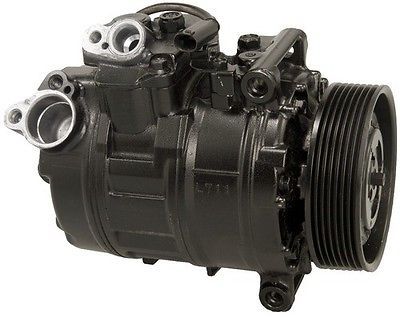
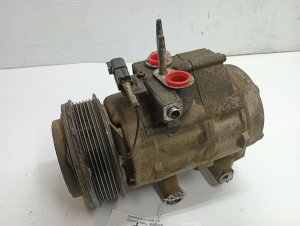
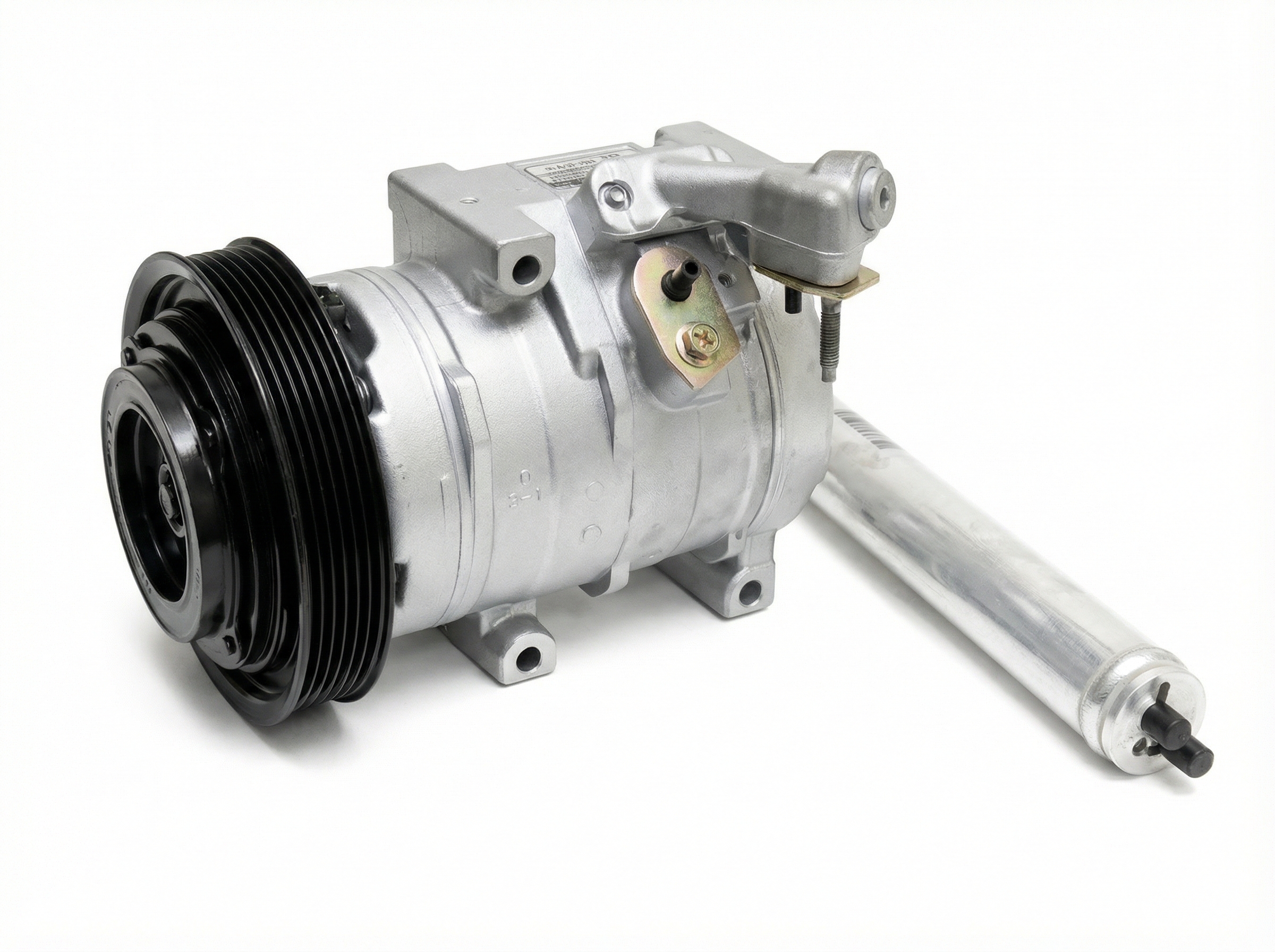
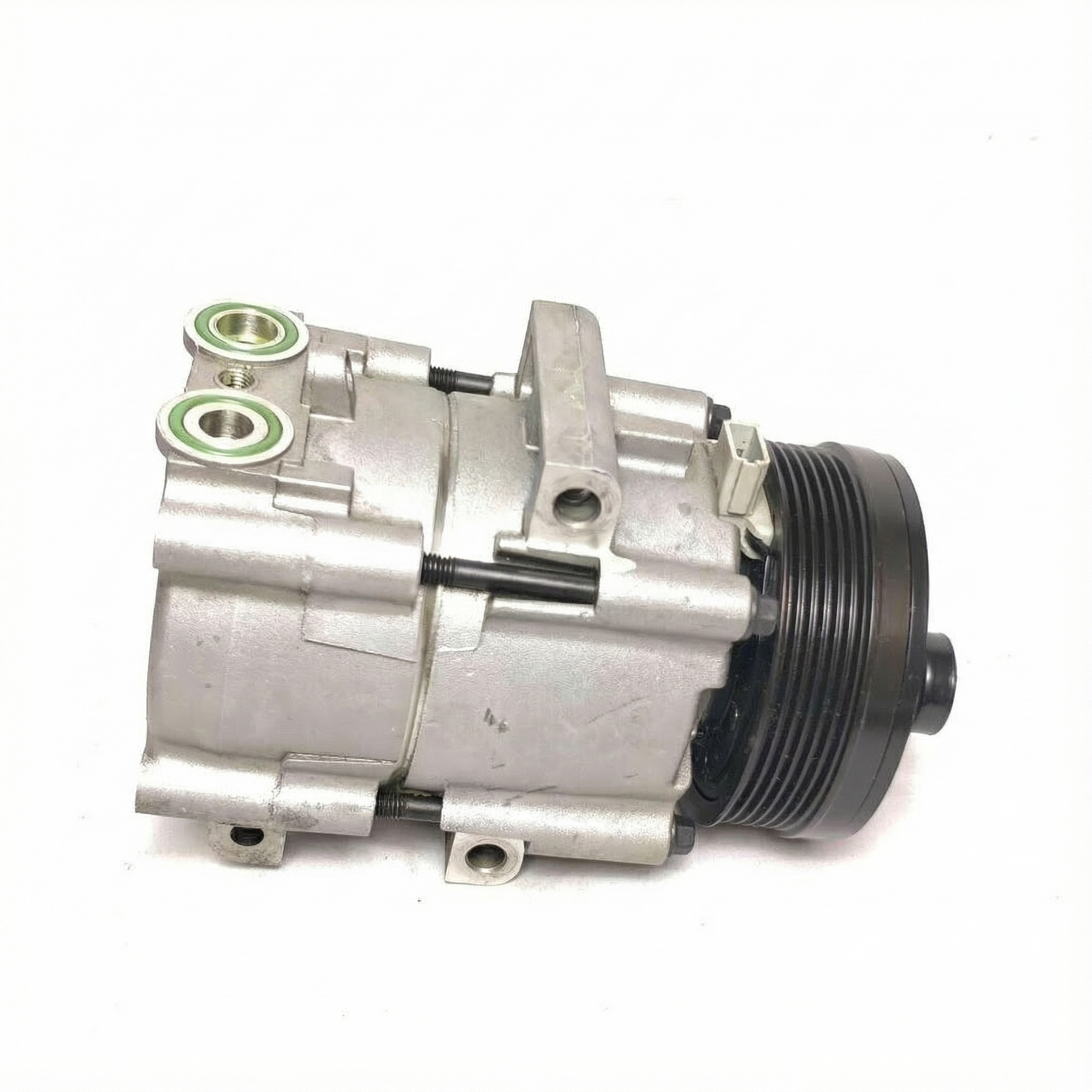
Critical Compatibility Warning: This is not a one-size-fits-all part. The correct A/C compressor for your vehicle depends entirely on the specific engine, model, and year. The vehicles covered in this guide use several different compressor designs. Always verify the part number or match your old compressor visually before purchasing.
The wide range of vehicles covered here, from the 1996 Ford Aerostar to the 2014 Ford F-150, means multiple compressor types are involved. Here’s a general breakdown:
- Ford F-150 (1999-2013), Expedition (1999-2014), Excursion (2000-2005), and Super Duty Trucks (F-250, F-350, F-450, 1999-2013): Compatibility is primarily determined by the engine (e.g., 4.6L V8, 5.4L V8, 6.8L V10). Different engine families use different mounting brackets and pulley configurations.
- Ford Mustang (2005-2014): The compressor is specific to the engine. The 4.0L V6 (2005-2010), 4.6L V8 (2005-2010), 3.7L V6 (2011-2014), and 5.0L V8 🎬 See this step-by-step compressor replacement for the Mustang 5.0 (2011-2014) each use a different compressor. Do not assume they are interchangeable.
- Ford Explorer (1996-2001) & Aerostar (1996): These often used the common Ford FS10 style compressor, but variations exist based on the 4.0L V6 or 5.0L V8 engines. For the 2001 Explorer, this part does not fit the Sport Trac model.
Common Symptoms of a Failing A/C Compressor
A failing A/C compressor will give you clear warning signs. Ignoring them can lead to more expensive repairs if the compressor fails catastrophically.
- No Cold Air: The most obvious symptom. If the refrigerant level is correct but the air from the vents is warm, the compressor may not be pressurizing the system.
- Loud Noises When A/C is On: A grinding or growling sound points to a failing internal bearing. A chattering or rattling noise can indicate a loose clutch or failing internal components.
- High-Pitched Squealing: This can be a sign that the compressor's internal bearing is seizing, causing the serpentine belt to slip over the pulley. If the bearing seizes completely, it can break the belt, leading to a loss of power steering and alternator function.
- Visible Leaks: The compressor contains refrigerant and lubricating oil. If you see a greasy, grimy buildup on the compressor body, it's likely leaking from its seals.
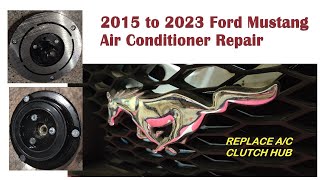
- A/C Clutch Not Engaging: When you turn on the A/C, you should hear a distinct 'click' from the engine bay as the clutch engages. If you don't hear this and the pulley's center plate isn't spinning, the clutch may have failed. This can be an electrical issue or a mechanical failure of the clutch itself. 🎬 Watch: A professional diagnosis and repair of a Mustang A/C
Warning: The A/C "Black Death"
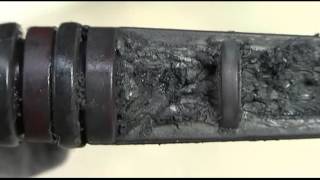
A catastrophic failure mode in these systems is known as "Black Death." This happens when the compressor's internal parts break apart, sending a slurry of metal shavings and dark, contaminated oil throughout the entire A/C system. If you pull the system's orifice tube and it's clogged with black, metallic goo 🎬 Watch: How to clean the system after Black Death failure, the system has suffered this failure. In this case, simply replacing the compressor is not enough. You MUST replace the accumulator/drier, the orifice tube, and thoroughly flush or replace the condenser and all lines to prevent the debris from destroying the new compressor.
Buying a Used A/C Compressor: What to Look For
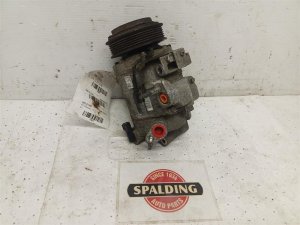
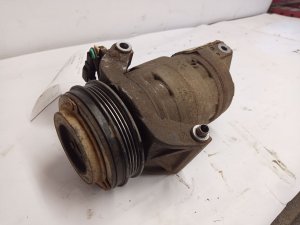
A used OEM (Ford/Motorcraft) compressor can be a reliable and cost-effective alternative to expensive new parts, especially when compared to cheap aftermarket units. However, you must inspect it carefully.
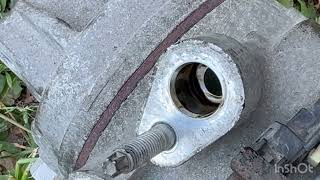
- Check for "Black Death": This is the #1 priority. Look inside the inlet and outlet ports with a flashlight. If you see any metal shavings, glitter, or black sludge, DO NOT buy the compressor. It is contaminated and will destroy your A/C system.
- Turn the Clutch by Hand: The center plate of the clutch should turn separately from the pulley. It should rotate smoothly with some resistance but without any grinding or roughness. A grinding noise indicates bad internal bearings.
- Inspect the Pulley and Bearing: Spin the outer pulley. It should spin freely and quietly. Any wobble, roughness, or a dry, sandy sound means the pulley bearing is bad.
- Examine the Body for Leaks: Look for oily residue, especially around the seals where the two halves of the compressor case meet and around the hose connections. This indicates a refrigerant leak.
- Check the Electrical Connector: Ensure the plastic connector for the clutch is not cracked, broken, or corroded.
- Verify Compatibility: Double-check that the part number and pulley design (number of grooves) match your original compressor. Ask the seller for the year, model, and engine size of the vehicle it came from.
Replacement Overview and Difficulty
Replacing an A/C compressor is a moderately difficult job that requires special tools. While mechanically straightforward, handling refrigerant has legal and safety implications.
- Difficulty Rating: 4 out of 5
- DIY Feasible: For experienced mechanics only.
- Key Steps:
- Evacuate Refrigerant: The system must be professionally and legally evacuated using an A/C recovery machine. Releasing refrigerant into the atmosphere is illegal.
- Remove Serpentine Belt: Release the tensioner and slip the belt off the compressor pulley.
- Disconnect Lines & Connector: Unplug the clutch connector and unbolt the refrigerant lines. Be sure to use new O-rings on the lines during reinstallation.
- Unbolt Compressor: Remove the mounting bolts holding the compressor to the engine bracket.
- Replace Other Components: It is mandatory to replace the A/C accumulator (or receiver/drier) and the orifice tube whenever the compressor is replaced to ensure the system is free of moisture and debris.
- Pull a Vacuum & Recharge: After installation, the system must be put under a deep vacuum for at least 30-60 minutes to boil off any moisture. Then, it must be recharged with the correct type and amount of refrigerant and PAG oil.
Pro Tip: Before condemning the compressor for a no-cool situation, check the A/C clutch air gap. Over time, the gap between the clutch plate and the pulley can become too large for the electromagnet to overcome. This is a common issue on Fords and can sometimes be fixed by removing a shim from the clutch, saving you the cost of a new compressor.
Cost of A/C Compressor Replacement
The cost can vary significantly based on the vehicle and the parts chosen. A catastrophic "Black Death" failure will be much more expensive due to the need for additional parts and labor.
| Part/Service | Estimated Cost Range | Notes |
|---|---|---|
| New OEM (Motorcraft) Compressor | $350 - $1,200+ | Varies widely by application. Can be very expensive for some models. |
| New Aftermarket Compressor | $150 - $500 | Quality can be inconsistent. May not last as long as an OEM part. |
| Used OEM Compressor | $75 - $250 | A cost-effective option if carefully inspected for contamination. |
| Remanufactured Compressor | $200 - $450 | A rebuilt unit. Quality depends on the rebuilder. |
| Shop Labor & Recharge | $250 - $550 | Includes system evacuation, installation, vacuum test, and recharge. |
| Total Estimated Cost | $800 - $1,800+ | Total cost for a professional installation with a new compressor. |
Frequently Asked Questions
Do I have to replace other parts when I replace the compressor?
Yes, absolutely. At a minimum, you must replace the accumulator (on trucks/SUVs) or receiver-drier (on Mustangs) and the orifice tube or expansion valve. This is required by warranty on all new and remanufactured compressors. Failure to do so will introduce moisture and potential debris into your new compressor, causing it to fail quickly.
Can I just replace the A/C clutch?
Sometimes. If the compressor itself is confirmed to be in good condition (no leaks, no internal noise) and only the clutch coil or bearing has failed, you can replace just the clutch assembly. However, the cost of a clutch kit plus the labor to install it can sometimes be close to the cost of a complete used or aftermarket compressor assembly.
Does a used compressor come with oil?
It may have some residual oil, but you should always assume it's incorrect. You must drain any oil from the used compressor and add the correct amount and type (e.g., PAG 46) of new compressor oil specified for your vehicle's A/C system before installation.
What is the difference between an accumulator and a receiver-drier?
They perform the same function: removing moisture from the refrigerant. An accumulator is located on the low-pressure side of the system (between the evaporator and compressor) and is used with an orifice tube. A receiver-drier is on the high-pressure side (between the condenser and expansion valve) and is used with an expansion valve system. Your vehicle will have one or the other.
Helpful Videos
Technical Specifications
OEM Part Numbers: 4L3411000AA 4R3Z19703A 5L3Z11002A 6C3T11000BA 6F1Z19D786AA 6L3411000CA 6R3T11000CA 7L1411000AA 7R3Z19703B 8C2Z19D784B 8C2Z19D786B 8L2Z19D786B 8L2Z19D798D 8R3Z19703A 8R3Z19703B F77Z19703AB 4C4Z19703A
Compressor type varies by application (e.g., Ford FS10). System uses R134a refrigerant and typically PAG 46 compressor oil. Verify specific capacity for your vehicle.
We Have This Part in Stock

The information in this article is provided for general reference and educational purposes only. Vehicle specifications, procedures, and part compatibility can vary by production date, trim level, and region. Always consult your vehicle's factory service manual and verify part numbers before purchasing or performing repairs. Safety-critical components such as airbags, seat belts, and braking systems should be installed by a qualified professional.
- Ford Mustang:
- Ford Aerostar:
- Ford Excursion:
- Ford Expedition:
- Ford Explorer:
- Ford F-150:
- Ford F-250:
- Ford F-250 Super Duty:
- Ford F-350 Super Duty:
- Ford F-450 Super Duty:
- 🎬 Helpful Videos
- 🛍️ Shop This Part
- A/C Compressor Compatibility for Ford Trucks, SUVs, and Mustangs
- Common Symptoms of a Failing A/C Compressor
- Buying a Used A/C Compressor: What to Look For
- Replacement Overview and Difficulty
- Cost of A/C Compressor Replacement
- Frequently Asked Questions
- 🎟️ Get 5% Off