

Sonata & Optima A/C Compressor Guide (2011-2023): Navigating Part Numbers and Engine Differences
This guide clarifies the confusing A/C compressor variations for the Hyundai Sonata and Kia Optima, ensuring you get the right part for your specific engine and year.
- Compatibility is critical; compressors are specific to engine, year, and generation. Always verify with a VIN.
- Hybrid models use a completely different high-voltage compressor and are not compatible.
- A faulty A/C control valve (solenoid) is a common failure that can be misdiagnosed as a bad compressor.
- When replacing a failed compressor, you must also replace the receiver/drier and flush the system to prevent immediate failure of the new part.
A/C Compressor Compatibility for Hyundai Sonata & Kia Optima
One of the biggest challenges when replacing the A/C compressor on a 2011-2023 Hyundai Sonata or 2011-2018 Kia Optima is ensuring you have the correct part. These vehicles were offered with numerous engines across several generations, and the A/C compressor is specific to the engine, year, and sometimes even the build date. Using the wrong compressor can lead to improper fitment, system damage, or it may simply not work. Always verify compatibility using your vehicle's VIN before purchasing.
Warning: Hybrid models use a completely different, high-voltage electric A/C compressor. The parts discussed in this guide are for gasoline engine models only and are not interchangeable.
Compatibility Breakdown by Vehicle Generation
Here is a general guide to the different compressors used. Part numbers often change, so use this for direction and confirm with the seller.
- 2011-2014 Hyundai Sonata (YF) & 2011-2015 Kia Optima (TF): These models typically use a compressor for the 2.4L GDI or 2.0L Turbo engines. A common OEM part number for this era is 97701-3R000. Some early 2012 models had specific build-date cutoffs, so checking your vehicle's production date is crucial.
- 2015-2019 Hyundai Sonata (LF) & 2016-2018 Kia Optima (JF): This generation introduced new engines and different compressors. For example, Sonatas from 2018-2019 with the 2.0L or 2.4L engine may use part number 97701-C2500.
- 2020-2023 Hyundai Sonata (DN8): These newer models use different compressors for the 1.6L Turbo and 2.5L non-turbo engines, such as part number 97701-L0000. This part explicitly does not fit the 2.5L Turbo or Hybrid models.
Symptoms of a Failing A/C Compressor
A failing A/C compressor can present a range of symptoms, from subtle to severe. Catching them early can sometimes prevent more costly damage to the rest of the system.
- Warm Air From Vents: This is the most obvious sign. If the compressor isn't pressurizing the refrigerant, the system cannot cool the air.
- Strange Noises: Grinding or squealing sounds when the A/C is on often point to failing bearings or internal components within the compressor. A loud rattling or rumbling might indicate the compressor's mounting bolts are loose.
- A/C Only Works While Driving: If the A/C blows cold at highway speeds but gets warm at a stop, it can be a sign of a weak compressor. However, this symptom can also be caused by a failing radiator/condenser fan, so a full diagnosis is necessary.
- Visible Leaks: The compressor contains oil. If you see oily residue or a puddle of fluid on or around the compressor body, it indicates a leak.
- Stuck or Non-Engaging Clutch: On compressors with a clutch, you should hear a 'click' when the A/C is turned on, and you'll see the outer plate of the pulley start spinning with the belt. If it doesn't engage, the compressor won't run. Some Sonata and Optima models use a clutchless, variable displacement compressor, where a faulty internal control solenoid is a common failure point that mimics a bad compressor.
Known Issues, TSBs, and Recalls
While there are no widespread recalls specifically for the A/C compressor itself on most of these models, some related issues and service bulletins exist.
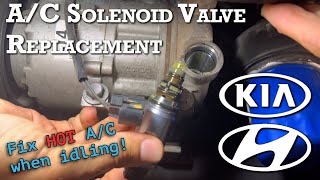
- Faulty Control Valve: On models with variable displacement compressors, the electronic control valve (solenoid) is a very common failure point. This valve regulates refrigerant flow. When it fails, the A/C may blow warm or only work intermittently. It is often misdiagnosed as a complete compressor failure. The valve can sometimes be replaced separately, which is much cheaper than a whole new compressor. 🎬 Watch: How to replace the AC solenoid valve yourself.
- Condenser Fan Issues: The A/C system relies on the condenser fan (usually located with the radiator fan) to cool the refrigerant. If this fan or its control resistor fails, the A/C will not cool effectively, especially at low speeds or idle. This is a common point of failure that should be checked before replacing the compressor.
- NHTSA Service Action (SA632): Hyundai issued a service action for certain vehicles where the A/C compressor might fail. The procedure involves checking system pressures and temperatures with a diagnostic tool and replacing the compressor assembly if it fails the test.
Pro Tip: Before condemning the compressor, always check A/C system fuses and relays, verify the refrigerant charge is correct, and ensure the condenser fan is operating properly. These are common, less expensive failure points.
Buying a Used A/C Compressor: A Smart Buyer's Checklist
A used OEM A/C compressor can be a cost-effective alternative to expensive new parts, especially when cheap aftermarket units have a reputation for premature failure. Here’s what to check before you buy.
- Verify Exact Compatibility: Double-check the part number and confirm the donor vehicle's year, model, and engine. The wrong compressor will not work.
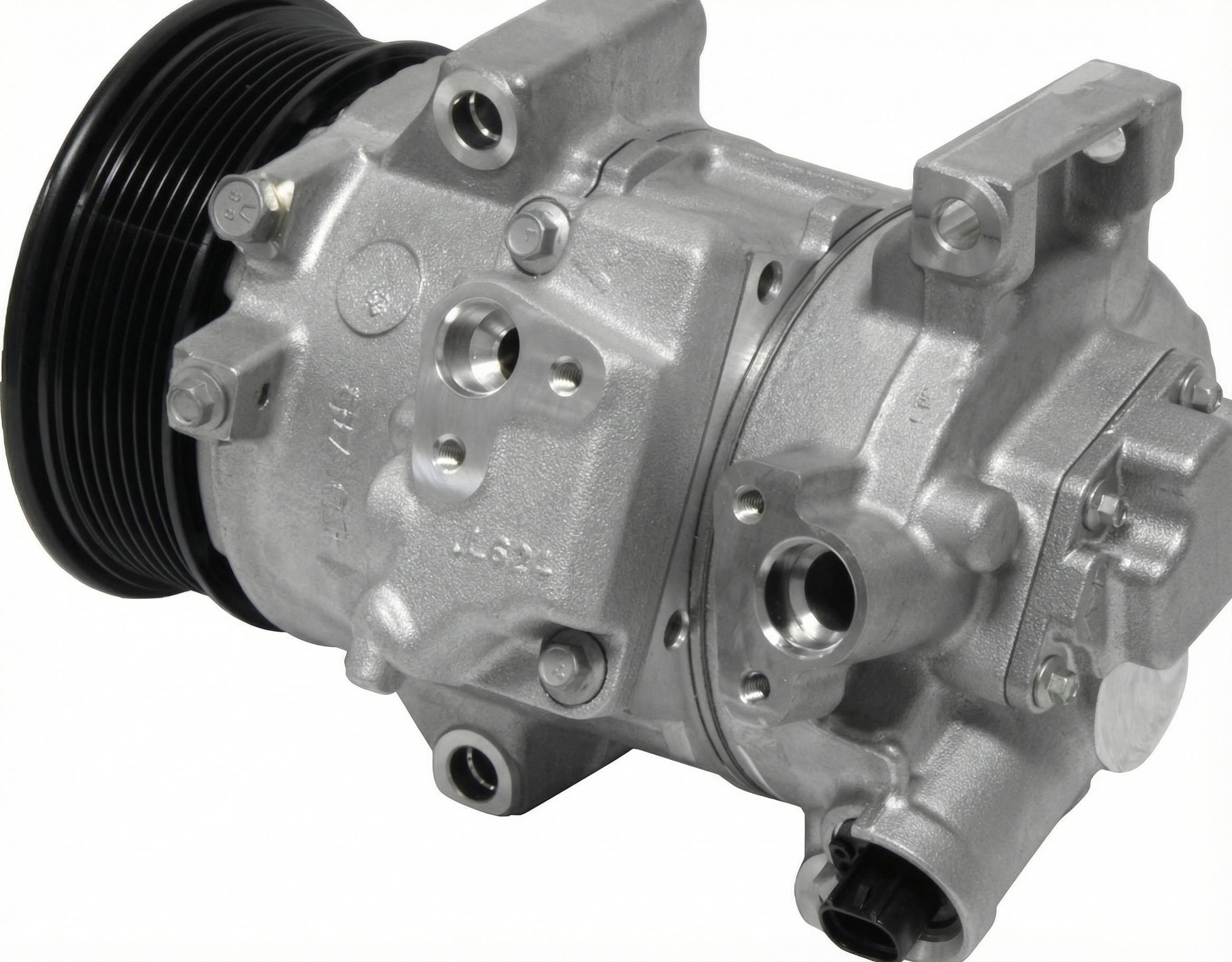
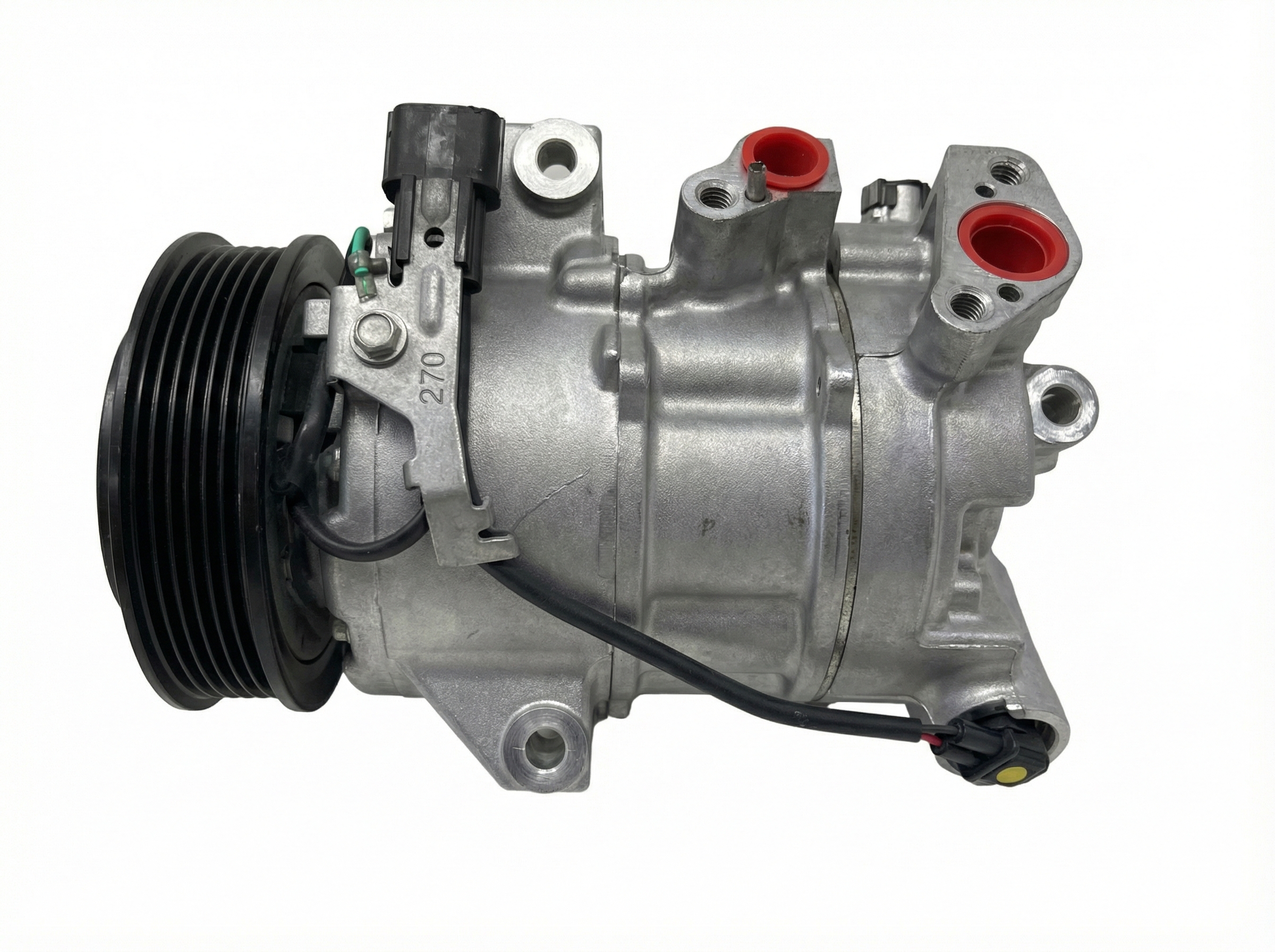
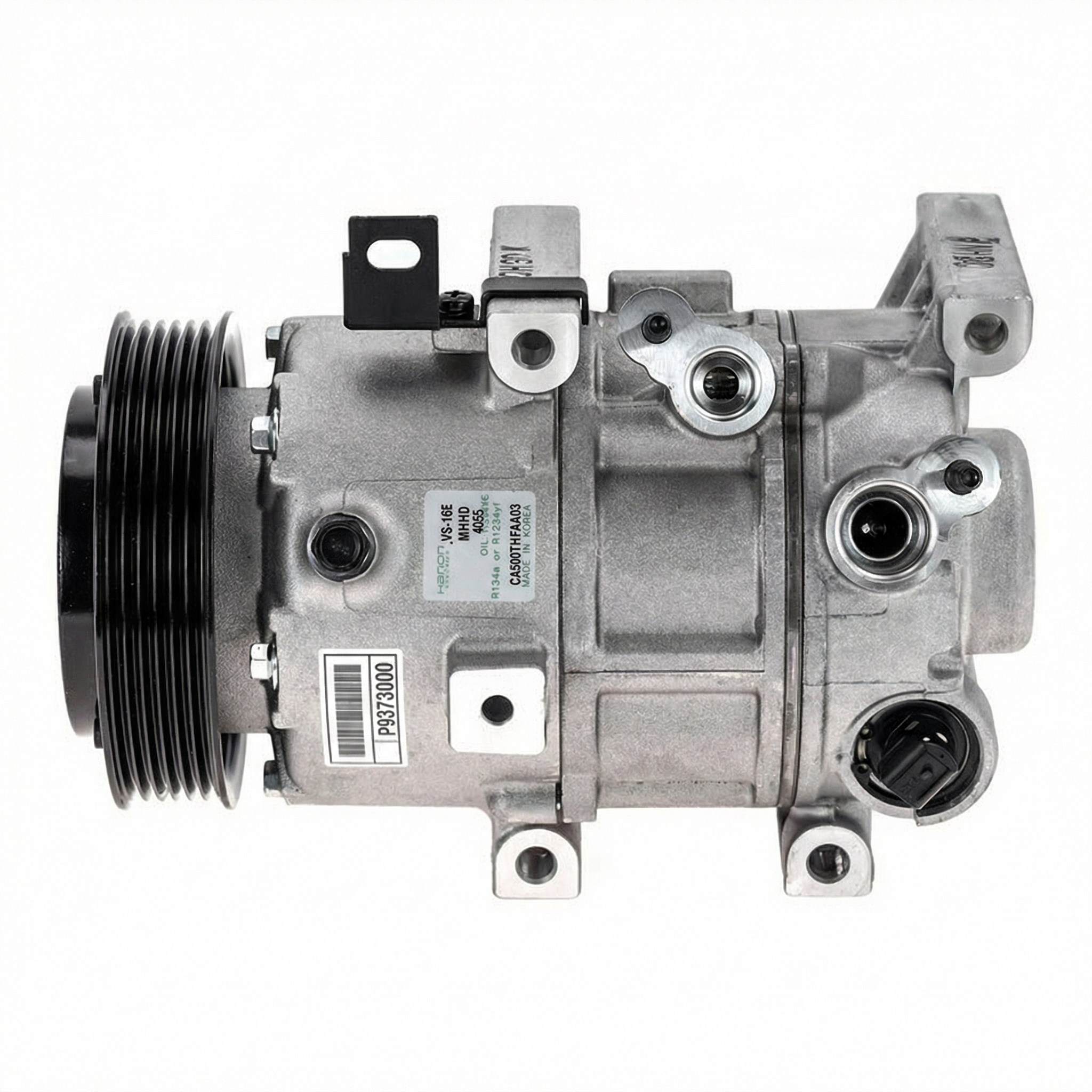
- Inspect the Pulley and Clutch: Spin the pulley by hand. It should spin smoothly and quietly. If it feels rough, gritty, or makes noise, the bearing is bad. On clutched models, check the clutch face for signs of extreme heat or damage.
- Check the Ports: Look inside the inlet and outlet ports. They should be clean. Any black, greasy residue (the "black death") is a sign of catastrophic internal failure. A compressor with this residue is junk and indicates the entire A/C system of the donor car was contaminated.
- Look for Physical Damage: Inspect the compressor body for cracks, deep gouges, or damage to the electrical connector. Ensure all mounting points are intact.
- Ask About Mileage and History: A compressor from a low-mileage, accident-damaged vehicle is an ideal candidate. Reputable sellers should be able to provide this information.
Cost Comparison
Prices can vary significantly based on your location and the specific part number required for your vehicle.
| Part Type | Estimated Cost |
|---|---|
| New OEM | $635 - $1,383 |
| New Aftermarket | $215 - $425 |
| Used OEM | $75 - $200 |
| Shop Labor | $434 - $448 |
Replacement Overview & Difficulty
Replacing an A/C compressor is a job for an experienced DIYer or a professional technician due to the need for specialized equipment.
- Difficulty: 4 out of 5
- Key Steps: The process involves legally recovering the old refrigerant, removing the serpentine belt, disconnecting electrical connectors and refrigerant lines, unbolting the old compressor, 🎬 See this step-by-step compressor replacement walkthrough for 2.4L models. and then installing the new one.
- Crucial Follow-up: After installation, it is critical to replace the receiver/drier (or desiccant bag), pull a deep vacuum on the system to remove air and moisture, and then recharge it with the precise amount of refrigerant and oil specified for your vehicle. Failure to do this will cause the new compressor to fail quickly.
Warning: It is illegal to release refrigerant into the atmosphere. The system must be evacuated using a certified recovery machine.
Frequently Asked Questions (FAQ)
Do I have to replace the whole compressor if only the clutch is bad?
On models with a separate clutch, it is sometimes possible to replace just the clutch. However, the cost of the clutch assembly and the labor involved often make it more practical to replace the entire compressor assembly, especially with a remanufactured or used unit.
What is the "black death" and why is it bad?
"Black death" refers to a thick, black sludge created when a compressor fails catastrophically and sends metal shavings and burnt oil throughout the A/C system. If your old compressor failed this way, you MUST thoroughly flush the entire system (hoses, evaporator, condenser) and replace the receiver/drier and expansion valve. Failure to do so will cause the new compressor to be destroyed by the contamination almost immediately.
Why do I have to replace the receiver/drier?
The receiver/drier (also called an accumulator or desiccant bag) absorbs moisture from the refrigerant. Once the A/C system is opened to the atmosphere during repair, the desiccant becomes saturated and can no longer protect the system. Not replacing it is a leading cause of repeat compressor failure and is required by warranty on most new and remanufactured parts.
My A/C blows warm, but the compressor seems to be working. What else could it be?
Many issues can cause warm air. The most common are a refrigerant leak (low charge), a faulty A/C pressure switch, a failed condenser/radiator fan, or a blend door actuator issue inside the dashboard. Always perform a full diagnosis before assuming the compressor is the culprit.
Helpful Videos


Technical Specifications
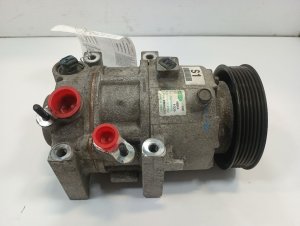
OEM Part Numbers: 97701-3R000 977013R000 977013V110 977013V110RU 977014R000 97701-C2000 97701-C2500 97701-L0000 F502EBAAA01
Compatibility varies greatly by engine (1.6L Turbo, 2.0L Turbo, 2.4L, 2.5L), vehicle generation, and build date. Hybrid models use a separate electric compressor. Most non-hybrid models use a belt-driven, variable displacement compressor.
We Have This Part in Stock

The information in this article is provided for general reference and educational purposes only. Vehicle specifications, procedures, and part compatibility can vary by production date, trim level, and region. Always consult your vehicle's factory service manual and verify part numbers before purchasing or performing repairs. Safety-critical components such as airbags, seat belts, and braking systems should be installed by a qualified professional.
- Hyundai Sonata:
- Kia Optima:
- 🎬 Helpful Videos
- 🛍️ Shop This Part
- A/C Compressor Compatibility for Hyundai Sonata & Kia Optima
- Compatibility Breakdown by Vehicle Generation
- Symptoms of a Failing A/C Compressor
- Known Issues, TSBs, and Recalls
- Buying a Used A/C Compressor: A Smart Buyer's Checklist
- Cost Comparison
- Replacement Overview & Difficulty
- Frequently Asked Questions (FAQ)
- 🎟️ Get 5% Off