

A/C Compressor for 2018-2026 Wrangler, Gladiator & Ram 1500: Engine-Specific Fitment and Known Issues
This guide covers the distinct A/C compressors for the 2.0L Turbo and 3.6L V6 engines and details the specific cooling issues affecting 2019-2021 Ram 1500 models.
- A/C compressor fitment is engine-specific. You must verify if you have the 2.0L Turbo, 3.6L V6, or 3.6L V6 with eTorque before buying.
- 2019-2021 Ram 1500 models suffer from a known A/C design flaw (TSB 24-001-20) that causes poor cooling, which may not be the compressor's fault.
- When replacing the compressor, you must also replace the receiver/drier and expansion valve to prevent premature failure of the new part.
- When inspecting a used compressor, check for smooth rotation and look for metal shavings in the ports, which indicates a catastrophic failure.
Vehicle & Engine Compatibility: A Critical First Check
Before purchasing an A/C compressor for your Jeep Wrangler, Gladiator, or Ram 1500, it is crucial to identify your vehicle's specific engine. Unlike many shared parts, the A/C compressor is different between the 2.0L and 3.6L engines, and even between the standard 3.6L V6 and the 3.6L V6 with the eTorque mild-hybrid system. Using the wrong compressor will lead to installation issues and improper A/C function.
Warning: This guide covers the 2018-present Jeep Wrangler (JL), 2020-present Jeep Gladiator (JT), and 2019-2021 Ram 1500 (DT). Part numbers for the previous generation 2014-2018 Jeep Wrangler (JK), such as those beginning with '55111', are not compatible and should not be used.
| Engine | Key OEM Part Number(s) | Compatible Vehicles |
|---|---|---|
| 2.0L I-4 Turbo (with or without eTorque) | 68245083AA | 2018-2026 Jeep Wrangler (JL) |
| 3.6L V6 Pentastar (WITHOUT eTorque) | 68292169AB | 2018-2026 Jeep Wrangler (JL), 2020-2026 Jeep Gladiator (JT) |
| 3.6L V6 Pentastar (WITH eTorque Mild-Hybrid) | 68292170AB | 2018-2026 Jeep Wrangler (JL), 2019-2021 Ram 1500 (DT) |
Known Issues by Vehicle
2019-2021 Ram 1500: Poor Cooling in Hot Weather (TSB 24-001-20)
Owners of 2019-2020 Ram 1500 trucks may notice significantly poor A/C performance, especially in very hot weather. A common symptom is that the air from the center vents is warmer than the air from the side vents. This is a known issue addressed by Technical Service Bulletin (TSB) 24-001-20. The problem stems from the design of the HVAC housing, which allows heat from the heater core to affect the cooled air from the evaporator. The official fix involves a significant amount of labor to service the HVAC housing with redesigned components. Due to the complexity and cost of the official repair, some owners have opted for a DIY solution that involves installing a manual bypass valve on the heater core inlet hose, effectively blocking hot coolant from circulating through the heater core during summer months.
Jeep Wrangler (JL) & Gladiator (JT): General A/C Concerns
Unlike the Ram 1500, the Jeep Wrangler JL and Gladiator JT do not have a widely documented design flaw with their A/C compressors. Most reported issues are typical of any modern vehicle's A/C system. These can include refrigerant leaks from seals or hoses, electrical issues with the control module, or mechanical failure of the compressor itself, often signaled by unusual noises. If your Wrangler or Gladiator's A/C is not working, the cause is most likely a refrigerant leak or a failed compressor component, rather than a systemic design issue.
Symptoms of a Failing A/C Compressor
A bad A/C compressor will eventually make itself known through several distinct symptoms. Paying attention to these signs can help you diagnose the problem before it causes further damage to the system.
- Warm Air From Vents: This is the most obvious symptom. If the compressor isn't pressurizing the refrigerant, the cooling cycle cannot begin, and the air from the vents will be warm or only slightly cool.
- Loud Noises When A/C is On: A failing compressor can make several noises. A grinding or squealing sound often points to a bad internal bearing. A rattling or knocking sound can indicate a failing clutch or loose mounting bolts.
- A/C Clutch Not Engaging: The compressor's clutch is an electromagnet that, when activated, connects the compressor's pulley to its internal pump. You should hear a distinct 'click' when you turn the A/C on, and see the center plate of the pulley start spinning. If it doesn't engage, the problem could be the clutch itself, a blown fuse, or a low-pressure lockout switch preventing activation due to a refrigerant leak.
- Visible Refrigerant Leaks: The compressor has several seals that can fail over time, leading to leaks. You may see a greasy, oily residue on the body of the compressor. The refrigerant contains oil to lubricate the system, and this oil will collect dirt where it leaks out.
- Erratic Cooling: An A/C system that blows cold, then warm, then cold again can sometimes be a sign of a failing compressor or a clutch that is struggling to stay engaged.
Buying a Used A/C Compressor: What to Inspect
A used OEM compressor can be a reliable and cost-effective alternative to an expensive new unit, especially when compared to cheap, often unreliable aftermarket options. However, careful inspection is key to getting a good part.
Pro Tip: Always purchase from a reputable seller that offers a warranty, even if it's only for 30-90 days. This gives you time to install the part and confirm it works correctly.
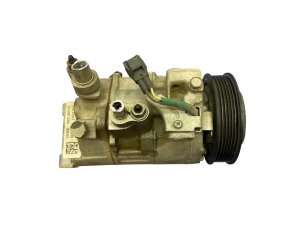
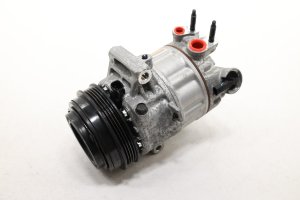
- Turn the Pulley by Hand: The outer pulley should spin freely with minimal noise. The critical test is to turn the inner hub or clutch plate (the very center part). With the clutch disengaged, it should not turn. If you can apply 12V power to the clutch connector, it should click and engage, and the inner hub should now turn with the pulley. The rotation should feel smooth, with consistent resistance and no grinding or catching spots. A seized compressor will not turn at all.
- Inspect the Ports: Look inside the suction and discharge ports where the A/C lines connect. They should be clean and capped to prevent moisture and debris from entering. The presence of dark, gritty oil or any metal shavings is a major red flag. This indicates a catastrophic internal failure, and installing such a compressor will contaminate and destroy your entire A/C system.
- Check for Physical Damage: Inspect the compressor body for cracks, deep gouges, or signs of heavy corrosion. Check that the electrical connector is intact and not cracked or broken. Ensure all mounting tabs are present and undamaged.
- Verify the Part Number: Double-check that the part number on the used compressor matches the required OEM number for your vehicle's specific engine (see the compatibility table above).
Replacement Cost & Procedure Overview
Replacing an A/C compressor is a moderately difficult job, primarily because it requires specialized equipment to handle the refrigerant. The mechanical steps of unbolting the old part and installing the new one are straightforward, but the system must be properly evacuated and recharged to work correctly.
| Part/Service | Estimated Cost |
|---|---|
| New OEM Mopar Compressor | $500 - $780 |
| New Aftermarket Compressor | $250 - $450 |
| Used OEM Compressor | $125 - $250 |
| Remanufactured Compressor | $200 - $400 |
| Shop Labor & System Recharge | $250 - $450 |
Important: Whenever you replace the A/C compressor, you MUST also replace the A/C receiver/drier (or accumulator) and the expansion valve. Failure to do so will introduce moisture and contaminants into the system, which can cause the new compressor to fail prematurely and will likely void its warranty.
Frequently Asked Questions (FAQ)
Can I just replace the A/C compressor clutch instead of the whole unit?
While clutch kits are available, it's often not recommended. The labor to remove the compressor and use special tools to swap the clutch can be almost as much as replacing the entire unit. Furthermore, if the clutch failed due to heat from a failing compressor bearing, replacing only the clutch is a temporary fix at best. In most cases, replacing the complete compressor assembly is the more reliable and cost-effective long-term solution.
Does the A/C system need to be flushed when I replace the compressor?
Yes, especially if the old compressor failed internally. When a compressor fails, it can send metal debris throughout the entire A/C system. If this debris is not flushed out, it will circulate and quickly destroy the new compressor. The only components that cannot be flushed are the condenser, the receiver/drier, and the expansion valve, which is why they must be replaced.
My 2019 Ram 1500's A/C is weak. Is the compressor bad?
Not necessarily. If the A/C cools somewhat but struggles in high heat, and the center vents are warmer than the side vents, the issue is likely the HVAC housing design flaw covered by TSB 24-001-20, not a faulty compressor. Consult a dealer about the TSB or research the DIY heater core bypass valve before replacing the compressor.
Do I need to add oil to the new compressor?
Most new and remanufactured compressors come pre-charged with the correct amount of PAG oil. However, you should always verify this with the part's documentation. When installing, it's common practice to drain the oil from both the old and new compressors into separate measuring cups to ensure the correct amount is in the new unit before installation. This confirms the new part wasn't shipped empty or overfilled.
Technical Specifications
OEM Part Numbers: 68245083AA 68292169AB 68292170AB
Compressor Type: Varies by engine (e.g., HV17). Pulley Type: Serpentine belt, grooved. Control: Electronically controlled clutch.
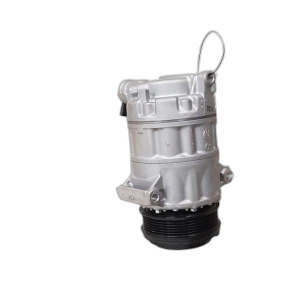
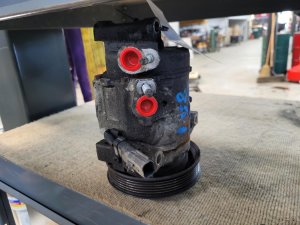
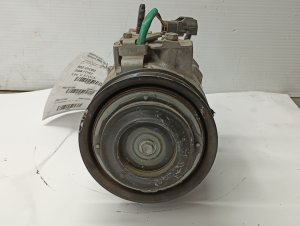
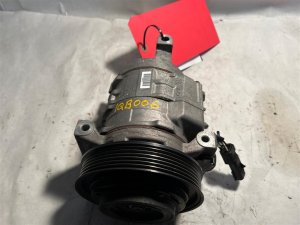
We Have This Part in Stock

The information in this article is provided for general reference and educational purposes only. Vehicle specifications, procedures, and part compatibility can vary by production date, trim level, and region. Always consult your vehicle's factory service manual and verify part numbers before purchasing or performing repairs. Safety-critical components such as airbags, seat belts, and braking systems should be installed by a qualified professional.
- Jeep Wrangler:
- Jeep Gladiator:
- Ram 1500:
- 🛍️ Shop This Part
- Vehicle & Engine Compatibility: A Critical First Check
- Known Issues by Vehicle
- 2019-2021 Ram 1500: Poor Cooling in Hot Weather (TSB 24-001-20)
- Jeep Wrangler (JL) & Gladiator (JT): General A/C Concerns
- Symptoms of a Failing A/C Compressor
- Buying a Used A/C Compressor: What to Inspect
- Replacement Cost & Procedure Overview
- Frequently Asked Questions (FAQ)
- 🎟️ Get 5% Off