

1997-2004 Dodge Dakota A/C Condenser: Leaks, Blockages, and Replacement
This guide covers the common failure symptoms of the A/C condenser on second-generation Dodge Dakotas, how to inspect a used part, and a detailed replacement overview.
- The most common failure is a leak caused by road debris or corrosion, identified by oily residue on the condenser fins.
- When replacing the condenser, you MUST also replace the A/C receiver/drier to remove moisture from the system.
- The system must be professionally evacuated before work begins and vacuum-recharged afterward; DIY refrigerant cans are insufficient and will cause damage.
- Poor cooling at idle can also be caused by a failing fan clutch, which mimics the symptoms of a bad condenser.
Symptoms of a Failing A/C Condenser
A faulty A/C condenser will quickly make itself known, especially on a hot day. Because it sits at the front of the truck, it's vulnerable to damage from road debris. Here are the most common signs that your Dakota's condenser is failing.
1. A/C Blows Warm or Lukewarm Air
This is the most obvious symptom. If the condenser can't release heat from the refrigerant, the entire system's cooling ability is drastically reduced. You'll notice the air from your vents isn't as cold as it used to be, or it may be warm altogether. This can be caused by an internal blockage or by external fins being so damaged that air can't pass through them.
2. Visible Refrigerant Leaks
The A/C system uses a special oil (PAG oil) that circulates with the refrigerant. When the condenser develops a leak, this oil will escape along with the refrigerant gas. This often leaves a greasy or oily residue on the surface of the condenser, its connections, or on the ground beneath it. Leaks are commonly caused by corrosion or punctures from rocks and other debris. You can sometimes spot these leaks with a UV light if dye has been added to the system.
3. Hissing or Bubbling Noises
A hissing sound coming from the front of the vehicle when the A/C is running can indicate a refrigerant leak. As the high-pressure gas escapes through a crack or bad seal, it creates this distinct noise. If the leak is significant, the system pressure will drop, and the A/C will stop working entirely.
4. A/C System Shuts Off or Compressor Doesn't Engage
A/C systems have high and low-pressure switches for protection. If a blockage in the condenser causes pressure to spike too high, the system will shut down the compressor to prevent catastrophic failure. Conversely, if a leak causes the refrigerant level and pressure to drop too low, the low-pressure switch will prevent the compressor clutch from engaging to protect it from running without lubrication.
Buying a Used 1997-2004 Dakota A/C Condenser
A used OEM condenser can be a smart buy, offering better fit and material quality than some cheap aftermarket alternatives. However, you must inspect it carefully before purchasing.
What to Inspect on a Used Condenser
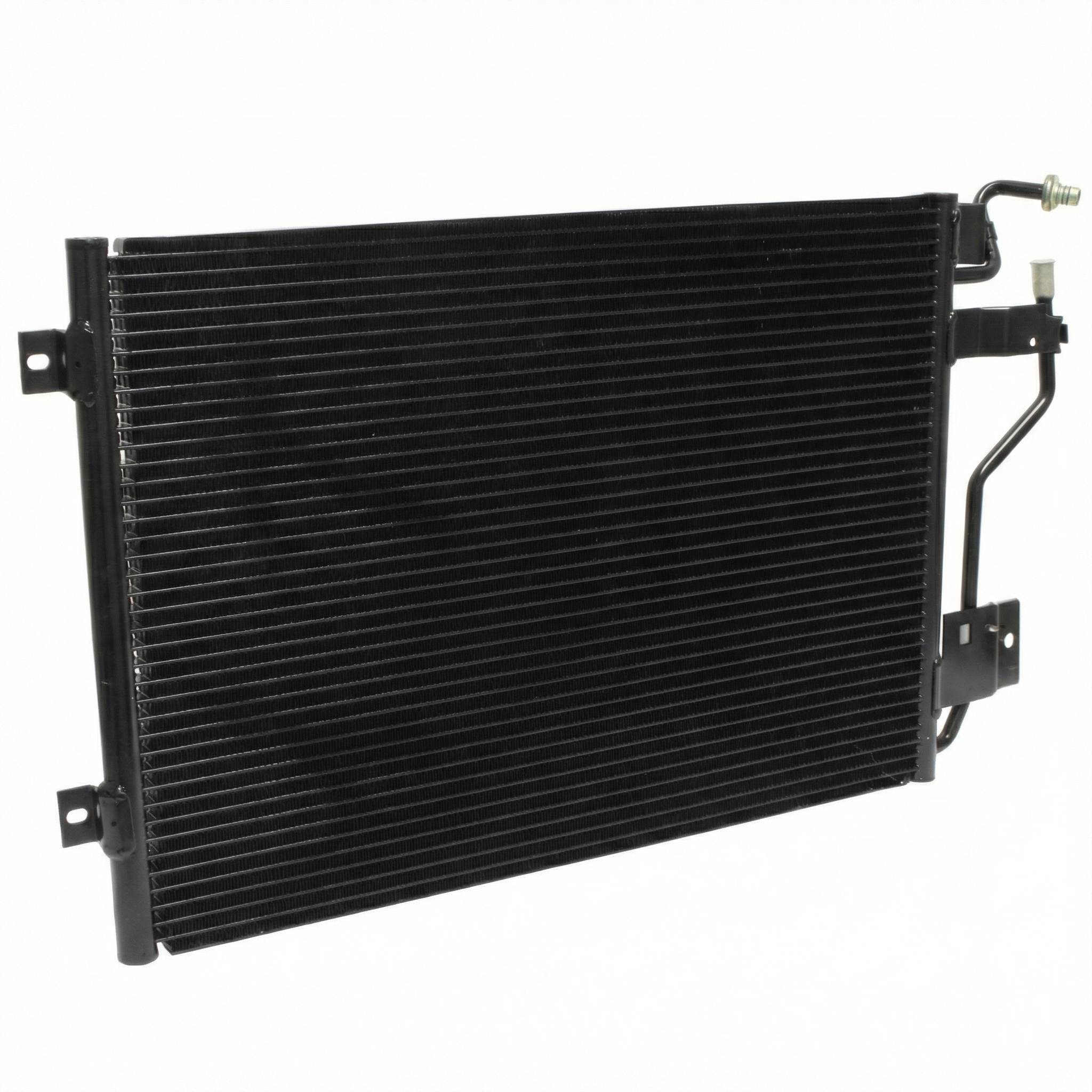
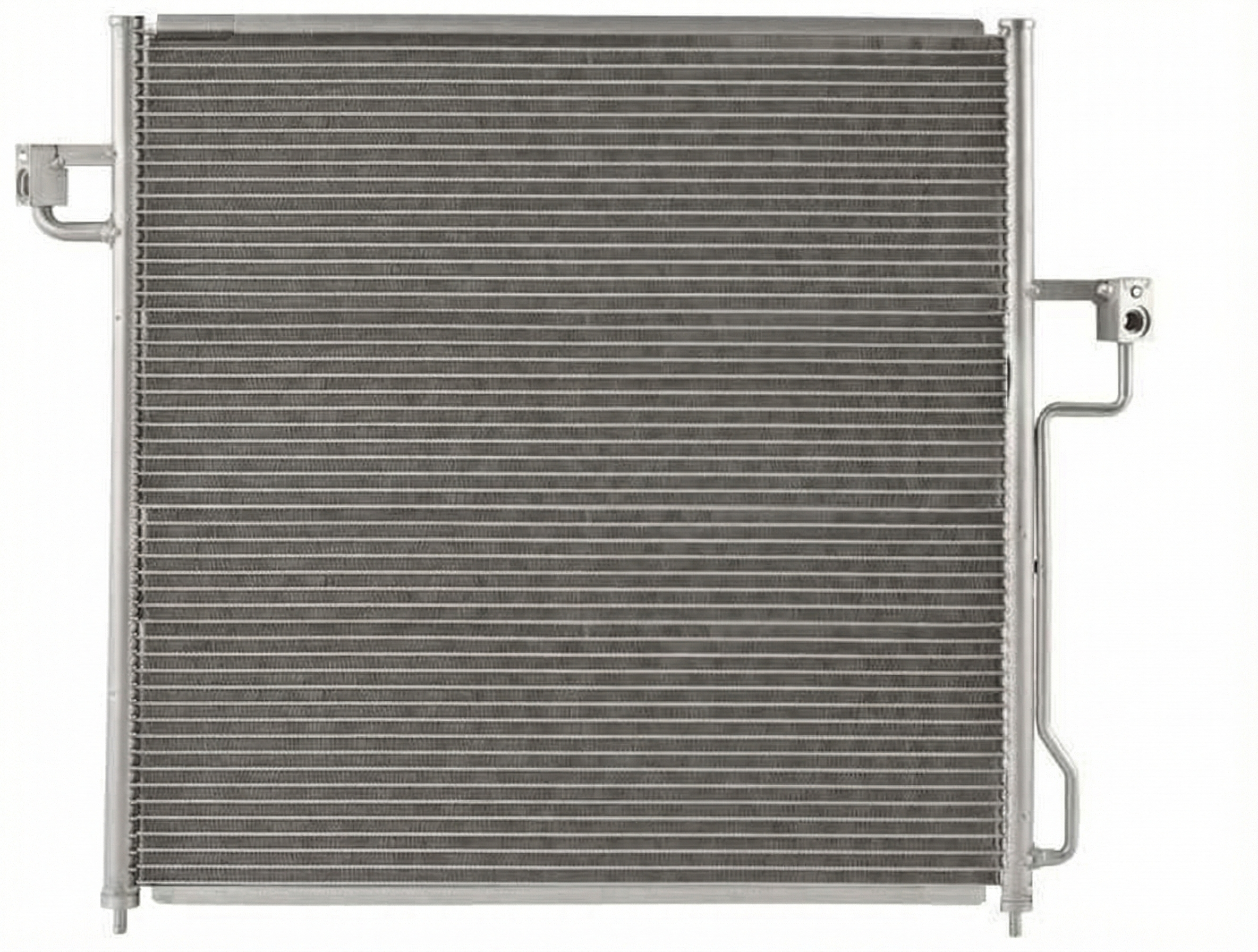
- Check for Leaks: Look for any oily residue, especially around the line connections and where the tubes meet the side tanks. A part that has been cleaned may hide evidence, so be wary.
- Inspect the Fins: The thin aluminum fins are crucial for heat exchange. Ensure they are mostly straight. While a few bent fins are acceptable, large areas of flattened or missing fins will significantly reduce performance. A 5% loss in capacity can occur with just one row of missing fins.
- Examine for Corrosion: Check for heavy white corrosion, especially on the lower sections where salt and moisture collect. Severe corrosion weakens the aluminum and can lead to leaks.
- Verify the Fittings: Make sure the inlet and outlet ports are not damaged, and the threads (if applicable) are in good shape. The best used condensers will have their ports capped to prevent moisture and debris from entering the system, which is extremely important for A/C components.
- Look for Physical Damage: Check for dents, cracks, or bent tubes from impacts. A small fender-bender can easily damage a condenser.
Pro Tip: When replacing the condenser, it is critical to also replace the A/C Receiver/Drier (also called an accumulator). This component contains a desiccant that absorbs moisture from the system. Once the system is opened to the atmosphere, the desiccant becomes saturated and must be replaced to prevent corrosion and system failure.
Known Issues for This Vehicle
While there are no specific recalls or TSBs for the A/C condenser on the 1997-2004 Dodge Dakota, owner forums reveal a few common trouble spots for the A/C system as a whole:
- Leaky Schrader Valves: The service ports (where refrigerant is added) contain small valves similar to a tire's valve stem. These are a known, common source of slow leaks. They are inexpensive and easy to replace when the system is empty.
- Failing Fan Clutch: A weak mechanical fan clutch can fail to pull enough air through the condenser at idle or low speeds. This causes high-side pressure to skyrocket, leading to poor cooling performance that can be misdiagnosed as a bad condenser or compressor.
- HVAC Drain Tube Clog: While not a condenser issue, these trucks are known for the evaporator drain tube in the firewall getting clogged or leaking, causing water to pool on the passenger side floor.
Replacement Difficulty and Labor
Replacing the A/C condenser on a 1997-2004 Dodge Dakota is a moderately difficult job that can be done by a skilled DIY mechanic, but with significant caveats.
- Installation Difficulty: 3/5
- Estimated Time: 2-4 hours
- DIY Feasible: Yes, but requires specialized tools.
The main challenge is not the mechanical work but the handling of the refrigerant. It is illegal to release R-134a refrigerant into the atmosphere. The system must be evacuated by a professional with an EPA-certified recovery machine before you begin work. After installation, the system must be put under a deep vacuum for at least 45 minutes to boil off any moisture before being recharged with the precise weight of refrigerant and oil. 🎬 Watch a helpful guide on recharging your Dakota's A/C system. Failure to pull a proper vacuum is a primary cause of premature failure of the new parts.
General Replacement Steps:
- Have the A/C system professionally evacuated.
- Disconnect the negative battery terminal.
- Remove the front grille and any upper radiator/support covers for access. 🎬 See how to remove the radiator and condenser together.
- Disconnect the high and low-pressure lines from the condenser. Be prepared to cap the lines immediately to prevent contamination.
- Unbolt the condenser from its mounting brackets on the radiator support.
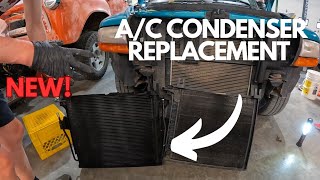
- Carefully lift the old condenser out of the vehicle. 🎬 Watch this step-by-step condenser replacement on a Magnum V8.
- Transfer any mounting brackets or rubber grommets to the new condenser.
- Install the new condenser, ensuring it's seated correctly in the lower mounts.
- Replace the O-rings on the A/C lines, lubricating them with new PAG oil.
- Reconnect the lines to the new condenser and torque the fittings to specification.
- Crucially, replace the A/C receiver/drier at this time.
- Reassemble the grille and any other removed parts.
- Take the vehicle back to a shop to have the system vacuum tested and recharged to the correct specification.
Cost Comparison
Prices for an A/C condenser can vary widely. A used OEM part often presents the best value, provided it's in good condition.
| Part Type | Estimated Cost |
|---|---|
| New OEM (Mopar) | $250 - $400 |
| New Aftermarket | $80 - $180 |
| Used OEM | $50 - $120 |
| Shop Labor (Part Replacement) | $150 - $250 |
| Shop Labor (Evacuate & Recharge) | $120 - $250 |
Note: These prices are estimates and do not include the mandatory replacement of the receiver/drier or potential taxes and fees. Total professional replacement cost often ranges from $550 to $900.
Frequently Asked Questions (FAQ)
Do I have to replace the receiver/drier with the condenser?
Yes, absolutely. The receiver/drier contains a desiccant material that absorbs moisture. The moment you open the A/C system, this material becomes saturated and is no longer effective. Failing to replace it will leave moisture in the system, leading to corrosion and potential compressor failure. Most part warranties are void if the drier is not replaced at the same time as the condenser or compressor.
Can I just use a can of refrigerant from the auto parts store to recharge the system?
No. After replacing the condenser, the system is full of air and moisture. This must be removed by pulling a deep vacuum for at least 45 minutes. Simply adding refrigerant from a can will trap this moisture, causing poor performance and long-term damage. The system must also be filled with a precise weight of refrigerant, which is not possible with DIY cans.
What type of refrigerant and oil does my 1997-2004 Dakota use?
These trucks use R-134a refrigerant. The system capacity is approximately 1.37 lbs (22 oz). The system uses PAG 46 oil. When replacing a condenser, you should add about 1-2 oz of new PAG oil to the system to account for what was removed with the old part.
Why is my A/C still not cold after replacing the condenser?
There could be several reasons. The most common are an improper charge (too much or too little refrigerant) or residual moisture from not pulling a deep enough vacuum. Other possibilities include a different leak elsewhere in the system, a faulty expansion valve, a weak fan clutch causing high pressures, or a failing compressor.
Helpful Videos
Technical Specifications
OEM Part Numbers: 300047 55036499AB 55036499AC 55036499AD 55055866AC 55055866AD 55055866AG 55055892AB
Refrigerant Type: R-134a. System Capacity: ~1.37 lbs (22 oz). Required Oil: PAG 46.
We Have This Part in Stock

The information in this article is provided for general reference and educational purposes only. Vehicle specifications, procedures, and part compatibility can vary by production date, trim level, and region. Always consult your vehicle's factory service manual and verify part numbers before purchasing or performing repairs. Safety-critical components such as airbags, seat belts, and braking systems should be installed by a qualified professional.
- Dodge Dakota:
- 🎬 Helpful Videos
- 🛍️ Shop This Part
- Symptoms of a Failing A/C Condenser
- 1. A/C Blows Warm or Lukewarm Air
- 2. Visible Refrigerant Leaks
- 3. Hissing or Bubbling Noises
- 4. A/C System Shuts Off or Compressor Doesn't Engage
- Buying a Used 1997-2004 Dakota A/C Condenser
- What to Inspect on a Used Condenser
- Known Issues for This Vehicle
- Replacement Difficulty and Labor
- General Replacement Steps:
- Cost Comparison
- Frequently Asked Questions (FAQ)
- 🎟️ Get 5% Off