

Explorer, Flex, MKT, Mountaineer Cooling Fan Failures (2002-2012): Overheating and A/C Issues
This guide covers the common failure symptoms, technical service bulletins, and replacement costs for the A/C condenser and engine cooling fan motor across two distinct Ford platforms.
- This part fits two different vehicle platforms; you must get the correct assembly for your specific vehicle year and model.
- A primary symptom of failure is engine overheating in traffic and the A/C blowing warm air when stopped.
- For 2011-2012 Explorer, Flex, and MKT models, a known TSB (14-0019) addresses fan-related overheating and A/C issues, often requiring a PCM update.
- Before replacing the fan, always check the simpler components first: the fuse and the relay.
Vehicle-Specific Information and Part Differences
This cooling fan assembly fits a wide range of Ford, Lincoln, and Mercury SUVs and crossovers, but it's crucial to understand they are split between two different vehicle platforms with different cooling systems and part numbers. Failure to identify the correct platform for your vehicle will result in buying the wrong part.
Group 1: 2002-2010 Ford Explorer & Mercury Mountaineer
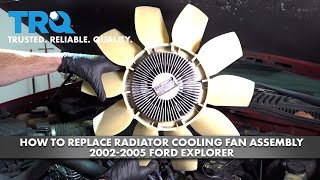
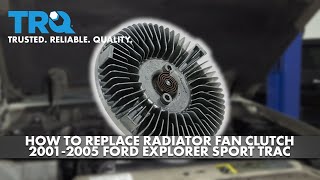
Important: Many V6 and V8 models in this generation used a primary mechanical fan that is driven by the engine's serpentine belt via a fan clutch. These vehicles may also have a separate, smaller auxiliary electric fan. This guide and the associated part numbers refer to the electric cooling fan assembly. Failure of the mechanical fan clutch is also common and presents with a loud roaring sound tied to engine speed.
- Platform: Body-on-frame, rear-wheel-drive based (UN152).
- Primary OEM Part Number: 1L2Z-8C607-AC.
- Engine Fitment: 4.0L V6 and 4.6L V8 engines.
- Key Replacement Note: Accessing or replacing the electric fan or shroud assembly on these models often requires the removal of the mechanical fan and clutch first. This requires a special 36mm fan clutch wrench to loosen the large nut on the water pump pulley. 🎬 See how to remove the mechanical fan clutch and shroud.
Group 2: 2011-2012 Ford Explorer, 2010-2012 Ford Flex & 2010-2012 Lincoln MKT
- Platform: Unibody, front-wheel-drive based (D4).
- Primary OEM Part Number: BA8Z-8C607-C (and subsequent revisions).
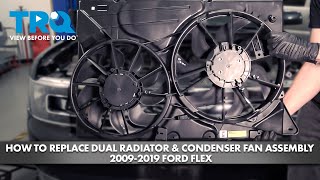
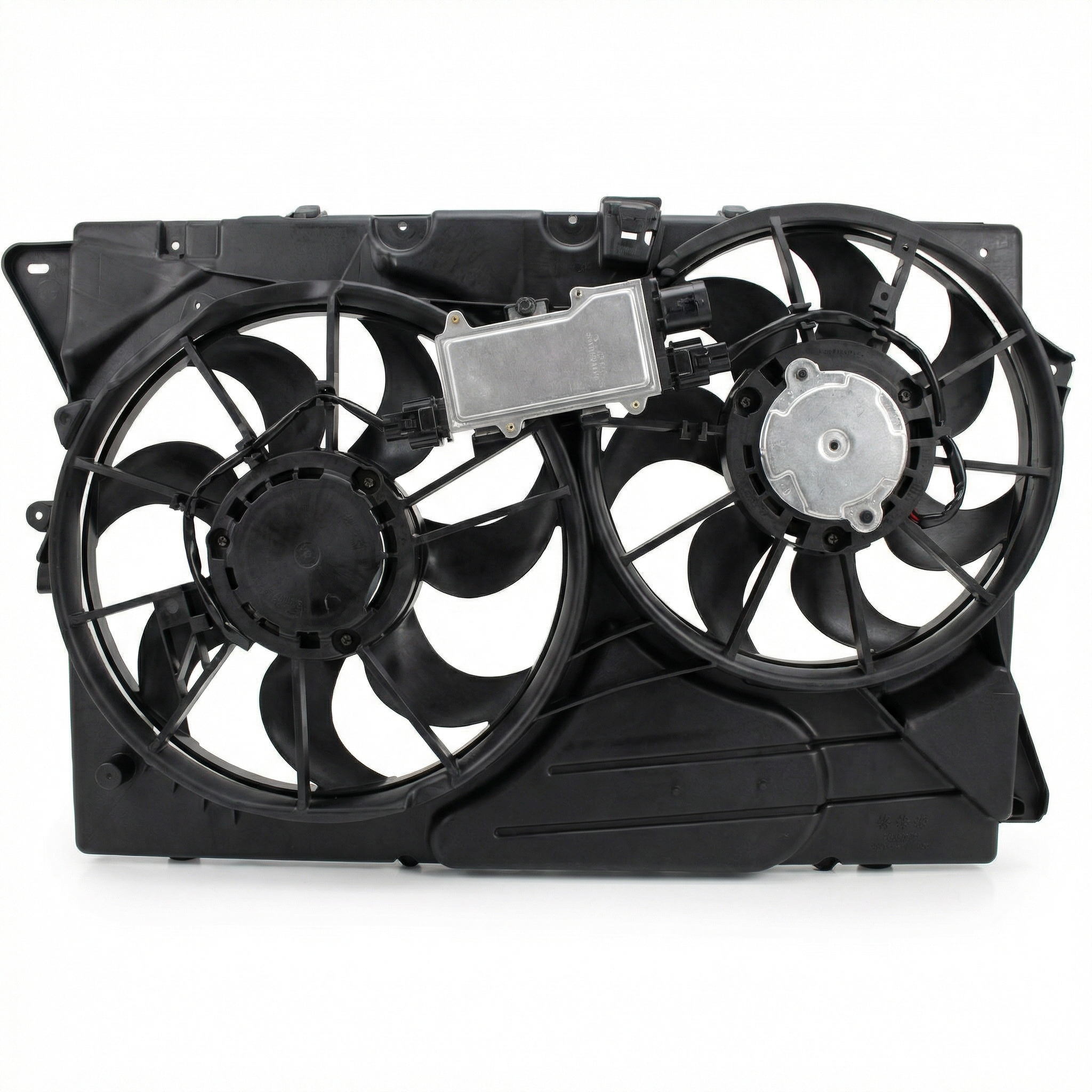
- System Type: Fully electric dual-fan assembly with an integrated control module. There is no mechanical fan. 🎬 Watch: How to replace the dual radiator and condenser fan.
- Engine Fitment: 2.0L Turbo, 3.5L, 3.5L Turbo, and 3.7L engines depending on the model.
Known Issues: TSB for 2011-2012 Explorer, Flex & MKT
Owners of the newer platform vehicles (2011-2012 Explorer, 2010-2012 Flex, and MKT) should be aware of a specific Technical Service Bulletin (TSB) related to the cooling fans.
TSB 14-0019: This bulletin was issued for vehicles that exhibit poor A/C performance when stationary or at low speeds, and/or an engine overheating condition. Diagnostic trouble codes such as P0217 (Engine Coolant Over-temperature Condition), P1299 (Cylinder Head Over-temperature Protection Active), and P1285 (Cylinder Head Over-temperature Sensed) may be stored in the Powertrain Control Module (PCM). The official fix involves reprogramming the PCM with an updated calibration and, if the fans are still inoperative after testing, replacing the cooling fan motor assembly.
Symptoms of a Failing Cooling Fan Motor
A bad cooling fan motor will make itself known quickly, especially in warmer weather or stop-and-go traffic. Here are the most common symptoms:
- Engine Overheating at Low Speeds: This is the most critical symptom. When you're stuck in traffic or driving slowly, there isn't enough natural airflow through the radiator. The fan is required to pull air through to keep the engine cool. If it fails, the temperature gauge will climb steadily.
- A/C Blows Warm Air When Stopped: The A/C system relies on the fan to cool the condenser. If the fan isn't spinning, the A/C will work fine on the highway but will start blowing warm or cool (but not cold) air as soon as you stop.
- Fan Does Not Spin: With the engine warm and the A/C turned on, you should be able to see the fan blades spinning. If they are not moving, it's a clear sign of a problem.
- Fan Runs Continuously: A failed fan relay or control module can cause the fan to run constantly, even after the engine is turned off. This can drain the battery.
- Loud Whirring or Grinding Noises: The bearings inside the electric motor can wear out, causing a loud noise whenever the fan is active.
- Blown Fuses: A failing fan motor can draw excessive current, causing the fuse that protects the circuit to blow repeatedly. If you replace the fuse and it blows again, the motor is likely the cause.
Buying a Used A/C Condenser Fan Motor
A used OEM cooling fan assembly can be a reliable and cost-effective alternative to an expensive new part, especially since many aftermarket options may not have the same durability. Here’s what to inspect before buying:
- Verify the Part Number and Vehicle Platform: This is the most important step. Ensure the part you are buying is for the correct vehicle group (2002-2010 Explorer/Mountaineer vs. 2010-2012 Flex/MKT/Explorer). They are not interchangeable.
- Inspect the Shroud for Damage: The plastic housing, or shroud, is critical for directing airflow. Check carefully for any cracks, breaks, or missing mounting tabs. A cracked shroud can vibrate and will not cool as efficiently.
- Check the Fan Blades: Spin the fan blades by hand. They should spin smoothly with minimal resistance and no grinding or gritty feeling, which would indicate bad motor bearings. Also, check that none of the blades are cracked, chipped, or broken.
- Examine the Electrical Connector: Look at the electrical plug on the fan assembly. The pins should be straight and free of corrosion. The plastic connector housing should not be cracked or melted, which could be a sign of a previous electrical issue.
- Consider Mileage: While not always possible to know, a fan from a lower-mileage vehicle is generally a better bet. These motors have a finite lifespan, so lower usage increases the chance of longer service life.
Cost Breakdown
Prices can vary based on supplier and location. The older style fan for the 2002-2010 Explorer is generally less expensive than the dual-fan assembly for the newer models.
| Part Type | 2002-2010 Explorer/Mountaineer (1L2Z-8C607-AC) | 2010-2012 Flex/MKT, 2011-12 Explorer (BA8Z-8C607-C) |
|---|---|---|
| New OEM | $85 - $130 | $250 - $400+ (Often includes module) |
| New Aftermarket | $70 - $130 | $140 - $240 |
| Used OEM | $50 - $90 | $85 - $200 |
| Shop Labor | $100 - $170 | |
Step-by-Step Diagnosis
If your fan isn't working, follow these steps before replacing parts:
- Check the Fuse: The first and easiest check. Locate the cooling fan fuse in the under-hood fuse box. If it's blown, replace it. If the new fuse blows immediately, there is a short circuit or a seized fan motor.
- Check the Relay: You can often swap the cooling fan relay with an identical relay from a non-critical system (like the horn) to see if the fan starts working. If it does, the relay is bad.
- Test the Motor Directly: Disconnect the fan's electrical connector. Use jumper wires to carefully apply 12V power directly from the car battery to the fan motor's terminals. If the fan spins, the motor is good, and the problem lies in the wiring, sensor, or control module. If it doesn't spin, the motor is dead.
- Check for Voltage: If the motor test passes, use a multimeter to check for voltage at the fan connector (the side coming from the car's wiring harness) when the engine is hot and the A/C is on. If you see ~12 volts, but the fan wasn't working when plugged in, it points to a poor connection. If you see no voltage, the problem is upstream in the circuit (relay, coolant temp sensor, wiring, or PCM).
Frequently Asked Questions (FAQ)
Can I replace just the motor or do I need the whole assembly?
It is almost always better to replace the entire fan assembly (motor, blades, and shroud). The components are designed to work together, and the cost of a complete used or aftermarket assembly is often close to the price of a new motor alone. This also ensures you don't have to deal with brittle old plastic on the shroud or blades, which can break during disassembly.
My fan works, but my car still overheats in traffic. What else could it be?
If the fan is spinning but the car overheats, the issue could be with the cooling system itself. Common causes include a low coolant level, a bad thermostat that isn't opening, a clogged radiator, or a failing water pump. For 2002-2010 models with a mechanical fan, a worn-out fan clutch could also be the culprit, as it may not engage properly to spin the fan at the necessary speed.
What is the fan control module?
On the 2010-2012 Flex, MKT, and 2011-2012 Explorer, the fan speed is managed by a fan control module. This electronic box receives a signal from the engine computer (PCM) and adjusts the fan speed accordingly. A failure of this module can prevent the fans from turning on or cause them to run at full speed constantly. TSB 14-0019 notes that when replacing the fan assembly, the original module is sometimes transferred to the new unit.
Is it difficult to replace the cooling fan assembly myself?
For a DIY mechanic, this is a manageable job. On the newer platform (Flex, MKT, 2011-12 Explorer), it typically involves removing a plastic top cover, disconnecting the upper radiator hose (you will lose some coolant), unplugging the electrical connector, and removing a few bolts holding the assembly to the radiator. On the older Explorer/Mountaineer, the process is more involved if the mechanical fan must be removed first, as it requires a special tool. The difficulty is a 2 out of 5 for the newer models and a 3 out of 5 for the older ones.
Helpful Videos
Technical Specifications
OEM Part Numbers: 1L2H8W601AC 1L2Z8C607AC AA8E8C607EA AA8E8C607EB AA8E8C607EC AA8E8C607ED AA8E8C607EE AA8E8C607EF AA8E8C607EG BA838C607AD BA838C607AE BA838C607AF BA8Z-8C607-G BA8Z8C607C
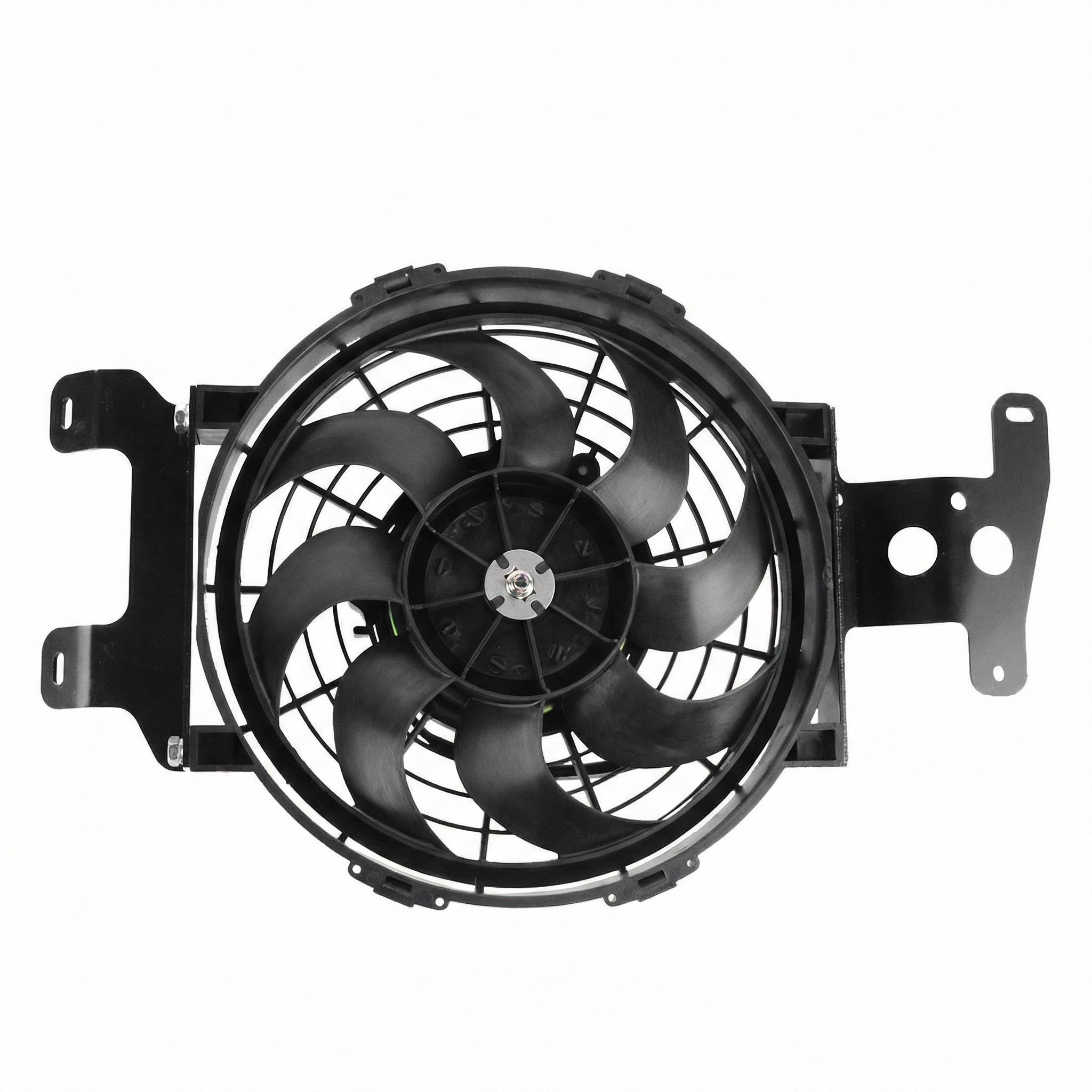
12V Electric Motor. Assembly includes motor, fan blades, and shroud. Later models use an integrated, variable-speed fan control module.
We Have This Part in Stock

The information in this article is provided for general reference and educational purposes only. Vehicle specifications, procedures, and part compatibility can vary by production date, trim level, and region. Always consult your vehicle's factory service manual and verify part numbers before purchasing or performing repairs. Safety-critical components such as airbags, seat belts, and braking systems should be installed by a qualified professional.
- Ford Explorer:
- Ford Flex:
- Lincoln MKT:
- Mercury Mountaineer:
- 🎬 Helpful Videos
- 🛍️ Shop This Part
- Vehicle-Specific Information and Part Differences
- Group 1: 2002-2010 Ford Explorer & Mercury Mountaineer
- Group 2: 2011-2012 Ford Explorer, 2010-2012 Ford Flex & 2010-2012 Lincoln MKT
- Known Issues: TSB for 2011-2012 Explorer, Flex & MKT
- Symptoms of a Failing Cooling Fan Motor
- Buying a Used A/C Condenser Fan Motor
- Cost Breakdown
- Step-by-Step Diagnosis
- Frequently Asked Questions (FAQ)
- 🎟️ Get 5% Off