

1997-1998 Ford Mustang A/C Condenser Fan: Why Your A/C is Warm at Idle
This guide covers the common failure symptoms, diagnosis, and replacement of the A/C condenser fan motor on 1997-1998 Ford Mustangs, helping you restore cold A/C performance.
- The most common symptom of failure is A/C that blows warm at idle but gets cold when the car is moving.
- A faulty fan can cause the engine to run hotter than normal in traffic, creating a risk of overheating.
- Diagnosis is simple: if the fan isn't spinning when the A/C is on, the motor is likely bad (after checking fuses/relays).
- When buying a used part, manually spin the fan to check for smooth, quiet operation and inspect the electrical connector for damage.
Symptoms of a Failing Condenser Fan Motor
When the A/C condenser fan motor begins to fail on a 1997-1998 Mustang, the signs are often directly related to the A/C's performance, especially in low-speed driving conditions.
- A/C Blows Warm at Idle: This is the most common symptom. When the car is stopped in traffic, the A/C blows cool or warm air, but gets colder once the car starts moving at speed. This happens because vehicle movement forces air through the condenser, temporarily doing the broken fan's job.
- Engine Temperature Creeps Up at Idle: While its primary job is for the A/C, the condenser fan also assists in engine cooling. If it fails, you might notice the engine temperature gauge rising slightly above normal when idling for long periods, especially in hot weather.
- Loud or Grinding Noises: A worn-out motor bearing can produce grinding, squealing, or buzzing sounds from the front of the car whenever the A/C is turned on.
- Visible Fan Malfunction: A clear sign of failure is when you turn the A/C on and can see that the fan blades are not spinning at all, or are spinning very slowly.
- Burning Smell: In severe cases, the motor can overheat and seize, sometimes producing a smell of burning plastic or electrical components. 🎬 Watch: 5 signs of a bad condenser fan and replacement costs.
Step-by-Step Diagnosis
Before buying a replacement part, a few simple checks can confirm the condenser fan motor is the culprit.
- Visual Inspection: With the engine off, look at the fan assembly. Check for any debris like leaves or plastic bags jamming the blades. Manually spin the fan blades (with the battery disconnected for safety); they should rotate smoothly with little resistance and no grinding noises.
- Functional Test: Start the engine and turn the A/C to its maximum setting. Go to the front of the car and look through the grille. The condenser fan should start spinning within a few seconds. If it doesn't, the motor or its circuit is faulty.
- Check for Power: If the fan doesn't spin, the next step is to see if it's receiving power. This requires a multimeter. Disconnect the fan's electrical connector. With the engine running and A/C on, carefully test the terminals on the vehicle-side of the connector for 12-volt power. If there is power but the fan doesn't run, the motor is bad. If there is no power, 🎬 See this video for a quick guide on testing the fan. the problem lies elsewhere, such as a blown fuse, a bad relay, or a wiring issue.
Pro Tip: If the fan tries to start but can't, or spins very slowly, you can (carefully!) give the blade a gentle push with a long screwdriver. If it then spins up to speed, this often points to a worn-out motor with a dead spot or a failing capacitor if the system uses one.
Buying a Used A/C Condenser Fan Motor
A used OEM condenser fan assembly can be a reliable and cost-effective solution. Here’s what to inspect before you buy.
- Verify Part Numbers: Ensure the part numbers match your original unit. Known OEM part numbers for the 1997-1998 Mustang are F8ZH8C607BB, F8ZHBB, and F8ZZ8C607BA.
- Inspect the Assembly: Check the entire unit, including the plastic shroud, for cracks or damage. Ensure all mounting points are intact.
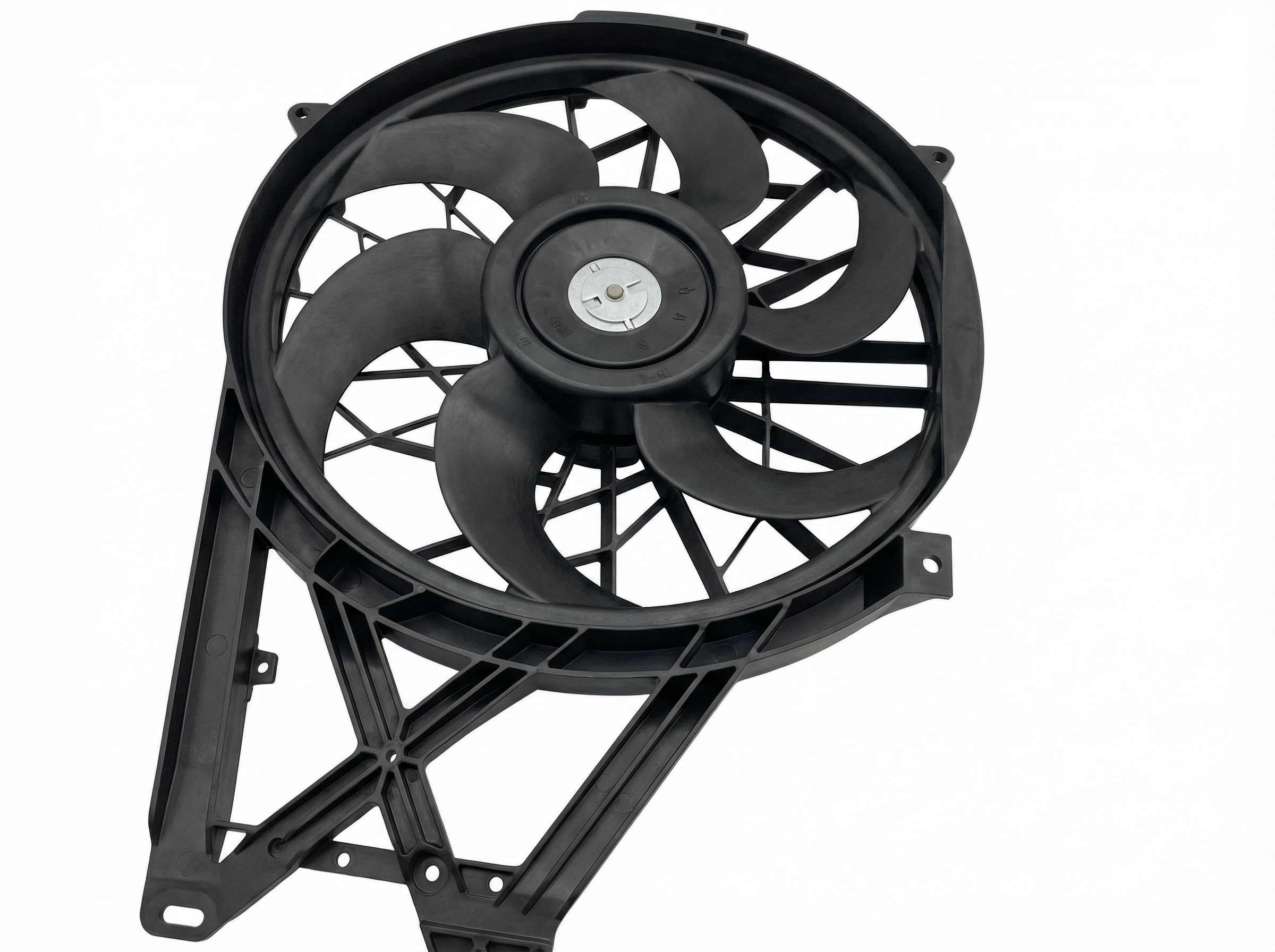
- Check the Fan Blade: Spin the fan blade by hand. It should feel smooth and quiet. Any grinding, wobbling, or excessive resistance indicates worn bearings, and you should pass on that unit. Also, inspect each blade for cracks or chips, which can cause imbalance and noise.
- Examine the Electrical Connector: Look closely at the electrical connector pins. They should be clean, straight, and free of any corrosion or signs of melting. A melted connector is a red flag for an overheating motor.
- Why Used OEM is a Good Choice: A genuine Ford part ensures a perfect fit for the shroud, mounting holes, and electrical connection. Some aftermarket units may require modifications or have different fan blade designs that can be less efficient or noisier than the original.
Replacement Cost Comparison
Prices can vary based on supplier and location. The fan is typically sold as a complete assembly with the motor, blade, and shroud.
| Part Type | Estimated Cost |
|---|---|
| New OEM | $200 - $350+ (if available) |
| New Aftermarket | $75 - $150 |
| Used OEM | $50 - $100 |
| Shop Labor | $130 - $200 |
(Pricing is an estimate as of early 2026 and does not include taxes or shipping.)
Installation Guide (Difficulty: 2/5)
Replacing the condenser fan is a straightforward job for a DIY mechanic with basic tools. The estimated time is about 1 to 1.5 hours.
- Disconnect the Battery: Always disconnect the negative battery terminal before working on any electrical components.
- Remove Top Covers: Remove the plastic radiator cover and any other brackets that obstruct access to the top of the fan shroud.
- Disconnect Electrical Connector: Unplug the fan motor's electrical harness.
- Unbolt the Fan Assembly: The fan assembly is typically held to the radiator or condenser with a few bolts at the top. Remove these bolts.
- Remove the Assembly: Carefully lift the fan assembly straight up and out of the engine bay, being mindful not to damage the radiator or condenser fins.
- Install the New Unit: Lower the replacement fan assembly into place, ensuring it seats correctly in any lower mounting tabs. Reinstall the bolts, reconnect the electrical plug, and replace the top covers. Reconnect the battery and test the A/C operation. 🎬 Watch this step-by-step Mustang condenser fan replacement walkthrough.
Known Issues, Recalls, and TSBs
As of early 2026, there are no specific recalls or widespread Technical Service Bulletins (TSBs) from Ford directly addressing the A/C condenser fan motor for the 1997-1998 Mustang. Failure of this part is generally considered a result of normal wear and tear due to age and mileage. However, there was a TSB for the 1996 model related to the condenser itself, which involved an updated design that was standard on 1997-1998 models.
Frequently Asked Questions (FAQ)
Can I drive my Mustang with a broken A/C condenser fan?
Yes, but with limitations. Your A/C will not work effectively when you are stopped or in slow traffic. There is also a minor risk of the engine running hotter than normal in these conditions, so it's best to get it repaired promptly, especially in warm climates.
Will a bad condenser fan cause the A/C compressor to fail?
It can. If the fan isn't running, the pressure and temperature in the A/C system can rise to excessive levels. This puts a major strain on the A/C compressor and can lead to premature failure of the compressor or other system components.
Why does my A/C get cold on the highway but not in town?
This is the classic symptom of a failed condenser fan. At highway speeds, the natural airflow from the car's movement is enough to cool the condenser. In town, with little to no natural airflow, the system relies entirely on the fan, and if it's not working, the system can't dissipate heat.
Is the radiator fan the same as the A/C condenser fan?
On many modern cars, one or two fans serve both purposes. On the 1997-1998 Mustang, the system uses a primary engine-driven fan (on V8 models) or an electric fan for the radiator and a separate, dedicated electric fan for the A/C condenser. This article specifically addresses the electric A/C condenser fan.
Helpful Videos
Technical Specifications
OEM Part Numbers: F8ZH8C607BB F8ZHBB F8ZZ8C607BA
Electric motor, typically sold as a complete assembly with fan blade and shroud.
We Have This Part in Stock

The information in this article is provided for general reference and educational purposes only. Vehicle specifications, procedures, and part compatibility can vary by production date, trim level, and region. Always consult your vehicle's factory service manual and verify part numbers before purchasing or performing repairs. Safety-critical components such as airbags, seat belts, and braking systems should be installed by a qualified professional.
- Ford Mustang: