

2012-2019 Fiat 500 A/C Condenser: Leaks, Road Debris Damage, and Replacement Guide
This definitive guide covers common failure symptoms, inspection tips for used parts, and the critical steps for replacing the A/C condenser in your 1.4L Fiat 500.
- The most common cause of condenser failure on a Fiat 500 is damage from road debris due to its exposed location.
- When replacing the condenser, you MUST also replace the A/C receiver/drier to prevent moisture contamination and future system failure.
- While the physical replacement can be a DIY job, the A/C system must be legally and safely evacuated and recharged by a certified professional.
- A good quality used OEM condenser can be a reliable, cost-effective alternative to expensive new OEM or cheap aftermarket parts, provided it is inspected carefully for leaks and damage.
Symptoms of a Failing A/C Condenser
When the A/C condenser in a Fiat 500 begins to fail, the signs are usually straightforward. Because its job is to release heat, any failure directly impacts cooling performance.
- Warm Air from Vents: This is the most common symptom. If you turn on your A/C and get lukewarm or ambient-temperature air, the condenser may be to blame. A leak will have allowed the refrigerant to escape, or a blockage is preventing it from flowing correctly.
- Visible Leaks or Oily Residue: The condenser is located at the very front of the car. Inspect it through the lower grille. If you see an oily, wet-looking substance on its surface, it's likely leaking refrigerant mixed with lubricating oil. Sometimes, a fluorescent green or yellow dye is added to the system, making leaks easier to spot.
- Physical Damage: Look for bent or crushed cooling fins, dents, or cracks. Because of its forward-facing position, the condenser is highly susceptible to damage from rocks and other road debris.
- Hissing Sounds: A hissing noise from the front of the car or from the dashboard vents can indicate refrigerant escaping from a leak in the system. It can also sometimes be heard if the system is very low on charge.
- A/C Only Works While Moving: If the A/C gets warmer when you're stopped in traffic but cools down when you're driving at speed, it can point to a problem with airflow over the condenser. This could be a failing radiator fan or a condenser whose fins are clogged with dirt and debris, preventing heat exchange at low speeds.
Known Issues: Why Fiat 500 Condensers Fail
For the 2012-2019 Fiat 500, the leading cause of condenser failure is its vulnerability to physical damage. Its placement directly behind the front bumper's lower grille offers little protection from stones and road debris kicked up by other vehicles. A single impact can puncture a tube or crack a weld, causing all the refrigerant to leak out.
Forum discussions also mention premature deterioration and corrosion on some vehicles, leading to leaks over time. In modified cars, particularly Abarth models with aftermarket front-mount intercoolers, there have been reports of the intercooler rubbing against the condenser and causing a hole. If you have an aftermarket intercooler, ensure there is adequate clearance and padding between it and the condenser.
Pro Tip: When washing your car, gently spray the condenser through the grille with a hose to remove bugs, leaves, and dirt. This improves airflow and helps the A/C system run more efficiently.
Buying a Used A/C Condenser: What to Check
A used OEM condenser can be a smart, budget-friendly choice, as factory parts often have superior construction compared to the cheapest aftermarket options. However, a thorough inspection is crucial before buying.
- Inspect the Fins: A few bent fins are normal and can be gently straightened with a fin comb. However, walk away from any condenser with large areas of crushed or flattened fins, as this will severely restrict airflow and reduce performance.
- Check for Leaks: Look for dark, oily stains or residue, which are tell-tale signs of a past leak. Pay close attention to the areas where the lines connect and along the welded seams on the sides. Do not purchase a condenser that shows any evidence of leakage.
- Examine for Corrosion: Check for heavy white, powdery corrosion on the aluminum body and fins. While minor surface oxidation is common, heavy corrosion can weaken the metal and lead to future leaks.
- Verify Connections: Ensure the inlet and outlet ports are clean, undamaged, and still have their plastic shipping caps if possible. This prevents moisture and debris from entering the unit.
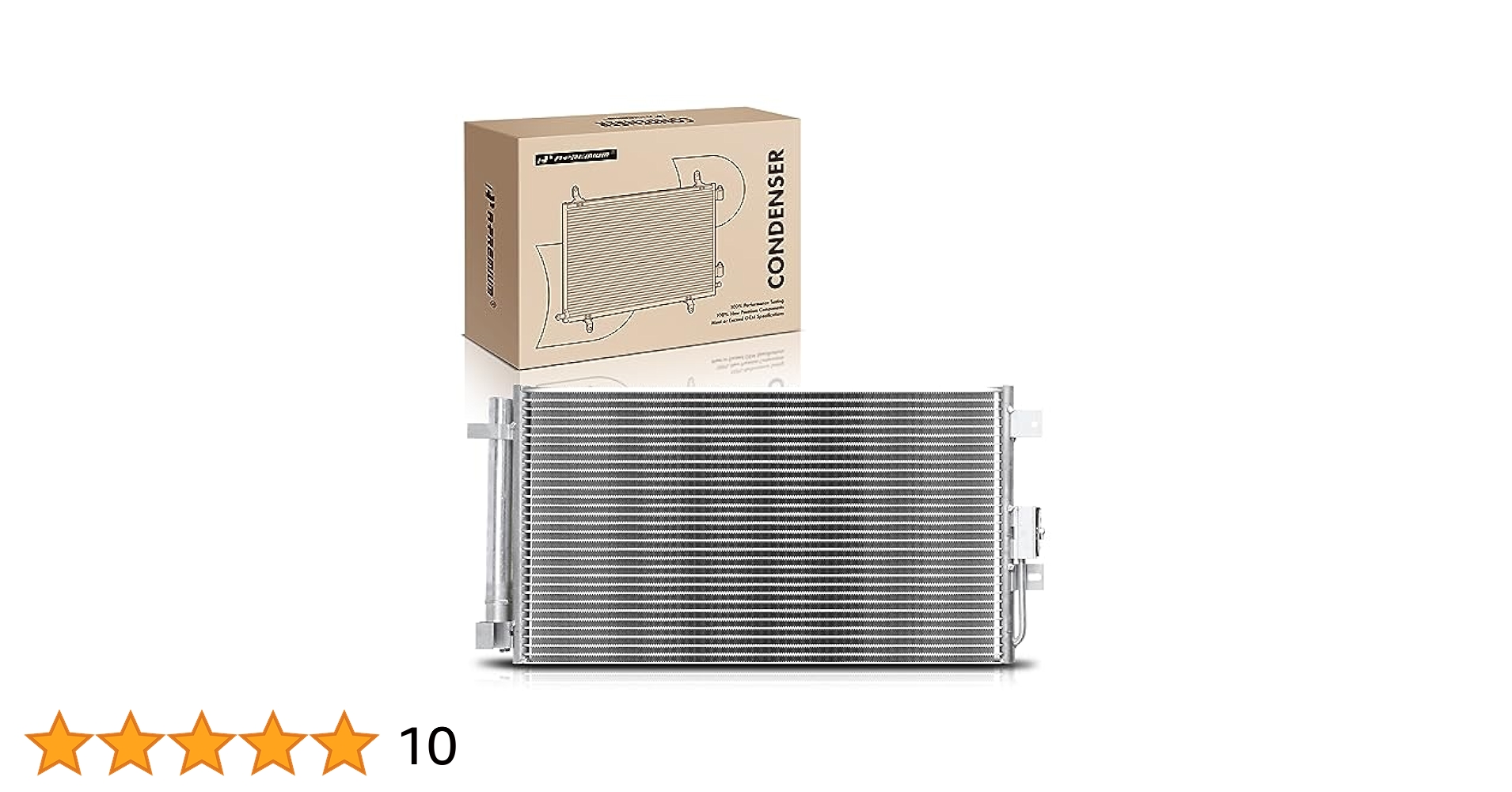
- Confirm the Receiver/Drier: Many aftermarket condensers for the Fiat 500 come with a new receiver/drier (the small canister attached to the side) already installed. If you are buying a used OEM condenser, you MUST install a new, separate receiver/drier. Do not reuse the old one. Factor the cost of a new drier (typically $20-$40) into your budget.
Replacement Overview and Difficulty
- Difficulty Rating: 3/5
- Estimated Time: 2 hours for physical replacement, plus professional A/C service.
- DIY Feasible: Yes, for the mechanical portion.
Replacing the condenser is a multi-step process. The most time-consuming part is removing the front bumper cover to gain access. Once the bumper is off, the condenser itself is typically held by just a few bolts.
Warning: It is illegal and unsafe to release A/C refrigerant into the atmosphere. Before you begin any work, the system must be professionally evacuated by a certified A/C technician using a recovery machine. After the new condenser is installed, the system must be vacuum-tested for leaks and then recharged with the correct amount of refrigerant and oil by a professional.
General Steps:
- Have the A/C system professionally evacuated.
- Disconnect the vehicle's battery.
- Remove the front bumper cover. This involves removing screws in the wheel wells, under the bumper, and on top near the radiator support.
- Disconnect the A/C lines from the condenser. Be prepared for a small amount of residual oil to drip out.
- Unbolt and remove the old condenser.
- If your new condenser does not include a receiver/drier, replace it now.
- Install the new condenser, ensuring all mounting brackets are secure.
- Lubricate new O-rings with refrigerant oil and install them on the A/C line connections.
- Reconnect the A/C lines and torque the fittings to specification.
- Reinstall the front bumper cover.
- Take the vehicle back to an A/C shop to have the system vacuumed, checked for leaks, and recharged.
Cost of Replacing a 2012-2019 Fiat 500 A/C Condenser
Prices can vary based on your location and choice of parts. Labor costs typically range from $250 to $400, which includes evacuating and recharging the system.
| Part Type | Estimated Price Range |
|---|---|
| New OEM (Mopar) | $290 - $435 |
| New Aftermarket | $70 - $260 |
| Used OEM | $75 - $150 |
| Shop Labor (incl. A/C Service) | $250 - $400 |
Official Recalls and Technical Service Bulletins (TSBs)
As of early 2026, there are no official recalls or Technical Service Bulletins (TSBs) issued by Fiat or the NHTSA specifically for the A/C condenser on 2012-2019 Fiat 500 models in the North American market. Any failures are typically addressed as individual repairs.
Frequently Asked Questions (FAQ)
Do I have to replace the receiver/drier with the condenser?
Yes, absolutely. The receiver/drier contains a desiccant material that absorbs moisture from the refrigerant. The moment you open the A/C system, this material becomes saturated with moisture from the air and is rendered useless. Not replacing it will cause corrosion, poor performance, and can quickly destroy your new condenser and compressor.
Can I just use a stop-leak product?
It is strongly advised not to use A/C stop-leak products. These sealants can clog not only the leak but also critical components like the expansion valve, orifice tube, and the small passages within the new condenser, leading to a much more expensive repair down the road.
My A/C is blowing warm. How do I know it's the condenser and not the compressor?
A technician can perform a pressure test. If the system cannot hold pressure, there is a leak. A visual inspection will often reveal if the condenser is the source of the leak. If the system is holding pressure but not cooling, the problem may lie with the compressor, clutch, or an electrical issue. A noisy compressor is also a clear sign of a problem with that component.
Will a bad condenser make my car overheat?
It can, but it's not common. The condenser sits in front of the engine's radiator. If the condenser's fins are severely clogged with debris or badly damaged, it can block airflow to the radiator, potentially causing the engine to run hotter, especially when idling or in slow-moving traffic.
Technical Specifications
OEM Part Numbers: 68073679AA
Material: Aluminum. Fits: 2012-2019 Fiat 500 with 1.4L engine (all submodels including Pop, Lounge, Sport, Abarth).
We Have This Part in Stock

The information in this article is provided for general reference and educational purposes only. Vehicle specifications, procedures, and part compatibility can vary by production date, trim level, and region. Always consult your vehicle's factory service manual and verify part numbers before purchasing or performing repairs. Safety-critical components such as airbags, seat belts, and braking systems should be installed by a qualified professional.
- Fiat 500:
- 🛍️ Shop This Part
- Symptoms of a Failing A/C Condenser
- Known Issues: Why Fiat 500 Condensers Fail
- Buying a Used A/C Condenser: What to Check
- Replacement Overview and Difficulty
- Cost of Replacing a 2012-2019 Fiat 500 A/C Condenser
- Official Recalls and Technical Service Bulletins (TSBs)
- Frequently Asked Questions (FAQ)
- 🎟️ Get 5% Off