

Mazda 3 & 6 A/C Condenser Guide (2010-2021): Leaks, Part Numbers & Replacement
This guide covers common A/C condenser failures for the 2010-2018 Mazda 3 and 2014-2021 Mazda 6, and clarifies the critical part differences between vehicle generations.
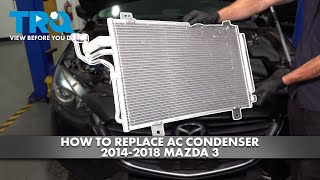
- There are two different, non-interchangeable condensers: one for the 2010-2013 Mazda 3, and another for the 2014-2018 Mazda 3 and 2014-2021 Mazda 6.
- The most common failure is a leak caused by road debris impact, which can be identified by an oily residue on the condenser's fins.
- Replacement is not a simple DIY job because it requires specialized equipment to legally recover, vacuum, and recharge the A/C system's refrigerant.
- Whenever the condenser is replaced, the receiver/drier (desiccant bag) MUST also be replaced to prevent moisture from destroying the new components.
Symptoms of a Failing A/C Condenser
A bad A/C condenser will prevent your air conditioning from working correctly. Watch for these common signs of failure.
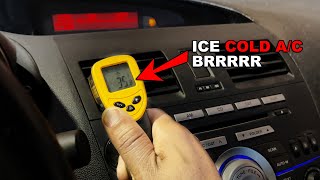
- A/C Blows Warm or Lukewarm Air: This is the most obvious symptom. A damaged, clogged, or leaking condenser cannot effectively cool the refrigerant, resulting in poor A/C performance. The system may work for a few minutes and then start blowing warm air.
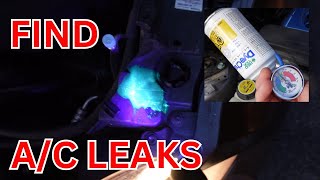
- Visible Refrigerant Leak: The condenser can develop leaks from corrosion or impact damage. You may see an oily, greasy, and sometimes greenish residue on the condenser fins or notice a puddle of this substance under the front of the car. This residue is refrigerant oil that escapes along with the gaseous refrigerant.
- A/C System Shuts Down Unexpectedly: Modern A/C systems have high-pressure sensors that will automatically shut down the A/C compressor if the pressure gets too high. A blocked or clogged condenser can't release heat, causing pressure to build until the system shuts itself off to prevent catastrophic damage.
- Burning Smell from Vents: In cases of a severe blockage, the condenser can't dissipate heat. This causes system pressures to skyrocket, which can lead to other components overheating and emitting a burning smell. If you smell this, turn off the A/C immediately to prevent further damage.
- Engine Overheats While Idling: Though rare, a condenser that is severely clogged with dirt and debris can block airflow to the engine's radiator located directly behind it. This can cause the engine to overheat when the car is stationary, such as in traffic.
Vehicle Compatibility & Part Number Guide
It is critical to understand that there are two different A/C condensers used across these vehicles, depending on the generation. The initial vehicle list covers two distinct platforms.
Warning: The parts for the 2010-2013 Mazda 3 and the 2014+ models are NOT interchangeable. Ordering the wrong part will lead to installation issues.
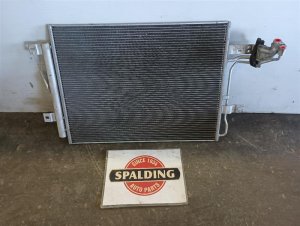
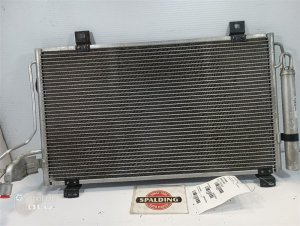
2014-2018 Mazda 3 & 2014-2021 Mazda 6
The third-generation Mazda 3 (chassis codes BM, BN) and the third-generation Mazda 6 (chassis codes GJ, GL) are built on a similar platform and share the same A/C condenser for non-turbo engines.
- OEM Part Numbers: GHR161480, GHR161480A, GHR161480B, BJS861480, GHP961480B
- Vehicles:
- 2014-2018 Mazda 3 (2.0L & 2.5L non-turbo engines) 🎬 Watch this step-by-step 2014-2018 Mazda 3 condenser replacement guide.
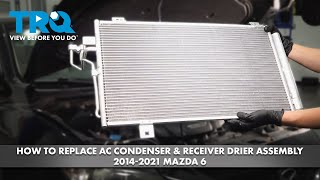
- 2014-2021 Mazda 6 (2.5L non-turbo engine) 🎬 See how to replace the condenser on a Mazda 6.
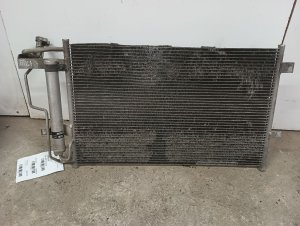
2010-2013 Mazda 3
The second-generation Mazda 3 (chassis code BL) uses a different condenser. This part is specific to this generation and does not fit the newer models.
- OEM Part Numbers: BBP261480A, BBP261480B, BBP261480C, BBY26148ZA, BBM461480C
- Vehicles:
- 2010-2013 Mazda 3 (Sedan & Hatchback with 2.0L or 2.5L engines) 🎬 Watch this video on replacing a 2010 Mazda 3 condenser.
Known Issues, TSBs, and Recalls
While there are no specific recalls for the A/C condenser on these Mazda models, several Technical Service Bulletins (TSBs) address related A/C performance issues. If you are diagnosing a problem, it's helpful to be aware of these other potential causes.
- 2014-2016 Mazda 3: TSB 07-003/16 was issued for models with manual A/C where the temperature knob doesn't change the air temperature. This is due to a faulty mix door link behind the dashboard, not the condenser.
- 2014 Mazda 3: TSB 07-002/15 notes that a lack of cool air can be caused by refrigerant leaking from the evaporator core inside the dashboard.
- Owner Complaints: Some owners of both second and third-generation Mazda 3s have reported that the A/C system feels weak in very hot weather, which may be a characteristic of the system's design rather than a specific part failure.
Buying a Used A/C Condenser: Inspection Checklist
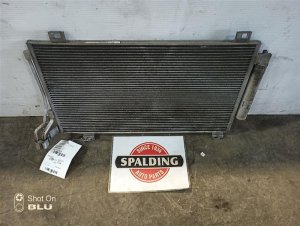
A high-quality, inspected used OEM condenser can be a reliable and cost-effective alternative to a new part. Cheap aftermarket condensers may use lower-grade aluminum and have fewer cooling fins, leading to reduced performance and a shorter lifespan. Here’s what to check before buying a used unit.
Pro Tip: Modern condensers have an integrated receiver/drier (also called a desiccant bag) that is not sold separately. When buying used, ensure you get the complete assembly.
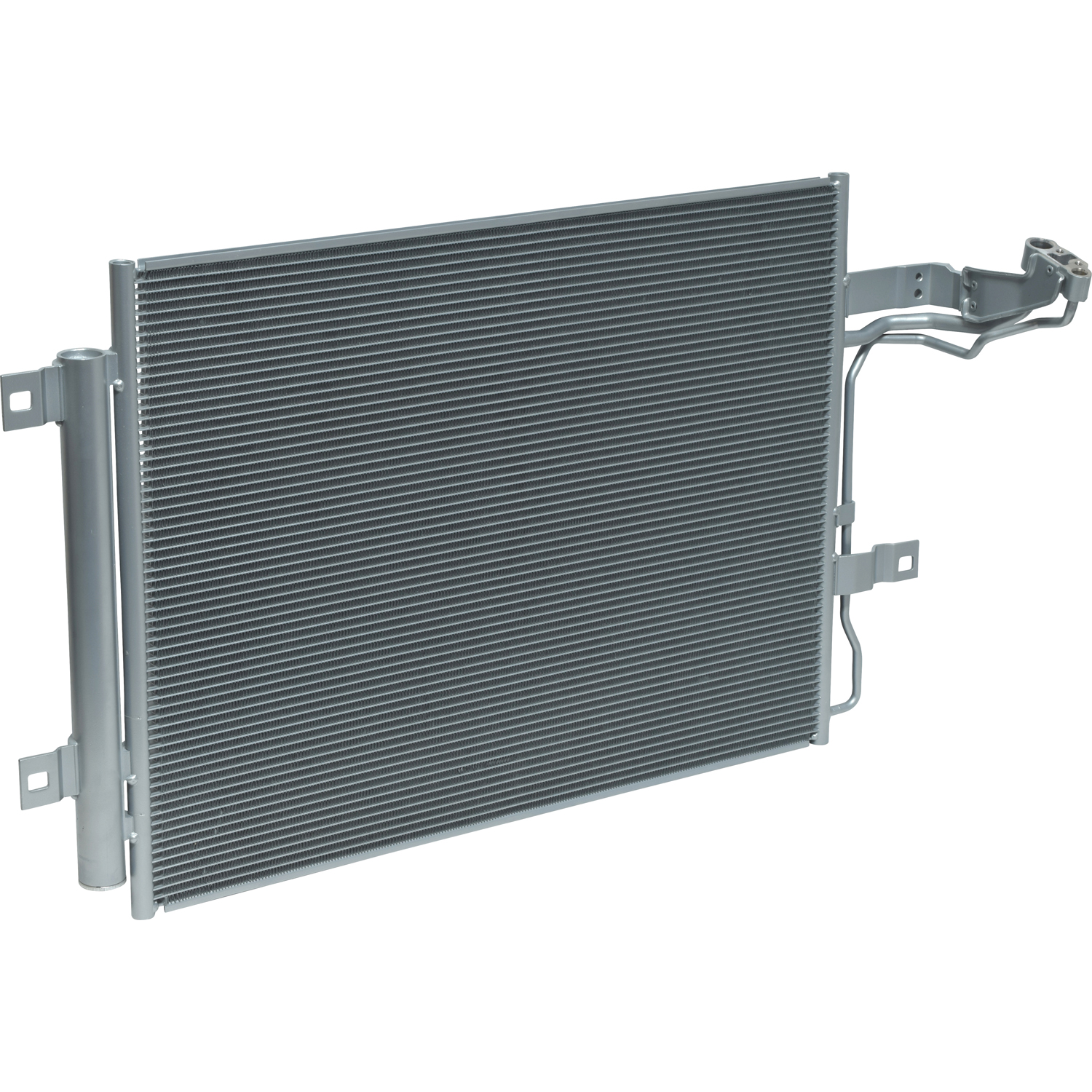
- Check for Oily Residue: This is the #1 red flag. Use a flashlight to inspect the entire finned surface, welds, and connection points. Any oily film, even a small amount, indicates a refrigerant leak. Do not buy a condenser that shows any sign of a leak.
- Inspect the Fins for Damage: Look for large areas of bent, flattened, or crumbling fins. While a few bent fins from small pebbles are normal, major damage will block airflow and significantly reduce performance.
- Examine for Corrosion: Check for white, chalky corrosion, especially where the fins meet the tubes. Severe corrosion weakens the aluminum and can lead to future leaks.
- Verify Mounting Points and Connections: Ensure all mounting tabs are intact and not cracked. Check that the inlet and outlet pipe connections are clean, round, and free of damage to ensure a proper seal.
Cost Comparison for A/C Condenser Replacement
| Part/Service | Estimated Cost | Notes |
|---|---|---|
| New OEM | $400 - $500 | Price for the part only, purchased from a dealer. |
| New Aftermarket | $100 - $175 | Quality can vary significantly between brands. |
| Used OEM | $75 - $150 | A cost-effective option if properly inspected. |
| Shop Labor | $375 - $550 | Includes system evacuation, installation, and recharge. |
| Total Professional Replacement | $550 - $1,100 | Depending on parts used and local labor rates. |
Replacement Overview & Difficulty
Replacing the A/C condenser is a moderately difficult job that is not recommended for beginners. The primary challenge is that it requires specialized equipment to legally and safely recover refrigerant from the system before starting, and then to pull a vacuum and recharge the system afterward.
- Difficulty Rating: 3/5
- DIY Feasible: Only for advanced DIYers with A/C service equipment.
- General Steps:
- Have a professional shop evacuate the A/C system's refrigerant.
- Remove the front bumper cover and other plastic shields.
- On some models, like the 2010-2013 Mazda 3, the headlights and radiator core support may need to be removed for access.
- Disconnect the A/C lines from the condenser. Be sure to use new O-rings on reassembly.
- Unbolt the condenser from the radiator. The two often come out as a single assembly.
- Transfer any necessary brackets to the new condenser.
- Install the new condenser and reassemble all components.
- Crucially, you must replace the receiver/drier (desiccant) element. Failure to do so will introduce moisture into the system and cause premature failure of the new components.
- Take the vehicle back to a shop to have the system vacuum tested for leaks and recharged with the correct amount of refrigerant and oil.
Frequently Asked Questions
Why is my A/C only cold when I'm driving?
This is a classic symptom of poor airflow across the condenser. When the car is moving, air is forced through the fins, allowing the system to cool. When you stop, a failing cooling fan isn't pulling enough air through, causing the system's pressure and temperature to rise and performance to drop. While this points to the fan, a condenser clogged with debris can also cause this issue.
Do I have to replace the receiver/drier with the condenser?
Yes, absolutely. The receiver/drier contains a desiccant material that absorbs moisture from the refrigerant. The moment you open the A/C system, this material is exposed to humidity in the air and becomes saturated. Reusing an old drier will leave moisture in the system, which can lead to corrosion and damage to the new condenser and compressor.
Can I just add more refrigerant if it's leaking?
No. Adding refrigerant to a leaking system is only a temporary fix and is harmful to the environment. The system will lose pressure again, and running the A/C compressor on a low charge can cause it to overheat and fail, leading to a much more expensive repair. The leak must be properly repaired.
What is the oily fluid leaking from the front of my car?
If you see a thin, oily residue on or under your A/C condenser, you are seeing refrigerant oil. This oil circulates with the refrigerant to lubricate the A/C compressor. Its presence is a definitive sign of a refrigerant leak that needs to be fixed.
Helpful Videos
Technical Specifications
OEM Part Numbers: GHR161480 GHR161480A GHR161480B BJS861480 GHP961480B BBP261480A BBP261480B BBP261480C BBY26148ZA BBM461480C
Material: Aluminum. Construction: Parallel Flow. Includes integrated receiver/drier.
We Have This Part in Stock

The information in this article is provided for general reference and educational purposes only. Vehicle specifications, procedures, and part compatibility can vary by production date, trim level, and region. Always consult your vehicle's factory service manual and verify part numbers before purchasing or performing repairs. Safety-critical components such as airbags, seat belts, and braking systems should be installed by a qualified professional.
- Mazda 3:
- Mazda 6:
- 🎬 Helpful Videos
- 🛍️ Shop This Part
- Symptoms of a Failing A/C Condenser
- Vehicle Compatibility & Part Number Guide
- 2014-2018 Mazda 3 & 2014-2021 Mazda 6
- 2010-2013 Mazda 3
- Known Issues, TSBs, and Recalls
- Buying a Used A/C Condenser: Inspection Checklist
- Cost Comparison for A/C Condenser Replacement
- Replacement Overview & Difficulty
- 🎟️ Get 5% Off