

2016-2025 Corolla, Prius & Corolla Cross A/C Condenser: Decoding Part Numbers and Common Failures
This guide clarifies the confusing part number variations for the A/C condenser in late-model Toyota hybrids and Corollas, and details how to diagnose and replace a faulty unit.
- Compatibility is extremely specific; 2023+ Prius and Prius Prime models use different condensers.
- Verify the exact OEM part number before purchasing a replacement to ensure correct fitment.
- Replacement is not a DIY job because it requires expensive, specialized equipment for handling refrigerant legally and safely.
- The most common cause of failure is physical damage from road debris, not a manufacturing defect.
A Note on Shared Parts
The A/C condensers covered in this guide are used across the 2020-2025 Toyota Corolla, 2016-2025 Toyota Prius, 2023-2025 Toyota Corolla Cross, and 2023-2025 Toyota Prius Prime. These vehicles share a common manufacturing platform (Toyota's TNGA-C platform), which means many parts, including components of the A/C system, are identical. However, compatibility is extremely specific and depends on the model, year, and drivetrain (standard hybrid vs. plug-in hybrid). Always verify the exact OEM part number before purchasing.
Part Number and Vehicle Compatibility
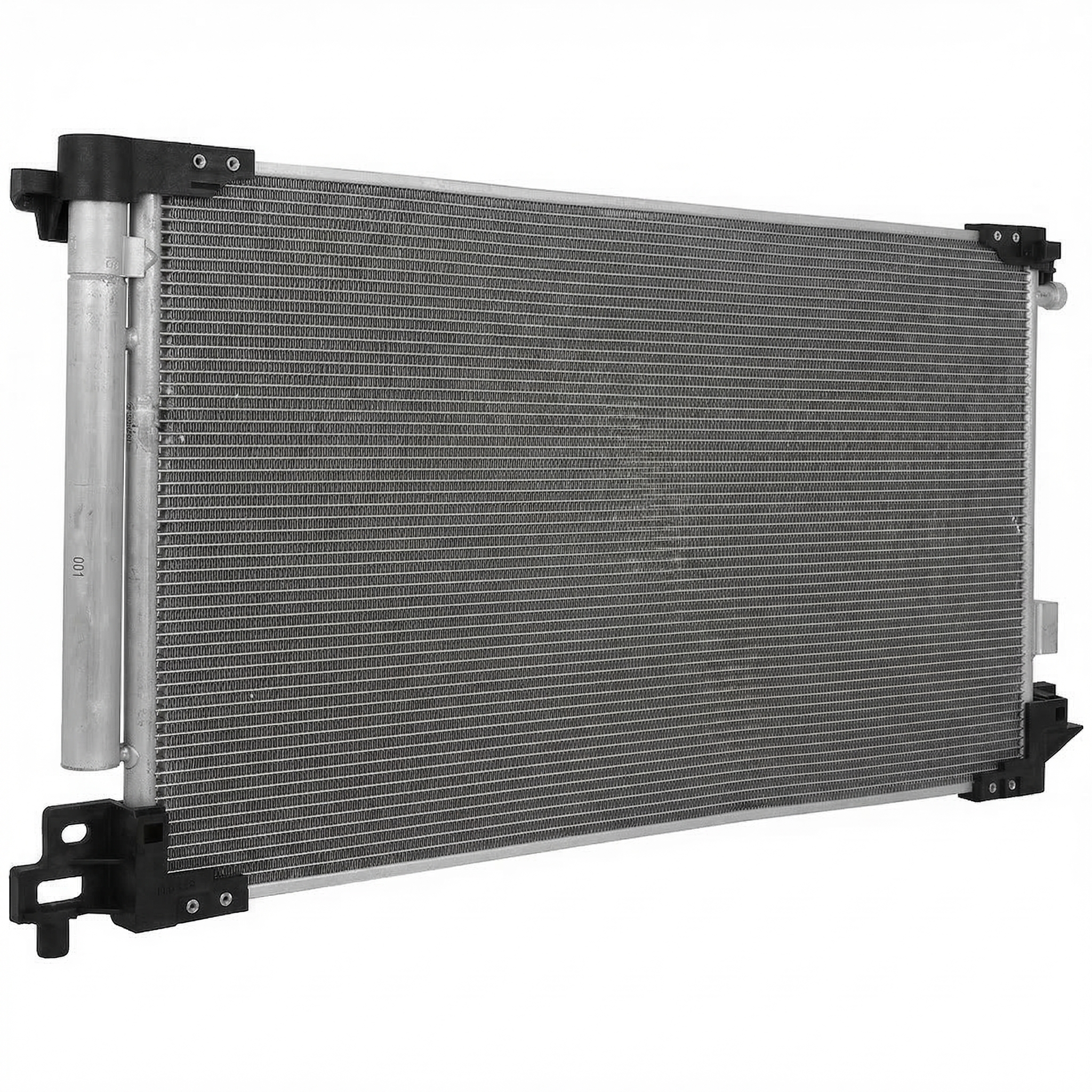
Choosing the correct A/C condenser is critical, as there are several different parts that look similar but are not interchangeable. Using the wrong part can lead to improper fit, leaks, or A/C system damage. The primary difference often lies in the pipe connections and mounting brackets. Refer to the table below to find the correct part number for your specific vehicle.
Warning: Fitment for the 2023-2025 Toyota Prius is split. Standard Hybrid (HEV) models use a different condenser than the Plug-In Hybrid (PHEV) Prius Prime models. Verify which hybrid system your vehicle has before ordering.
| Part Number | Vehicle Fitment | Engine/Drivetrain | Notes |
|---|---|---|---|
| 88460-10320 (replaces 88460-47020) |
• 2016-2022 Toyota Prius • 2020-2025 Toyota Corolla Sedan |
1.8L Hybrid | This is a common part for the previous generation Prius and hybrid Corollas. |
| 884A0-0A080 (replaces 884A0-12110) |
• 2023-2025 Toyota Prius • 2023-2025 Toyota Corolla Cross |
2.0L Hybrid (Standard, non-PHEV) | Fits the newer generation standard hybrids. |
| 884A0-47020 | • 2023-2025 Toyota Prius Prime | 2.0L Plug-In Hybrid (PHEV) | This part is specific to the Plug-In Hybrid Prime models. |
Symptoms of a Failing A/C Condenser
A failing A/C condenser will quickly make itself known, especially on hot days. Here are the most common symptoms to watch for:
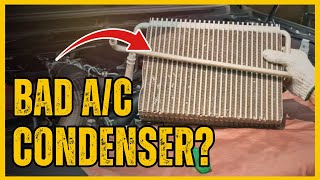
🎬 Watch: 7 symptoms of a bad condenser and replacement costs- Warm Air From Vents: This is the most obvious sign. If the condenser is blocked or leaking, it can't cool the refrigerant, and the air coming from your vents will be warm or only slightly cool.
- A/C Works at High Speeds, But Not at Idle: If the A/C gets colder when you're driving on the highway but blows warm in stop-and-go traffic, it could mean the condenser isn't getting enough airflow. This can be caused by a faulty cooling fan or debris blocking the fins.
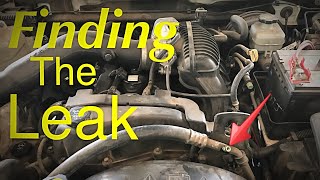
- Visible Leaks: The condenser is located at the very front of the car, making it vulnerable to damage from road debris. A puncture will cause refrigerant to leak out. You may notice an oily residue on the condenser fins. If a UV dye has been added to the system previously, the leak will appear as a bright green or yellow stain. 🎬 See how to find A/C leaks fast and simple
- Burning Smell: If the A/C system is struggling to release heat due to a faulty condenser, other components can get too hot, sometimes producing a burning smell from the vents.
- Vehicle Overheating at Idle: The A/C condenser sits in front of the radiator and releases a lot of heat. If the condenser is blocked or not working properly, it can restrict airflow to the radiator, causing the engine to run hotter than normal, especially when the car is stationary.
Known Issues, TSBs, and Recalls
As of early 2026, there are no widespread recalls or Technical Service Bulletins (TSBs) specifically for A/C condenser failure on these Toyota models. The most common cause of failure is not a manufacturing defect, but rather physical damage.
- Road Debris Damage: Because of its forward-facing position, the condenser is highly susceptible to being punctured by rocks and other debris kicked up on the road. This can cause a sudden loss of refrigerant and A/C function.
- Corrosion: In areas that use road salt during the winter, the aluminum fins and tubes of the condenser can corrode over time, leading to weak spots and eventual leaks.
Buying a Used A/C Condenser
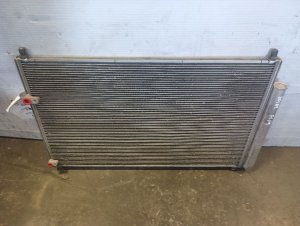
A used OEM condenser can be a cost-effective alternative to a new part, but careful inspection is key. Since this part's function relies on being sealed and undamaged, you must check it thoroughly before buying.
- Verify the Part Number: This is the most important step. As shown in the table above, there are multiple, non-interchangeable parts. Match the part number from your old condenser exactly or confirm compatibility with a trusted source.
- Inspect for Physical Damage: Look at the condenser in good light. Check for any bent or crushed fins. While a few bent fins are normal and won't significantly affect performance, large areas of damage will reduce cooling efficiency.
- Check for Leaks: Look for any oily residue, which is a tell-tale sign of a refrigerant leak. Pay close attention to the welds where the lines connect to the body of the condenser.
- Examine the Fittings: Ensure the inlet and outlet pipe fittings are perfectly round and free of cracks or deep scratches. Damaged fittings will prevent the A/C lines from sealing properly, causing a leak.
- Consider the Source Vehicle: If possible, find out the history of the vehicle the part came from. A condenser from a low-mileage, front-end collision vehicle (where the condenser itself was untouched) is often a better bet than one from a high-mileage car with a worn-out A/C system.
- Why Used OEM is a Good Choice: A genuine used Toyota condenser is built to the original factory specifications for material quality and fitment. This ensures it will bolt in correctly and the line fittings will match perfectly, which is not always the case with cheaper, new aftermarket parts.
Replacement Difficulty & Procedure Overview
- Difficulty Rating: 4 out of 5
- DIY Feasible: Not Recommended
While the mechanical steps of replacing the condenser are straightforward for an experienced DIYer, handling the refrigerant is not. Federal law requires the use of special equipment to recover refrigerant from the system before it is opened, and to pull a vacuum and recharge it after the repair. Attempting to release refrigerant into the atmosphere is illegal and harmful to the environment.
Pro Tip: It is highly recommended to also replace the A/C receiver/drier (or desiccant bag) anytime the system is opened to the atmosphere. This small component absorbs moisture that can contaminate the system and cause damage to the compressor. Most OEM condensers come with a new drier already installed.
The general replacement steps are:
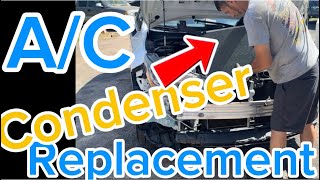
🎬 Watch this 2020 Toyota Corolla condenser replacement walkthrough- A certified technician recovers all refrigerant from the A/C system.
- The front bumper cover and various plastic shields are removed to access the condenser.
- The high- and low-side A/C lines are disconnected from the condenser.
- Mounting bolts are removed, and the condenser is carefully lifted out.
- The new condenser is installed, and new O-rings (lubricated with PAG oil) are used on the A/C line fittings.
- The system is reassembled.
- A vacuum pump is connected to the system to remove all air and moisture for at least 30 minutes.
- The system is recharged with the manufacturer-specified amount and type of refrigerant (typically R-1234yf for these newer models).
- The system is tested for proper operation and leaks.
Cost Comparison
Prices can vary by location and supplier, but this table provides a general estimate for replacing the A/C condenser.
| Part Type | Estimated Cost | Notes |
|---|---|---|
| New OEM | $250 - $410 | Genuine Toyota part offering the best fit and quality. |
| New Aftermarket | $75 - $150 | Lower cost, but fit and quality can be inconsistent. |
| Used OEM | $150 - $320 | A good balance of cost and quality, if inspected carefully. |
| Shop Labor | $450 - $700 | Includes refrigerant recovery, vacuum, and recharge. Labor time is typically 3-5 hours. |
Frequently Asked Questions
Can I just add more refrigerant if my A/C isn't cold?
If your system is not cold because of a leak, adding more refrigerant is only a temporary fix that releases harmful chemicals into the atmosphere. The A/C system is a sealed loop; if it's low on refrigerant, there is a leak that must be repaired first. Topping it off without fixing the leak is wasteful and environmentally irresponsible.
Do I need to replace any other parts with the condenser?
Yes, you should always replace the receiver/drier or desiccant bag when you replace the condenser. This part absorbs moisture from the refrigerant. A new one ensures the system stays clean and dry, which is critical for the longevity of the A/C compressor. If the old A/C compressor failed and sent debris through the system, a full system flush and replacement of the expansion valve may also be necessary.
What kind of refrigerant do these vehicles use?
Most vehicles manufactured after 2016, including these Toyota models, use R-1234yf refrigerant. This is a newer, more environmentally friendly refrigerant that is not compatible with the older R-134a systems. R-1234yf and the equipment to service it are significantly more expensive.
Why did my A/C condenser fail?
The most common reason for failure is a puncture from a rock or other road debris. Its location at the very front of the car makes it vulnerable. The second most common cause is corrosion from road salt in winter climates, which can eat away at the aluminum and cause pinhole leaks over many years.
Helpful Videos

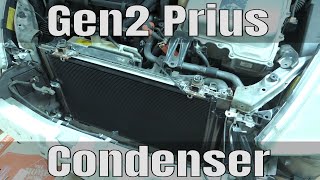
Technical Specifications
OEM Part Numbers: 88460-10320 88460-47020 884A0-0A080 884A0-12110 884A0-47020
Material: Aluminum. Configuration: Parallel Flow. Includes integrated receiver/drier.
We Have This Part in Stock

The information in this article is provided for general reference and educational purposes only. Vehicle specifications, procedures, and part compatibility can vary by production date, trim level, and region. Always consult your vehicle's factory service manual and verify part numbers before purchasing or performing repairs. Safety-critical components such as airbags, seat belts, and braking systems should be installed by a qualified professional.
- Toyota Corolla:
- Toyota Prius:
- Toyota Corolla Cross:
- Toyota Prius Prime: