

2015-2025 Colorado & Canyon ABS Module: Stabilitrak Lights and Programming Guide
This guide covers the mandatory programming, common failure symptoms, and replacement costs for the ABS control module in your Chevrolet Colorado or GMC Canyon.
- A replacement ABS module, whether new or used, MUST be programmed to your truck's VIN by a dealer or qualified shop to function.
- Failure almost always triggers the ABS, Traction Control, and Stabilitrak warning lights to come on together.
- After replacing the full pump assembly, a special 'automated bleed' procedure using a scan tool is required to remove air from the system.
- Before replacing the module, always check for damaged wheel speed sensor wiring, as this can cause identical symptoms and is a common issue.
Symptoms of a Failing ABS Module

When the ABS module in a 2015-2025 Chevrolet Colorado or GMC Canyon begins to fail, it typically announces the problem with a distinct set of dashboard warnings. Because the module controls multiple systems, you will likely see several lights appear at once.
- ABS, Traction Control, and Stabilitrak Lights: The most common symptom is having the ABS, Traction Control Off, and Service Stabilitrak warning lights all illuminate on the instrument cluster simultaneously. This indicates the entire system has detected a critical fault and has been disabled.
- Unresponsive or Spongy Brake Pedal: You might notice the brake pedal feels different, either requiring more effort to press or feeling soft and unresponsive.
- Wheels Locking Up: With the ABS system disabled, your wheels can lock up and skid during a hard stop, especially on wet or loose surfaces. This is a return to how brakes behaved before ABS was standard.
- ABS Activates Randomly: Some drivers report feeling the ABS pump activate and the pedal pulsate at low speeds on dry pavement, when there is no reason for the system to engage.
- Inaccurate Speedometer: In some vehicles, the ABS module plays a role in processing wheel speed data for the speedometer. A faulty module can lead to incorrect speed readings or a speedometer that doesn't work at all.
Common Diagnostic Trouble Codes (DTCs)
A professional scan tool capable of reading the ABS module is required to retrieve these codes; a basic engine code reader often won't see them. While many codes point to specific wheel speed sensors (e.g., C0035, C0040), a faulty module can also be the root cause. Codes indicating an internal module failure are more definitive.
- C0035-C0051 range: These codes typically point to a specific wheel speed sensor circuit (e.g., Left Front, Right Rear). While often caused by a bad sensor or damaged wiring, they can also be triggered by a fault within the ABS module itself.
- C121C, C121E, C1255: These are examples of General Motors codes that point to internal communication errors or malfunctions within the Electronic Brake Control Module (EBCM) itself.
- U-series codes (e.g., U0073, U0101): 🎬 Watch a diagnostic walkthrough for an ABS module communication failure. These indicate a loss of communication between the ABS module and other control units in the vehicle.
Known Issues, Recalls, and Technical Service Bulletins (TSBs)

While there are no widespread recalls specifically for the ABS control module on these trucks, owners of 2015 models should be aware of two important safety recalls that involve the braking and steering systems.
- NHTSA Recall 14V-266 (GM #14888): Affecting certain 2015 Colorado and Canyon trucks, this recall addresses front brake calipers that could leak brake fluid due to a casting defect. A fluid leak can lead to longer stopping distances and increase the risk of a crash.
- NHTSA Recall 15V-811 (GM #15595): Some 2015 models were recalled for a poor electrical connection in the steering gear, which could cause a sudden loss of power steering assist.
Pro Tip: Before condemning the ABS module, always perform a thorough visual inspection of the wheel speed sensor wiring 🎬 See how to replace a wheel speed sensor yourself. at all four corners. This wiring is exposed to the elements and can be damaged by road debris or during other suspension work, leading to symptoms that mimic a failed module.
Buying a Used ABS Control Module: What You Must Know

Purchasing a used OEM ABS module is a cost-effective alternative to a brand-new unit. However, there are critical factors to consider to ensure you get a compatible and functional part.
- Part Number Verification is Essential: The most important step is to match the part number on the replacement module to your truck's original module. GM uses many different modules based on model year, drivetrain (2WD vs. 4WD), and optional features. Using a module with the wrong part number can lead to system incompatibility, even after programming. Verify one of the OEM part numbers listed in the technical specifications matches your original part.
- Programming is Not Optional: A used ABS module will not work correctly until it is programmed to your vehicle's Vehicle Identification Number (VIN). The module from the donor vehicle is coded to that truck's specific features. Installing it without reprogramming will result in persistent warning lights and a non-functional system.
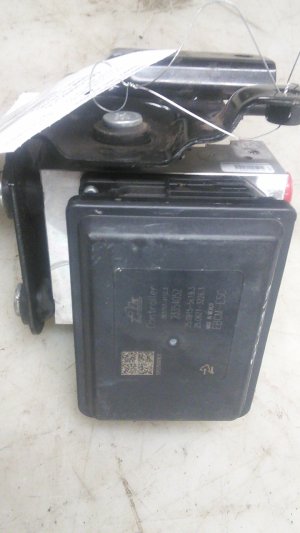
- Physical Inspection: When you receive the used part, inspect it carefully. Look for any signs of damage to the plastic electrical connector and pins. Check the aluminum hydraulic block for cracks or signs of leaking brake fluid. Avoid any units with heavy corrosion or physical damage.
- Why Used OEM is a Smart Choice: A used OEM module was built to GM's original quality standards. Compared to the high cost of a new dealer part, a quality-tested used module offers significant savings. It is often a more reliable choice than new aftermarket units, which may have different internal electronics and programming requirements.
Programming and Installation Requirements

Replacing the ABS module in a Chevrolet Colorado or GMC Canyon is a two-part process: physical installation and electronic programming. While the physical installation is straightforward for a mechanic, the programming requires special tools and is not a typical DIY task.
Warning: This module absolutely must be programmed to your vehicle's VIN to function. Do not expect a used module to be "plug-and-play."
Who Can Program the Module?
- GM Dealerships: A dealer has the guaranteed ability to program the module using their proprietary software.
- Independent Repair Shops: Many professional shops have the necessary equipment, such as a J2534 Pass-Thru device and a subscription to GM's Service Programming System (SPS), to perform the programming. When installing a used module, they must select the "Replace and Reprogram" option in the software.
- Locksmiths/Mobile Programmers: Some automotive locksmiths or mobile diagnostic services may offer this service, but you must confirm they have the specific capability for a modern GM ABS module.
Automated Brake Bleeding
If the entire ABS pump and module assembly is replaced, the brake lines must be disconnected. After installation, the brake system must be bled to remove all air. This requires a scan tool that can activate the ABS pump and cycle the internal valves to purge trapped air—a procedure known as an "automated bleed" or "ABS bleed." A standard manual brake bleed is not sufficient and will leave air trapped in the hydraulic unit.
🎬 Watch this guide on how to properly bleed your brakes.Replacement Cost Comparison
The cost to replace the ABS module can vary significantly based on the parts source and labor rates. Programming is an additional cost that is often billed separately from the physical installation.
| Item | Estimated Cost | Notes |
|---|---|---|
| New OEM Part | $450 - $900 | Price for the complete pump and module assembly from a GM dealer. |
| New Aftermarket Part | $350 - $600 | Availability can be limited. Quality and programming compatibility may vary. |
| Used OEM Part | $150 - $300 | A cost-effective option from a reputable auto recycler. |
| Shop Labor (Installation) | $125 - $200 | For physical replacement. Does not include bleeding or programming. |
| Shop Labor (Programming) | $100 - $250 | Typically 1-1.5 hours of labor for programming and the automated bleed procedure. |
Frequently Asked Questions (FAQ)
Can I still drive my truck with a bad ABS module?
Yes, but with significant safety limitations. Your standard hydraulic brakes will still function, but you will not have anti-lock brakes, traction control, or stability control. This means your wheels can lock up in a panic stop, and the truck will not assist you in slippery conditions or emergency maneuvers, increasing the risk of a crash.
Do I have to replace the pump and module together?
It depends. The electronic module can sometimes be unbolted from the hydraulic pump (solenoid block) and replaced separately. However, they are most often sold, replaced, and programmed as a single assembly. If you are only replacing the electronic portion, you may be able to avoid opening the hydraulic lines and bleeding the brakes.
My ABS light is on. How do I know if it's the module or just a wheel speed sensor?
A diagnostic scan is the first step. If the code points to a specific wheel speed sensor, the most common cause is a faulty sensor or its wiring. A visual inspection of the sensor and its harness for damage is a good second step. If replacing the sensor doesn't fix the issue, or if the codes indicate an internal module failure or communication loss, the module itself is the likely culprit.
Can I program a used ABS module myself?
This is not recommended for DIY mechanics. Programming requires a J2534 pass-thru tool, a laptop with specific software, a stable internet connection, a battery maintainer, and a paid subscription to GM's Service Programming System (SPS). The cost and complexity of this equipment make it more practical to have a professional shop perform the programming.
Helpful Videos


Technical Specifications
OEM Part Numbers: 85761114 87823126 23200277 23200278 23354053 23414480 23422800 85008633 85008634 85620545 85667448 85774350 84214766 84644579 84733769 87823127 23414478
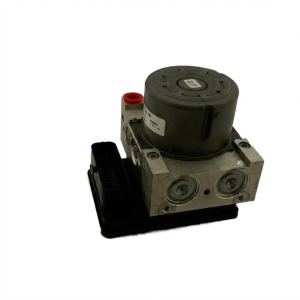
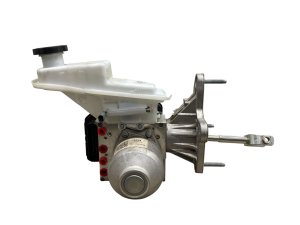
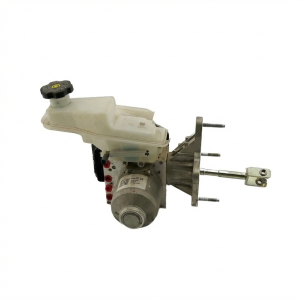
The unit is an assembly containing the Electronic Brake Control Module (EBCM) and the Brake Pressure Modulator Valve (BPMV), also known as the hydraulic pump. It requires programming via GM's Service Programming System (SPS) with a J2534 interface.
We Have This Part in Stock

The information in this article is provided for general reference and educational purposes only. Vehicle specifications, procedures, and part compatibility can vary by production date, trim level, and region. Always consult your vehicle's factory service manual and verify part numbers before purchasing or performing repairs. Safety-critical components such as airbags, seat belts, and braking systems should be installed by a qualified professional.
- Chevrolet Colorado:
- GMC Canyon:
- 🎬 Helpful Videos
- 🛍️ Shop This Part
- Symptoms of a Failing ABS Module
- Common Diagnostic Trouble Codes (DTCs)
- Known Issues, Recalls, and Technical Service Bulletins (TSBs)
- Buying a Used ABS Control Module: What You Must Know
- Programming and Installation Requirements
- Who Can Program the Module?
- Automated Brake Bleeding
- Replacement Cost Comparison
- Frequently Asked Questions (FAQ)
- 🎟️ Get 5% Off